Latest Manufacturing Data Offers Insight for 2 Holdings
Takeaways support our decision to exit the shares of Builders FirstSource.
You've reached your free article limit
You've read 0 of 1 free Pro articles.
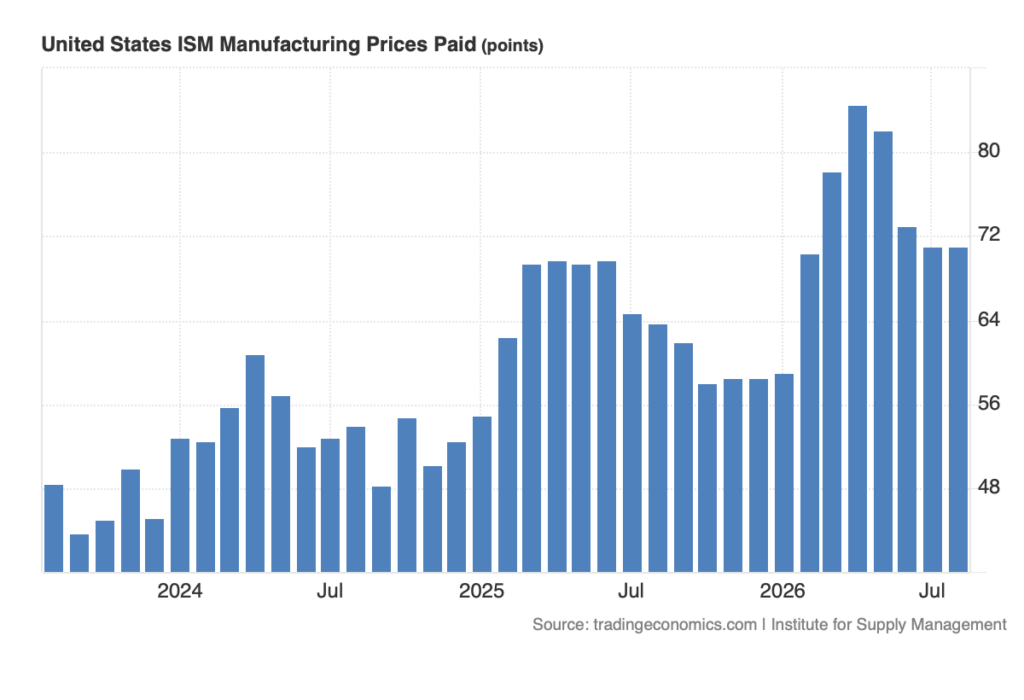
When we exited the Portfolio’s position in Builders FirstSource (BLDR) earlier on Tuesday, we shared that ISM’s Manufacturing PMI Price component for August was unchanged at 71.1 with July’s figure. Paired with the renewed upswing in oil and related prices, and Treasury yields that cemented our decision to exit BLDR shares given the growing likelihood for a Fed rate hike later this month.
But that same August Manufacturing PMI report from ISM had more insights to offer and the same can be said for the July Construction Spending Report. Let’s break it all down:
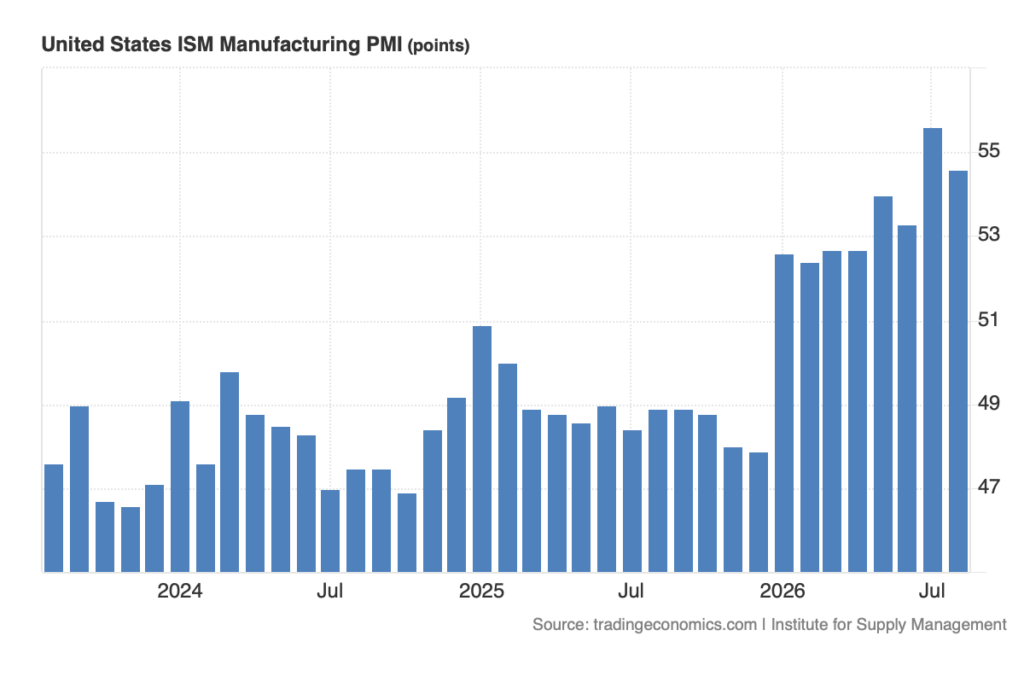
The ISM Manufacturing PMI fell to 54.6 in August from July’s near four-year high of 55.6, and missed the market expectations of 55.2. Despite the softer print, the August figure marked the eighth consecutive month of expansion in manufacturing activity. Production growth was broadly stable at 58.3, compared with 58.5 in July, but employment growth eased to 51.2 from 52.8, indicating a a softer pace of job creation in the sector.
Meanwhile, manufacturers continued to highlight rising costs, supply-chain disruptions and heightened uncertainty, with tariffs and the Middle East conflict adding further pressure. As we noted above, the Prices Index remained elevated at 71.1, while the Supplier Deliveries Index rose to 59.3, signaling another step up in supply-chain delays. The Backlog of Orders Index fell sharply to 51.8 from 55 in July suggesting weaker order pipelines.
When we look at the ISM data, one easy mistake to avoid is reading too much into any one particular data point for each particular series. What we want to take stock of is the trend, and that’s where the charts below come into play.
Manufacturing activity has improved so far in 2026 and we can corroborate that with the improvement in rail and truck traffic.
The month-over-month dip in new orders in August is something we’ll want to follow carefully, but as we can see in the chart below, order activity can be choppy month to month. Viewing 2026 against the prior 24 months, it can be said that manufacturing activity is has picked up. Our thinking is we can attribute that the combination of re-shoring activity, the AI and data center buildout and accelerated depreciation found in the “One Big Beautiful Bill.”
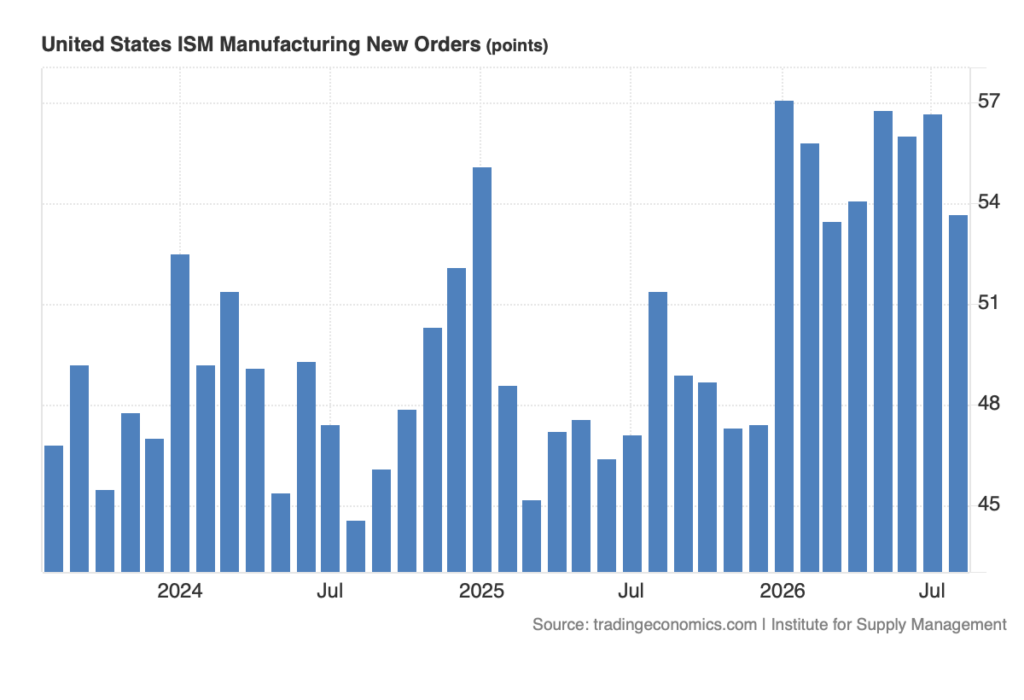
In our view, that bodes well for the Portfolio’s position in Paccar (PCAR) shares. The next data point we’re waiting on for that position is the Flash truck order data for August, which should be in before too long.
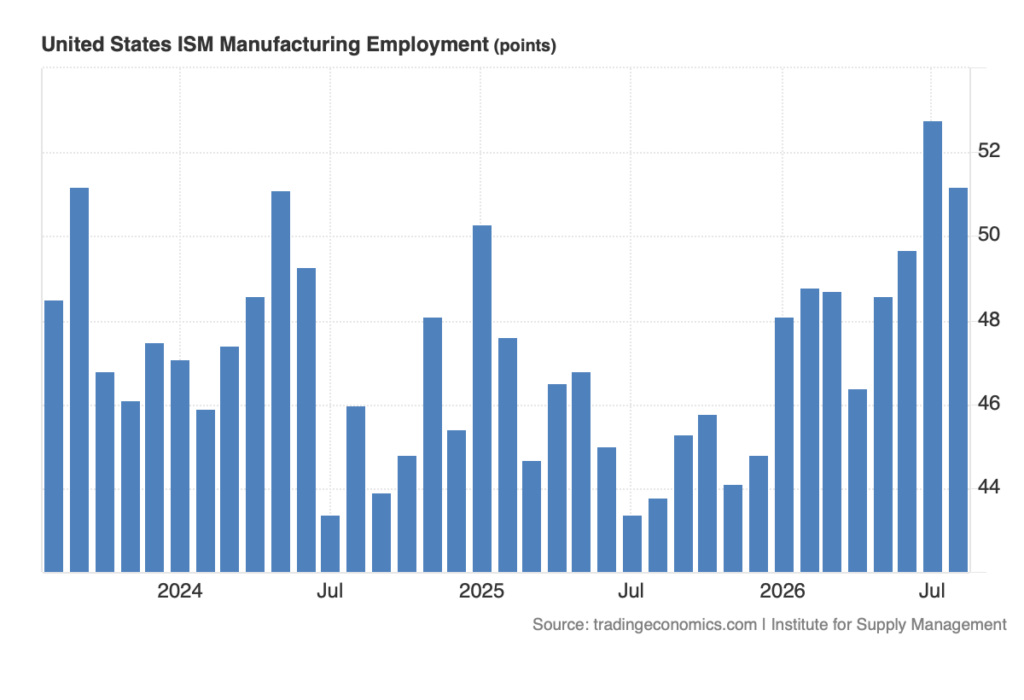
After moving into expansion territory in July, the pace of employment growth slowed in August, but the key is that job creation was still up. With ADP’s August Employment Change Report out on Wednesday and ISM’s Services PMI report out on Thursday, aggregating that employment data will give us a clearer picture of what we can expect with Friday’s August Employment Report.
July Construction Spending
Construction spending in the US fell 0.5% month-over-month to a seasonally adjusted annual rate of $2,158 billion in July, missing the market’s expectation for a flat reading. Given the data we shared with you gaming our our plan for Builders FirstSource on Monday, you won’t be surprised to see that residential construction spending fell 1.3% sequentially.
On a year-over-year basis, total residential construction spending fell 7.3%, with single-family down 6.5%. Granted that’s bit backward looking at this point, but it’s another data point suggesting homebuilders will continue to use incentives to win orders despite the margin impact. We see that the other July and August data discussed on Monday and ISM’s August Manufacturing PMI Price finding all giving fire cover for our BLDR decision.
The brighter spot in the July Construction Spending report was non-residential construction, which continues to be driven by power, highway and street and related construction. We see that as very positive for our shares of United Rentals (URI), but recognize the prospect for higher interest rates later this month will be a perceived headwind for the shares even though we are in the seasonally strongest time of the year for United’s core rental equipment business.
For now, we’ll monitor construction activity and should we see a pronounced slowing on a sustained basis that would give us a reason to revisit URI shares in the Portfolio.
More Pro Portfolio
- We’re Accumulating More Shares of This Oversold Holding
- We’re Tracking 23 New Signals Across Our Investing Themes
- August Monthly Roundup: Maintaining Our Lead Through the Ups and Downs
At the time of publication, TheStreet Pro Portfolio was long PCAR and URI.