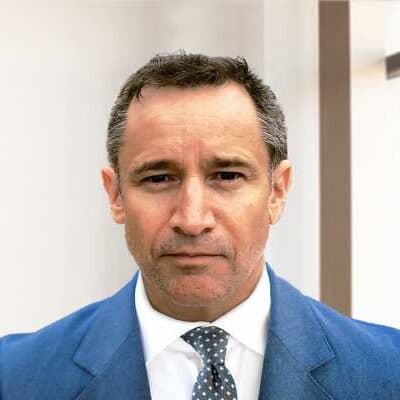
How the Evergrande Founder's $42 Billion Fortune Became a Guilty Plea
With his empire collapsed, Hui Ka-yan's fraud case represents the death spiral of China's property industry.
You've reached your free article limit
You've read 0 of 1 free Pro articles.
 Trading Ideas for 6 Stocks Out of Evergrande's Implosion
With China’s property industry on its knees, the founder of its largest developer has pleaded guilty to fraud and will seek clemency from the Chinese courts, as creditors chase down the assets of the failed China Evergrande Group.
The founder of the Evergrande Group, the largest property developer in China before its debt-induced collapse, has pleaded guilty to fraud charges, a court in the southern city of Shenzhen said on Tuesday.
Guilty on Multiple Charges
Evergrande founder Hui Ka-yan has admitted to charges including the misuse of funds, fraudulent fundraising, securities fraud, embezzlement, bribery and illegally taking deposits from the public.
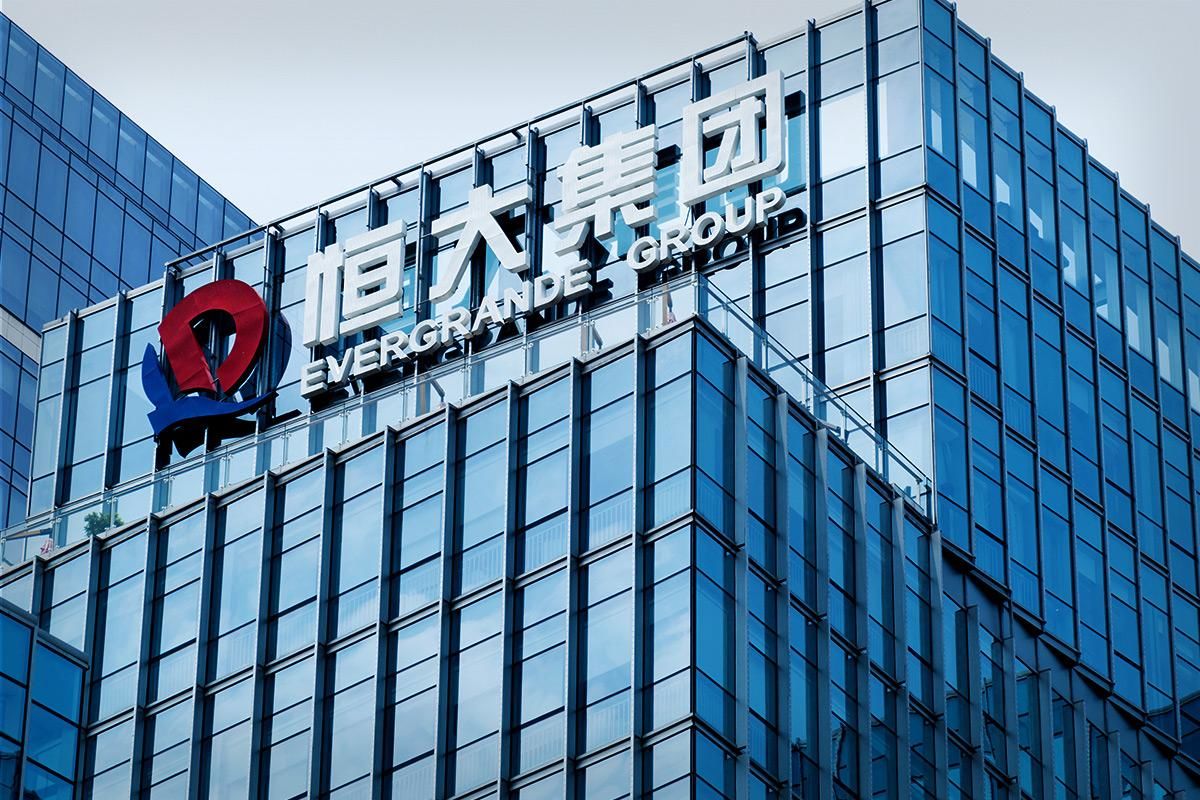
Shutterstock
Hui built a property empire that spanned mainland China, specializing in mass-market housing developments with dozens of towers. By 2017, it made him the richest person in Asia, according to Forbes, with a net worth estimated at $42.2 billion.
That pushed him past tech entrepreneurs such as Tencent Holdings chairman Pony Ma and the Alibaba Group co-founder and figurehead Jack Ma. The internet entrepreneurs are not related, despite their shared family name, but ascended to the top of Asia’s rich list in their own right on the back of China’s boom in e-commerce.
Rags to Riches
Hui’s fortune was built from the ground up. He came from modest roots in rural Henan Province, in northeast China, raised by his grandmother after his mother died of sepsis when he was just eight months old. After graduating from what’s now the Wuhan University of Science and Technology, he worked as a steel technician, rising through the ranks before opting to move to the then-new special economic zone of Shenzhen, just across the border from Hong Kong.
Hui secured work in a trading company, then founded a property developer in nearby Guangzhou in 1996. Although the company maintained its original name, Hengda Real Estate, as an operating business within mainland China, it took on the China Evergrande Group title, listing in Hong Kong in 2009.
The scope of Evergrande’s reach is hard to overstate. It developed 1,300 housing projects across 280 cities right across China, relying on the fast sale of off-plan, under-development apartments to spin out cash that would go towards the purchase of land for the next development.
Thousands of Units Across Cities Within Cities
Take the Evergrande Splendor development in the southern city of Kunming, the capital of Yunnan Province. It covers 5,000 acres on the outskirts of the city, a city on the edge of the city, with 20 high-rise towers of modern apartments as well as villas. The 16,000 units, built around a lake, mountain features, a conference center and hotel, can house 60,000 people.
Homebuyers would put down deposits on apartments for delivery in two to five years. Buying a property is almost always the first major investment that a Chinese family would make, and many investors historically preferred to keep their wealth in bricks and mortar, given the unpredictable nature of mainland China’s stock markets, and the generally low quality of equities on offer.
It all functioned swimmingly, much to the glee of local government officials, who typically rely on land sales and property taxes to contribute 38% to 40% of their revenue. You can be sure that permit-granting officials received hefty kickbacks to ensure the right bidder won a property project.
But the extent of overborrowing in the property industry, both by developers and homeowners, came to concern Chinese Communist Party officials. Their main objective was to let the hot air out of the bubble in Chinese apartment prices that pushed even mass-market projects beyond the reach of ordinary buyers.
Three Red Lines Marked Beginning of End
The Beijing authorities therefore in August 2020 introduced the “three red lines” policies, sharply cutting back the level of permissible leverage in the property industry.
Developers were forced to come into line on their ratio of debt to cash, debt to equity and debt to assets. Only 6.3% of property developers could satisfy all three rules when they were introduced, according to ratings agency Standard & Poor’s.
China Evergrande, the world’s most-indebted developer with a debt load equivalent to $371 billion, sat atop the massive pile of debt wrongdoers. It owed one-third of $1 trillion! That’s equivalent to the annual economic output of a nation like Nigeria, the sixth-largest population in the world.
Death Spiral for Property Industry
It was staggering, and after struggling along for years, Evergrande finally collapsed into liquidation in January 2024, as I explained at the time. It was delisted in Hong Kong in 2025, an event I covered last August.
With property buyers uncertain which developers could survive, many held back on putting down deposits for apartments they feared would never be built. That led to a decline in property sales, robbing developers of the vital operating capital they required, and a decline in property valuations and prices, which only further undermined confidence in the sector.
The industry entered a death spiral of declining values, sales and activity. Property prices fell some 40% from their 2021 peak through late 2025, according to UBS.
Poster Child for Property Problems
Evergrande quickly began defaulting on obligations, missing debt payments by late 2021. It became the poster child of problems in the Chinese property industry, but was hardly alone. The number of developers peaked at 105,434 that year, but as of a 2024 estimate, some 40% of bank loans to the property sector were held by “zombie” companies that do not have operating earnings that can cover their interest payments.
The high-yield bonds of Chinese developers had been exceptionally popular with international investors. But they proved a liability after the property industry ran aground. Among the 50 largest developers issuing U.S.-dollar bonds, some two-thirds have subsequently defaulted.
Hui was detained by the authorities in September 2023, at first reportedly kept under house arrest in Beijing but then moved to a special detention center in Shenzhen, where he could better communicate with Evergrande officials.
But Evergrande did not take the necessary steps to rectify its balance sheet, with Hui divorcing his wife in what some consider an arrangement of convenience. She now lives in a luxury apartment in London, where she has built up a portfolio of $350 million in assets, much of it in British and Canadian real estate.
Awaiting Sentencing
Hui, now 67, “expressed remorse” over the course of trial proceedings on Monday and Tuesday, the Shenzhen Intermediate People’s Court stated in a post on its official WeChat social-media account, according to the Global Times state-owned newspaper.
Hui, the adopted Cantonese name of the man also known as Xu Jiayin in Mandarin Chinese, will now await a verdict on his sentence. Chinese courts have a conviction rate of 99%, with the police, prosecutors and courts all working in unison. Many defendants will make public confessions and plead guilty in the hopes of securing a lighter sentence.
The process of unwinding China Evergrande and its Hengda operating units is complicated by the fact that most developers set up separate corporate entities for each development. There’s also the cross-border nature of the cases to consider, with Evergrande’s securities and corporate bonds listed in Hong Kong but its operating entities mainly incorporated within China.
Liquidators said last August that they had sold off $255 million in Evergrande assets in the 18 months since its liquidation began. The firm Alvarez & Marsal indicated it had received claims from creditors on $45 billion in assets, although creditors have also seized many of its assets within mainland China.
Under Hui, Evergrande expanded into entirely unrelated businesses such as the title-winning soccer club Guangzhou FC as well as a bottled-water company. It still has two listed subsidiaries, the property-management business Evergrande Property Services (HK:6666) and the electric-vehicle company Evergrande New Energy Vehicle (HK:0708). The Hengchi 5 SUV went on sale in 2022 but has struggled to produce a production vehicle due to the group’s financial troubles.
Related: Renewed Pressure From Iran Obscures Notable Software Sell-Off