Will Rivian’s Deal With Uber, New R2 Model Jumpstart the Stock?
Rivian’s R2 should drive itself onto Uber’s rideshare platform by 2028. Is this the missing ingredient?
You've reached your free article limit
You've read 0 of 1 free Pro articles.
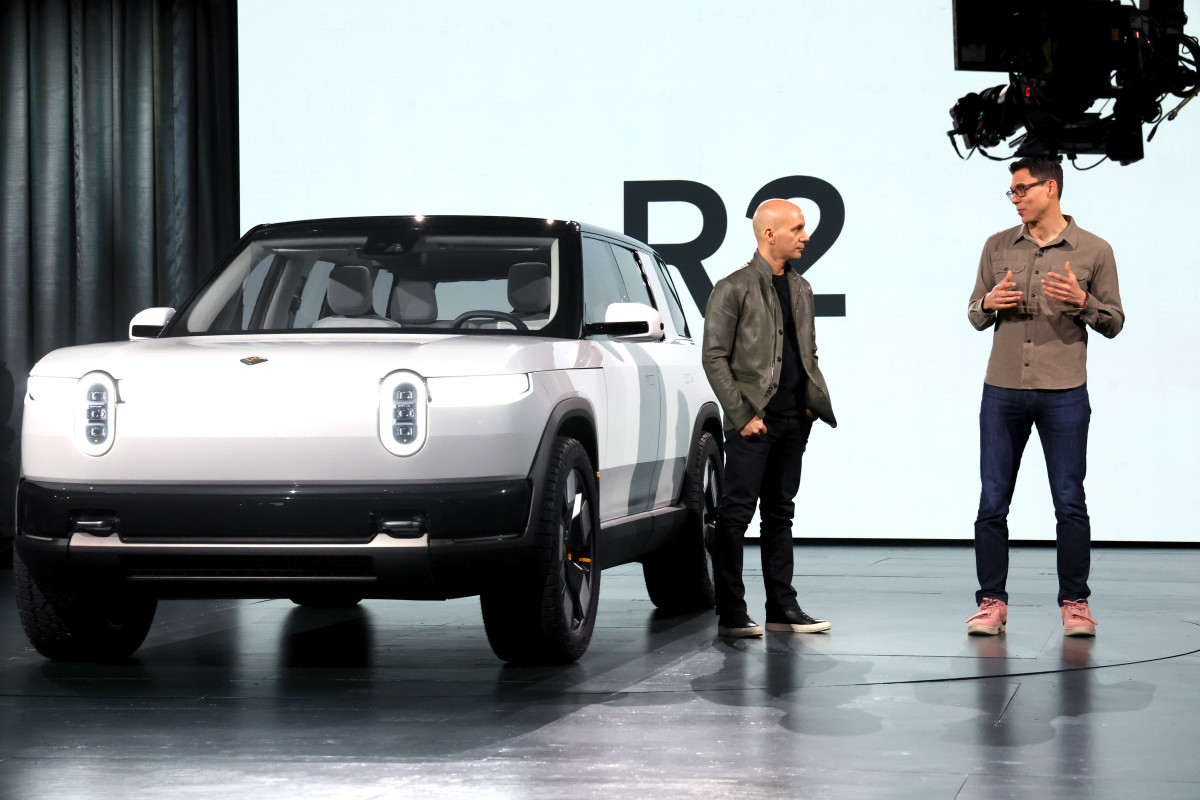 Rivian All-Electric R2 Midsize SUV
Rivian Automotive (RIVN) , an Irvine, California-based electric vehicle manufacturer, has struck a $1.25 billion deal with rideshare kingpin Uber (UBER) . The objective is to put 50,000 autonomous Rivian R2 vehicles on Uber’s ride-sharing platform by 2031.
Will the Uber deal give Rivian shareholders the jumpstart they’ve been looking for?
A Downhill Ride
Rivian shareholders have had a rough ride. Rivian went public in November of 2021 at about $100 per share, and quickly rose to $172.
Since then, it’s been a downhill ride. The stock now trades in the mid-teens, a decline of over 90%. In addition, Rivian shares have fallen by 19% since the start of this year.
Rivian saw a decline in sales last year to just 42,247 units, from 51,579 units in 2024. That decrease occurred as global EV sales climbed by an estimated 20% from 2024 to 2025.
In Need of a Jumpstart
Rivian needs a catalyst to jumpstart sales and regain favor. The company is hoping the R2, a mid-size electric SUV, will be that catalyst.
The vehicle, projected to cost from $45,000, is expected to begin shipping next month. Rivian is accepting orders with just a $100 deposit.
Rivian says it received 68,000 orders for the R2 on its first day of availability — well above the automaker’s total sales in 2025. Orders for the R2 are now believed to exceed 200,000.
The R2 is also the key to Uber’s deal with Rivian. The two companies plan to introduce autonomous R2’s to Uber’s platform in 2028, rising to 50,000 R2’s by 2031.
The Missing Ingredient
The news sounds amazing on the surface. A huge deal to put 50,000 autonomous R2’s on Uber’s rideshare platform, and over 200,000 R2 reservations from the general public.
If the news is truly great, why aren’t institutions buying Rivian?
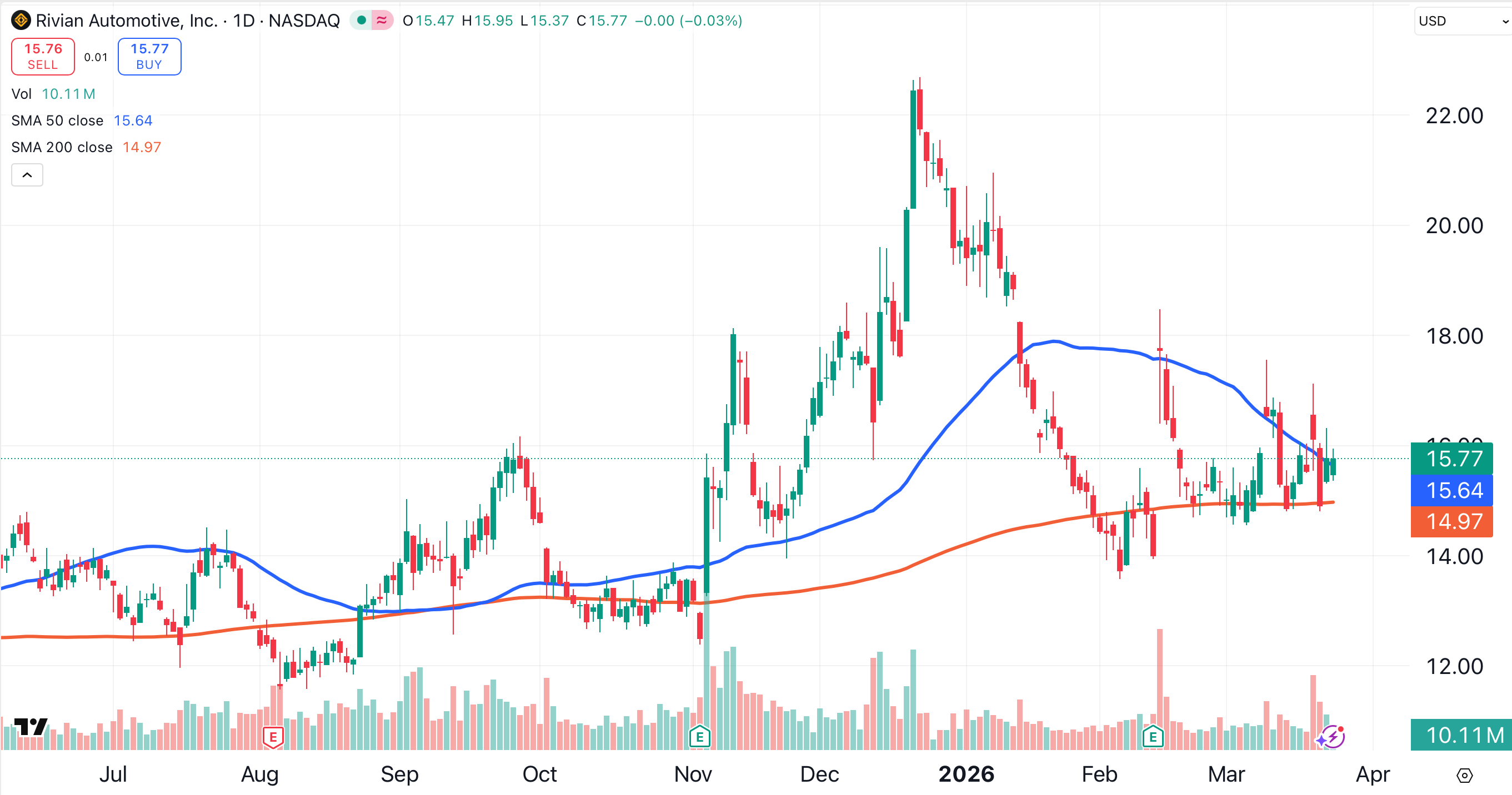
Rivian shares have lost nearly a third of their value over the past three months. It’s highly unlikely that this price action was driven by retail investors.
Institutional investors are aware of the positive developments involving Uber and the R2. Why aren’t they buying Rivian?
JPMorgan has an underweight rating and a price target of $9. Goldman Sachs recently raised its price target for Rivian to $18 from $15, but maintained a neutral rating on the stock.
Analysts cite Rivian’s large operating losses, cash burn, and growing competition as reasons for their reluctance to support this stock.
The Bottom Line
Eventually, institutional investors may change their minds and start buying Rivian. If that happens, we’ll see it on the chart. Until then, we’ll be patiently waiting for indications that institutional money is moving into the stock.
Related: When Markets Go ‘Below Deck’: The Portfolio Strategy Built for Stormy Conditions
At the time of publication, Ponsi had no positions in any securities mentioned.