Trump Tariff Delay Can Boost These Two Stocks
As Donald Trump's lack of action sends the U.S. dollar tumbling, this pair of stock giants will likely benefit.
You've reached your free article limit
You've read 0 of 1 free Pro articles.
President Trump was sworn in on Monday, and as expected, he unleashed a series of executive orders. In a twist, it was the action he didn’t take that sent the U.S. dollar tumbling.
While Trump signed a flurry of executive orders involving immigration, energy policies, trade practices and illegal drug cartels, there were no signed orders regarding tariffs.
There has been speculation that there are disagreements within the Trump camp regarding the game plan for tariffs. Should a gradual approach that phases in tariffs be used, or should a more aggressive approach be implemented?
According to the chart, the U.S. dollar index, which pits the greenback versus a basket of foreign currencies like the euro, yen, and British pound, has quickly flipped from a multi-year high (point A) to a two-week low.
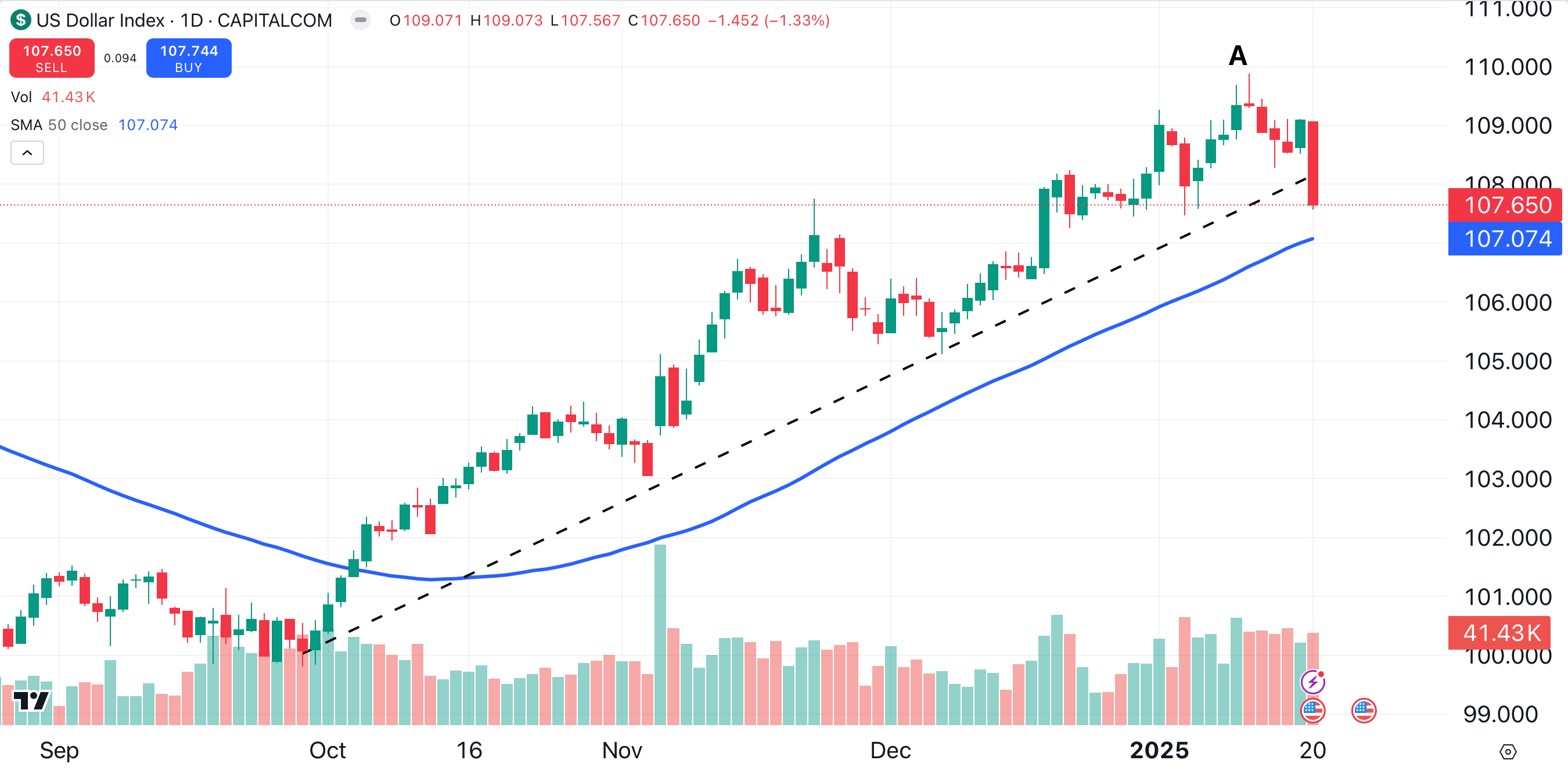
A steep, three-month trendline has been broken (black dotted line), and the index is rapidly falling toward its 50-day moving average (blue).
Currency trading is a zero sum game. Just as the dollar has been rising for three months, the euro (below, left chart) and the British pound (below, right chart) have been getting hammered.
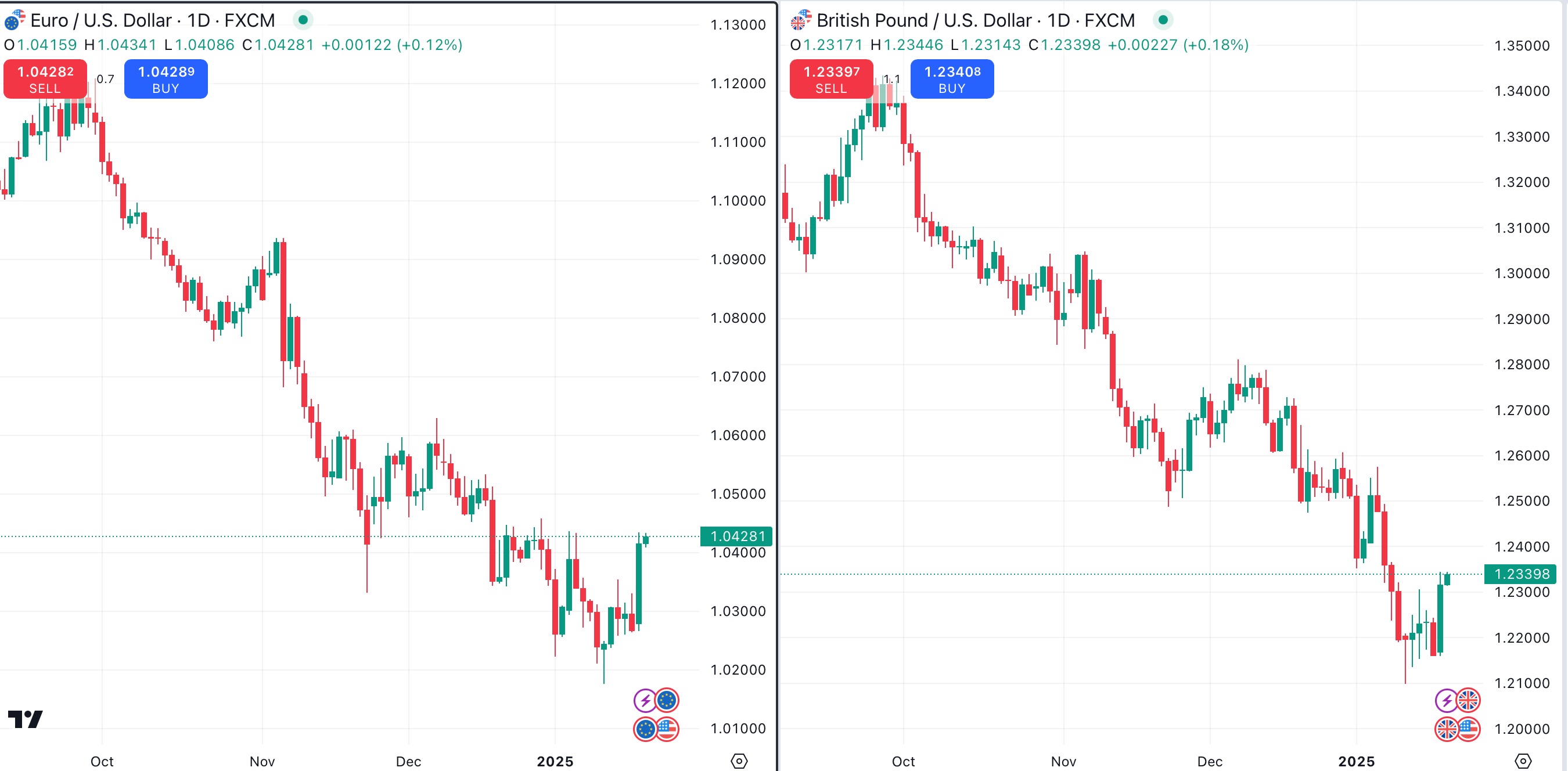
I know this sudden flip in the dollar seems like a negative event, but there is a positive side. A strong dollar acts as a drag on U.S. exports, and has a negative impact on earnings for companies that do a significant amount of business overseas.
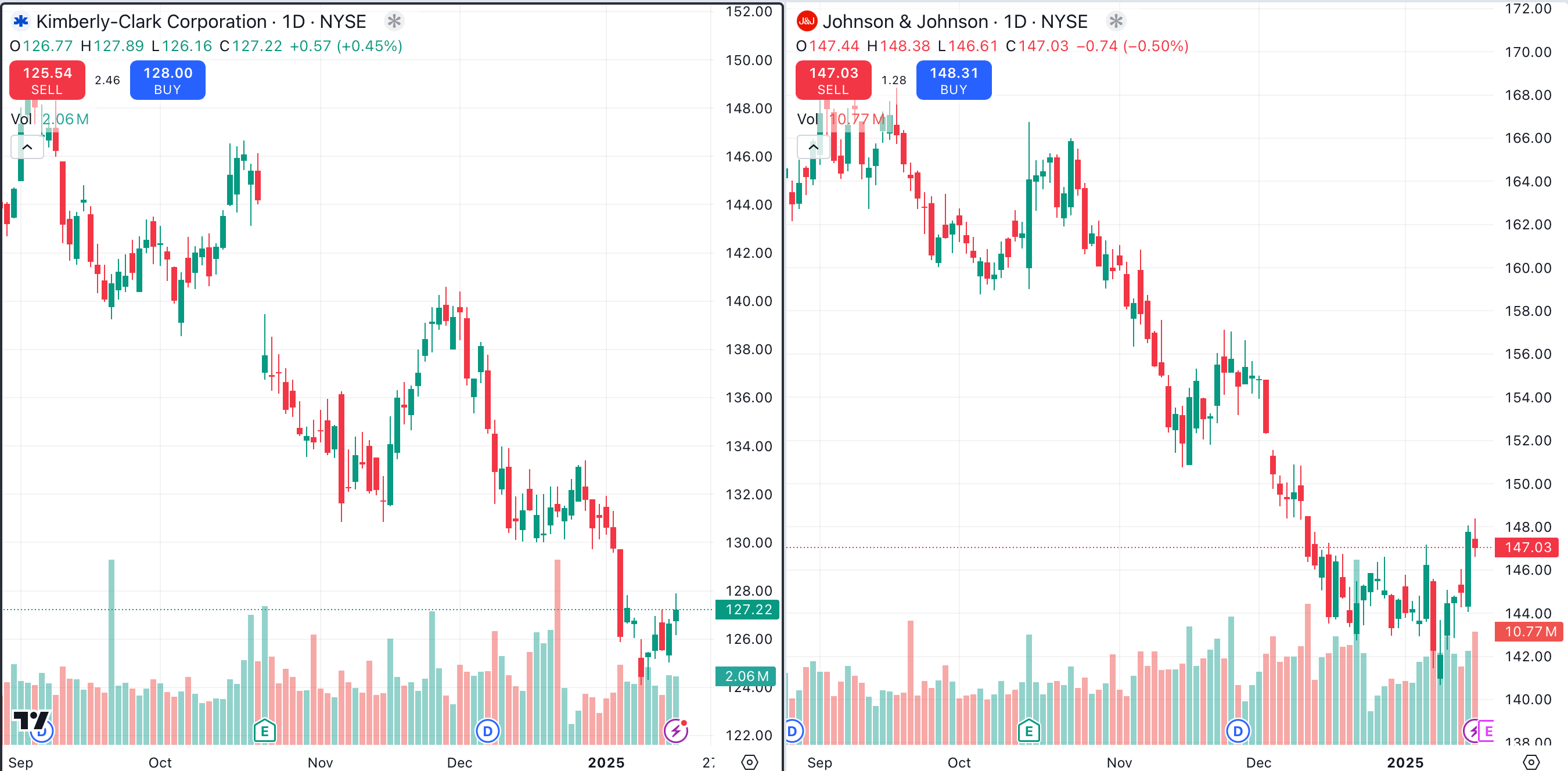
For example, take a look at the charts of Kimberly Clark KMB (below, left chart) and Johnson & Johnson JNJ (below, right chart). Both of these companies obtain a significant percentage of their revenues from outside the U.S.
Both charts also bear a resemblance to the euro and pound charts (above).
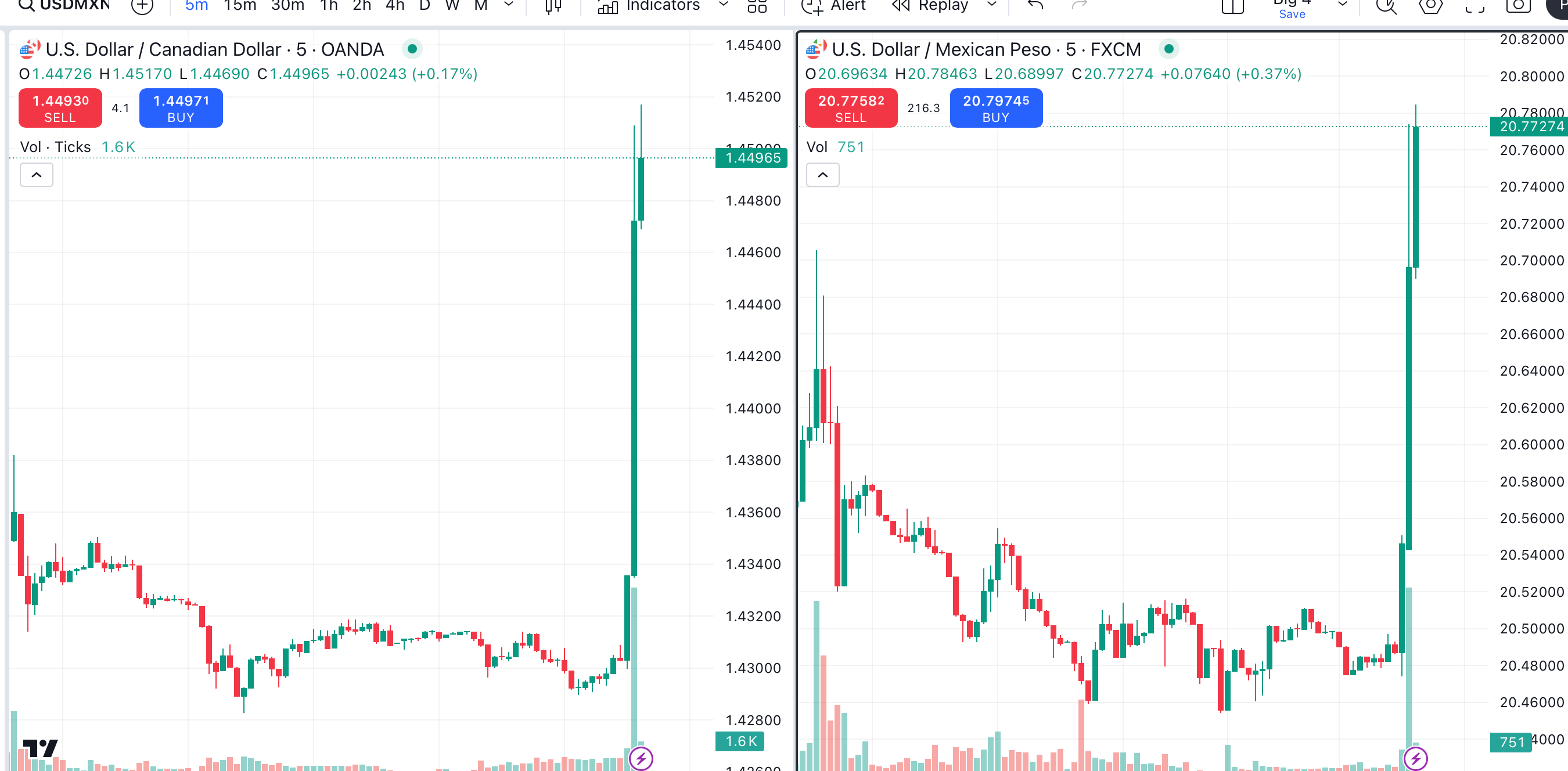
As if to drive home the connection between the dollar and tariffs, Trump commented on Monday evening that he could levy tariffs against Canada and Mexico starting on February 1.
The U.S. dollar reacted immediately, instantly pummeling the Canadian dollar (below, left chart) and the Mexican peso (below, right chart).
Simultaneously, stock futures plunged. The S&P futures (below, left chart) and the Nasdaq 100 futures (below, right chart) moved in the opposite direction of the dollar.
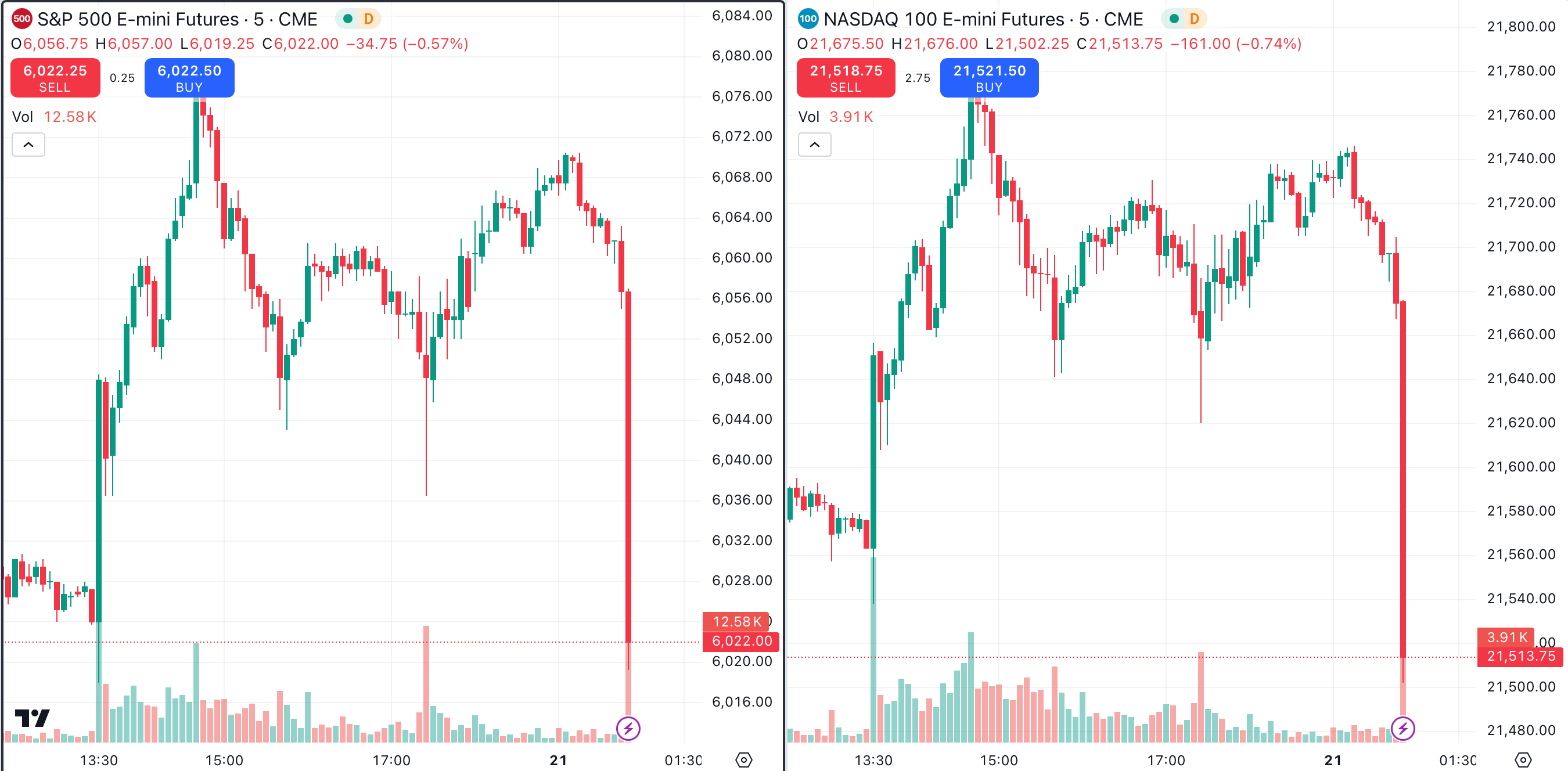
This is an excellent demonstration of the perceived effects of tariffs on the U.S. dollar, stock futures and foreign currencies.
Regardless of where you stand on the tariff issue, there’s no question that a gradual approach would favor U.S. companies that rely on exports. While an aggressive approach to tariffs could derail earnings for large U.S.-based exporters, it would do little to harm companies that obtain the vast majority of their revenues from inside the U.S.
At the time of publication, Ponsi had no positions in any securities mentioned.