This Japan ETF Is a Tariff Trade Opportunity After Negotiation News
Tariff trade wars can lead to stock market volatility, as well as opportunity.
You've reached your free article limit
You've read 0 of 1 free Pro articles.
In a world clouded by politics, objectivity can be hard to find. But in the world of investing, objectivity is key.
Like everyone else, I’m concerned about the effect of tariffs on the markets. Unlike many, I’ve chosen to allow this process to play out a bit before jumping to conclusions.
Beyond Borders
On Monday, it became clear that a trade that objectively makes sense has emerged from the fog of this trade war. Because the U.S. is at the center of the tariff controversy, it’s less clear what the end result will be for U.S. equities..
However, after the events that unfolded earlier this week, it’s not difficult to envision a positive resolution for Japan. Japan has secured priority at the tariff negotiating table, and as a result, Japan’s benchmark Nikkei 225 rallied 6.03% on Tuesday.
Is it too late to jump on the Japan bandwagon? Not at all. According to the charts, the Nikkei could gain another 10% in the short term. The index has formed a double bottom (green arrows), an indication that the worst may be over for Japanese stocks
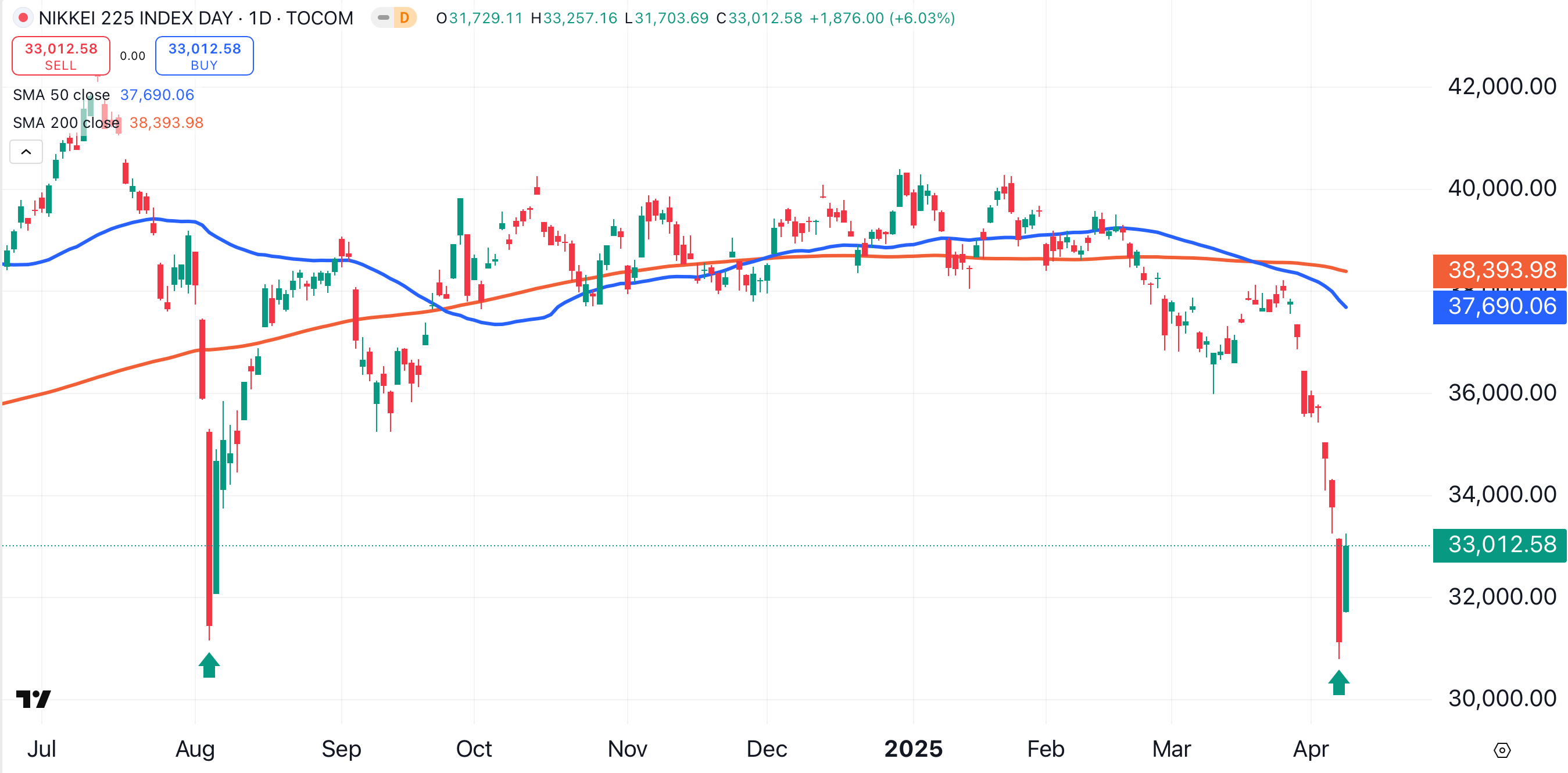
Due to the Nikkei’s recent sharp decline, there is little standing in its way in terms of resistance. This means a rally to 36,000 could happen quickly. Further gains are possible, but there is heavy resistance above that level.
How to Play it
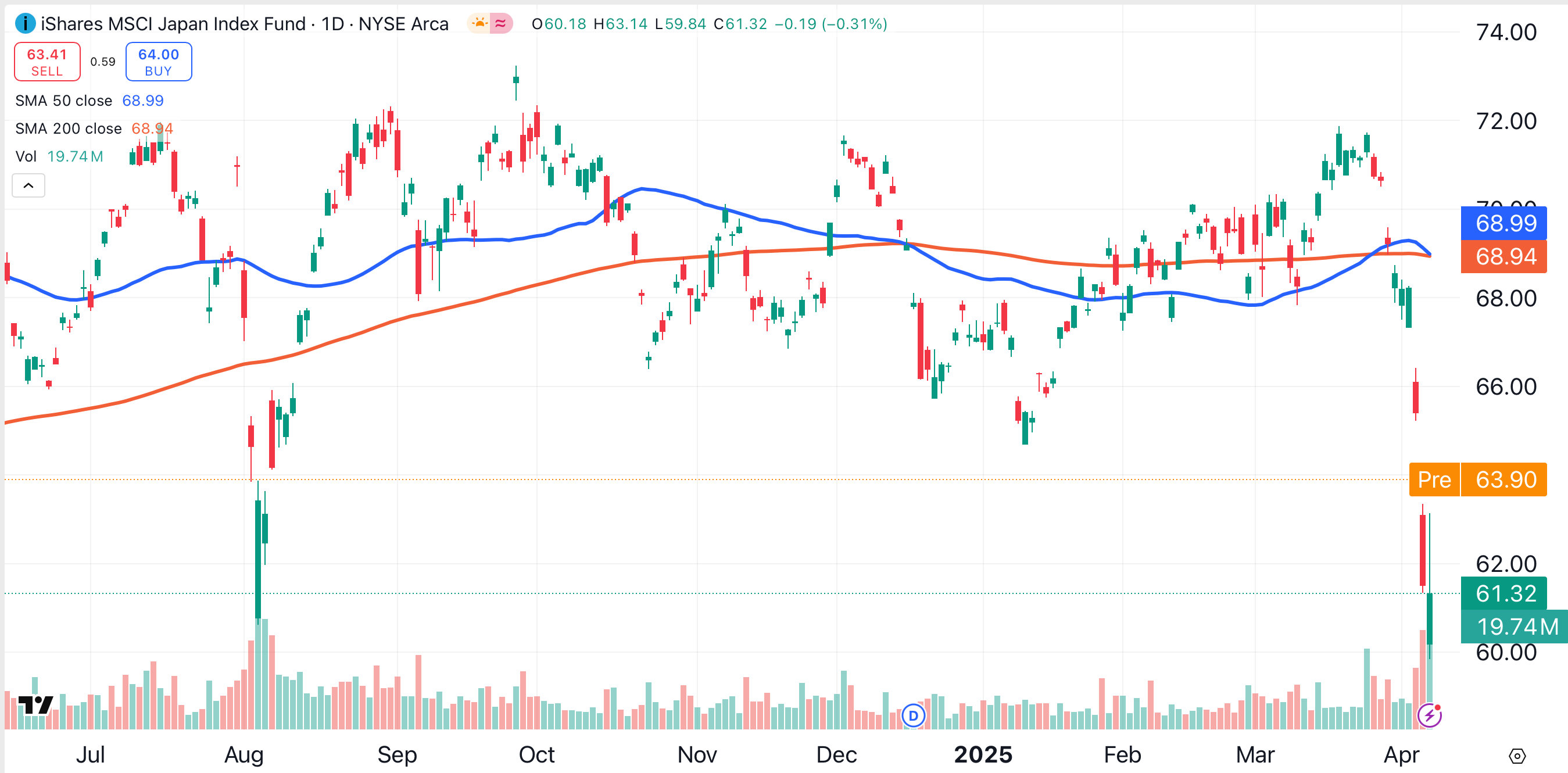
How can U.S. investors fit Japanese stocks into their portfolios? The iShares MSCI Japan Index Fund ETF EWJ is one way to quickly gain exposure to Japanese stocks. This ETF provides diversification, while favoring large-cap companies that are most likely to benefit from a tariff resolution.
One Big Negotiation
By coming to the negotiating table early, Japan is distancing itself from major exporters in Europe and China. Japan is also creating a scenario where it could increase its exports to the U.S. at the expense of its competitors.
If Japan strikes a deal with the U.S., and Europe fails to do so, it's easy to imagine a scenario in which non-tariffed Japanese autos compete on U.S. soil against heavily tariffed Volkswagens and BMWs.
Japan could also take market share from China, the largest exporter to the U.S.
Japan’s willingness to negotiate is a game changer for the U.S. If a U.S.-Japan agreement can be reached, other countries, now at a disadvantage to Japan, may feel the need to follow suit. It’s critical to the U.S. that negotiations with Japan succeed, as it could increase pressure on holdouts Europe and China to come to the negotiating table.
At the time of publication, Ponsi was long EWJ.