These Nvidia Suppliers in Asia Score Big on Earnings ... For Now ...
Artificial intelligence stocks and Nvidia’s suppliers are the strongest winners in Asia, but semiconductors are still lower this month.
You've reached your free article limit
You've read 0 of 1 free Pro articles.
There’s been a lot of uncertainty in Asia’s tech sector this month, with markets that tipped record highs in October selling off hard in a short space of time.
As I noted in my last column, jitters that the tech sector is overextended saw Asian equities fall to their lowest level in more than a month.
Everyone was awaiting earnings from Nvidia (NVDA) . Now that the company delivered?
All good!
It’s faintly ridiculous that the prospects of a continent on the other side of the world should hinge so dramatically on a quarterly release of just one company, even if it is now the largest in the world. But that’s where we stand.
Biggest Components Get Bigger
Taiwan’s small exchange is the region’s biggest gainer, with the benchmark Taiex up 3.2% at the close. That’s largely because the world’s largest chip-foundry operator, Taiwan Semiconductor Manufacturing Co. (TSM) (TW:2330), rose 4.3%, and makes up one-third of the Taiex weighting.
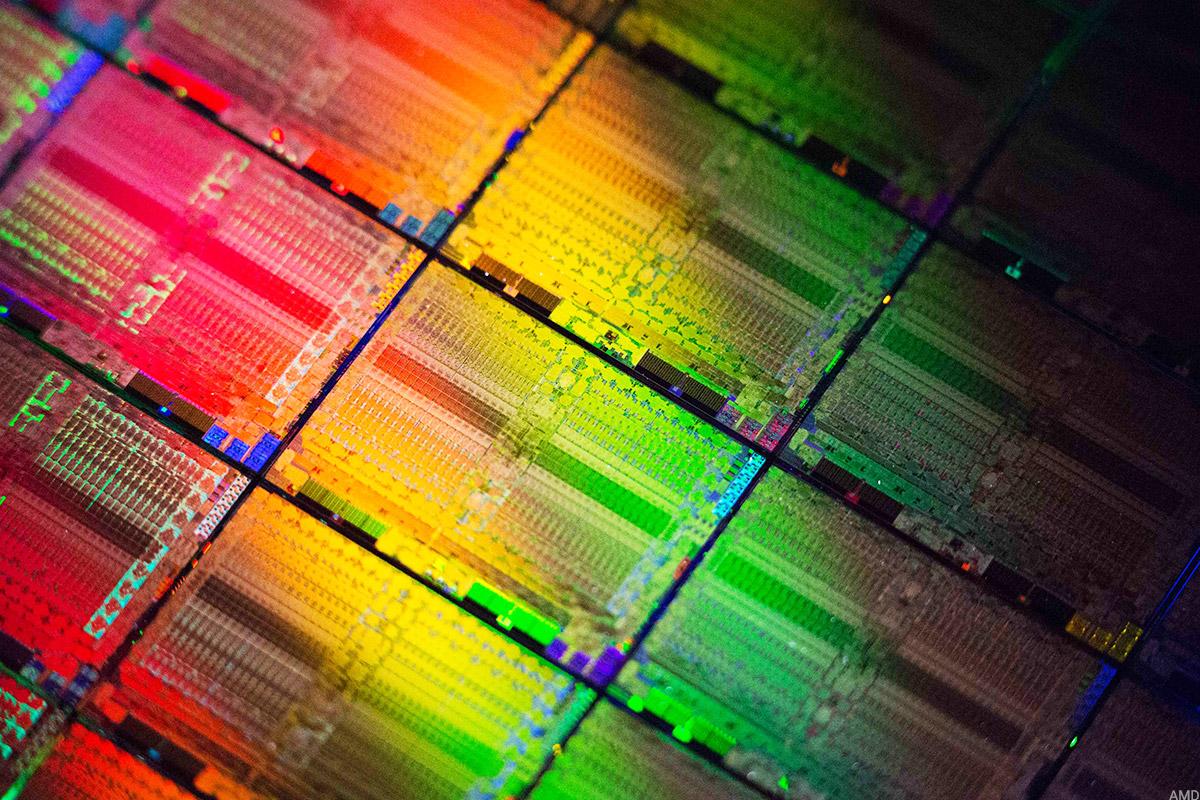
Similarly, chip producer and smartphone maker Samsung Electronics (KR:005930 is powering gains on the Korean exchange, where it is the largest component, accounting for one-quarter of the entire market cap. Samsung shot up 4.3% on Thursday, reaping the rewards of its attempts to catch up with production of the top-flight chips used to power AI servers.
Samsung is raising prices on Double Data Rate (DDR) chips by as much as 60%, Reuters reports, due to constrained supply. Data-center developers say their current progress is hampered not by demand but by a lack of chip hardware to install in new facilities.
SK Hynix (KR:000660), the second-largest component in Seoul at around 10% of the total market cap, is up 1.6% today, indicating that some prices are still looking toppy. Hynix shares have already trebled this year, up 233.5% given its headstart in high-end chip production, in contrast to the 2025 gains of “just” 88.4% for Samsung Electronics.
Tokyo Tech Up Too
In Tokyo, the blue-chip Nikkei 225 index ended the day up 2.7%, briefly climbing back above the 50,000 level before closing just below that, at 49,823.
We can see how tech multinationals are driving Tokyo, in that the broad-market Topix gained a full percentage point less than the Nikkei. The Topix, capturing all the main Tokyo equities, skews far more toward domestic consumption plays.
Chip-testing equipment maker Advantest ATEYY (T:6857) is one of the strongest performers today, up 8.8%. It is a key supplier to Nvidia, and has seen its shares ramp up 124.0% this year to give it a price/earnings ratio that, at 58.5-times, is actually higher than the 53.1 notched by Nvidia.
Advantest set a record high on the last day of October, just after the company delivered strong earnings and hiked its profit forecast 25%.
Tokyo Electron TOELY (T:8035), the largest Japanese chipmaker, is 5.3% higher today. But we have seen Japan’s chipmaker stocks struggle in the face of threatened higher U.S. tariffs and issues surrounding the supply of high-end chips to China. But the imposition of a 100% trade tax on imported semiconductors may be pushed back, The Guardian reports today, because the Trump administration does not want to irk China – and likely also because of the global chip short supply.
Truth be told, valuations have looked stretched since then, and investors are demonstrating a little “position fatigue” that saw Asian tech stocks drift significantly lower in November.
Chip Sector Peak
The Global X Asia Semiconductor ETF (HK:3119), a Hong Kong-listed product that tracks the Asian chip sector, is up 56.1% this year alone. But it peaked on Nov. 3, and is still down 6.0% since then, despite today’s rally.
Samsung, TSMC and Hynix are the largest components, together accounting for 32.4% of the ETF.
Asia’s tech sector last month powered the record highs in South Korea, Taiwan and Japan. And while Asia tech skews toward the “chips and shovels” hardware side of the sector, much of the recent demand is tied in some shape or form to Artificial Intelligence (AI).
Questions remain about how profitable AI will eventually prove. Nvidia’s numbers are also built on the massive ramp up in capital spending by data-center developers and AI model operators.
Nvidia Nerves
I was apprehensive heading into NVDA’s numbers that we could see a far sharper correction, even if it beat analyst expectations but “not by enough.”
Instead, investors have been reassured by the strong earnings, up 62% year-on-year, and Nvidia’s increased forecast for Q4 of $65 billion in sales. CEO Jensen Huang notes the company sits at the intersection of three huge platform shifts: the transition from general to accelerated computing; the shift to generative AI; and the move to agentic and physical AI, in the form of robots or electric vehicles.
There will come a time when Nvidia misses the mark. But this is not that time. The companies that form part of its supply chain in Asia are driving higher again as a result – but watch out for earnings exhaustion in another three months.
At the time of publication, Alex Frew McMillan had small long positions in NVDA and TSM.