Pop Mart Was Saved by the Labubu Doll. But How Long Will the Love Affair Last?
Shares of PMRTY hit eye-popping numbers as celebrities like Rihanna and Dua Lipa sported the trinkets. Can the stock continue its skyward ascent?
You've reached your free article limit
You've read 0 of 1 free Pro articles.
Just how long does Labubu mania last?
The question is crucial to the future prospects of what’s currently the Hong Kong market’s hottest property: Pop Mart PMRTY (HK:9992) stock.
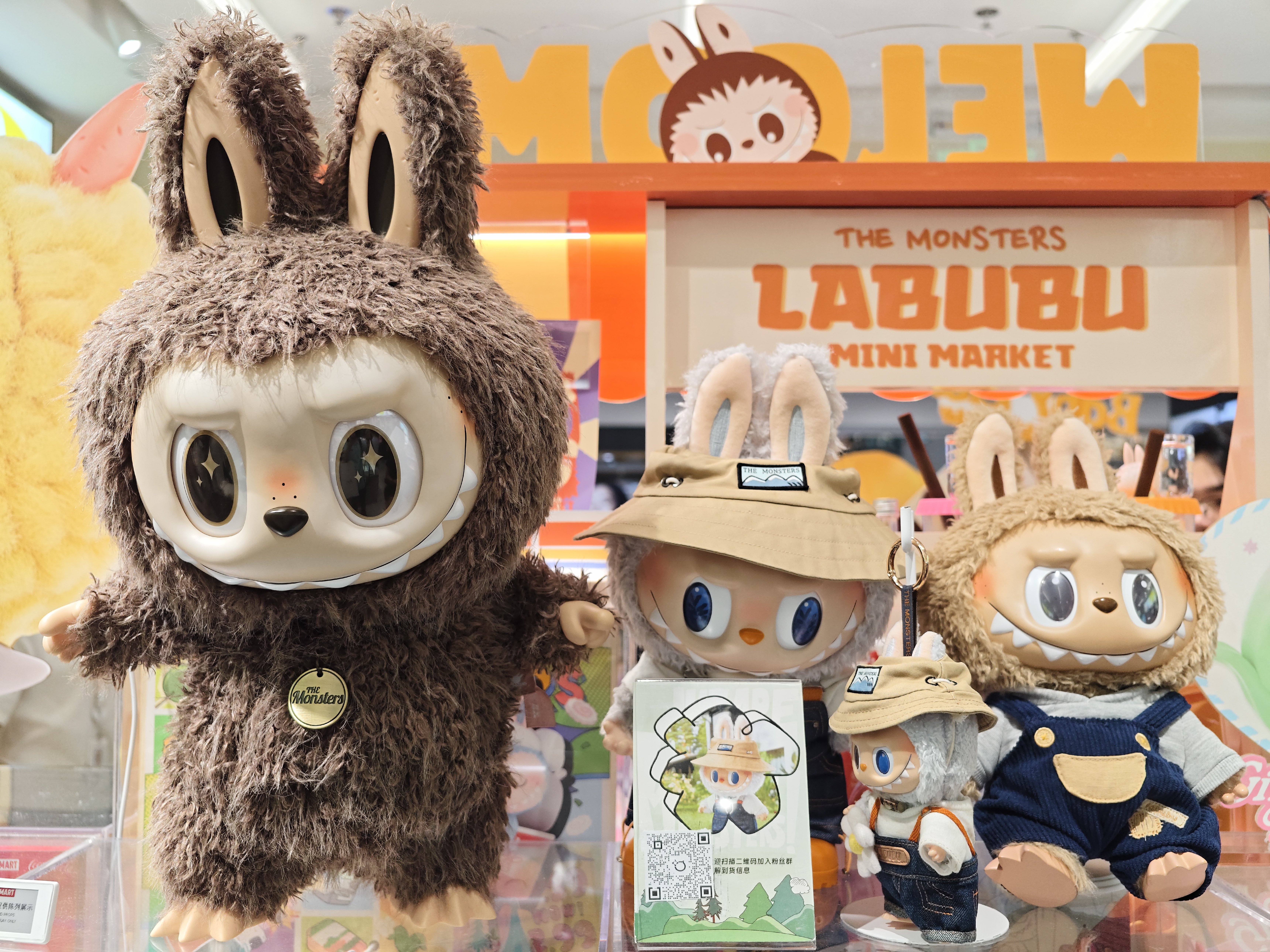
Diagnosing the craze is simple. The devilishly cute Labubu dolls are popping up attached to the totes of tastemakers like Rihanna, Dua Lipa, Kim Kardashian and even David Beckham.
Toy Story
Lisa and Rosé from the K-pop band Blackpink are credited with popularizing the toys as a viral accessory.
Hong Kong illustrator turned toy designer Lung Ka-sing (now styled as Kasing Lung on his Instagram page) created the Labubu characters in 2015 as part of his series The Monsters, at first in three children’s books. He says he was inspired by Norse mythology.
Beijing-based Pop Mart International Group, to use the company’s full name, then linked up with Lung in 2019 to mass produce Labubu dolls. At first, they were typically sold in China inside “blind boxes” offering a mystery prize. Buyers don’t know exactly which doll they’ll get.
Pop Mart shares are up 208.1% year to date, and by an absolutely astounding 1,382.6% since the start of last year. In other words, they’re now almost 15 times their trading price entering 2024.
Stock Lost 90% of Its Value
But Pop Mart had been a serious disappointment since the initial runup in its shares on debut day back in December 2020. The shares doubled out of the gate from their initial public offering price of HK$38.50, and closed up 79.2% on the first day of trade, on the back of an earlier Molly doll that set investor pulses racing. (At the current exchange rate, HK$38.50 is just under $5 in U.S. dollars.)
After testing HK$100 in February 2021, the shares came crashing down. By October 2022, they had pulled a painfully inverse ten-bagger, down to just above HK$10. You could still buy the shares below HK$20 coming into 2024.
Then … Labubu!
Lisa was first spotted with a Labubu keychain attached to her bag back in April 2024. Even viral trends take a while to catch on, so it wasn’t until the fall that investors began to notice the spike in sales. The shares really started to skyrocket last September, and haven’t looked back.
Pop Mart has just reported a 204.4% jump in sales for the first half of 2025, and a 396.5% leap in net profit. That’s in line with the forecast it made last month, when it estimated that it would notch at least a 350% increase in profit and 200% jump in sales for the first six months of the year.
The Chinese retailer has found equally rich pickings selling its wares overseas, where it can benefit from thicker margins.
Sales Rising Faster Overseas
Year on year, sales for the first half more than doubled in China but rose five-fold overseas. For now, China accounts for 59.6% of sales, but international sales may soon eclipse mainland revenue. Online sales match sales in physical stores internationally, whereas store purchases and mystery boxes are still the most popular way to buy in China.
Those stellar earnings have lifted the fortunes of Pop Mart founder Wang Ning. He and his family, including wife Yang Tao, have a war chest of $23.3 billion (in U.S. dollars), according to Forbes. That would catapult Wang from No. 68 on the China “rich list” last year into the top 10.
I’m flying tomorrow, and there’s a Pop Mart store at the Hong Kong International Airport, primed for those impulse purchases to give to your young, or young at heart, loved ones back home. The company now has 571 stores across 18 countries, plus 2,597 “roboshops.” It is focusing its new-store efforts on tourist destinations and airports.
Rally Have Further to Go?
Friends of mine are certain the shares have farther to go. But their sudden rise worries me. With a market capitalization of HK$377.1 billion (U.S.$48.3 billion) as of today’s close, Pop Mart now far outstrips the likes of Mattel MAT, with a market cap that’s a fraction of that size, at $5.8 billion. Pop Mart was worth $7 billion when it listed.
There was selling ahead of today’s earnings news, with the stock down 1.4% on Tuesday. But investors will no doubt turn to prospects for the rest of the year.
The company says it is “aspiring to become the world’s Pop Mart.” Sales in Southeast Asia and the Americas are fueling the company’s rapid rise. Its store expansion pattern seems sensible, with 12 stores added inside China in the first six months of the year, an increase of just 2.8%, giving it a total of 40 new stores around the world, an increase of 7.5%. That’s with 5 elsewhere in Asia, 19 in the Americas, and only 4 new stores in Europe, where the company says it is really laying the groundwork for expansion.
That pattern doesn’t concern me. It sounds like sensible expansion in the face of rapidly growing demand.
What worries me is when the Labubu fever wears off. Pop Mart does have other intellectual property, with Skullpanda dolls alongside a newly emotive Angry Molly. But fevers do break, and there will come a time when Labubu aren’t attention-grabbing enough to demand social media saturation.
What I can’t tell you is when that time will come. Until then, Pop Mart shares will continue to skyrocket.
At the time of publication, Alex Frew McMillan had no position in any security mentioned.