Now Is a Low-Risk, High-Reward Time to Buy Palantir, SoundHound AI
These stocks have seen recent pullbacks that give investors who missed the boat a chance to dive in.
You've reached your free article limit
You've read 0 of 1 free Pro articles.
It’s easy to justify a long position when stocks are strong and bulls are being rewarded. You’re part of a big team, and everyone is pushing in the same direction.
It’s tougher to justify buying on a pullback. Are we buying at the point where the move will reverse, or will the stock continue to slide? It’s human nature to lose confidence in a stock that’s on the decline.
The advantage of entering on a pullback is that we’re buying off the highs. We don’t have to exceed the prior high point to yield a profit.
There are many techniques that can be used to buy a pullback. A retracement to a key Fibonacci level, or a decline to a closely-watched moving average are just two examples.
Generally, I’ll use Fibonacci techniques when I’m trading something other than stocks. Fibonacci is used on currency trading desks, and seems more appropriate when used in that context.
When trading stocks, I’ll buy a pullback to the 50-day moving average under certain conditions. For example, a stock that recently hit at a 52-week high, and that hasn’t traded below its 50-day moving average for a significant period of time, might make a good candidate.
If a stock is pulling back due to a company-specific issue, I’ll leave it untouched. But if there is nothing apparently "wrong" with the stock, and it is pulling back with the market, then it’s worth consideration.
Right now, the S&P 500 is testing its 50-day moving average (blue), so I shouldn’t be surprised if a stock is making a similar move. The large cap index has spent a significant amount of time below that moving average in recent weeks.
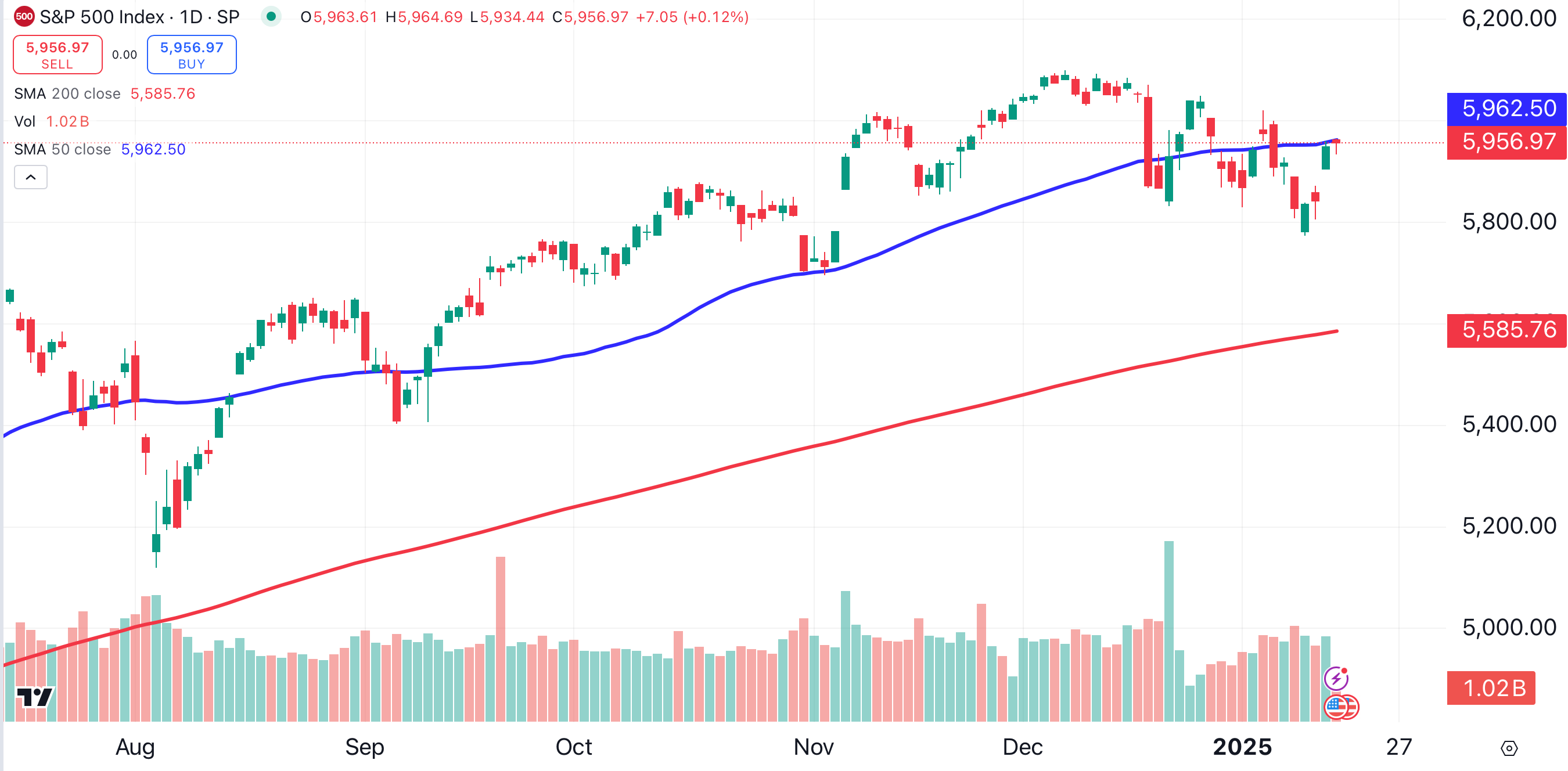
There are two stocks that I already own that are currently pulling back to their 50-day moving averages. If you missed a chance to buy these names earlier, now could be a good time to consider a position.
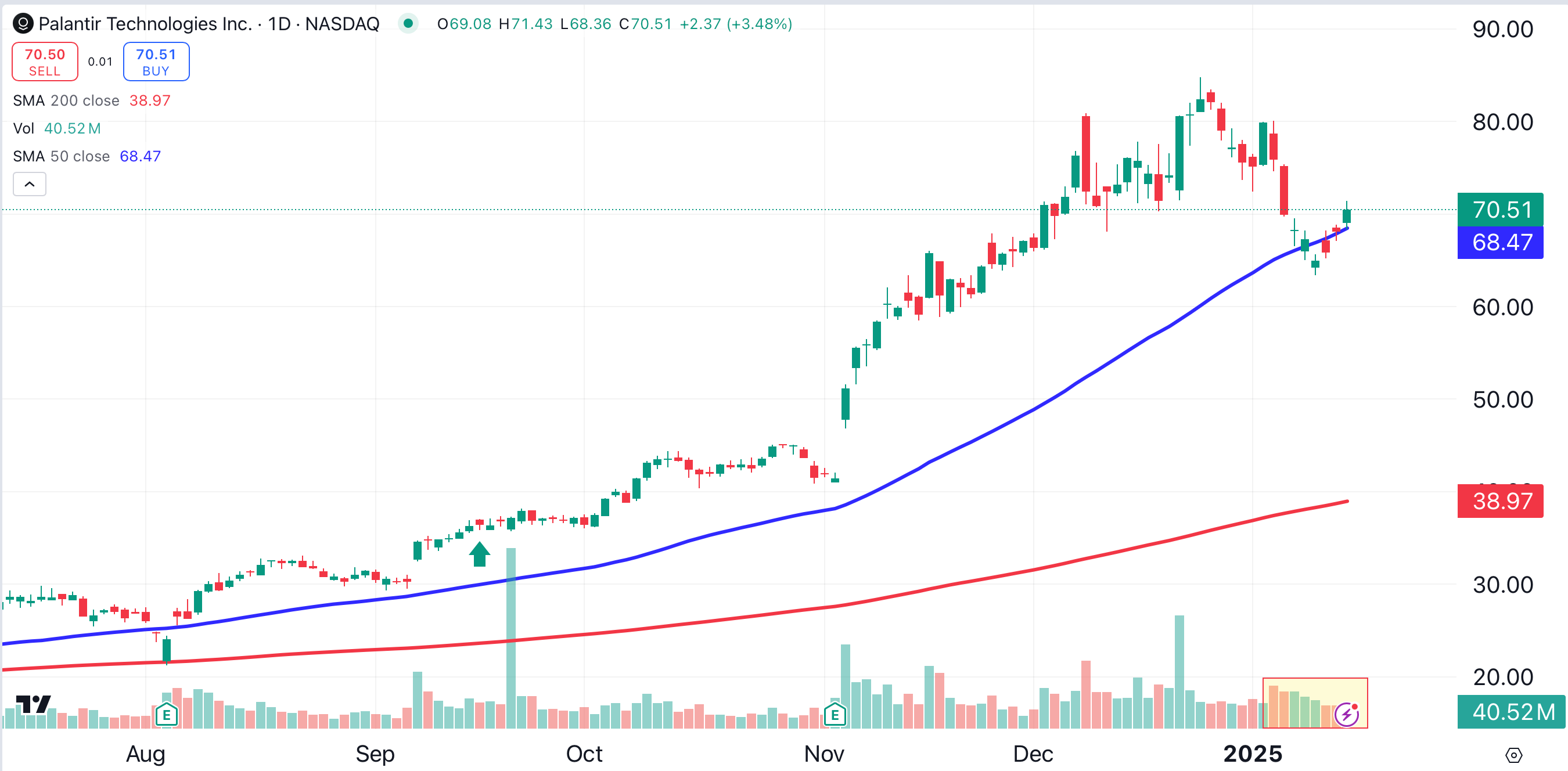
First up is Palantir PLTR. Until last week, this stock hadn’t dipped beneath its 50-day moving average (blue) since August. Notice how Palantir’s volume has declined along with the stock, a positive sign (shaded yellow).
Another stock that is pulling back to its 50-day moving average is SoundHound AI SOUN. This stock is down about 40% from its all-time high of $24.23, set in late December.
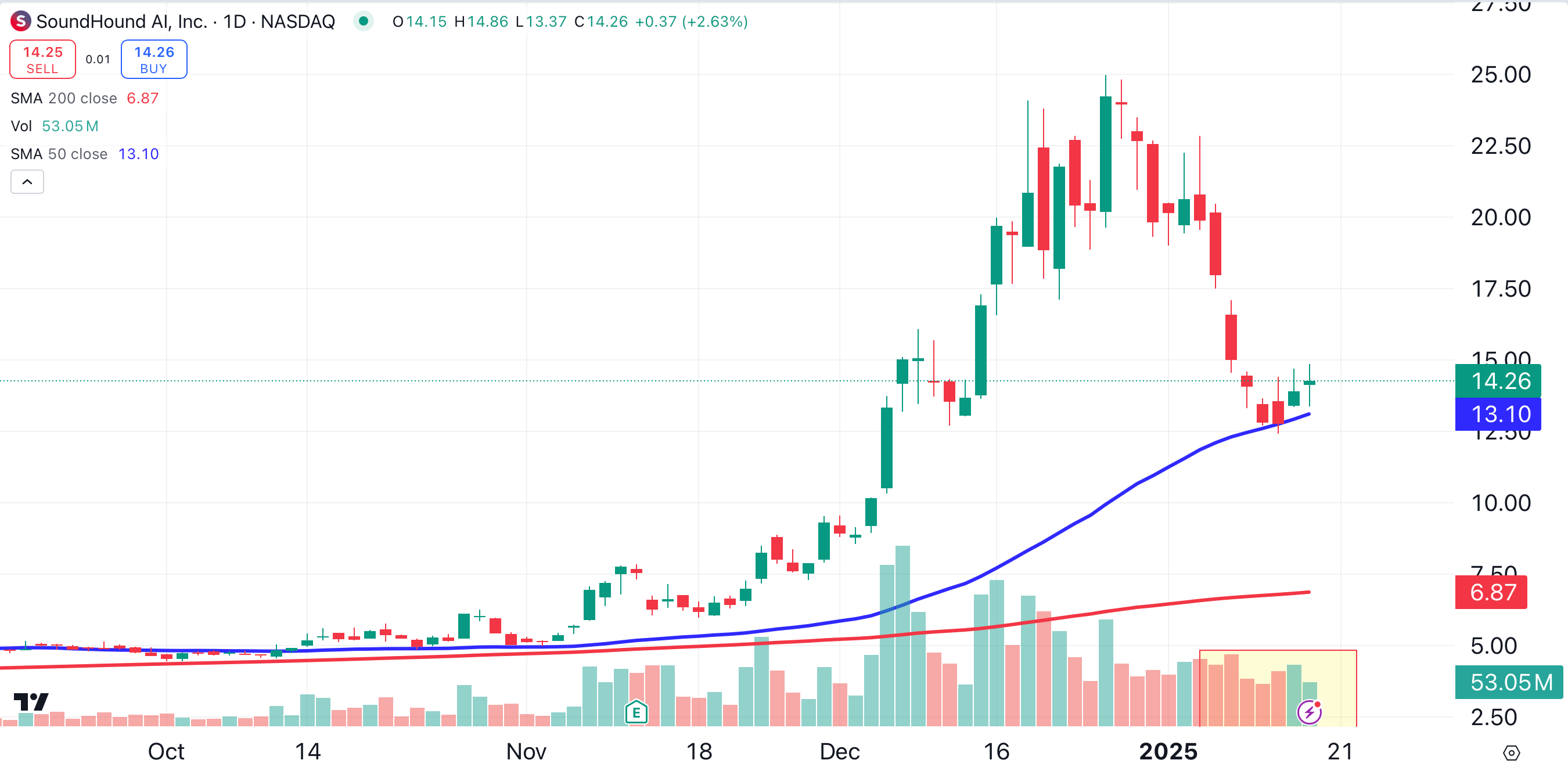
Like Palantir, SoundHound AI’s volume has recently declined (shaded yellow). SoundHound’s 50-day moving average has provided support for the past four sessions.
Palantir has a market cap of $160 billion. SoundHound is the more volatile stock, with a market cap of just $5.2 billion. Palantir is scheduled to report earnings on February 3, while SoundHound is expected to report on March 11.
For either stock, traders can place a low-risk trade by simply using the 50-day moving average as their guide. Right now, we have the opportunity to buy close to that moving average. If the stock drops below the 50-day MA, we can use that as our signal to cut our losses. This form of risk management creates a low-risk, high-reward setup for both stocks.
At the time of publication, Ponsi was long PLTR and SOUN.