Is Verizon Calling Dividend Investors as Yield Nears 7%?
Despite VZ's recent woes, I see two reasons to dial up on the telecommunications giant.
You've reached your free article limit
You've read 0 of 1 free Pro articles.
Verizon VZ hasn’t been a great stock to own. If you’d held shares of the telecommunications giant for the past five years, you’d have lost 34% of your investment.
The stock is down by 8% over the past month. Verizon has lost ground in a bull market, and apparently, there is no compelling growth story that might break this stock out of its doldrums.
But I see two good reasons to look at Verizon stock right now.
The first reason is technical.
At first glance, there isn’t much to like about Verizon’s chart. The stock is trading below its 50-day (blue) and 200-day (red) moving averages, which appear ready to cross (red arrow) - an indicator of bearish momentum.
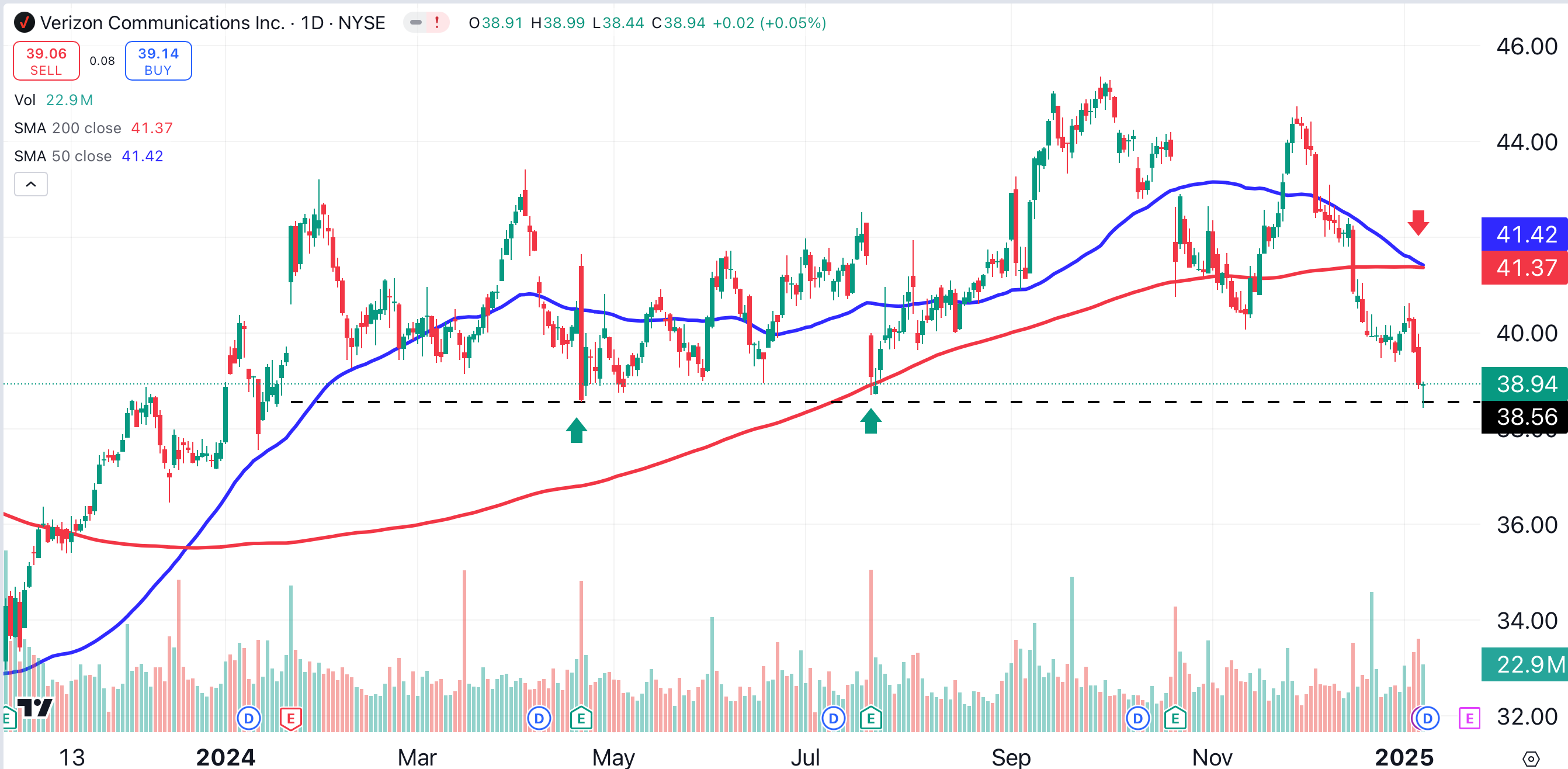
The stock, however, has declined to a strong support level (black dotted line) near $38.50. Verizon tested this level on several occasions last year (green arrows). The first bounce, in April, led to a rally of about 10%. A subsequent bounce in July led to a 17% rally.
The second reason to look at Verizon is its dividend.
As the stock’s price has declined, its dividend yield expanded. As of Wednesday’s close, Verizon shares boast a yield of 6.96%.
Why are shares of Verizon falling? The most likely culprit is the recent relentless rise in bond yields. The yield on the 30-year U.S. Treasury bond is currently just below 5%, a rise of over 100-basis points since September. The 30-year T-bond now boasts its highest yield in over a year.
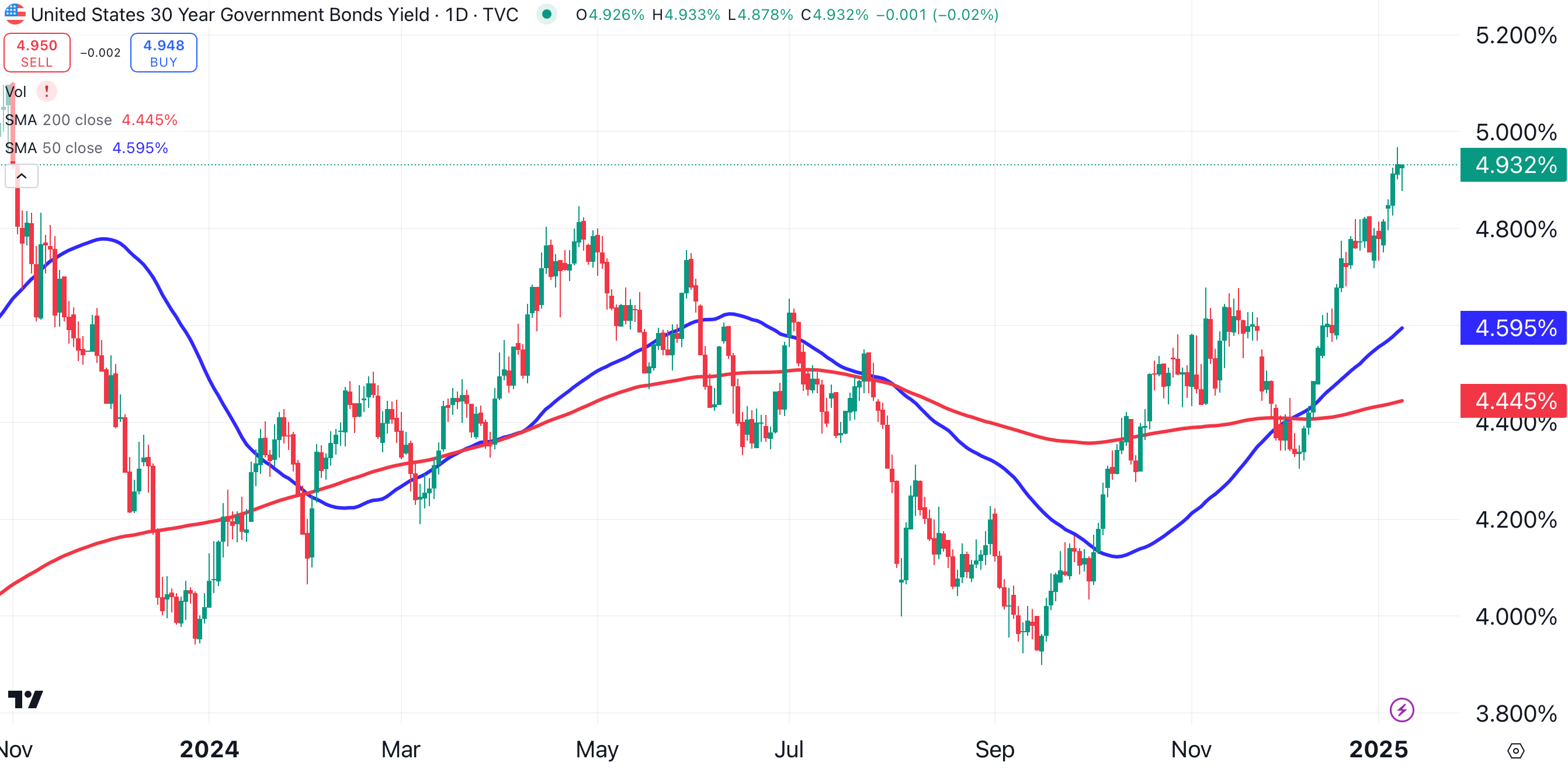
Investors are demanding a higher yield, and therefore a lower price, for Verizon common stock, since it is riskier than owning Treasury bonds. Verizon isn’t the only name impacted by the rise in bond yields.
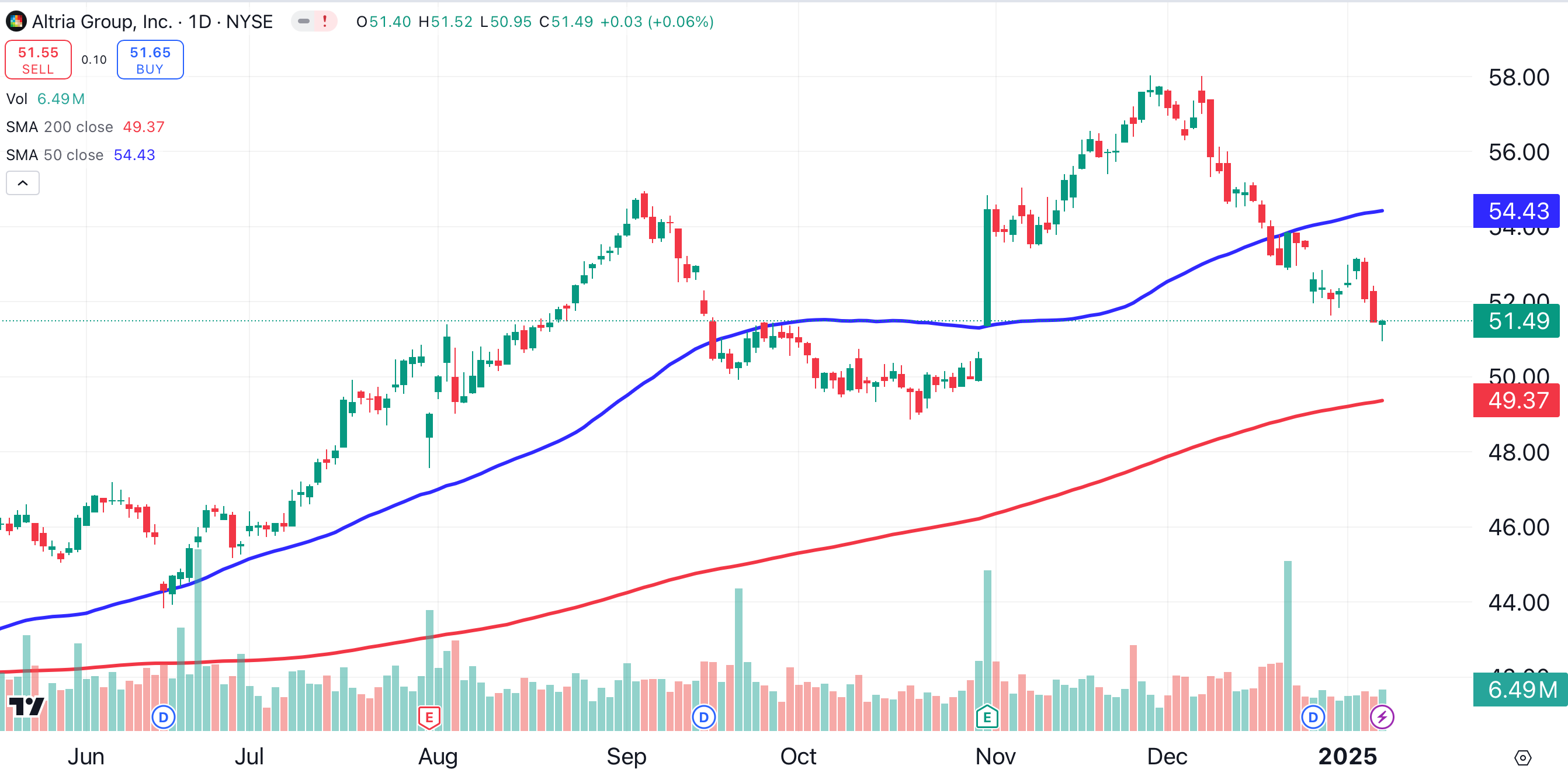
Shares of tobacco giant Altria MO, for example, have lost 12% since peaking in early December. This drop has boosted the stock’s dividend yield to 7.92%.
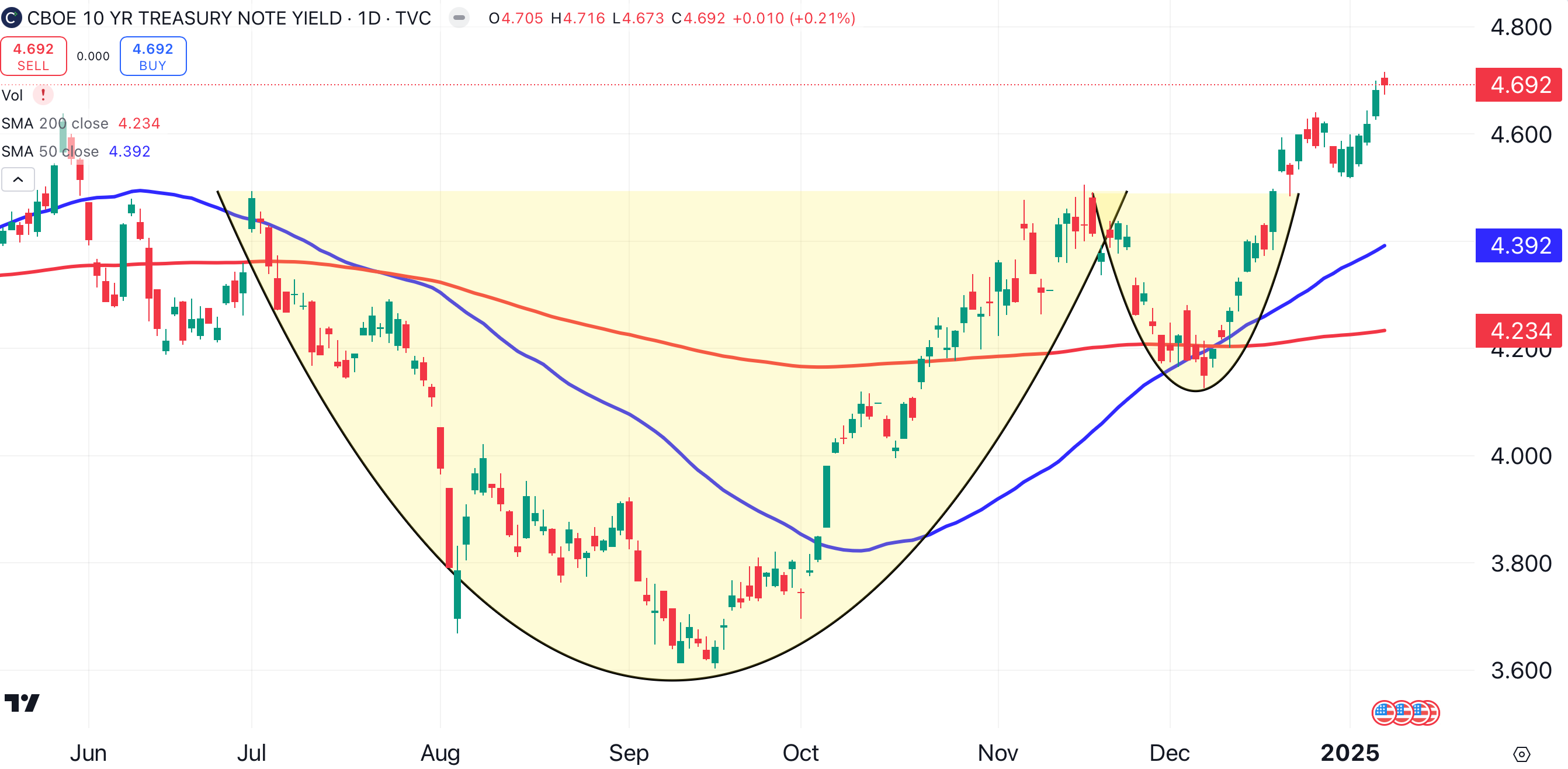
The risk of buying Verizon is that Treasury yields might continue to rise. If the yield on the 10-year U.S. Treasury note keeps climbing from its current 4.7%, investors will need higher yields on stocks like Verizon to justify their inherent risk. The 10-year T-note’s yield recently broke out of a bullish cup and handle pattern (shaded yellow), a sign that it could be headed higher.
If you’re considering buying shares of Verizon, be aware that the company is scheduled to report earnings in just two weeks, on Jan. 24. Investors might consider a smaller initial position if entering prior to that date, to reduce any potential risk due to that event.