How to Trade This Emerging GARP Healthcare Name
The markets seem to be getting spooked but I recently added to this name.
You've reached your free article limit
You've read 0 of 1 free Pro articles.

A whiff of fear seeped into the markets this week.
Better-than-expected Q3 results from Meta Platforms (META) and Space Exploration Technologies Corp. (SPCX) failed to boost the stocks as concerns grew around negative free cash flows. Thursday saw the worst daily decline for the NASDAQ since June. The yield on the 10-year treasury also plunged this week despite rising oil prices, on a notable flight to safety. The divergence between German and French sovereign debt continued to blow out this week, it should be noted.
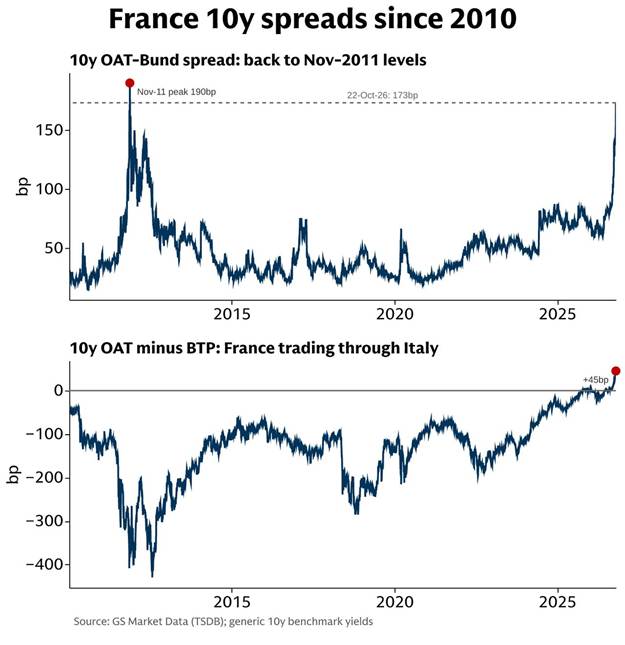
My trading activity is quite subdued right now. There are two reasons for this. First, I am not finding much value in the current market. Second, equities feel like they might be at an inflection point. More questions are starting to finally being asked about the sustainability of AI infrastructure spending growth.
One of the few new additions to my portfolio is the topic of this column. It is an emerging GARP trade in the healthcare space around a company called Astrana Health, Inc. (ASTH). Astrana is a technology powered healthcare management company that is headquartered in California where it has a core market. The company is focused on coordinated outcome-based healthcare for both the private and public insurance markets.
Astrana acts as a single payer across its network which consists of roughly 20,000 contracted physicians and coordinates care for roughly 1.6 million patients on an annual basis. The stock currently trades just under $38.00 a share and sports an approximate market capitalization of $1.9 billion. Astrana should do nearly $4 billion in revenues this year.
The company is expanding to new markets in places like Texas and Hawaii and still integrating a just over $700 million acquisition of Prospect Health that was announced in July 2025. It is also focused on utilizing AI to reduce operating costs. Notably, G&A costs dropped to 5.57% of overall revenues in its most recently reported quarter from 7.75% in the same quarter a year ago. Analyst firms were positive around the company’s prospects following Q2 numbers in early August.
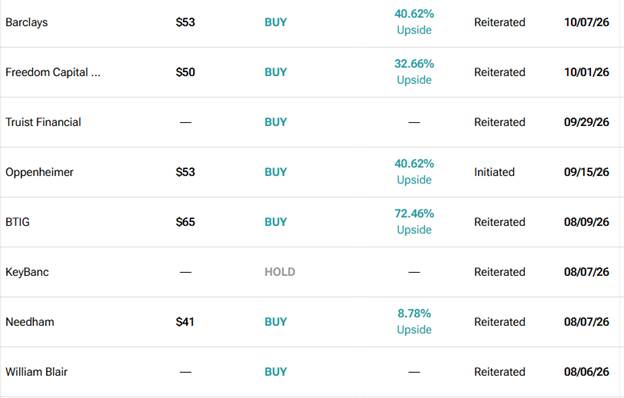
Benefiting from its acquisition, revenues were up 49% on a year-over-year basis in Q2 and should rise 25% overall in FY2026. The company did take on a significant amount of debt for its purchase last year. In its last reported quarter, it had cash/marketable securities of just over $400 million against long-term debt just north of $930 million for a leverage ratio of 2.26-times. Management’s goal is to reduce that to under two-times in the near future. The company produced roughly $93 million of free cash flow in the first half of 2026, so is in good shape to do so.
Analyst firms project that profits will more than triple this year to around $1.40 a share followed by nearly $2 in EPS in FY2027 and just over $2.60 a share in FY2028. The stock does not pay a dividend but appears reasonably priced given growth projections. I can make the shares even more attractive via the following covered call trade.
Option Strategy
This is how one can initiate a holding in ASTH with a covered call trade. Using the May $35 call strikes, fashion a covered call order with a net debit in the $29.00 to $29.60 a share range (net stock price – option premium). At the midpoint of the range, this strategy provides downside protection of 22% with roughly 19% upside potential even if this equity trades down roughly six percent over the option duration.
At the time of publication, Jensen was long ASTH.