Here's Where I Will Short the Dow as Data Shows Fed Underestimates Inflation
Stocks jumped after the latest CPI data was released, but does that move have legs?
You've reached your free article limit
You've read 0 of 1 free Pro articles.
On Wednesday, markets celebrated as consumer prices rose more slowly than expected. The S&P 500 gained 1.83%, and the Nasdaq Composite jumped 2.2%.
Why the celebration? December’s consumer price index showed core inflation rising at a 3.2% annual rate. That statistic excludes volatile food and energy prices.
Now, 3.2% core inflation isn’t anything to celebrate. But when we look at the trend for core inflation (below), a brighter picture emerges:
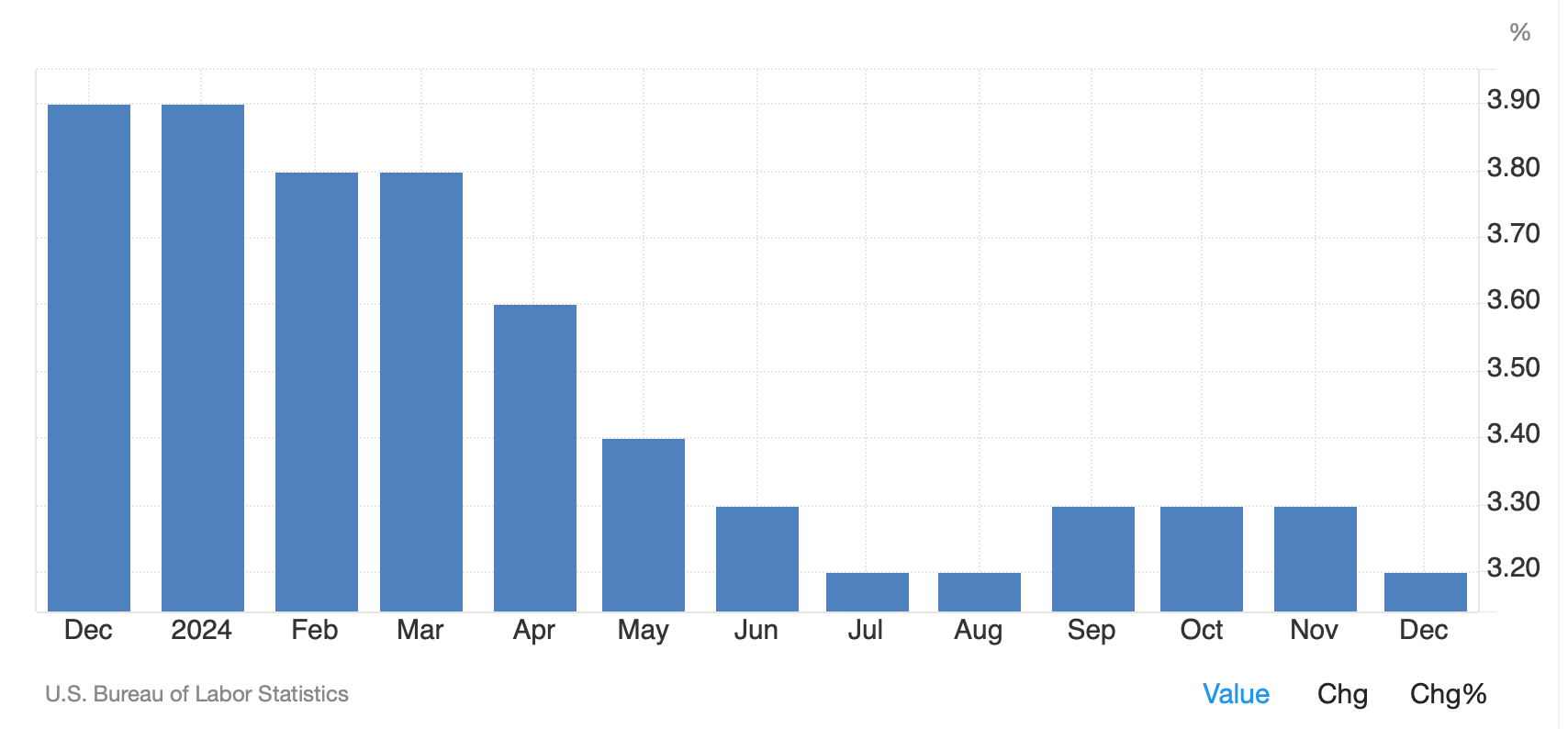
Under normal circumstances, 3.2% core inflation would be unacceptable. But when viewed against the backdrop of the worst bout of inflation in over 40 years, it becomes more palatable. The trend is favorable.
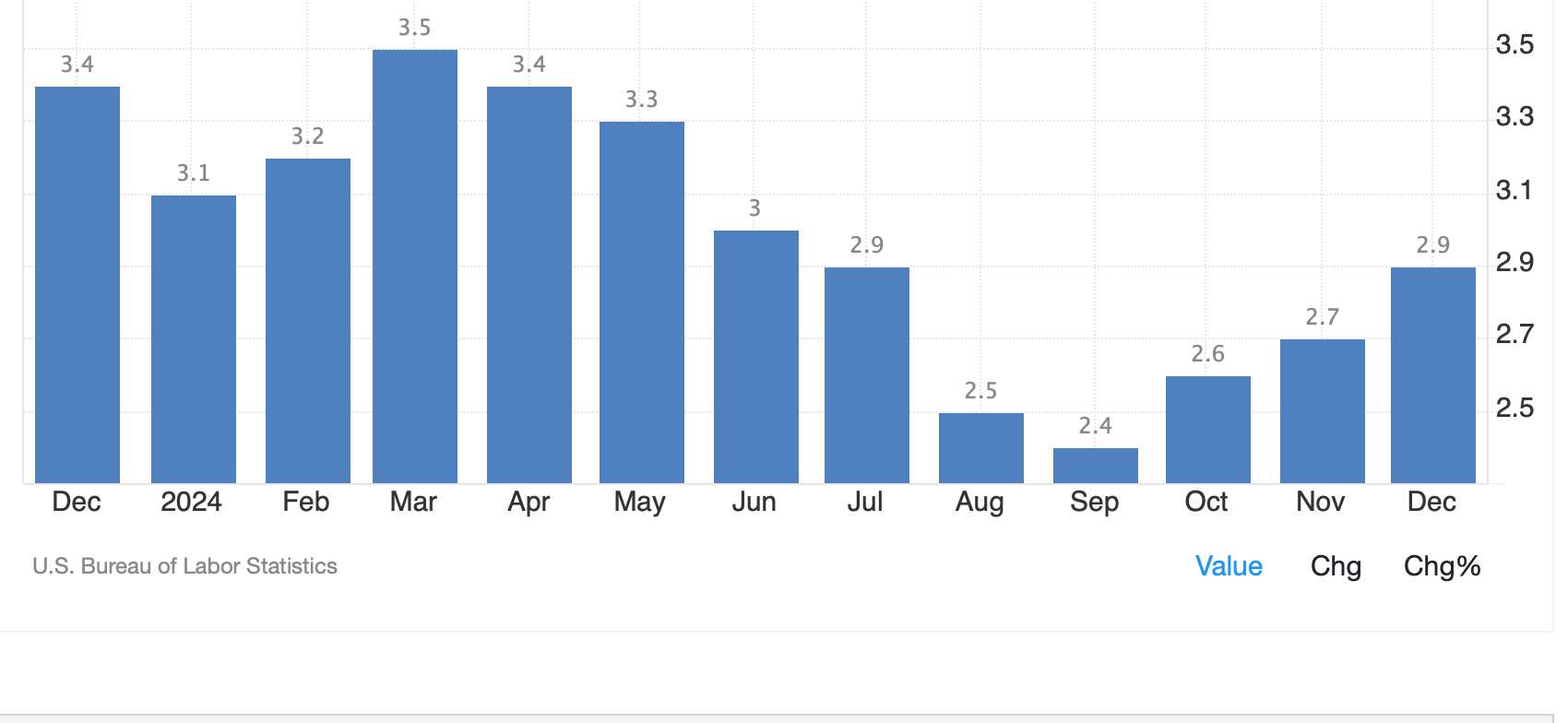
Now let’s add food and energy back into the equation, and view non-core CPI. The picture here is less comforting.
In December, consumer prices rose for the fourth-consecutive month. The trend isn't favorable. It’s not difficult to imagine that the Fed has once again underestimated inflation.
Next week, the second Trump Administration begins. President Elect Trump is promising lower taxes, less regulation and the institution of tariffs.
On the positive side, all three of these changes are designed to spur U.S. economic growth. The flip side of that equation is that stronger growth often results in higher inflation.
Despite Wednesday’s CPI stats, I’m not convinced that inflation is dead. In fact, I wouldn’t be surprised if inflation is very much alive.
If that’s the case, then traders who bought stocks in celebration of moderating inflation could soon be disappointed. While I’m still overall long, I’m also looking at ways to fade this rally.
I’m looking at the Dow Jones Industrial Average. This index shot higher on Wednesday, due to both the CPI data and strong earnings reports from two large financial institutions. Both Goldman Sachs GS and JP Morgan Chase JPM are components of the index.
The Dow appears to have formed a bearish head-and-shoulders formation (L-H-R), but the price is moving away from the neckline of the pattern (black dotted line). If Wednesday’s move proves to be an anomaly, we could see a reversal when the index reaches its 50-day moving average (blue line), currently near 43,500 (green).
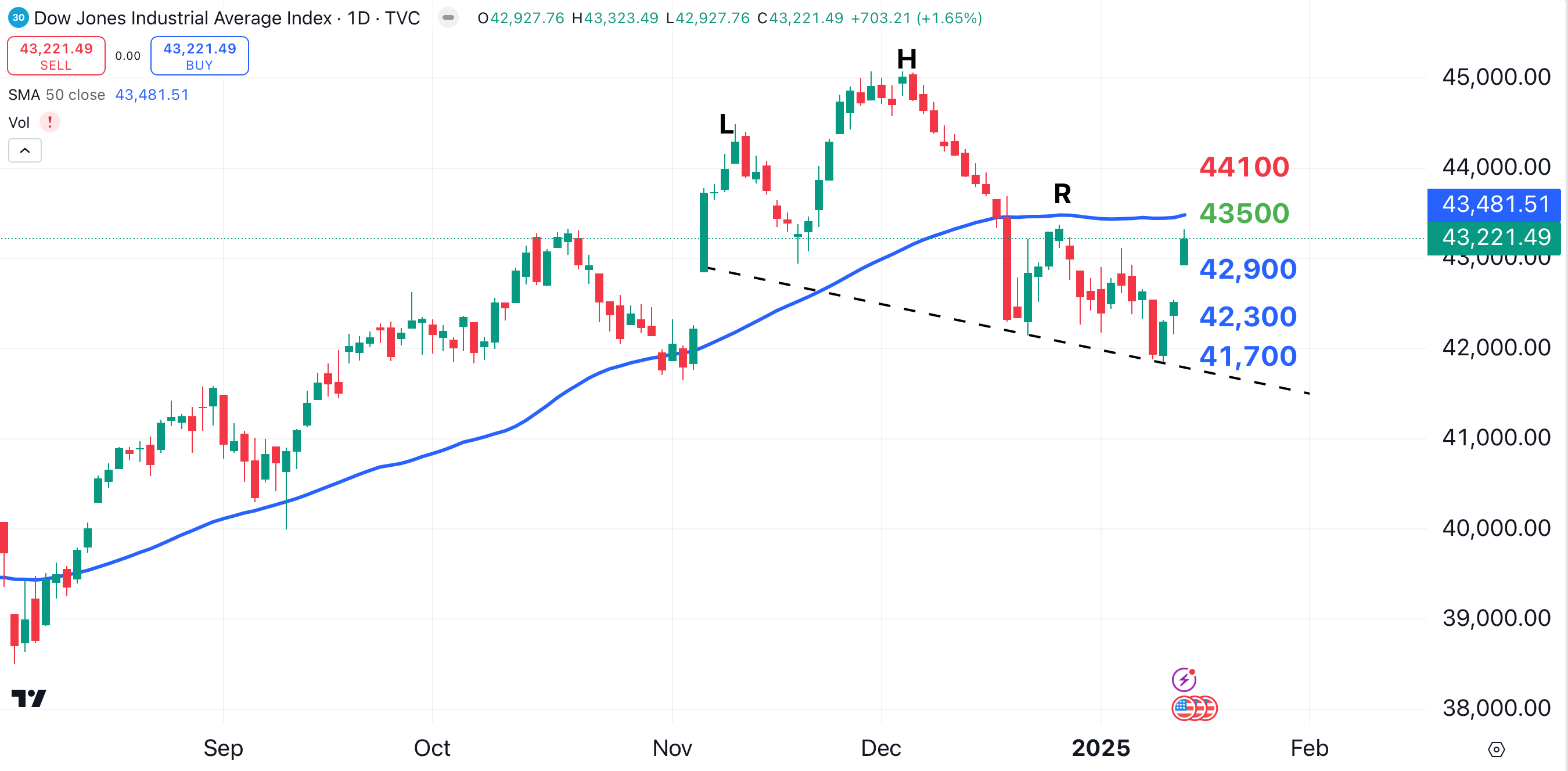
I plan to short the Dow at 43,500 and I’ll cover if the index climbs to 44,100 (red). At that point, the index will have formed a higher high, negating the bearish pattern.
I plan to close one-third of the trade at each of three targets (blue); 42,900, 42,300 and 41,700. In theory, the price could hit all three targets without breaking the neckline of the bearish pattern.
This is a short-term trade, based only on charts and price action. Regarding risk management, I’ll risk no more than 1% of the account's value on this trade, and I reserve the right to a discretionary exit at any time.
At the time of publication, Ponsi had no positions in any securities mentioned.