Grading Goldman’s Stock Picks as Earnings Season Approaches
Will these four top trades from the invesment bank beat earnings? Plus, four other names expected to dissapoint.
You've reached your free article limit
You've read 0 of 1 free Pro articles.
The days are getting shorter. Leaves are turning from green to red and brown. Every store you visit smells like pumpkin spice.
That’s right, it’s earnings season once again.
On Thursday, venerable investment bank Goldman Sachs (GS) released its top trades for the upcoming earnings season. Specifically, New York-based Goldman listed the four stocks it favors to beat Wall Street consensus estimates by the widest margin.
How does Goldman Sachs choose these names? Goldman Sachs screens for situations where its own analysts’ estimates are far above the Wall Street consensus. In effect, Goldman is betting that its own analysts are better at estimating a company’s earnings than Wall Street as a whole.
I thought it would be interesting to take Goldman’s picks and screen them by applying technical analysis. Then we can grade them from best to worst. Here’s how they rank:
Wynn Resorts
Wynn Resorts (WYNN) has been a solid performer in 2025, gaining 43% year-to-date. Interestingly, of the four Goldman picks, Wynn is the only one that is currently trading above its 50-day moving average (blue).
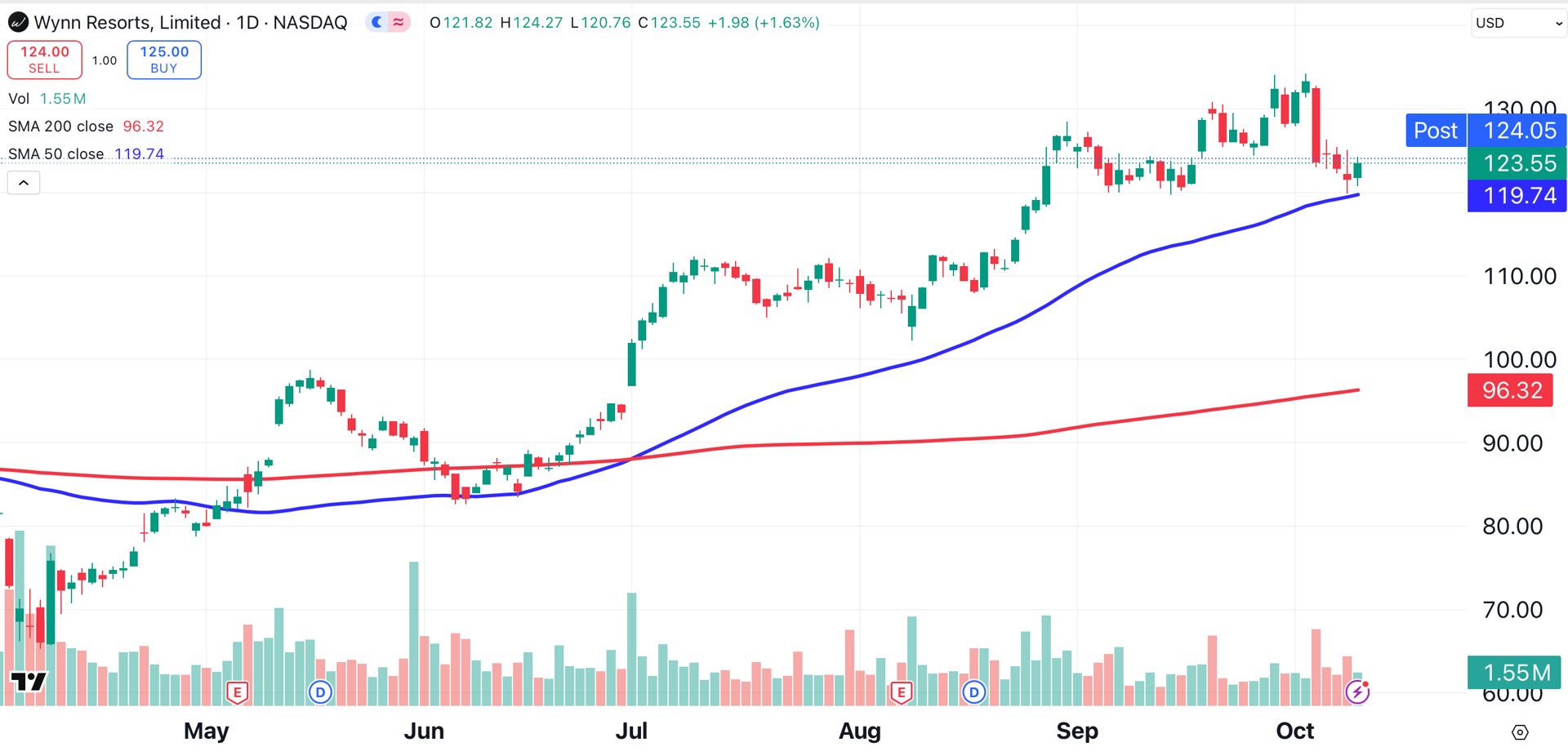
Wynn’s pullback to its 50-day moving average creates an interesting setup — traders can buy Wynn here, and sell it if the moving average fails to hold. Wynn Resorts is scheduled to report earnings on November 6.
GRADE: B+
Citigroup
On Thursday, Citigroup (C) closed below its 50-day moving average (blue) for the first time since May 1. This violation of a key indicator is notable because the bellwether Financial Select SPDR Fund (XLF) is still trading above its 50-day MA.
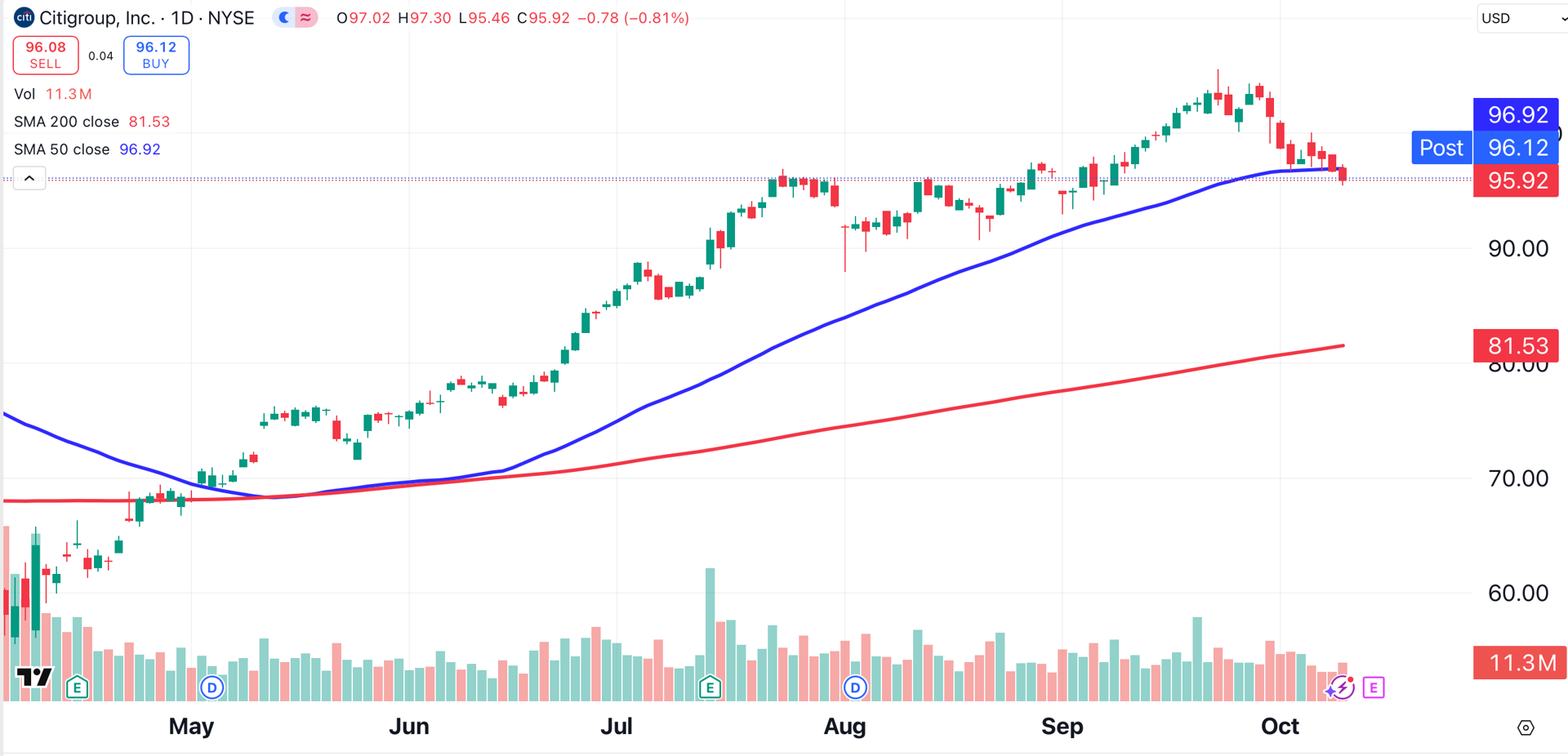
This means that Citi is weaker than the overall market, and weaker than its own sector. Still, the stock has been resilient, gaining 37% year-to-date. Citigroup is scheduled to report earnings next week, on October 14.
GRADE: B
Suncor Energy
Suncor Energy (SU) has slightly underperformed the market this year, gaining 12% vs. the S&P 500’s gain of approximately 14.5%. This stock also recently drifted below its 50-day moving average (blue).
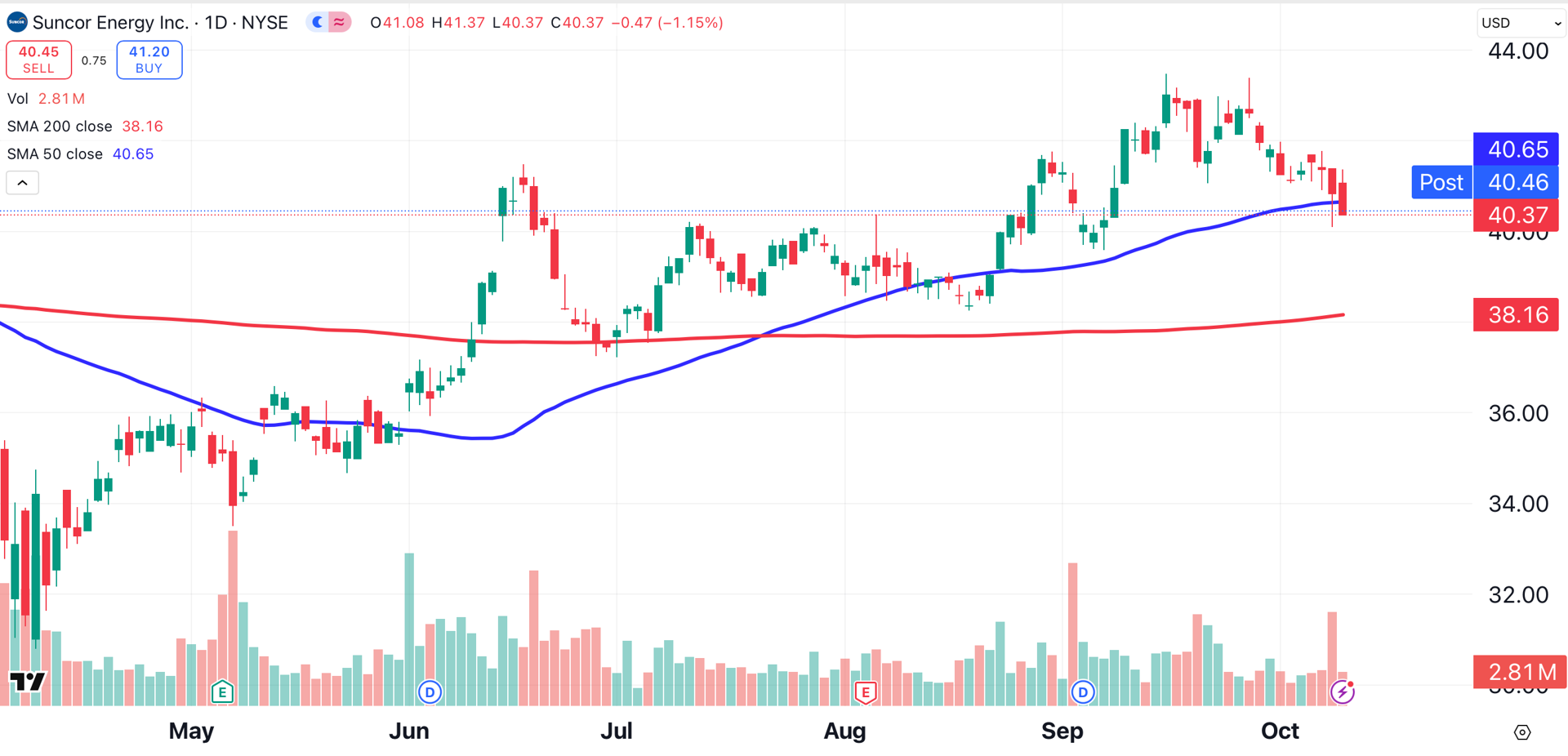
My issue isn’t with Calgary-based Suncor, which is one of the largest Canadian energy companies, but with the energy sector as a whole. With OPEC+ planning to raise production by 137,000 barrels per day in November, combined with the potential for softer demand due to a weakening U.S. economy, this is a counter-intuitive play.
GRADE: B-
eToro Group Ltd.
Speaking of counter-intuitive, Goldman analysts must feel confident about their choice of eToro Group (ETOR). I say this because the chart of this financial services company leaves much to be desired.
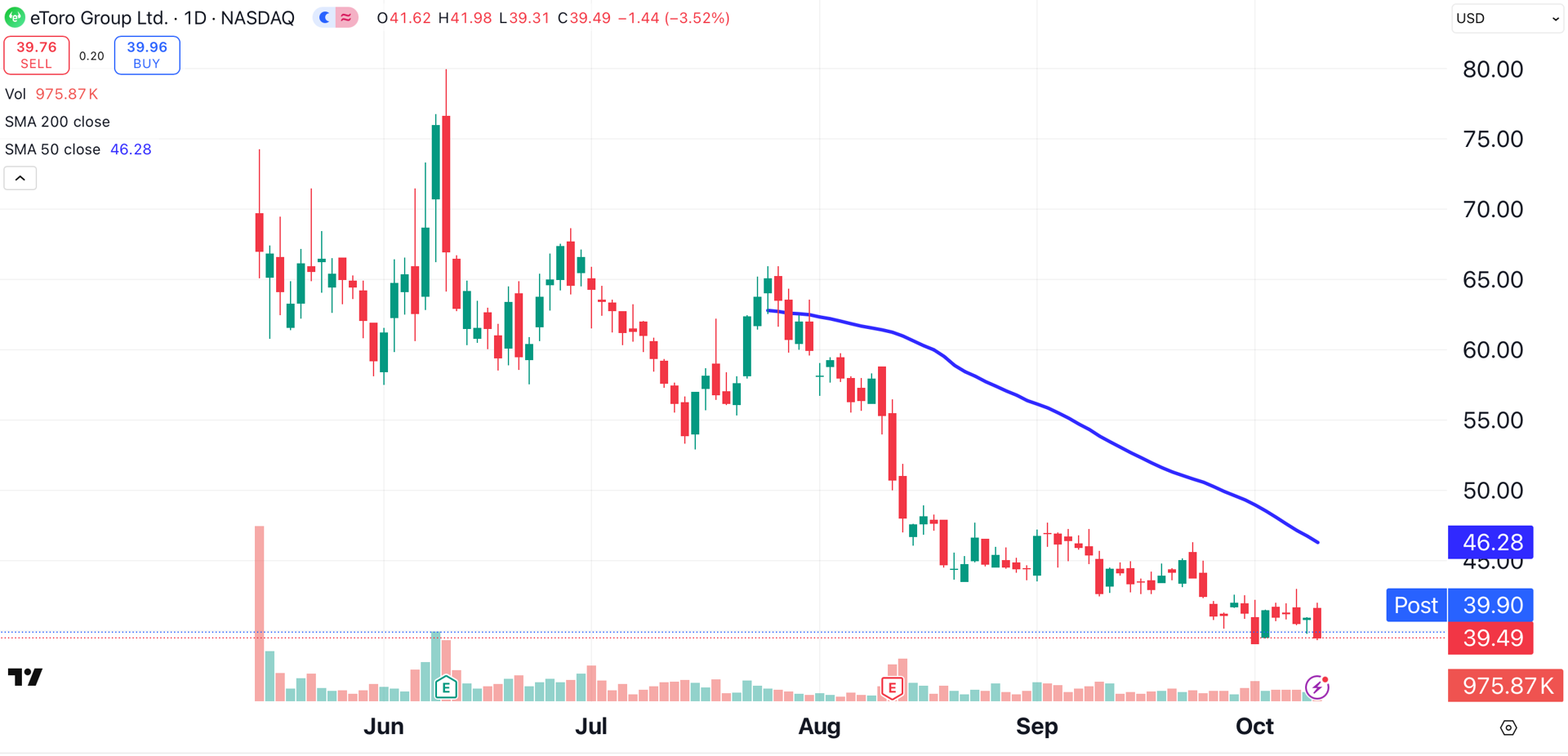
To be fair, eToro has little chart history, and has only been publicly traded since May 14 of this year. In that brief time, this stock has lost 41% of its value.
Does Goldman Sachs know something about eToro that I don’t know? Almost definitely, but I need to see some positive price action before I consider owning this stock.
GRADE: C-
Flipping the Script
In order to determine which companies are most likely to disappoint investors this earnings season, Goldman screens for situations where its own analysts’ estimates are far below consensus expectations.
The four names Goldman Sachs believes could encounter difficulty this earnings season are MGM Resorts International (MGM) , Enphase Energy (ENPH) , Super Micro Computer (SMCI) , and A.O. Smith Corp. (AOS) .
Even if Goldman Sachs is right about these picks, I’m not keen to make any bearish plays in a roaring bull market. As a wise trader once said, “Don’t fight the tape.”
At the time of publication, Ponsi had no positions in any securities mentioned.