As Regional Banks Plunge, Watch This Key Indicator for Warning Signs
After the plummet in Zions Bancorp, Western Alliance, and Jefferies Financial, traders will be keeping a close eye on this rate for at least the next few weeks.
You've reached your free article limit
You've read 0 of 1 free Pro articles.
For those who traded in 2008, you might recall banks began to distrust one other. As a result, banks would require a higher interest rate for overnight loans to other banks.
Why would banks lose each others' trust? In 2008, there was a persistent rumor that one or more of the banks was in trouble. Banks raised their short-term rates, demanding a higher reward for the increase in risk.
What does that have to do with 2025? Over the past week, the SOFR (Secured Overnight Financing Rate) has climbed sharply, from 4.12% to 4.29%.
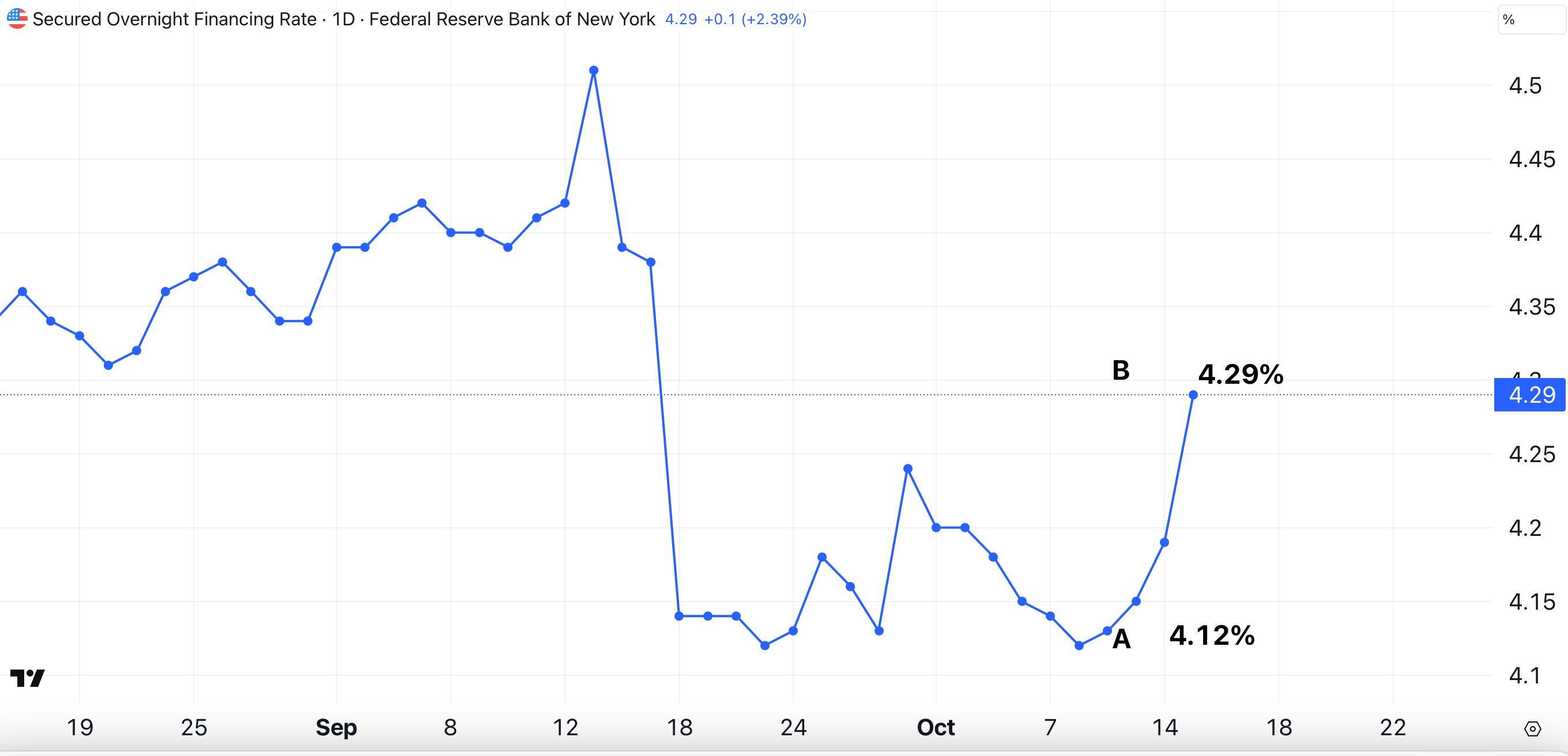
SOFR isn't flashing a sell signal — at least not yet. In 2008, the overnight LIBOR (London Interbank Offered Rate) climbed as high as 6.87%.
If trouble is brewing, SOFR could be an early warning sign. Traders will be keeping a close eye on SOFR for at least the next few weeks.
Big Banks Are Sliding
In the third quarter, major financial institutions held up well. Recently, Goldman Sachs (GS) , Citibank (C) , JPMorgan Chase (JPM) , Morgan Stanley (MS) and Wells Fargo (WFC) all exceeded earnings and revenue estimates.
Despite this, the SPDR Financial Select Sector ETF (XLF) , a good bellwether for large financial institutions, dropped by 2.8% on Thursday.
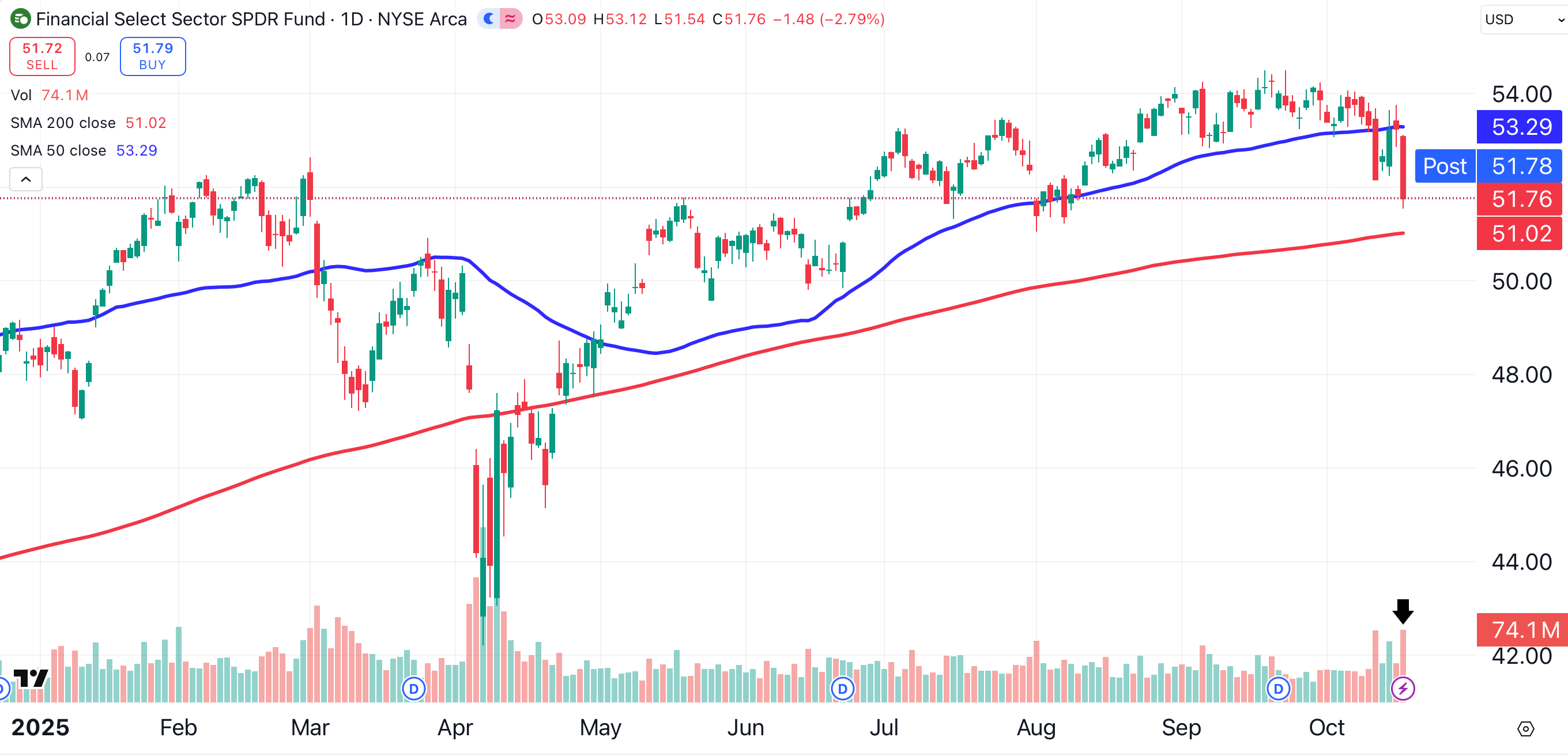
The ETF, which traded at an all-time high this past summer, is now well below its 50-day moving average (blue). Thursday’s turnover was above average (arrow), as XLF closed at a two-month low. .
Regional Banks Are Plunging
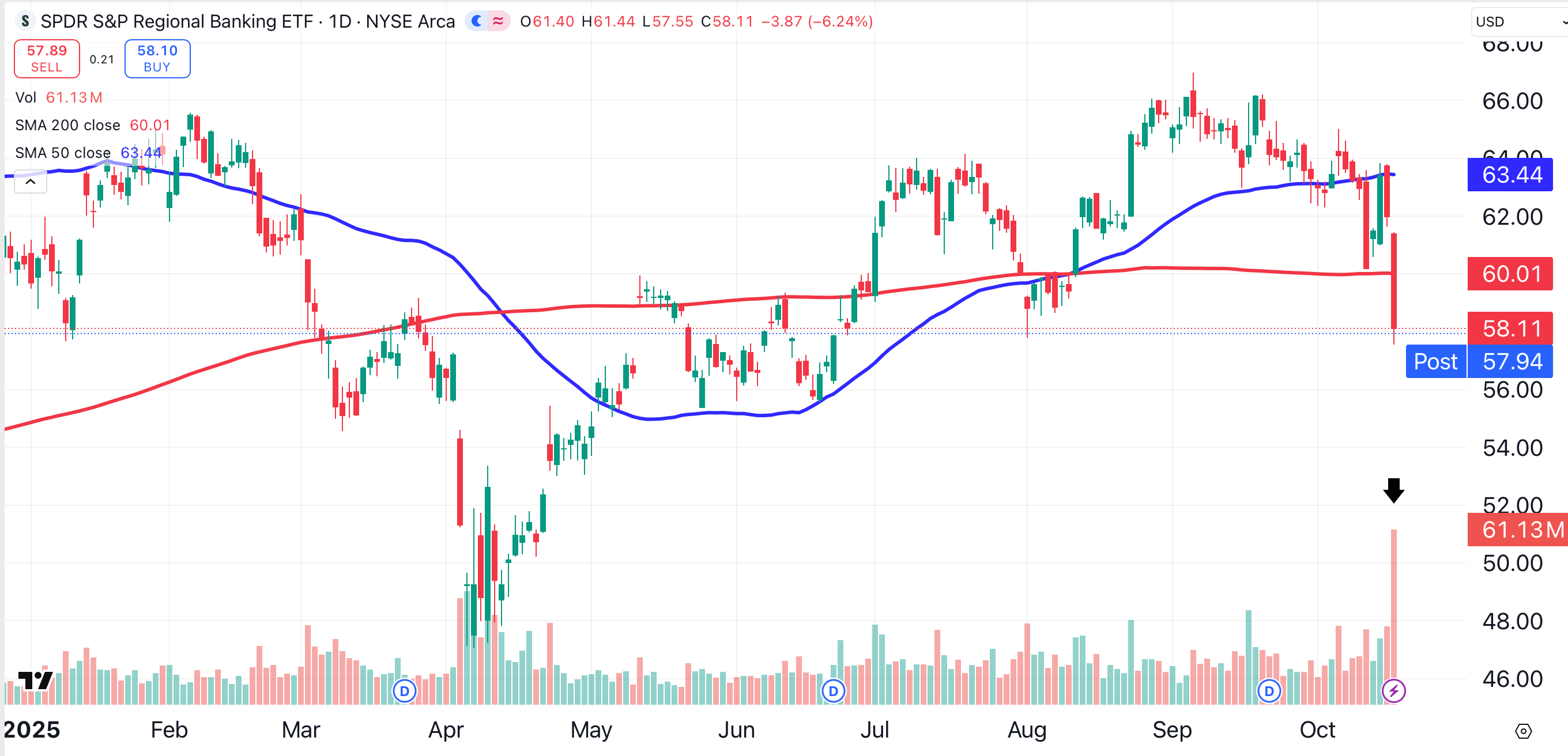
The S&P Regional Banking ETF (KRE) suffered a 6.2% loss for the day. KRE is now trading well below both its 50-day (blue) and 200-day (red) moving averages.
Thursday’s losses occurred on very heavy volume (arrow), as the regional bank ETF closed at its lowest level since June.
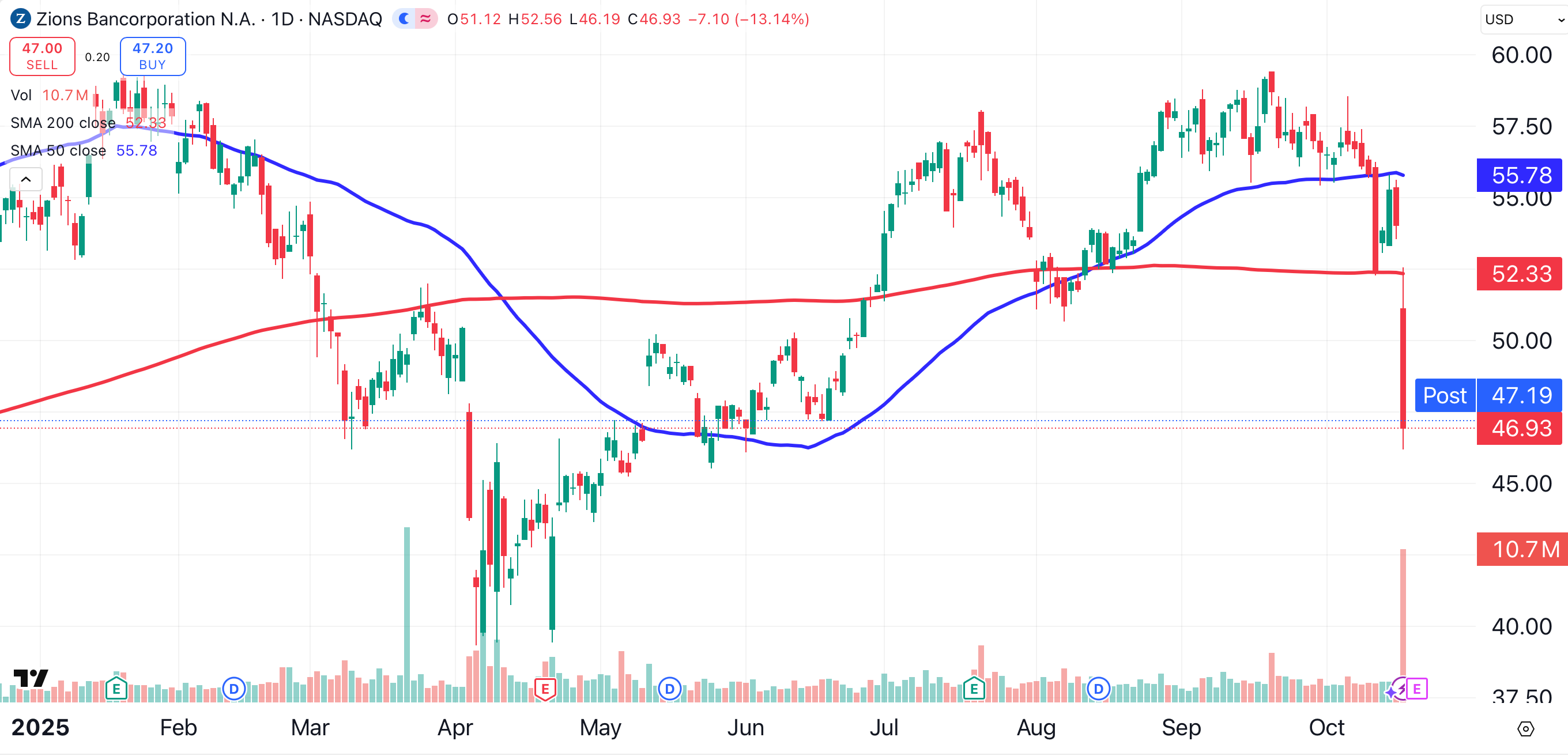
Heavy selling was seen in Zions Bancorp (ZION), due to two bad loans totaling about $50 million. Shares of ZION fell by 13.1% on Thursday.
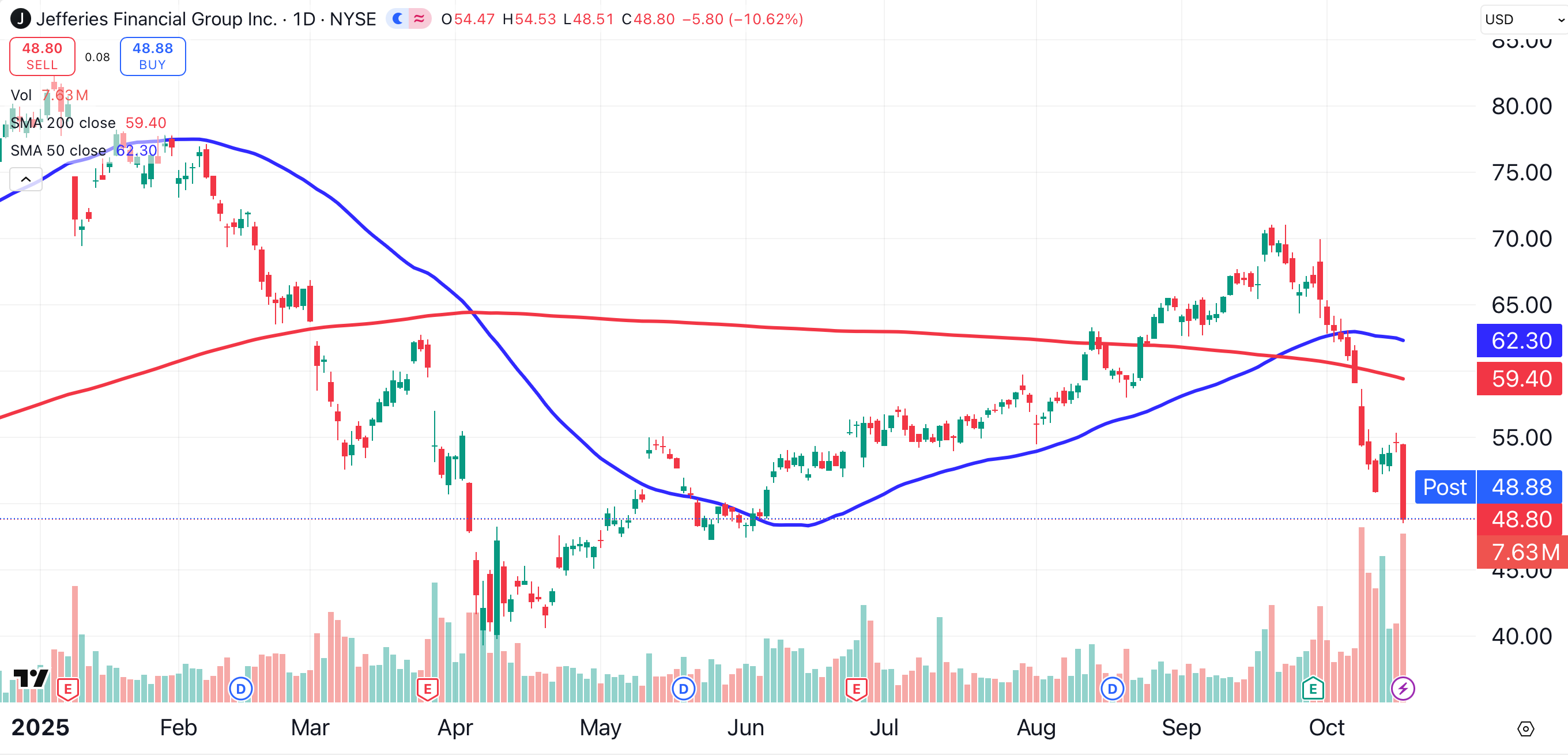
Meanwhile, shares of Jefferies Financial Group (JEF) lost 10.6% on the day. New York-based Jefferies is caught up in the First Brands Group debacle, losing $45 million on the collapse of the Cleveland-based auto parts giant.
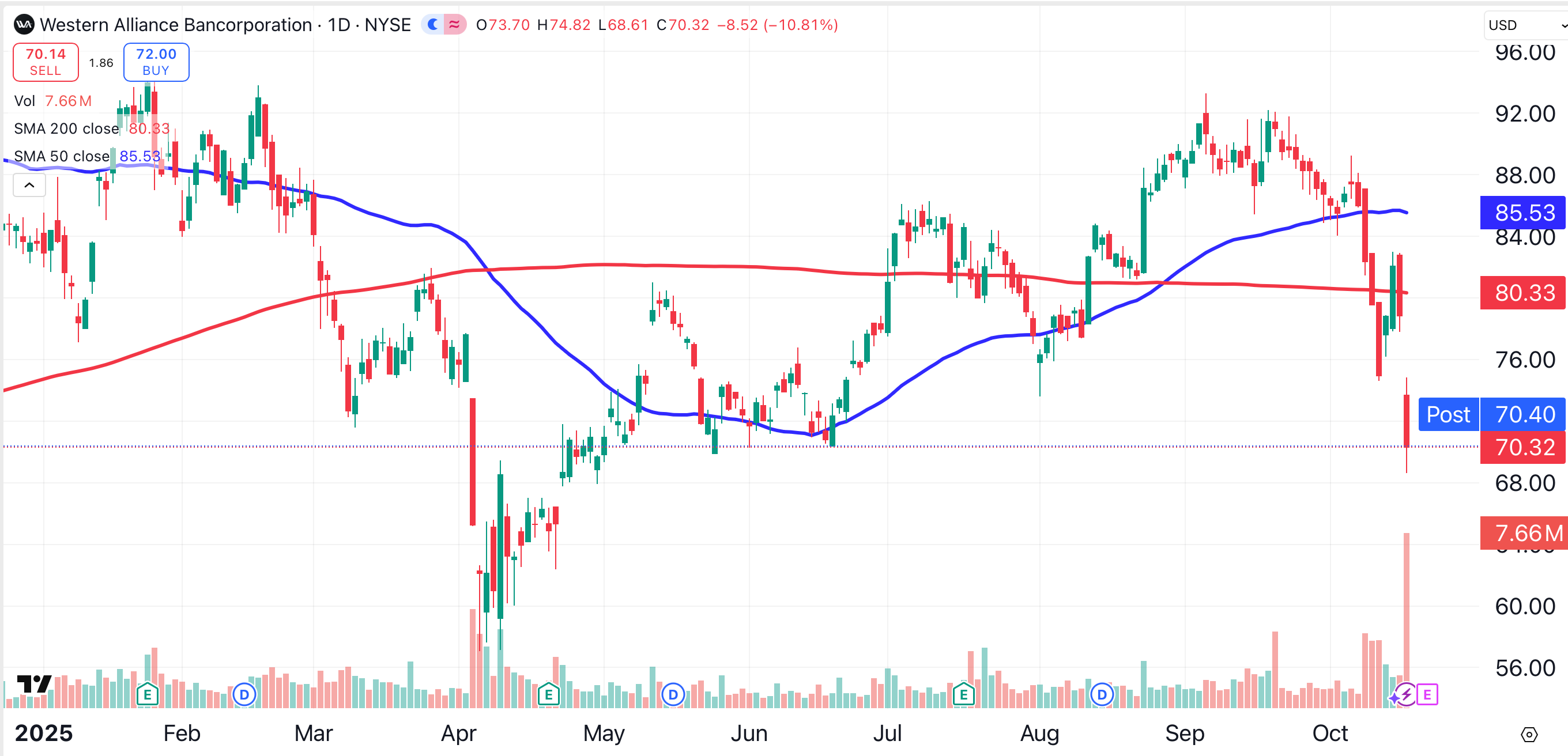
Shares of Western Alliance Bancorp (WAL) plunged by 10.8%. In August, Western Alliance brought legal action against Cantor Group, involving a revolving credit facility backed by commercial real estate loans.
2008? Not So Fast
There are those who say that recent price action in the regional banks is reminiscent of 2008.
That’s a stretch. Over the past few years, we’ve watched several small regional banks lose their value without contaminating the broader market.
In the spring of 2023, First Republic Bank, Silicon Valley Bank, and Signature Bank of New York all collapsed within the span of a few weeks. Despite this, a wider contagion never occurred.
However, it would be unwise to ignore current developments in the banking sector. The unpleasant stew of bank losses, bad loans, and rising short-term rates has an all-too-familiar taste.
At the time of publication, Ponsi had no positions in any securities mentioned.