5 Investment Themes That Still Have Room to Run — and My Picks for Each
Here’s what’s rising to the top of my list right now and how to play each category.
You've reached your free article limit
You've read 0 of 1 free Pro articles.
Some of the most useful insights I’ve gained recently didn’t come from headlines or research reports, they came from quiet, candid conversations with sharp people in the investment field. I then take these valuable ideas and cross reference their research with mine.
Here’s what’s rising to the top of my list right now and where I see potential opportunity.
The Stock Market Is Overvalued, but What Do I Do?
First, yes — the broad equity indexes are richly priced, largely due to a handful of dominant stocks screaming higher. These businesses have powerful models, strong growth potential, and unique competitive advantages that could sustain them for years.
I often get asked, “What do you think about the market?” I’ve realized I don’t love that question. It's almost irrelevant for an investor like me who doesn’t just back up the truck and buy index funds.
Active Management or Autopilot Investing in the Largest Companies?
Right or wrong, I’m more comfortable with active management — blending qualitative assessments with backtested quantitative data to guide decisions. I don't like to hold only indexes and blindly invest in the largest companies in the market.
Right now, I believe many investors are on autopilot, investing into index funds or large active funds that closely hug the benchmark. You see this especially among institutional investors who don't want to deviate too far from the S&P 500.
By default, investors are putting money in big-cap companies. I learned during the dot-com bubble that this strategy works well until it doesn’t and then it gets ugly. Many investors are in danger of being hurt by this.
Avoid When Active Management Really Isn’t Active
I recently spoke with a portfolio manager who’s overseen billions in active strategies. While his firm claims to use a differentiated process, it turns out their primary weighting was still market-cap weighted and sector-constrained to the Russell 1000 index. As someone who believes in “trust but verify,” I coded up the strategy myself.
The result? The factor models were solid — but once I layered on the sector constraints, market-cap tilt, position-size limits, and the high number of holdings, the strategy barely outperformed the benchmark. Add in fees, and the edge all but disappears. It left me asking, "Is the juice worth the squeeze?"
So, I turned to a more concentrated approach, allowing for more drift from the indexes from a sector and market cap perspective. The performance is improved significantly in back tests, which supports the strategy of blending more concentrated and unconstrainted strategies to indexes.
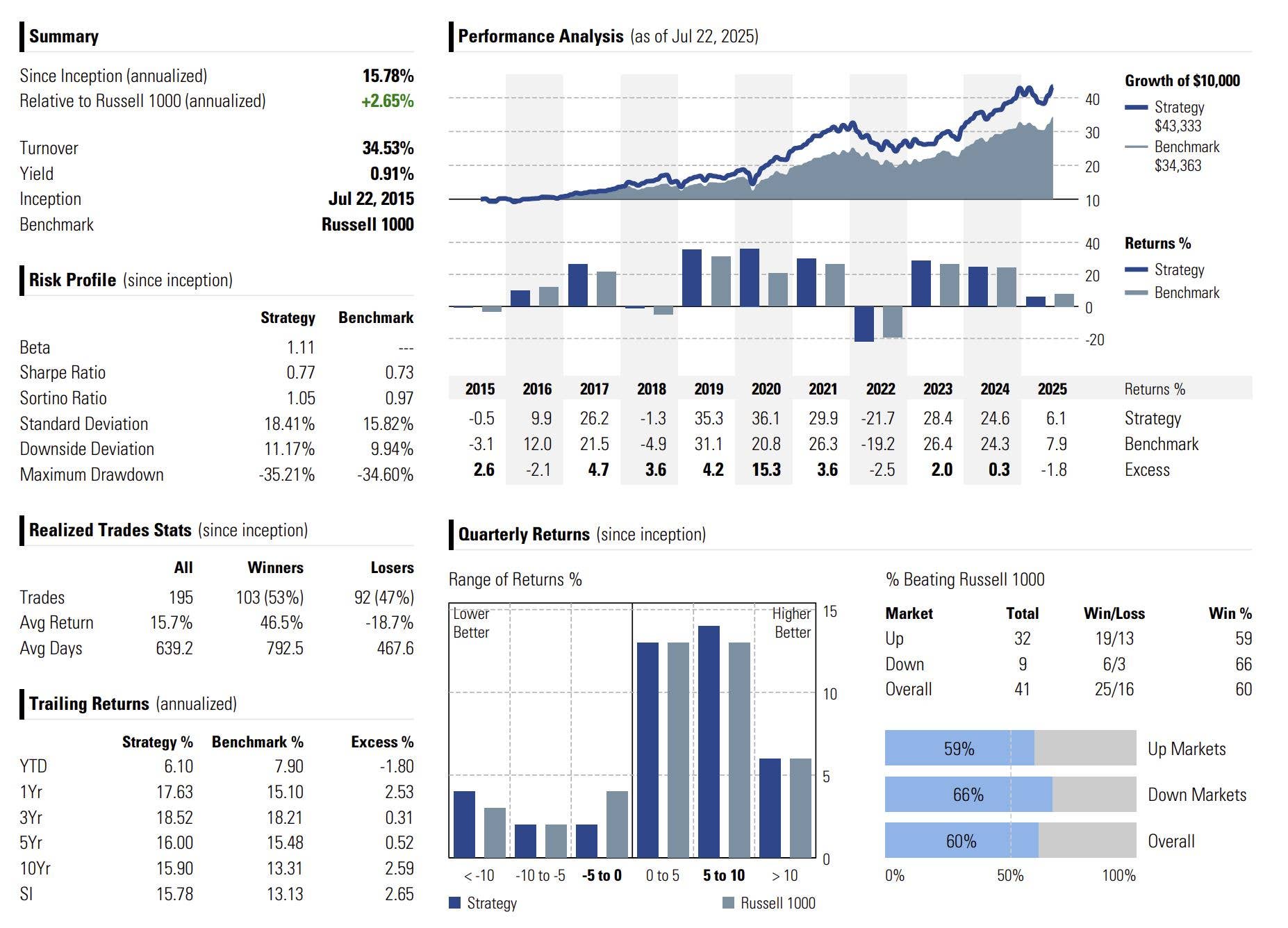
But even then, I found myself wanting more control over the qualitative elements and fewer constraints on where I could invest, which leads me to themes I like now.
Themes That Make Sense to Me Now
I recently looked over trades from my proprietary, retirement, and trust accounts, analyzed how they aligned with my process, and concluded that investing in multiple ways — and blending strategies — has served me well. This can include companies chosen for different reasons. Here’s a summary of what’s been working and where I see continued opportunity.
Macro Safe Havens
The macro environment points toward a continuation of bullish momentum. We’re in the middle of a technological revolution, and the current administration is encouraging private-sector growth. At the same time, rising tariffs may be mildly inflationary. But if we don’t get federal spending under control, the U.S. dollar’s status as the world’s reserve currency could be at risk.
This leads to my first theme: Macro Safe Havens — including gold, select gold mining stocks, and even Bitcoin. I get that Bitcoin may not feel like a safe haven — it’s intangible and could, in theory, disappear — but Bitcoin could act as a decentralized store of value in the face of geopolitical risk or a U.S. dollar crisis.
AI Growth
AI is starting to move the needle — not just for the companies building it, but for those using it to work smarter. I’m focused on businesses that are using AI to boost productivity, cut costs, and respond faster to client needs — which often translates to stronger margins and new revenue streams.
It’s not just about owning chipmakers or software platforms; it’s about finding operators who are embedding AI into how they run and win.
Reindustrialization & Onshoring
We're seeing a major shift as more companies bring supply chains back to the U.S. — not just because of tariffs or politics, but because it makes strategic sense. This trend is fueling demand in areas like manufacturing, infrastructure, energy, and logistics.
I’m focusing on businesses that are building or enabling this move — because they’re positioned to benefit from a long-term structural tailwind.
Defensive at a Reasonable Price
When the macro gets choppy, I like companies that keep making money no matter what. These are names with strong cash flow, steady demand, and healthy balance sheets — but I’m not chasing them at any price.
I want to own these defensives when they’re still trading at reasonable valuations and can quietly compound over time.
Growth in a Slowing Environment
Another theme is Growth in a Slowdown. Q1 GDP looked strong largely due to a drop in imports, which artificially boosted GDP. Since then, the economy has shown signs of slowing. Growth has dropped from 3% to just above 1% on a run-rate — a level that’s uncomfortably low.
Meanwhile, the Fed has held the federal funds rate steady while the 10-year yield is dangerously close to staying below the Fed Funds Rate — often a signal of upcoming rate cuts or recession.
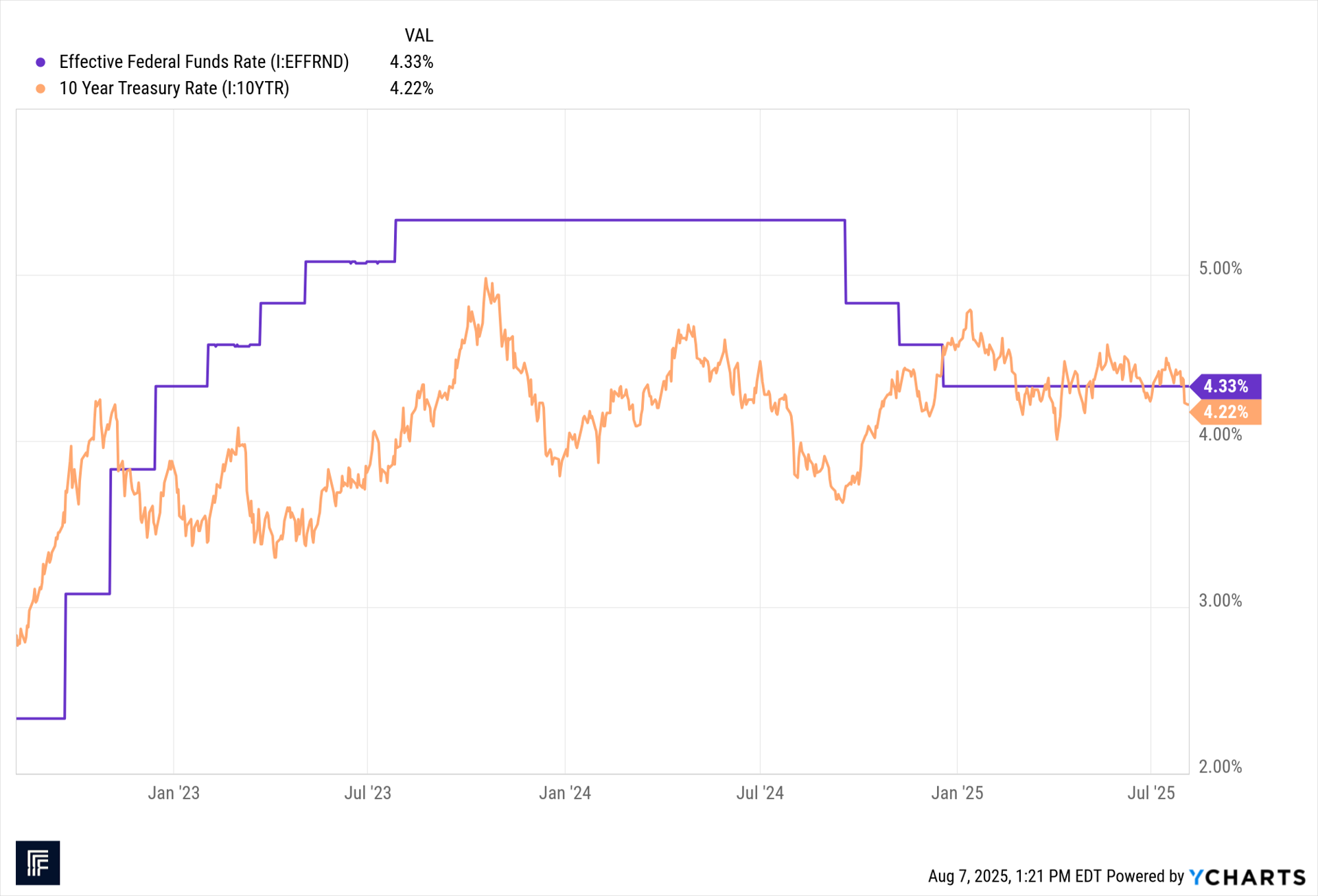
If you’re holding a lot of cash, you’re about to get a pay cut. I don’t think sitting on the sidelines makes sense.
Here Are Some of My Picks in Each Category:
- Macro Safe Haven: A basket of gold mining stocks, gold directly through VanEck Merk Gold ETF (OUNZ) and iShares Bitcoin Trust ETF (IBIT) and also Systematic Trend managers through ETFs that can take long and short positions in a wide variety of instruments. These strategies have historically done well when volatility increases sharply and unexpected trends explode. I like these ETFs because they are accessible to individual investors easily and are liquid: iMGP DBi Managed Futures Strategy ETF (DBMF); WisdomTree Managed Futures Strategy Fund (WTMF); and Simplify Managed Futures Strategy ETF (CTA).
- AI Growth: This space has many subthemes, but the core is clear: some companies are winning big. They’ve run up, yes but buying on pullbacks makes sense. I believe investors must have some exposure here. An interesting play is SuRo Capital (SSSS), a Business Development Company (BDC) that invests private growth and earlier stage companies. SuRo is a holding in the TheStreet Pro Portfolio.
- Reindustrialization & Onshoring: This trend looks durable, especially given geopolitical tensions and our huge budget deficit. CSX Corporation (CSX) is a conservative play in the freight industry. I also like MP Materials Corp (MP) which is a rare-earth play aligned with government effort for reshoring, and United Rentals Inc. (URI), the world’s largest equipment rental company.
- Defensive at Reasonable Valuation: Names like Hershey (HSY), and Constellation Brands (STZ) continue to hum along regardless of the macro backdrop and they are trading at reasonable prices.
- Growth in a Slowdown: As the environment slows, companies with visible earnings growth become more valuable. I want to own those. Think: DoorDash (DASH) and Uber (UBER).
Final Thoughts
I don’t spend much time thinking about the market as a whole. I focus on individual opportunities. I study macro trends to read the psychological tone of the market —bullish or bearish — and look for chances to buy mispriced businesses where the future profit potential is strong.
I don't want to talk about where the market is going. I want to talk about businesses, portfolio construction, and how to create strategies that help private investors reach their goals. People want to know, “What should I do now?” That’s my job — helping clients thrive in any environment.
Frankly, many packaged Wall Street products underwhelm me. Not always, but often enough that I value independent thinking and consistency. “Eating my own cooking” is a big part of my philosophy — if I wouldn’t invest in it myself, why should my clients? The only exception is when goals or risk tolerances differ.
My advice? Focus on businesses more than markets. That’s where the real opportunity lies. What are your thoughts and comments?