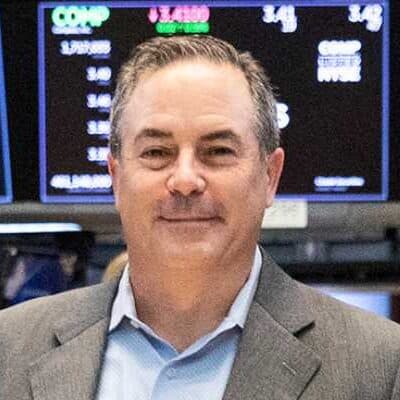
VIDEO: What to Watch Next in the Market With Bob Lang
Let's check in with the Portfolio's chart expert on the S&P 500's technicals, key levels to watch, the Fed, options expirations and more!
You've reached your free article limit
You've read 0 of 1 free Pro articles.
Given the market action Thursday, which included the S&P 500 closing below its 100-day moving average, Chris Versace welcomes Bob Lang to discuss the market’s technical setup, and what to watch next.
As you’ll hear, the message is all about follow-through, and that means focusing on where the S&P 500 closes, not just Friday, but most likely watching the first week of December for a market re-test. Near-term, for us, that could mean sitting on the sidelines, but keeping our eyes open for opportunities and a potential oversold condition in the market.
Bob and Chris also discuss the recent movement in market expectations for a December rate cut, and why the data we’ll be getting after the Thanksgiving holiday could keep the market volatile.
Transcript
CHRIS VERSACE: Hey, folks, Chris Versace here. As you probably know it is Friday, November 21, and we're coming off, let's just say, challenge day in the market. Certainly not one that we expected yesterday with the move higher. But let's talk about this with our good friend Bob Lang and get a technical eye on what we should be paying attention to.
Bob, thank you so much for joining me. I know you got a busy morning ahead of you, but I appreciate you. And I know the members are going to appreciate you spending some time with us today, just given everything that's going on. So let me set the stage, and then let's talk about it.
So if you remember, in the October monthly roundup, we talked about how the S&P 500 the NASDAQ had a string of positive months. I believe the S&P 500 was up 6 consecutive months in a row. The NASDAQ was up about 7 consecutive months in a row.
And, as we moved into November, there were some softness in the market. And the initial thought would be that perhaps we would see after such a pronounced move higher, we would get, a 5% pullback in the market. Our good friends, Jay Woods at Freedom Capital, kind of mentioned that on the Stocks & Market podcast. So folks were looking for that. Keeping an eye at some point that we might hit that 6574 level on the S&P 500.
Lo and behold, earlier this week, we did that. It appeared that we might have bounced off that. But yesterday, Bob, not only did we move through that level, we actually closed below the 100-day moving average of the S&P 500. So this is really why we wanted to spend a little bit of time with you to get your take on this and understand the key levels that we should be watching here. So what do you have to say?
BOB LANG: Well, good to see you, Chris, and members as well, too. So I think people are a little bit shocked and surprised because the setup coming into November seemed to be pretty bullish. And why is that? It's because we started entering into what's called a seasonally bullish time period for the markets.
What does that mean? That means over the last 5, 10, 15, 20 years, the markets have generally been up the last 6 to 8 weeks of a calendar year. So even though the markets were up strong in October, Chris, it still augured well for a continued run higher into the end of the year. And so, so far for the first 3 weeks of November, it hasn't worked out that way. So people are really scratching their heads wondering, what is this whole seasonality thing going on, and is it going to work in 2025? It doesn't work every single time. Nothing ever works 100% of the time.
But still, I think people are really wondering whether there's going to be any bullishness at the end of the year, or is the Grinch going to come in and steal Christmas away--
CHRIS VERSACE: Right.
BOB LANG: --from all the bulls.
CHRIS VERSACE: So, I guess, there's some varying thoughts out there, Bob. There are some folks that are saying, hey, S&P 500 Short-Range Oscillator, deeply oversold as a result of what we saw yesterday. We could get a bounce today. I think Goldman Sachs is out with some data. I think RevShark actually tweeted about this, saying that since 1957, and again, this is per Goldman, the S&P 500 is opened up only eight times opened up over 1% to close in the red. And historically the next day the market is up nicely, up even bigger over the ensuing month.
Now, what do you-- I know you're a student of history when it comes to this. And as we were chatting earlier you reminded me about April. So why don't you share that with folks, and then let's talk about what we should be paying attention to as it relates to the technicals today?
BOB LANG: Well, I'm a full advocate in believing that history never repeats, but it certainly rhymes. But the last time we had some kind of a bifurcated market intraday, like we had yesterday, was on April 8 where the markets were up 1% closed down, 1.5%. The next day, April 9, was a huge day for the S&P 500. I think was up like 9.5% with some kind of a record point gain in the index.
But one thing I wanted to reference, Chris, is going-- just circling back to what you just talked about with the market sentiment and so forth. About a couple of weeks ago, Chris, we were hearing a lot of people talking about something called the Hindenburg Omen.
CHRIS VERSACE: Mm-hmm.
BOB LANG: Just one reading of the Hindenburg Omen doesn't really tell us much. But if you see clusters of these showing up, prints of these Hindenburg Omens showing up four, or five, six, seven, eight times in a matter of a few weeks, then it becomes quite meaningful and it matters.
So it really basically told us that the market was separating itself. You had some companies that were doing well and other companies that were not doing well performance wise, price wise. And that sort of separation has been historically negative for markets.
I'm surprised that today we're not seeing that as a result of some of those Hindenburg Omens that were printed in the early part of November. That is the result-- this is the result that we're getting from the Hindenburg Omen, the heavy volatility, the big movements, the swings in the markets that we have that make everybody very uncomfortable. So I think that by and large, this rise in volatility, certainly not a surprise to me, but it is a big move up, and people really have to be cautious right now.
CHRIS VERSACE: All right. So, be cautious. Stay on the sidelines. I think that's what we're planning to do on Friday. Partly would be for a couple reasons. One, I think we want to watch the volatility index to see if it moves higher to the extent that it moves dramatically higher. It could signal that we get this big washout that maybe some folks are looking for that would kind of reset things, allow folks to come back into the market.
So, I think, in that environment, we just kind of want to stand pat. Maybe, maybe we could do some selective nibbling on some oversold positions, like we did yesterday. But as it relates to the 100-day moving average, Bob, very important here, I think, we want to clear something up. Yes, we moved below it yesterday. But as you've been talking about, over the last few years, it's not that particular one day that matters, it's the follow-through that matters. So explain what you mean by that?
BOB LANG: So if we get a follow-through day, which means that it continues, the index, the S&P 500, continues lower. Makes a lower high and a lower low, and maybe closes at the lows of the day today. We really don't know how the market's going to finish. Then that sets up a scenario where we can continue to bleed even lower to an oversold reading-- we're almost to an oversold reading, Chris, especially on the RSI, which is sitting at about 34% right now.
Kind of rare to see it get to below 30%. So if we get below 30% on the RSI, I think a bounce is going to be coming. But if the longer you stay below a moving average, the stronger that resistance becomes when the stock or index decides to make a bounce. It'll have a hard time getting through that level at least the first time around. So I think it's important to pay attention to these moving averages.
We sliced right through the 50-day moving average yesterday. We tried to get above it, and then all hell broke loose. I think we could also-- if you want to look you want to tie that reversal into something, Chris. I think I mentioned it earlier in the week that the stock market and Bitcoin have become almost conjoined twins now. They really seem to move together.
And if you go back even about a year, Chris, just before and then after the election, Bitcoin really rose up after the election and the stock market rose up right along with it. And what tends to go up together goes down together as well too. So we should not be surprised to see some weakness in the stock market associated with the drop in Bitcoin.
There is some good support of Bitcoin if you wanted-- if you're looking for that about 78, 78.5 on the coin, which is about $4,000 to $5,000 lower than where it is right now. So if you were-- maybe that matches up with a drop below the 100-day moving average on the S&P 500, Chris. And we bounce over there, you get to an oversold reading, you match up that low with on Bitcoin with a low in the S&P 500, and then together you bounce from there
CHRIS VERSACE: OK. So we do want to pay attention to volatility. See if it spikes. We want to see if we close the S&P 500 today above the 100-day moving average.
BOB LANG: That's right.
CHRIS VERSACE: If it does, Bob, does that give us some comfort that level could be setting in?
BOB LANG: No. Generally speaking, I like to see a retest of that level. So if we do bounce at a certain level and come right back up, I want to retest that level to make sure it's firm. And I want to make sure that buyers are willing to step in and support that price level that was established wherever it may be. If it was yesterday, or is it today, or is it next week. So once that level is established, you get a bounce off of there. Come back down and test that level to see if it's firm. And if we bounce off of that level again, yes, then I feel pretty confident that level is going to hold.
CHRIS VERSACE: OK. Now, this next part is kind of important because next week is a holiday week, right? We have Thanksgiving on Thursday, which means the market's closed. And as we the day before Thanksgiving, volume tends to be a little light. The day after Thanksgiving, we have a shortened trading session. Market closes at 1:00 PM Eastern. Tends to be a very light day. So, you know, will we see the volume necessary to say if we do retest, that, yes, this is a, let's call it, a solid retest.
BOB LANG: No, we won't have any good volume on next week. Next week is all about volatility, Chris. And what we tend to see happen during short trading weeks, like next week, is volatility sellers coming in and starting to sell volatility. And why is that? Just because you have an extra day and a half of option decay for calls and puts.
What is that extra day and a half? Half day trading on Friday, full day trading on Thursday, where the markets are closed, right? When the markets are closed, if you're an option seller, you don't have to worry about prices going against you. The market's closed, right? So you don't have to worry about that.
So I think there's a lot of option players who are going to jump the gun today and even on Monday and start selling-- trying to sell volatility and get that VIX down sometime over the next 3 to 4 days. And we often see that happen. So what is the offset of lower volatility? It means the markets go up, S&P futures rise, and the volatility goes down.
So we'll see if that pair matches up sometime next week. Again, the traders and the bears have done a lot of damage to the charts. No question. And the last 4 to 5 sessions especially, and below there. So there's got there's a lot of work to do for the bulls to get back on track here. They're going to need to be a basing period. You got to find that bottom first. You have a basing period. I don't know if that's going to happen next week or not. But, I mean, if you're looking for a bounce to happen, next week would be ideal, especially if volatility starts to come down.
CHRIS VERSACE: So then just gaming it out, if we do see that bounce next week for the reasons you just described, but we want to see a retest, that means that it would be that first week of December trading that we could see that retest?
BOB LANG: I agree with that. Yes, that's right.
CHRIS VERSACE: So let me just stick with that. Because, at that point, we're going to get a lot of economic data, right? Not necessarily employment report. We know that's going to be pushed off to December 16 for-- as you and I have talked about offline, some silly reason. But we will be getting ADP's November Employment Report. We'll get all that ISM data. We'll get the S&P PMI data as well as some other bits and pieces.
And, I think, at that week that's when the market's really going to start to decide, are we likely to get a December rate cut or not? And I just want to stick with that for one second. Because yesterday, there was a lot of concern given that September jobs print 119,000 jobs much stronger than everybody was looking for.
Yet, as you and I talked about, the unemployment rate ticked higher 4.4%, highest level since October 2021, and we actually saw the CME FedWatch tool numbers tick higher. They had been falling. They bottomed out around 30%, and then they moved higher for December rate cut. And, I think, this morning, they're north of 40%. Still not over 50%.
BOB LANG: Yeah.
CHRIS VERSACE: Is it possible, as we game this out, that if the data is friendly for a rate cut in that first week of December. And the market all of a sudden starts to think, oh, we could see a rate cut, that that could help lift us higher into the end of the year? What do you think?
BOB LANG: Well, that's the paranoia that the Fed Funds futures market spreads to the rest of equity markets, right? So, yes, it's certainly possible. But, I think, cooler heads are going to prevail here. I think people's hair are going to be on fire when they start seeing some of this data, Chris, and start thinking that, OK, well that means rate cut. No, it doesn't mean rate cut. That means-- we're going to be back and forth trying to figure out whether the Fed is going to move on a certain piece of data, I think--
CHRIS VERSACE: Well, hang on. Let me stop you. They're not going to move on any one piece of data. That's ridiculous. You and I both know that it's the aggregate picture that they'll be looking at, which means that we're going to have to get through that first week of December and look at all of the data, and then we'll have a better sense. I wasn't trying to say it's any one piece of data that, ah, here we go. Quite the--
BOB LANG: No, what I'm saying is that the market is going to respond to everyone--
CHRIS VERSACE: Oh, yes. Yes.
BOB LANG: --like the Fed. The market is going to respond to every one little piece of data and anything that comes in positively that seems to think maybe the economy is cooling down, and they need rate cuts, and then maybe the labor market is slowing down or something like that, all of a sudden, there's going to be a rush to people buying Fed Funds futures. Saying, oh, there's going to be a rate cut.
So there's going to be all these machinations going on here over the next couple of weeks. But until we get that decision on December 10, it's not going to-- none of that stuff is going to matter. I wish you and I were a fly on the wall in that meeting room. It's going to be a contentious meeting. I think there's going to be quite a bit of dissension going on there. I think there's going to be a lot of debate about whether they should whether they should cut.
I mean, there's been some talk this morning already, Chris, that Powell is thinking about doing what's called a dovish pause, which means he's going to pause in December and signal that the next rate cut probably going to be coming in January. There's others who are talking about a hawkish cut, meaning cut in December, and then tell everybody what we're going to pause, and we're going to wait.
I think that would be the, personally thinking, that would be the worst result. Because down the road, you really don't know when they're going to cut rates, especially if inflation remains sticky as it has for months, and months, and months. They're not going to get off of that hawkish stance anytime soon.
CHRIS VERSACE: But remember, though, this is a December meeting. That also means-- oh no, we don't get an updated SEP at this meeting, do we? Not till January.
BOB LANG: That's right. No, no, no. We do get a economic projections coming out in December. Yes, we do so.
CHRIS VERSACE: So even if we do get a hawkish cut, the Fed will be updating its potential expectations for rate cuts in 2026. So there could be a little bit of this is what I'm saying but look at what we're also telling you.
BOB LANG: Yeah, that's exactly right. Look don't pay attention, look over here
CHRIS VERSACE: [LAUGHS] OK. But let's get back to today. So the message today is we need to see where we finish out today, right?
BOB LANG: That's right.
CHRIS VERSACE: And with that in mind, we're going to sit on the sidelines, review our shopping list in case we see anything that gets extremely oversold. We did that yesterday with the portfolio with the shares of Axon, Meta, and ServiceNow. There's a couple on the periphery that we're watching, Arista Networks, for example, Eaton. So that's what we'll be doing.
And, Bob, we're going to start Monday morning off with a look at the S&P 500, like we always do from you. Bright and early. So we can look forward to that. And you'll give us the technical setup going into next week.
BOB LANG: One footnote, Chris, I wanted to mention is that today's a double witching options expiration day. And what does that mean? It means that options, equity options, and options on futures are going to be expiring today. And you got to pay attention to the volatility. And what's something called-- well, you don't have to pay attention. This is my job.
Pay attention to watch Gamma. Gamma is a tool that the option traders, option dealers use. And if there's negative Gamma, that means there's a huge spread between Delta and prices. And that tends to create a very negative environment. That's kind of what happened a little bit yesterday, when the markets fell through a certain level, and that caused an avalanche of selling to occur towards the end of the day yesterday.
So, we had negative Gamma coming into to today. All of that. All those November options are going to be coming off the board by the end of the day. So that's something to pay attention to. But still, this is not one of your triple witching which is going to be coming next month. But still, it's a heavy volume day to day, Chris. And we're going to be seeing a lot of options coming off the board and a lot of trading going on here. And again, with the high volatility, it sets up for a lot of big movement intraday.
CHRIS VERSACE: Right. But, again, we want that confirmation.
BOB LANG: Right.
CHRIS VERSACE: And be prepared for a retest over the coming days. So tread carefully.
BOB LANG: That's right. Tread carefully. [LAUGHS]
CHRIS VERSACE: All right. Well, Bob, thank you so much for joining us today. I really appreciate it. I think we're going to look to have you on a little more in the next couple of days, because it's going to be important.
BOB LANG: Sounds great. Thanks, Chris.
CHRIS VERSACE: Thanks, Bob.