TheStreet Stocks & Markets Podcast #6: The Next Market Catalyst With Jay Woods
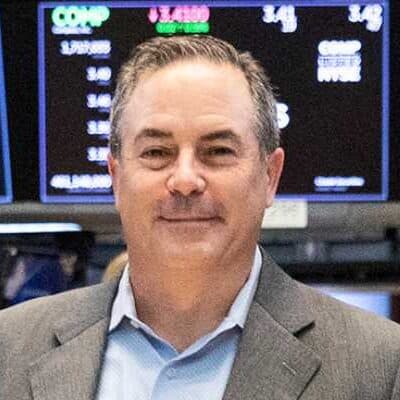
Jay Woods of Freedom Capital Markets joins Chris Versace to talk current market dynamics, four potential catalysts, Nvidia and why he watches a certain type of stock for clues.
You've reached your free article limit
You've read 0 of 1 free Pro articles.
It’s a mad dash of a conversation on this week’s Stocks & Markets podcast as Pro Portfolio Manager Chris Versace is joined by returning guest Jay Woods, Chief Global Strategist at Freedom Capital Markets. Out of the gate the two talk about the market’s recent abrupt rebound from April lows and what we could see in terms of a pullback near-term.
The two also discuss four potential catalysts that could lead the market higher in the coming weeks, including next week’s earnings report from Nvidia NVDA. Jay also offers his insight on how he uses market technicals and why he watches washed-out stocks to gauge where the market may head next.
They then answer questions from Pro Portfolio members, with Jay explaining how he sizes up stock opportunities while being mindful of the market’s current technical setup.
More Pro Portfolio:
- We're Locking in Big Gains on These 6 Portfolio Holdings
- Weekly Roundup: Pro Portfolio Widens Its Lead Over the S&P 500
- AI That Cares, Consumers Fretting Over Tariffs, Nucor Hacked, and More Headlines for Investing
Transcript
Chris Versace: Hey, folks, welcome to the latest edition of TheStreet’s Stocks and Markets podcast. I'm Chris Versace and I manage TheStreet’s Pro Portfolio. And we're coming to you live from the New York Stock Exchange today with our good friend Jay Woods from Freedom Capital. So we're going to talk about the things that are shaping the market, things you're going to want to pay attention to especially as we gear into earnings from Nvidia next week. Jay, thank you so much.
Jay Woods: It's good to be back.
Versace: It is wonderful always to be here on the floor of the stock exchange chatting with you, my friend. And I know that we've got some big things to talk about. So let's kick it off. The market rally that we've seen since the lows in April. Sustainable?
Woods: I don't know if we're going to continue to plow through and get to those new highs. We did get within 3% of a new high in the S&P 500. Considering where we were, the panic, the sentiment, let's just be happy at these levels. We did get a downgrade from Moody's this week. They joined Fitch and S&P a little late to the party.
Versace: So you would agree with me in saying, yeah, not really that important.
Woods: No, no this is something they should have done years ago. Now you have to think, OK, is S&P going to say, hold my beer, we'll go again? That would cause some major panic in this market.
Versace: I don’t see that.
Woods: I don't see it. No, I don't see that. I'm kind of just half-kidding on that. But no, but that was something that after a big rally that could derail it. What's causing problems now? Tariffs again?
Versace: And so, Jay, as I was writing last week in the weekly roundup for TheStreet Pro Portfolio members, I was concerned that with the market entering near overbought, the S&P 500, Nasdaq technically, based on its RSI, overbought, that any little thing could potentially disrupt the market rally that we've had. And it sounds like you're kind of on board with that.
Woods: Yeah without a doubt. We went from an extreme oversold condition to a euphoric near overbought 69 on the RSI and not quite 70. But the speed at which we recovered was dramatic. And now we're losing a little momentum. The earnings season is slowly fading into the distance. We still have one big one, which we'll touch on later. I would argue there are a couple. but, yeah, so any little news story that couldn't carry this momentum forward, whether it's the downgrade or Trump and Walmart going at it on tariffs impacting the retail sector, we were going to get that pause. And these pauses are healthy. We've cleared major technical hurdles. We got back above the 50-day moving average. Then we got above the 200-day. Then we got above that gap up during the election cycle when Trump was elected, and we held on to these levels. Any retest of that is healthy and normal considering the run we've been on. So I'm not worried about some steady action in this market.
Versace: So when we talk healthy pullback, taking out the froth as I like to say: Low-single-digit move lower?
Woods: Yeah, it's something like that. Let's retest that gap up above the 200-day moving average. To me, that's the barometer of health. And I think we're getting a little healthier. We still haven't hit the tax implications hitting the inflationary data. There are still things that are genuine concerns. Yes, sentiment is a soft number. The hard numbers haven't followed through. They will probably tick up. That's why the Fed is on watch. They're not doing anything as far as rates.
Versace: So, since you brought that up I gotta ask.
Woods: Go for it.
Versace: When do you think we actually see a rate cut, assuming we see a rate cut?
Woods: I think we could get a rate cut in June. We probably won't until the following meeting. So it looks like [at] the end of the summer we could get a cut. And that's only if the data continues to remain stable. If it does, then that's thrown off that fear, the one the sentiment indicators are telling us. And then, too, the Fed is kind of worried about – because tariffs should cause inflation, it hasn't seen it. Mortgage rates have not really dipped down. And then you got to watch these bond yields. The 10-year Treasury yield and the 30-year over 5% They're supposed to stabilize and come in a little bit to help us out. They haven't. So the data isn't there to give us the cut just yet. But it isn't there to cause a panic either.
Versace: So I'm going to say the soonest is September, potentially later, depending on, subject to, the data.
Woods: Correct. And I know the president would like to see it last time. And I think June, we could do a quarter-point and it wouldn't upset this market too much at all.
Versace: You know, we're going to get a bunch of data in the first week of June. That’ll help us decide. Manufacturing, services and a few other things next week, too.
Woods: So yeah, there's a lot, there's a lot.
Versace: So we'll have to revisit that because we're going to talk to you again and again.
Woods: I can't wait.
Versace: But let's just talk about potential catalysts that could reenergize the market. So my thinking is no brainer. Real progress on trade deals. We'll have to see if that happens. The conversation on tax and budget. The big beautiful deal. Yeah, I don't think that's going to deliver it. Anything else that might rebound this market?
Woods: It's two sectors. They drove the bus on the biggest rally we had in 2023. It's technology. And discretionary technology is flat as we're taping this, up 0.06%. And then discretionary, you know, it rallied 16% off the lows, I think almost 20% at one point. Still the worst performing sector of the year. We'll see if Tesla and Amazon can get us going. But those are the two sectors you need to see start to propel the leadership. There's positivity there. Industrials remain strong, stable. That's good financials. They got the wind taken out of their sails. They're coming back. You look at different aspects of financials. The credit card companies, Visa, Mastercard, are making new highs. You look at the exchanges. ICE: They had a great run, pulling back a little bit. These should be buying opportunities.
Versace: So what about those really tied to investment banking? Because we might be seeing the IPO window heat up. And M&A is starting to pick up as well.
Woods: Well, I look at them like I look at tech stocks because right now I, as a technician first. we had a ridiculous selloff – Goldman, JP Morgan, Citi – a horrible selloff. And now they've snapped back: JP Morgan. Goldman rallied over 30% from their lows. Still have room to run. That M&A activity does start to pick up, which you're hearing. It could, end of [the] second quarter, beginning of the third. This will be a tailwind they need. And then the overall sector has pockets of strength. Insurance has been strong, stable. The regionals: That's where we're seeing a place to avoid. The big institutional banks – they've come back. But for them to make new highs I think we need time, and that time would be another earnings cycle. And that'd be the end of summer.
Versace: So let me just drag you back a second because you were talking about discretionary and you said two companies. One makes sense. Amazon, yeah, given what they do and digital shopping. But the other, Tesla, (I) got a bone to pick with that because what is Tesla doing in consumer discretionary? That doesn't sound right.
Woods: I hate talking about Tesla. This is just a lightning rod.
Versace: No, I'm not talking about Tesla per se, but just about how folks need to be aware of how the sectors inside the S&P 500 are constructed. What they may contain, may not contain. It's not always obvious.
Woods: No it's not. And when you look at the sectors this is what I tell my students. This is what I talk about religiously. You better know the top performing stocks in those sectors. The top weightings, right? And it's Amazon and Tesla, 40% of the XLY. The discretionary index is tied to that. So, now, let's see: Does Tesla have something to reverse to get back to new highs? It does. It's back above 320, which is a key resistance level. To me it's acting healthy, but Tesla is a different animal. I mean, that's hopes and dreams, and we'll see autonomous driving how it comes out.
Versace: Look, you're not flying down to Austin to give it to us, to do the due diligence?
Woods: I've been to Austin. I saw Waymo's driving all around. I wanted to get in one. It was fantastic. Tesla's not there yet. Waymo is eating their lunch. But – once they get rolling, the hockey-stick level. Yeah, I know, eye-rolling. Horrible pun and I didn't mean to do that. And sometimes I do. But in this case, yeah, if Tesla can start the rollout and the technology behind it, they can really start to increase exponentially, where Waymo is starting to grow at hockey-stick levels. But it gets hidden in Alphabet, which is Google and search and the problems they have now.
Versace: Did you not pay attention to the Google I/O event? (t seems like they're really leaning into AI. They're really pushing back on the notion that they could be biased.
Woods: I’m biased. You're talking to a Google shareholder for years. I'm biased. It just broke above its 200-day moving average. Looks good. Technically climbing a wall of worry if you will. YouTube subscribers: If you look at the top two search engines in the world, it's Google and YouTube is a search engine.
Versace: I think until you see Gartner or some other third-party research firm is showing how they're continuing to widen their lead in streaming.
Woods: And to me, Google would be better if they did have to break up the company because sum of the parts is just tremendous. But we are so fixated on ad revenue and search and ChatGPT eating their lunch, which if you do a Google search and a ChatGPT search you can understand why.
Versace: But back to yesterday's event: They're updating with Gemini search. They're bringing all that functionality of shopping and paying, translating all into it. I think what they are going to do is surprise folks in the coming weeks with all the functionality that they bring.
Woods: Yeah, and I agree with you. They got their best shot. As a technician I want to look long-term price action: I looked at this the max on a monthly and 150. It held. That was a key level and now it's rallying, breaking back above a key resistance area and the 200-day moving average. I think it's healthy again. But if you read the headlines, you're not so sure. But we are getting better headlines. But they seem to be the one of the Mag 7 outside of Elon Musk that really has been getting beaten down lately. So I love it personally, I own it and that's one I put away. But now I'm questioning it because of all these headlines. And I don't like when I do that. I just want to look at price action. Price action is telling me, all right, it got tested, it held, and now we're back. So we'll see if it can continue.
Versace: Check the emotion. Stick with the discipline.
Woods: It's hard, but once you own it you look at it so differently. I understand and I teach this all the time.
Versace: But that's the biggest risk – getting overly emotional. Yeah, and it happens.
Woods: But it's just raised an octave as we talked about it, so emotional.
Versace: But it's a great point, though, because it's not easy to do. Even for people who do this day in, day out.
Woods: Of course. Yeah, once you own something look at it very differently. Your biases change. And if you can just be like me with my 401(k) and just put it away and look at it once a year just to update my books, and it's good.
Versace: Hopefully, more than once a year.
Woods: No, no. Once a year. That's it. Well, that's me.
Versace: Before we started taping we were chatting a little bit and you had said that I think one of the big catalysts ahead for the market is Nvidia earnings. But at the same time you kind of signaled, like, I don't know if they're going to deliver. So break this down.
Woods: Well. it's not about delivery. They've delivered solid earnings but price action hasn't followed. All right. We have some major overhead resistance at this 150 level in Nvidia. We've seen progress. It sold off on DeepSeek news. All right. So the threat of that coming and hurting their bottom line and disrupting all the Mag Seven stocks and technology in America was a big story. We never fully recovered it. And then we had the tariff selloff and all of a sudden we're starting to come back.
Versace: Well, the catalyst for that is Big Tech. Yeah, right. Reiterating their capital-spending levels, companies like CoreWeave coming out and saying we are going to spend heavily. I mean talk about a deal that had a tough time getting priced. Look where that stock is now.
Woods: Yeah, and I'm kicking myself for not getting involved in it.
Versace: You and me both. You and me both.
Woods: I was like, oh, this one really is overdone to the downside. But, Nvidia to me is a tell. But price action will be more of the tell. I expect them to beat. I expect everything to be rosy. We still have tariff and trade war concerns. That's not going to go away when they release earnings. No, but it will be a headwind. And let's see, I look at Microsoft in the Mag Seven. It got to all-time highs, just under, didn't get through. Meta has rallied back. Still has 100 points to go to make new highs. Amazon, Apple: Constructive sideways action above key levels. Both happen to be 200 in those stocks. So to me, this is just a digestion phase. Now Nvidia can take us to a next level if it gaps and goes above 150 and holds. All bets are off. Technology is going to lead. The semiconductors are back. And the bullish horns will come sprouting out of my head again. But right now I think there's too much uncertainty in this market. The word of the year: uncertainty. For Nvidia to break out on this earnings next week it would really have something from Jensen, a new development that we didn't see coming. But I'd like to see it test those highs. And any pullback would be a dip to buy because we are making higher lows. It's constructive, but are we ready to break out? if anyone's going to do it. If anyone's going to lead the charge, it's going to be this stock.
Versace: So the two things that I'll be looking for when they report. One is: Is the guidance as solid as people expect? Because remember the last time they reported – a little below the whisper number, and the market kind of didn't like that. The other is going to be an update on the margin expectations with the Blackwell ramp. If you remember, they kind of talked down near-term margins, with the rebound expected in the back half of the year. We want to hear them reiterate that, maybe accelerate that.
Woods: That accelerate would be music to the market’s ears because we're not seeing a lot of acceleration. We're seeing guides that remain in line. That's great, but we're not seeing guides that go above expectations. And in this market, who's going to do that? Keep the bar low, exceed the bar and you'll be fine. So that excessive optimism isn't there. And that's what this market likes. It likes to be a little optimistic and euphoric at times, and we just haven't seen it yet. It'll be back, but it may take another cycle of earnings to get there.
Versace: OK, so let's just game this out before we take one or two member questions. We've got Nvidia earnings next week. And then after that we'll be getting a lot of fresh economic data for the month of May. That will tell us the speed, the vector, the velocity of the economy. Yeah, insights on inflation, what we might see. And then after that, we have Apple's WWDC event.
Woods: Oh yeah. What's the AI story. Are we going to hear it. I mean, Apple is one AI story away from getting back on track. It's just we thought it was going to happen with Siri –
Versace: or Apple Intelligence.
Woods: Yeah, and well, what Apple does is they roll things out slowly. And that's frustrating, because you want to know exactly what the game plan is. And oh no, I have another update tonight. Oh, I have an update in a week. And it's not the wow factor. They haven't had that wow factor in years.
Versace: So what? So if you think of it this way. In the S&P 500, you've got, number one is either Apple or Nvidia. They trade back and forth depending on what's going on in terms of weighting. So the next couple of weeks could be really telling for the market.
Woods: Yeah, and it could be a dull market. But what's the expression? Never short a dull market. So to me we need to just take a break. The VIX back Under 20. Not necessarily sell in May and go away, but just let things play out. We won't see as much crazy volatility, except if we get bigger headlines on the trade war front. And so far, every headline we've gotten has been a scaleback, has been progress. So to me the worst is clearly over for anyone to think we're going to retest lows. Crazy.
Versace: But you're talking early April, the early April 7 lows.
Woods: Yeah, there's no way but maybe X,X00, 5,500. The 5,500, the 50-day moving average. I think that could be the worst-case scenario, if we get a little bit of a scare. But right now, no. We've ripped off the Band-Aid. Now, we're walking back that nice, beautiful chart. That big, beautiful chart. Not that he called it that, but he would if he could. But we are seeing things slowly come back and negotiations happening. We're not seeing them at the breakneck speed we would love to to get this market to new highs.
Versace: We knew that, though,of course. XXX this is going to take time. Yeah, I think he said 90% of the trade deals will be done by the end of the year.
Woods: Yes, so this 90 day reprieve is nonsense as well.
Versace: Extension, extension.
Woods: Exactly, and that's fine. So we've slowly come back and then we rely on these companies to keep hitting their earnings, singles, doubles. No one's hitting it out of the park right now. But once we get through this tariff phase then we'll probably see some more triples and some home runs.
Versace: So we need to see – and I've written about this and it sounds like you're on the same page.
Woods: I read you too as well – So we need [that] progress.
Versace: We need the progress on the trade deals. We need, as Walmart said, to get those tariffs even lower. Then earnings expectations for the back half of the year, we can either get more comfortable relative to what Jamie Dimon had to say this week about how they need to drop. Or perhaps as the tariffs come down, we might even see earnings expectations for the back half of the year lift. And I think the market would like that.
Woods: I think not only would the market like it, the CEOs that run these companies are hoping that's exactly what happens. I thought it was very interesting to see the Walmart CEO say, yes, we may have to raise prices, and the president say, no, you're going to eat it. That to me was interesting. So we got some of these other retailers, especially Home Depot, to scale back in how they perceived the message going forward. But if the tariffs come down, then they won't have to raise prices.
Versace: if the tariffs don't come down as quick as we might hope they do, that guidance that they're supposedly keeping could be at risk.
Woods: It could be revised. And that's where you see another little leg lower. The key word is little. Let's hope it's not revision that is like, nope, all bets are off. I think the worst case was thrown in there with the 145% against China. These big numbers against countries I never even heard of. It was a little too much. And now that shock and awe is over and we get back to the negotiating table. Don't want to be the pawn in these negotiations, we being people that participate in the market, but it is showing some signs of progress. We'll see if it can lead us to new highs sometime by third quarter, if not definitely at the end of the year.
Versace: All right. Well, we will see. Let's turn to some member questions, Jay.
Woods: Sure let's go.
Versace: So the one question that I want to talk about in particular is folks have asked, Jay, how do you balance looking at the market's technicals, whether it's overbought or oversold, and applying that from a top-down perspective as you're looking at individual stocks and their technical setups?
Versace: It's a great question. What I try to do is when I go through my charts is look at the chart and the price action and not the stock that I'm looking at now. Obviously, I know I'm cycling through every sector, but you use comparative relative strength to really filter out when you're doing sector breakdowns and chart action to see what are the best in class. Defense stocks. We talk about them. They're in the news today. No one talks about Howmet, HWM. That stock is crushing it. It's just one of the best charts in the world. But you look at Level 3 Harris. You look at Northrop, look at Lockheed. There are a lot of differences between the sectors. So the tide isn't lifting all the boats. The sector overall is doing well if you have a basket. But there are winners and losers in each sector. Industrials, the same way. You look at GE Vernova. Uber is an industrial. We talked about this beforehand. It's one of the best industrials out there now. But you need to know what the best in breed are. So to me, I look at the charts with the best strength and then compare them to each other. So there's no one golden rule I use, but the price action, trying not to get clouded by it. When you give me a chart of Tesla, I cringe. But I can tell you what the price action is doing. Don't ask me about the fundamentals because they don't match up.
Versace: So just a quick follow up on that. If you're looking at a chart, let's say you see a nice opportunity in an individual stock. But as we just talked about a few minutes ago, coming into this week the market looks to be overbought. How do you reconcile the two of that? Will you wait to see what happens with the market first, or should you plow ahead XXX great individual stocks?
Woods: It’s a great question. Everything I look at is always in risk-reward terms. Uber is a perfect example. It was outperforming the indexes going into earnings. It was trading in a very large neutral range between 60 and 80, price led before earnings. It broke out. And boom you're in the stock. And now my risk-reward is favorable because there's a measured reward of 20 to 100. And the risk was if it breaks under 80,78, let me get out. Let me try again. It didn't break out of this channel. It wasn't clean. So every time I look at it, I look at the individual stock and what my risk-reward setup is and if it's outperforming the indexes, to me this is great because if the index turns, it's going to lead us. But if to your point, the index starts to turn over, yeah, you want to just stop yourself out and then –
Versace: Or maybe hold off.
Woods: You can hold off easily. And it's always good to have cash on the sidelines. And that's the thing. Sometimes you get fully invested. You're like, oh, I love this, I love this. Those are great bull markets because you don't know exactly where you want to go. And I like to hold strength. And sometimes I'll hold a little too long and wait for that trend to change to get out. But I'm still getting the meat of that trade. So I always look at risk-reward setups. And yes, I get stopped out too many times too soon. I'm sure you know it well, but the overall market is the first thing I look at. Then I look at the biggest pockets of strength, and those are the stocks I tend to focus on. And then the next thing I focus on the worst and is something changing? I caught this in Five Below and some of the smaller retailers that had been down for so long. Disney is a great example of a stock that's been beaten down.. I'm watching Nike like a hawk. Watching Target. Target didn't do it. They could not close above 100 and it's back in its downtrend. It's back in the penalty box. Let's see where we can get back into that name. If it can hold 90 then maybe there's a near-term trade in it. But long term it's just not bad.
Versace: It's lost. Yeah, in my opinion..
Woods: I agree. And Canada Goose – we talked about this off air. It's a beautiful downtrend OK. It just broke above its 200-day moving average.
Versace: How it popped 20% after pulling the guidance is beyond me. Yeah I don't understand.
Woods: But it's a great opportunity to short it again because that downtrend is great. Now if it pulls back and holds the 200-day then great. But it's not a name. I don't have to play every single name and I'm not going to call that this was the low in Canada Goose. But I'll tell you what: This is the beginning of a low. And if it can hold these levels, then, yeah, that's a stock that will be on my radar. But I missed this 20% pop. But I also avoided whatever that loss was to begin with. So there are two sides to every coin.
Versace: True, true. All right, Jay, as always. Really appreciate all the time you spend with us today. Before we get out of here, we covered a lot. But any final thoughts to share?
Woods: Any final thoughts? I think we need to be patient right now. This has been a crazy market. There were some of the greatest trading opportunities we've seen. I didn't time them perfectly, but right now the trends aren't saying all is clear. So if you have some gains in some of these stocks, if you bought around early April and you have some, trim, put a little cash on the sidelines because there are going to be opportunities in this market again, and I wouldn't chase here.
Versace: I just want to be clear that we made some trim trades early this week with the Pro Portfolio. I did not ask you to bring that up. You just did that on your own.
Woods: I didn't read that part of your writing, so I did not know. I just think it's Risk Management 101. And sometimes taking some powder off and now being ready for another rainy day. We're going to get volatility in this market. There's no doubt about that. So there are opportunities. I'm watching Palo Alto today. That fell on earnings. But it's holding some key technical levels. Tried to buy it but Compliance wouldn't allow me.
Versace: I'm sorry. All right. That's how it happens.
Woods: That means it's going to go higher because I couldn't get in. But, yeah, there are opportunities. When stocks have good earnings, they trade down a little bit, but they're in great long-term trends in a sector like cyber. To me Palo Alto is one that I'm watching. CrowdStrike one I'm watching. Cloudflare – another one. They've had great runs. Pullbacks I think are opportunities to buy.
Versace: All right. Well we'll talk about all that and much more when you join us in the coming weeks.
Woods: Look forward to it.
Versace: All right. All right all right, folks, that is this week's edition of the Stocks and Markets Podcast. Thanks for tuning in, and we'll see you next week.
At the time of publication, TheStreet Pro Portfolio was long NVDA.