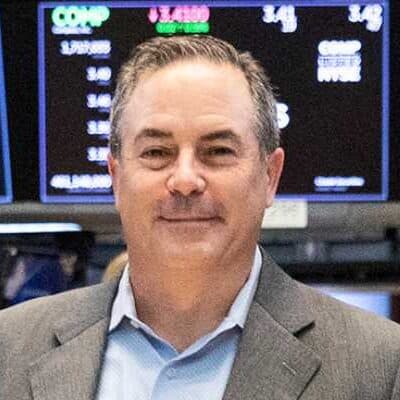
TheStreet Stocks & Markets Podcast #4: Nvidia Game Plan With Todd Campbell
Chris Versace and TheStreet's Todd Campbell discuss a differentiated move with Nvidia shares, why the Fed is in a tough spot, concern for retail earnings, recession or stagflation, and more!
You've reached your free article limit
You've read 0 of 1 free Pro articles.
In this edition of TheStreet's Stocks & Markets Podcast, ahead of Wednesday’s Fed next policy decision, Pro Portfolio manager Chris Versace talks with TheStreet’s Todd Campbell about why the Fed is between a rock and a hard place.
The two also talk about their concern for retail and other consumer discretionary earnings reports that are on the horizon, as well as how Todd uses the 200-day moving average in his trading strategy.
In addition, Todd explains why he bought more shares of Nvidia NVDA, cut his overall position size later in the month, and what he’s focused on long-term for the shares.
Lastly ,Chris and Todd discuss what they are interested in learning when Molson Coors TAP and Tapestry TPR report earnings, and answer Pro member questions.
At the time of publication, TheStreet Pro Portfolio was long NVDA.
Transcript
Chris: Wondering what the Fed is actually going to do next? Looking for a differentiated view on NVIDIA and capital spending? I'm Chris Versace and I manage The Street's Pro Portfolio. Joining me to talk about all that on this week's Stocks and Markets podcast, where we talk about, you guessed it, all things impacting the market, is Todd Campbell.
Todd: Chris, thanks for having me on. It's been a long time. I hope we have some people that remember some of our chats from a couple of years ago, but I'm excited to get back into the saddle with you and chat a little bit about markets today.
Chris: I'm looking forward to it too, Todd. And it's funny, I was just going to say that folks who have been around as members for The Pro Portfolio probably remember our past conversations. But for the newer folks, tell us a little bit about yourself, Todd, your investment background, if you will, your acumen, what you look for.
Todd: Yeah, I'm a stock market junkie, self-professed. I love everything that has to do with the markets. I sold research to hedge funds and mutual funds for 20-plus years. I love to write and talk and do podcasts like this with you. I wrote and had a product on The Street Pro for a while called The Street Smarts. I did a stint as the Editor-in-Chief for The Street. Again, I just love everything that's markets. I'm just thrilled to be able to sit here today and talk to you about what we're thinking in the markets now and see what stocks are doing what and where we could be going.
Chris: Well, there is no shortage of things to talk about, Todd. But before we get to that, let's just kind of get folks a little more familiar with you. There's a lot of different investment styles. Some folks are more technical. Some are more fundamental. Some are a mixture. Some are short-term, long-term. Tell us about your investing style.
Todd: Well, like many people who are probably listening, I think I've tried every single investment style known to mankind with mixed results. And all of that has been part of a journey for me that has brought me to something I guess I'd call opportunistic buy and hold.
So I tried my hand at day trading. And I found, like many people do, that day trading is great and can be horrible.
Chris: It's funny. The one thing I will share with folks is that a lot of people probably think that we're sitting there watching every little tick and tack of the market. And I learned a long time ago that checking in throughout the day is smart, but sitting there and staring at it, it can drive you crazy.
Todd: You see things that aren't there.
Chris: Correct.
Todd: And again, this is just me. Maybe there are listeners out there that are just crushing it and have been for a long time. I've known a lot of professional investors. And anybody who has been a very successful day trader has done so for very short periods of time. So they're very successful, and eventually they burn out or they wash out. And it's just a risky game. I don't want to say that's more akin to the gambling aspect, but it's kind of a little more to the gambling aspect. I don't know.
Chris: I would say that there are folks out there, and I'm not judging. I think there are folks out there that like the juice that they get from that. I would say I'm much more like yourself, that I like to sit back, collect data, do the detective work, if you will, and make a, what I like to say, an increasingly well-hedged move. That's what I would say.
Todd: Yeah. I think that that's smart. I like to sort of tilt, depending on what risk reward shows. Look at Warren Buffett. Why not just follow in Warren Buffett's footsteps? And I'm not talking about, hey, I'm going to go buy a railroad and own it for 50 years. I'm talking about Berkshire Hathaway portfolio and the way he approaches it.
He goes into these things, buys them at prices that he thinks is fair, where he's going to have solid risk reward, he's going to make some money. But he is ruthless. If he buys something and his mind changes, that stock is gone from Berkshire Hathaway's portfolio within a quarter or two, or quickly, he can unwind it, depending on how much he bought.
Chris: But his timetable, though, is extremely long. So getting back to where you say opportunistic buy, I think folks who are watching this can kind of wrap their head around that. But when you say hold, what's your time horizon?
Todd: So I have all my stocks in two buckets, forever and rental. So forever, quote unquote, stock would be one where I have no timetable to sell it. So for example, I've owned Nvidia since 2017. I bought Nvidia. So I'm up like, I don't know, 2500% or some, some great
Chris: You’ve done well, you've done well.
Todd: And I bought it because of I believe that their GPUs were better than AMD's and anybody else's. And I believe that GPUs were the best solution for gaming and for crypto. That was my original thesis, right? That they were going to enjoy revenue strength and profit growth off of that, because I do believe that stocks follow earnings over time, they just don't do in a straight line, up or down. So you know, that was the thesis originally. So the thesis has changed, obviously, as the market has changed, as Nvidia's business has changed, but there was really no reason for me to wholesale sell it.
Now, does that mean that I've never tweaked my exposure to it? No, of course, of course, I have, you know, I've paired it off, when I felt like I needed to, and I've added to it when I felt like I could, and I could make some money, including early in early April.
Chris: That's you just headed my question off, because that was that has been a very volatile time, a lot of questions about AI capital spending, data center spending. Now that we're coming out of that with earnings, you know, I think people are a little more comfortable with that. We've had Amazon, Alphabet, Meta upsize its guidance, well, you know, those others have reaffirmed their capital spending guidance. But what so what led you to decide to add to Nvidia during April?
Todd: Whenever the market gets significantly, I believe most stocks will follow the market. Right? So when you get these major turning points, either the stock market itself goes parabolic, or you get this very, very steep sell off. And you get, you know, RSI, we're below 30 on the S&P sentiment indicators on the stock market, they were telling you, Oh, my God, the world is going to end. Whenever that happens, I found that. And you don't go crazy here, folks, don't go like bet the farm. These are not buy on margin bets. It is, it is like, okay, well, why not buy X amount of shares here on sale? And over time, I that that strategy has worked out. So for example, I bought shares in video on April 4, did I get the bottom? No, I didn't get the bottom, right? Did I make money on it? Yeah, I think about like 20% on that basket of shares, right? I also though, did the first breaking news, right? I did the first major sale of my Nvidia position since 2017. Too soon, you know, but middle of the month. And I actually cut my exposure to it by about 50%. I so I still it's still my largest position, but now it's only about six and a half percent of my portfolio. I like to own a lot of stocks, Chris.
Chris: So I will share that the pro portfolio around the time you bought Nvidia, we picked up more shares of Marvell. So similar, similar thought process with the RSIs and the market. And then about a week to 10 days later, we bought more stocks, about six, you know, shares of six other positions.
So did we buy big? No, we did not go as they say, you know, chips in. We did more, you know, prudent nibbling is what I would call it. But what I'm curious here, Todd, is why did you sell the Nvidia when you did in, you know, in April?
Todd: I am very concerned about my exposure when I think that the market risk becomes extremely uncertain. Because again, you know, a stock like Nvidia, that represented a fairly large portion of my portfolio, I think it was 15 to 20%, which for me is massive. I didn't want to take the chance that that thing was going to roll over and really bury me. And my feeling was if the market does decide that it's going to double top up here now that it's hitting some resistance roll back down, which is kind of what I'm thinking, you know, I'm, I'm thinking that's a likely, potentially likely outcome. I can talk more about that.
Chris: We will don't worry.
Todd: So for me, it was more of a risk management move.
Chris: So you were being prudent, right? It was your biggest position probably got outsized relative to others, took some chips off the table, you know, as people like to say, rang the register, that sort of thing.
Todd: Yeah, you know, I made some fast money on that April 4th buy. So I took that off and I took off, you know, a good chunk of, like I said, I've reduced that position by about 50% from what it was still, you know, a massive position for me at 6.5%. So it's not like I'm thinking that the wheels are off the bus on that stock. But I think that it's prudent when things become incredibly uncertain to play a little bit of defense and pay a little protection. And you might say, well, Todd, you know, well, you know, you sold, I actually, Chris, I have more cash now. Um, I think I'm at 40%, which again, is massive for me, probably the most cash since, um, 2022.
Chris: All right, Todd, stop, stop, stop. Let me, let me use a word that I hate to use. Let's unpack that real quick.
Okay. So you sold Nvidia. Did you sell anything else? What I'm trying to get at is between when the market bottomed out in early April, and we've had this nice run in the balance of April and last week, as we started off May, were you getting a little concerned as we started to hit these resistance levels? If memory serves, we blew through the 50-day on the S&P 500. You're staring down the 100, the 200. There's a lot of hopium in the market about what trade deals could bring. Uh, is that, is that kind of why you raised your cash levels back up? Todd: Yeah. Yeah. 100%. 100%. Um, and I, I did, I, I sold a lot of things that I haven't touched in many, many years. Do I, most of them were both were reductions in exposure. Most of them.
Chris: So you didn't cash out of anything.
Todd: There were a few stocks that I would consider rentals that weren't forever portfolio, but yeah. All right.
Chris: Now let's, let's talk about that because you said that you're more long-term active, you know, buy and hold opportunistic buy and hold, I think were your words, but rentals, rentals to me is, you know, a couple of days, short-term, you know, A, is that right? And then B, how do you identify these things?
Todd: So for me, rentals is longer than that. I go into it with a position trading mindset that maybe I'll own it for three to nine months, something like that. Um, but if I make a lot of money in a week, I'll be gone. Um, if I lose a lot of money in a week, I'll be gone. Um, so for me, it's a, it's, that's not a hard and fast ownership rule either for a forever or a rental stock. It's more of a mindset.
So for a rental, for me, it's like, okay, there's some sort of development that I think is going to be a catalyst that's going to cause this thing to go up. Um, but it's not necessarily something that deserves a full-time position in my portfolio as opposed to a part-time worker. Uh, when a stock, for example, that I sold out of entirely, I made a lot of money on, uh, with SoundHound. Uh, SoundHound was an AI company. Um, they did things like, uh, AI for the drive-through at your local restaurant.
Chris: Oh, I remember a different company doing that and they did not do so well.
Todd: Yeah. So SoundHound, uh, was, was quite a, a hot stock. Um, I felt like we were at a point in the AI cycle where people were going to start looking beyond Nvidia for other ideas, uh, that proved to be correct. Um, the stock made a really nice move up, uh, but it's not something that I wanted to own forever. And given the market uncertainty right now, uh, doesn't really deserve a spot in doesn't mean I might not consider it again, but you know, you have to go through and pick these, you know, it can't be emotionally attached to these things.
Chris: No, no, no, no. You're, you're, you're just looking to put capital to work in opportunities, right? And your rentals, it's, it's kind of, it sounds to me like it's something that you would, um, like to have in your portfolio. You think it's going to go higher, but you're by no means wedded to it, right? This is not part of your core position.
Todd: Correct. I have one wife been married to her for a long time. I'm not going to marry any stocks or anything else. I'm not…
Chris: Todd. I'm not really sure that analogy holds between core holding and rentals, but you know, we'll, uh, you know what, we'll, we'll let the pro members below in the comment section, give you some grief on that. Let's, uh, what do you say we move on? Because I, I want to get your thoughts here as the market has rebounded, you know, uh, and we, we both agree that it is staring down some resistance levels. Now, um, pro contributor, Bob Lang, a while back set that the market would really need to retest it's April lows. Now we will see if that happens, but I kind of want to flip the conversation a little bit and say, as you look forward, we're, we still have more earnings to go. We'll talk about it. Trade deals, the fed is coming up. What do you think it's going to take to push the market through those resistance levels? And here's the key on a sustained basis.
Todd: Yeah. Everybody hopes that it's going to be trade deals, but you know, market has a, has a, uh, a way of frustrating the masses. And I think that, you know, a lot of people believe that, you know, we're going to come up with these trade deals and that's going to be what causes the, the, the market to, to soar to new highs. I am, I don't know if that's going to happen or not. Right. I mean, nobody knows what's going to happen in the future and how people will react to it. Uh, well, I will say is I feel like a lot of the fear that was built into the market in early April has been resolved. Um, yeah, you're not nearly as, uh, dealing with even time.
Chris: Even Trump is saying, oh, you know, at some point I'm going to have to roll back these, you know, tariffs on China at 145%. But what I love about it is then he says, we're going to tariff the movie industry as well. So he, so he's got this, like, I'll give you a little bit, but then I'm going to take this back. It's, it's this constant uncertainty. And what I thought was funny today, um, treasury secretary Bessent called it strategic uncertainty.
Todd: Yeah. Strategic uncertainty. I saw that quote and thought it was kind of a brilliant quote. Um, you know, I, I think that we have to remember is that even if you negotiate trade deals, you're still talking about tariffs that weren't there.
Chris: Well, yeah. All you're doing is moving the dial up or down.
Todd: Right. So we don't know what that impact, we know that tariffs historically are inflationary in the short term and deflationary in the longterm. And I think that's why, you know, he's, he's so mad at Powell because he knows he needs Powell to cut rates.
Chris: Yeah. Well, wow. That's look, I agree with you that he's going to need that because as we're seeing in some of the data, the economy is slowing, but not as much as people feared, but the inflation numbers are clearly marching higher. It doesn't give the Fed a lot of room to do anything.
Todd: No, the Fed is in a rock and a hard place, Chris. It can, you know, this could very well be, and Powell even admitted it last month when he was out in a speech, he said that the, the dynamic, they may be even more intention than normal, whatever, right? You've got the dual mandate, low unemployment, low inflation, and the two often work contrary to each other. Right. If you raise rates, right, you can lower inflation, but you'll cause job loss. If you cut rates, you cause inflation, but you increase, you increase inflation. But you, you, so you get the idea. It's, you know, it's this, this rock and a hard place. It's not that they have to walk. And there's really, you know, no incentive for Powell to go out on a limb and say, yeah, I'm going to cut rates because if you get this inflationary spike, it is going to cause a re-ratcheting, a rethinking of spending. And then you can end up with deflation. And at the same time, and unemployment, you know, has risen from 3.4 in 2023 to 4.2. Now you've got challenger Christmas's layoff numbers are, you know, if you back out 2020, the layoffs are as high as they were in 2000, you got to go back to 2009.
Chris: And we haven't seen those flow through the employment data yet.
Todd: No. And this, see, one of the things that we have to always remember is that there are lagging indicators and there are leading indicators, right? So, you know, the lagging indicators, everything's still okay. I mean, you know, sure GDP in the first quarter was the advance estimates negative, right? But of course there's all sorts of people who were pulling forward imports because of tariffs. You had a surge in gold. Nobody really talks about that. You had the surge in gold activity that affected GDP numbers as well. You back all that stuff out and you're still talking two to 3% GDP. Well, that's historical. It's rear, rear, rear, rear. Yeah,
Chris: right, right. So I, I haven't paid a lot of attention. I shouldn't say I haven't paid a lot of attention. I haven't weighted it in my thinking as much because it's, it's kind of like, you know, you know, BC/AD, right? It's kind of like, you know, before tariffs, after tariffs, right? So to me, the data that we get on April is going to be a lot more important. And that, that's really what stood out to me. Yeah. We saw, you know, the prices components in the April ISM data, you know, jump higher. We knew that was going to happen, but I think what really surprised me was the uptick in new order activity in the April services PMI. I think a lot of people were expecting that to ratchet down and point to the economy slowing, not perking up compared to April.
Todd: Yeah. I don't know how to interpret that, Chris. Do you have any, I don't, well, that's something I've spent a lot of time thinking about.
Chris: I'm going to say it like this, that for folks who were thinking the Fed's going to deliver three to four rate cuts in the back half of the year, come this afternoon when Fed chair Powell gives his comments, do not expect him to support that line of thinking, you know, really the, the two big jumps in ISM manufacturing services prices, there's no way that he can deliver on that. And the economy between that services PMI number and the April employment report, you know, like you just said, Todd, 2%, 2% plus on GDP.
Todd: Yeah. And you look at those ISM numbers. Okay. So I'm a little concerned about manufacturing, right. But manufacturers struggled for a long time and we all know that, right.
Chris: So here, here's the thing. Manufacturing is what percent of GDP, 10%, 15% maybe. So it's all on the services sector.
Todd: Yeah. And the services sector is not, it's not horrible, right. It's above 50 on both the S&P. So it's still an expansionary, but it is retreating. And I think what people have to remember is this is a rate of change game. Right. You're going to think about what the rate of change, is the rate of change accelerating or is it declining? So I think that, and then you can't just think one month is not a trend. This applies to-
Chris: Totally agree. Right. Totally agree.
Todd: So you have to say to yourself, well, are we really making progress? So you can look at inflation and say, yeah, inflation's down from three months ago, but it's flat to where it was last September. I mean, there are so many things.
Chris: So here, here's the big conundrum, right. With the services number. Okay. So the April print was below the first quarter average. So you would say, oh, slower to your point, a slower rate of change. Yet that new order number for April above the first quarter average. And you're, you know, I'm sitting there scratching my head going, okay, what is going on to drive this?
Todd: Could they be, could they, and again, I don't, you know, better than me on this. Could companies be adding more orders to try and shore up supply later on, assuming that because we're going to have this supply chain Armageddon again with the port of Los Angeles.
Chris: I think that's a good point. I think there is some of that. I think people were expecting to see, you know, that in March, the pull forward. Right. But then over the last few weeks, what have we heard from, you know, or seen, I should say, in port data, what have we heard from air freight handlers, right? Oh, orders are falling, get ready to get hit in May. So that does stand to reason that we might have seen some pull forward in orders. But, you know, we won't really be able to confirm that, unfortunately, until we get the May data, which means about four weeks from now.
Todd: So, and the other thing we haven't even talked about here, Chris, is consumer confidence. I mean, that's another leading indicator that's in the toilet.
Chris: Oh, 100%. 100%. And it has me bracing for what retailers are going to say. Think of the two things that we just, you know, piece together, right? You know, supply coming from overseas and are consumers willing to open their wallets and buy. So you look at the results we're going to get, you know, Macy's, Kohl's, you know, Dick's, you know, you name it. I'm a little concerned that those numbers are going to be, you know, let's just say coming up short.
Todd: I'm not sure if we'll see that yet. I'm not sure. It'll be interesting to see what they say and what their guidance is, what their forecast is. The only reason I'm not sure we're going to see that yet is because real wages are still positive. So people are still growing their income faster than inflation. And typically speaking, that's good for households, right? And it's good for household spending. If that flipped the other way, like it did back in 2022, well, then, yeah, you know, look out below, right? But so you look at the expectations index, right, of the conference board and University of Michigan, pick one, doesn't matter which one you look at. Inflation expectations have skyrocketed to the highest since like 2011. One of them, it's even longer than that. And I think one of the things that we have to remember is that that weighs on people spending decisions. So it may not be affecting how much they spend at Macy's this month or last month, but it certainly may be weighing on their decision on whether or not to repair the roof or get new siding or go out and buy themselves a new motorcycle or, you know, some of these decisions I think are going to get put off, especially the larger...
Chris: Durable goods, Todd, is that what you're saying? Durable goods?
Todd: Yeah. You know, discretionary purchases that are very expensive and, you know, some of these durable goods, if you can still, you know, make it work for now. So I'm concerned about that, but I'm also concerned about corporate spending because, you know, the tariff, the tariff scheme, regime, whatever you want to call it, is incredibly frustrating to business owners.
Chris: That's what... Are you referring to the uncertainty around all the numbers and the shifting numbers, trade deals, no trade deals or something else?
Todd: How do you plan for that?
Chris: You can't. That's why, that's why, that's why if you look at the NFIB Small Business Index, the uncertainty component is at record levels because they don't know what to do.
Todd: No, you can't have a sit down and figure out a plan for where you want to build. Do you want to build your... Okay, so you don't want to build in China. You don't want a factory in China anymore. Right. So where do you build it? I guess the U.S. is where they want to build it.
Chris: Oh, that's what the goal is, right?
Todd: Right. But, you know, I mean, you know, are you going to look at India? Are you going to look somewhere else? You don't know what the other... You don't know what those trade deals are going to be like. So you can just pause on everything because you need to know what the numbers are so you can run the math.
Chris: I agree with you. But I think if you look at what Apple did and how they said on their earnings call, you know, last week that China is going to serve for iPhone production, all the markets outside the U.S. For the U.S., it's going to be India. Why? Well, odds are those tariff numbers are going to be way less than whatever China's are. So it's an educated guess, I would argue.
Todd: Yeah. I mean, educated guessing is not necessarily the way that a lot of businesses want to run their businesses.
Chris: No, no, I understand that.
Todd: And I think that, you know, yes, some companies are going to spend X amount. But are they going to ramp up their spending or are they going to tap the brakes a little bit on their spending? I think they're going to tap the brakes on the spending until they have some clarity. So, yeah, you'll get people who will say, I'm going to build this or I'm going to do that. They would do that anyways. Right. I mean, you have to keep the lights on.
Chris: They're going to. I think what you're saying is they are going to spend where they have to spend. Right. They're not going to necessarily spend on large capital capital plans because they because of the uncertainty in and around things.
So like if you look at like the big tech guys, right. Amazon, Meta, Microsoft, Google, they are still capacity constrained for cloud and data center. They have to spend some cases they're spending very big, but they have to spend to add that capacity. So, you know,
Todd: I'm going to go back to my rate of change argument there, too, though.
Chris: Go ahead.
Todd: It's the rate of change for CapEx.
Chris: So CapEx, when you say that you look at Meta, they boosted their CapEx, but they're not. Are you saying they're not boosting it as much as they had in the past?
Todd: Correct. So you're seeing sequential and year over year growth is going to decline in the amount that these companies are investing into these things. Right. So that's when you put on. OK, let's put on our way back machine hats. Right, Chris? I mean, because you and I, we were both. We don't like to admit it, but we were both front row participants in the net boom and bust.
Chris: Oh, you're you're going to touch on one of my concerns about this whole AI buildup, which is at some point, you know, capacity, the capacity demand outstrips the available capacity. Right.
Todd: Yeah. I mean, look at Cisco. I mean, this is where you get back to the stock argument, too. Right. So, you know, Cisco rallied up to these crazy levels in 1999. Right. Did the Internet fall apart? Did the Internet not become awesome and fantastic and everything that we expected the Internet to be? Of course it did. But Cisco never got back to that 1999 high, did it?
Chris: No, no, no. So my concern on this is that and this this speaks a little bit to what we saw back then, right, which was there was this build out in capacity right back for the Internet days of all the promise the Internet was going to bring and all these new business models and everything that we were, you know, hoping to see. I guess that's where Hopium for me originated. And did we see all those companies succeed? No. By definition, they could not. So the amount of companies expected to tap all that capacity fell short. And I could we see that this time around again? I think it's possible. I don't think we're there yet, but it is possible.
Todd: Yeah. And again, that's why I still have, you know, NVIDIA is still my largest position, but at the end of the day, I still look at NVIDIA and I say semiconductors are a commodity. It's a cyclical. Semiconductors are cyclical. So it depends on where you are in the cycle. Correct.
Chris: 100 percent. 100 percent. If we start seeing capacity slowdowns on a sustained basis, not a temporary low, then you've got to revisit what you own. But this is all part of not being what I call a crockpot investor. Right. There is no fix it, forget it. But to your point, you need to be an active, I guess, an opportunistic and active buyer. I think of it more as an active investor, meaning we're constantly pouring over the data, updating our expectations, our assumptions and making calls as we need to.
Todd: You know, one of the things that whenever we have discussions like this or I have discussions on this kind of subject, one of the things I always point out is that, you know, people say, well, the S&P 500 buy and hold. Right. But the constituents in the S&P 500 are changing.
Chris: So just to be fair, it's not just the 500.
Todd: Right. Right. So I mean I mean it's not like. So what happens with the S&P 500 is that the companies that get small and are out of favor get tossed out of it, and the companies that are rising and going into favor get added to it. Right and you look at Buffett's portfolio, and if you look at Berkshire Hathaway's portfolio, the things where he thinks he's going to make money again, he buys them and he buys a lot of them. And when he's wrong, you know, or if it's a rental, you know, like he goes in and out of energy stocks the last 15 years, I'll buy some. No, I'm going to sell them. You know, I'm going to go to airlines. Oh I'm going to buy them. I'm going to sell them, you know. So, you know, I think that you make a great point. Active investor, opportunistic buy and hold whatever. You know, I think that you just have. There's just. So… if you just bet on 1999 names being the ones you left. How did that work out?
Chris: How many of those 1990 names are still around? That's the question.
Todd: Yeah not many. And even if even those that are like Intel, have those been the stocks that you would have wanted to own over the last?
Chris: No, no. I mean, it's very rare that you find companies that are able to bob, weave and alter their business and evolve over time. You know, I mean, for every for every iPhone there, God, there were how many other devices that people had at one point. Right
Todd: Yeah. And go back even further. And, you know, I mean, what are you going to have a Polaroid, an IBM in your portfolio?
Chris: You know, Todd, I don't know about you, but Polaroids are making their way back as a party favor, so you never know. You never know. All right, let's let's talk about some companies that are reporting later this week. We've got Molson Coors. You know, I'm watching this. Todd not so much because of, you know, beer consumption, but I am very curious about what they have to say about tariffs. What do you think?
Todd: I think that, well, I'm more worried about other places like Constellation because of corona than I am, say, domestic oriented. I think that everybody is going to have to be thinking about tariffs and thinking about how are tariffs are going to impact their businesses. And one of the things that we always have to remember is that even when it comes to a pencil, there are so many pieces of a pencil that depend upon the foreign depend upon imports. It was funny. Elon Musk actually did like a whole video on that. Supply chain and pencils. But Yeah, you know, there are so many things that we may not, we may assume is just like, look at the US auto industry. And I'm getting away. Yeah, Yeah.
Chris: No, no, that's an important one.
Todd: All of these things have inputs that are coming from all over the world. Correct so all of these companies, cause included, is going to be thinking about, OK, what does this mean for my business and how is this going to increase my supply, my, my supply costs? And then how much of that am I going to be able to pass along to my consumer? And because those are your two choices, right? You know, no, China is not paying for the tariffs. Right the tariffs are either going to be paid through the consumer or you're going through
Chris: You're throwing shade at the external revenue service.
Todd: It's either going to be paid through inflation, or it's going to be paid through a decline in profit margin. Right that's how tariffs get paid for. So you know that's why I think that, you know, all of these companies are going to have to really they're either going to have to be able to squeeze their own suppliers to make up the difference to some extent, or absorb some of it themselves, or raise the prices.
Chris: And we're starting to see more companies talk about price increases. We saw that the last two weeks, really from the CPG or consumer product companies, and I suspect we'll see more of that. That will be something to listen to. One other company that's reporting that I think is going to be kind of telling not only about tariffs, but about the consumer is going to be Tapestry. You know, I'm kind of curious to see, because we are seeing declines in international travelers to the US. What could that mean for some of the luxury good companies here? Well, I wouldn't put Tapestry on the same banner as LVMH and some others. It's definitely a higher end product. So I'm going to be going to be very curious to what they say about demand there.
Todd: Actually, I think they've got a slight problem on their hand because you get your Uber wealthy who they don't care. They just spend the money. They want something. They'll just buy it, right? Yeah, but then you have the aspirational wealthy. So
Chris: and that's where they're going to get hit.
Todd: Yeah so you look at Silicon Valley, what has happened to jobs in Silicon Valley over the last year? According to challenger, gray and Christmas they're down. I think it's like 35% 30. Layoffs are up 35% in technology over the last year. Right what's another high-income group of workers? Federal government? Well, federal government employees six figure salaries. So you're not talking about unemployment at the service sector level yet. You know, you still need people to, you know, do those important jobs. That's not where the layoffs that are going to hurt the aspirational buyer of Tapestry's products. Right it's going to be your six figure incomes. So so think about where those six figure incomes are in. What's going on. Are those jobs growing? Are those people who are working in those jobs? Do they feel better or worse about their whether they'll still have those jobs in one year?
Chris: Yeah Yeah.
Todd: And if you look at those going back to the consumer confidence data. So if you look at the consumer confidence data, they're more worried about their job security. And they think that inflation is going to go definitely higher. That's not a recipe for going out and buying a new luxury product.
Chris: Right so I mean at the margin then it sounds like you're a little concerned about discretionary spending, right? Whether it's certain retailers, certain restaurant companies. Right
Todd: Absolutely, absolutely. Now, does that mean that this is going to be an economic reckoning and that we were destined to recession? No right. Economists have forecasted nine of the last five recessions or.
Chris: Yeah, Yeah Yeah Yeah.
Todd: Blah blah blah blah blah. So you can look at all this data and say it's concerning. It's something that raises eyebrows, not necessarily destiny, but something that should make you think.
Chris: But I think it also gets back to something you said earlier when we were talking about certain pieces of economic data. It's the rate of change in spend, right? In this case, the rate of change is probably to the downside, right? The vector velocity, the vector is down. The velocity of that moving down is probably growing. So you know, that gets back to what I said earlier, that I'm a little concerned that these companies, as they report in the coming weeks, retailers, restaurants that, you know, their guidance is likely to be lower than expected.
Todd: Yeah, I mean, this is, the markets rely on confidence, right. And the confidence is dependent upon how do I believe revenue is going to grow more or less. Do I believe profit is going to grow more or less. And if you think revenues are going significantly higher and you think earnings are going significantly higher, then Yeah, I am going to go out and I'm going to overweight stocks in my 60/40 portfolio is going to become 80/20 or whatever. Right but then when you get the opposite of that, then you look at your portfolio and say the 10 year Treasury is yielding 4.35 or whatever that happens to be today. You know, that's actually pretty competitive. Maybe I don't need to go out and take on the risk. And what was it, Doug Kass back in 2022. So accurately saying treasuries are the alternative, you know. And, you know, I'm not saying that we're there again, but I think we always have to keep an eye on these things because, you know, this stuff doesn't happen in a vacuum, right?
Chris: No, it doesn't, it doesn't. All right, Todd, let's let's move on. I want to answer some Pro member questions. We've got a handful of them. Kind of rapid fire, if we can. Here we go. Todd, how do you balance fundamentals versus technicals in your investing?
Todd: I want to own growth companies, but I also want to own companies that are above their 200-day moving average. That's probably the best way to describe it. So I want to see revenue growth forward or I want to see. So the last 4 quarters I want to see the revenue growth growing as a percentage terms. So think in terms of 4 quarters ago up 10, up 15 up 20 and then up.
Chris: So an uptrend in the trailing revenue.
Todd: And I do the same thing with earnings I want to say it doesn't I will buy a stock that doesn't have earnings yet. As long as I can map out a pathway to profitability. But ideally again I want to see the change sequentially growing quarter after quarter year over year. I want to see that growth. I also want to buy stocks that, you know, have tailwinds behind them, where other people are also buying them. Now, some people will say no, just buy them at their lows. Nobody can buy them at their lows. I mean, you know, well,
Chris: you're lucky. You're lucky. You're lucky if you do. It's the exception, right? But when you say tailwinds though, I just want to just call this out. Because for me, tailwinds are that kind of intersection of economics, demographics, you know, structural change type of tailwinds. You're defining it as something a little different. You just said, if people are in buying.
Todd: Yeah I want more. I want more buyers than Sellers.
Chris: So you want rising. So you want. So if someone's tracking this, you're saying rising volume trading volume
Todd: rising stock price on rising volume. Absolutely, 100% Yeah OK. So that's how I balance the two. So then I'll do all sorts of other funky things. You know I'll look to see OK. The stock is is the stock now 70 or 80% above its 200 day moving average. Well that would scare me right. I would think that we're going to get a little bit of a pullback and then OK. Did it get to the 50 day and bounce off the 50 day. If I still like it and I like the fundamentals I like the macroeconomic backdrop I think the stock market has got you know is heading in the right direction. Yeah I'll buy it off the bounce. Same thing with the 200 day. So that's how I balance the two. I want to have growth companies, but I want to buy them at the times where I think I have the best opportunity for upside.
Chris: All right. So a nice mixture. There is no silver bullet
Todd: correct.
Chris: OK Todd next question. Do you see this will get back to what we were talking about some of the economic data. I'm going to tweak it just a little bit. Give you an ore in here. Todd do you see a recession on the horizon or stagflation?
Todd: I added the stagflation part. I think that we are entering stagflation. How deep does stagflation go? I don't know. OK is a recession possible? I think yes. Is it likely I don't know. I mean, now you're getting into the.
Chris: So let's let, let let's, let's peel the onion on this just just real quickly. So the way I think about it is you've always got to take a look at the various possibilities that are out there and you weigh them. Right what's the probability of this versus this. And you refine that as you get more data. So I'm going to put words in your mouth Todd Campbell, you're saying that based on the data that you're seeing now that it looks like stagflation is where we might be, we might might get into a recession. We're not seeing enough data to really say that yet. But at the same time, if we see the economic data pick up, we could simply be back to not stagflation, but, you know, decent growth, but suffering in the near term with higher inflation.
Todd: All of that is fair. That's the reason I give 40% of my money in cash.
Chris: All right, fair enough, fair enough. Oh, this is an interesting one. OK, so one Pro member wants to know. Todd Campbell options. Do you use them? If so, how?
Todd: Options oh, man. So Yeah, the answer could be no. I danced, I danced with the beasts in the early 2000. I used options, I built up an options account from basically nothing to a very large sum that I probably then handed all back. And, you know, I think options, you really have to be careful and keep them to a very manageable part of your portfolio, because I think you can lose a lot of money fast. You can make a lot of money very fast, and you can lose a lot of money fast. And I think that the best way to use options, and I know other guests will disagree, but maybe it's one of those things where you, you know, when you do get really, really, really, really oversold, you buy some leaps on some things. But again, you're not doing. So you're going one year out, you're not going in the out of the money ones that are going to make you the most money. And they expire in three weeks. You know, I tried that. One of the biggest mistakes of my investing career was basically doing a Hail Mary pass and didn't work out
Chris: all right. All right. Well, that that transitions to our last question. Maybe you just answered it. Todd, what is the biggest investing mistake you've made? And what's the biggest learning that you walked away with?
Todd: Well, you know, I used to think that leverage was my friend and
Chris: and and hang on, hang on. So leverage meaning using the margin.
Todd: Yes so I used to think that leverage in any format. So OK using margin borrowing basically borrowing money from my broker to buy stocks. Right so that would be, you know, going into your margin account. And I used to think that options, which is another form of leverage in my view. So I used to like leverage until I did. Right and the biggest mistake that I ever made was I built up that options account to a fairly large sum. I was I was taking it on the chin left and right. During the I want to say it was pulled back in early 2000 and there were names like Lycos and anyways.
Chris: Oh, I remember I was like a former search engine company, wasn't it?
Todd: Yeah, Yeah. So there are all these, these, these things that you're making money on that soon I became losing money on and I got down to a certain number and I was just like, I hit a, I hit a, I don't know, I give up stage and
Chris: You hit the Kenny Rogers moment.
Todd: Yeah and I just said, you know, I'm putting all my chips in on these options on a company called trans switch that that went to zero and wiped that account fully out. And it was just, you know, in a way, I'm glad that I did it relatively early on in my career so that, you know, those numbers, really. I mean, they were big numbers to me at the time. But now I look at those numbers. And I think of it as a nice tuition to a school. And I wish that that tuition. You know that tuition?
Chris: Yeah, no I understand. Oh I'm sorry, I'm sorry. You're not saying it was the size of a tuition payment. You're saying that it was. It was what you paid to learn.
Todd: Both Yeah. I mean, you know, and I think that, you know, we have to remember that, you know, you're. What's the definition of insanity is failing to learn from mistakes, right? And continue to do the thing over and over and over again expecting a different outcome. So, you know, I don't use margin anymore. I don't use options anymore. Why? it didn't. It's just not my brain doesn't work that way. And in the pain that I felt wasn't worth where it has to say the juice wasn't worth the squeeze for me.
Chris: Right, right, right. Oh, excellent. That that is a great way to finish that, Todd. And thank you for taking those member questions. And folks, remember, if you want to have your question asked and answered on the podcast, you have to be a street Pro member. All right. Todd, final thoughts before we get out of here. Anything you'd like to share?
Todd: No, I think that, you know. Fine find the way of investing that works for you and for your mindset. Don't allow your emotions to dictate your choices, right. And it's OK to not feel like it's OK to feel like you're missing something. Don't be afraid. Oh, I'm going to miss out on something, right? So, you know, I just like I said, I'm at 40% cash, right? I would made more money if I hadn't been at 40% cash in the last week and a half, right? But at the same time, the 60% that I have, I'm still up 9% for the quarter. So am I going to complain about being 9% up for the quarter? I'm up 6% in the past month. You know, market's up flat, you know. So am I going to complain about having a 40% cash. No, no. So I just I think that, you know, just manage the money, manage your money wisely. Try not to get too whipsawed around by your emotions and try to find an investment style that matches your mindset.
Chris: All very sound advice. Todd why am I not surprised? So, Todd, thank you for catching up with us today. I look forward to having you back on, and I also look forward to sharing our conversations when we bring a third party guest in, whether it's, you know, someone else to talk about the market or we can both kind of, you know, Q&A them, so to speak, or whether it's a management team or something like that. So thank you for joining. And folks, that is a wrap on this week's stocks and market podcast. Thanks for tuning in. Pro members comment and like in the comment section below. And the same goes if you're watching this on YouTube, give a thumbs up, give a comment. We'd appreciate it. And folks, we'll be back before you know it.