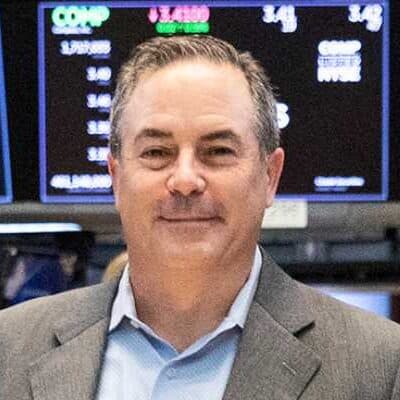
TheStreet Stocks & Markets Podcast #2: Bear Market Blues With Jay Woods
Chris Versace and global strategist Jay Woods discuss why Woods follows the price action, risk management, blending fundamentals with technical analysis, and answer member questions.
You've reached your free article limit
You've read 0 of 1 free Pro articles.
In this week’s Stocks & Markets Podcast, TheStreet Pro Portfolio’s Chris Versace is joined by Jay Woods, Chief Global Strategist and CMT Association board member. The conversation begins with an introduction of Jay’s background and investing style and quickly turns to the current market environment and why we could see the market re-test its April lows. The two also discuss signs of investor capitulation, factors that could drive the market higher on a sustained basis, and why folks need to be on the lookout for potential head fakes.
Jay gives his views on Dollar General DG, Dollar Tree DLTR, TJX Cos. TJX and Walmart WMT, as well as Pro Portfolio holdings Waste Management WM and Costco COST. The two also discuss which sectors Jay is following as March-quarter earnings season heats up — and the ones he’s avoiding.
All that plus Jay’s answers TheStreet Pro member questions.
TheStreet Pro Portfolio is long WM and COST.
Jay Woods is long WMT shares.
Transcript
Note: We apologize in advance for any grammatical errors or incorrect words. The transcript is generated automatically and, we can only perform limited edits in order to provide this in a timely manner.
Chris: Welcome, everyone to TheStreet’s Stocks and Markets podcast. I'm Chris Versace, portfolio manager for the Pro Portfolio at TheStreet Pro. And joining me today to break down what's driving the markets and share what he's watching is Jay Woods, chief global strategist at Freedom Capital Markets. Jay is also a board member at the CMT association and an adjunct professor at Fordham University, one of my Alma maters.
Jay, I've got to thank you for joining us. Really appreciate it. You're kind of new to some of the folks at TheStreet. So, tell us a little bit about your investing style and kind of what you're paying attention to.
Jay: Yeah, for me, it's always about risk management and then setups from a risk-reward perspective. So just a little bit of background. I started as a trader here for 28 years. So, you have to know your time frame. And when I was a trader here, market maker back in the day, time frame was minute by minute, second by second. And it's not anymore. Well, it depends on what we're talking about. We want to do a deep dive into some anchored VWAP stuff. We can do that. But no. Now, I've pivoted into a market analyst, and I take a lot of my experiences from this trading floor, and I put them into broader perspectives. I talked to more of a retail base and family office customer base, that we're looking at different time frames that may be intermediate three to six months or longer term. And then from my own investing, I had my own rules, for a job, I did this minute by minute, but for my own investing. Put it away by best in class, by strong technical strength and not look at it every day. And you know, I got to focus on my job of looking at 30 stocks minute by minute every day.
Chris: So, you're an investor or a trader?
Jay: I am both, and I like to put both hats on and combine the two when talking to an audience. So, when we talk through ideas later on in this podcast, we're going to be talking on time frames, good entry points, good risk reward setups. And then once someone gets into that, they make it their own. Because once you own it, you have to have that time frame. What is my my goal here? And then once you achieve that goal, are you going to let it ride or are you going to take profits?
Chris: You know, that's a great point because it's an evolving landscape. Of course, there's always new data, fresh insights, and sometimes you might have to let it ride. Other times you might have to harvest.
Jay: Yeah, and if you haven't noticed, it's been a little volatile lately. So time frames are quick and goals are met very quickly from tweet to tweet as we like to say
Chris: tweet to tweet. Well said, well said. So let's talk about the market environment. You know for some folks challenging other folks more painful. You know, if we dial back to February with the start of the first round of Trump tariffs, what were you thinking was going to happen? Have things played out that way?
Jay: Yeah let's back up to the election when we had that euphoric things are going to be different. Things are going to trade a certain way. Tariffs were a concern, but we didn't know the extent of that concern. So, the word of the year since Trump's been in office is uncertainty because we aren't certain exactly how tariffs are being used. Are they a negotiating tactic, how long they might be, exactly who will be implicated by them. So there are a lot of questions. And every day we look for answers and it seems like we get one answer. But three new questions. So it is volatile.
Chris: Magic eight ball.
Jay: So yeah, who knows. Whatever works, right? You know when the magic eight ball is on a roll, you stay with it. That's the trading superstition in me. But no, you know, what I do is I always follow price action as a market technician.
Chris: Now hang on, let me back you up. Go! price action. What does that mean?
Jay: Price action. You look at something as simple as the last sale. All right. Once you buy a stock, you're anchored to that price. That is your, you know, level where if it goes up, you're making money. If it goes down, I'm losing money. And when it goes down, you look at it differently and you have to game plan differently. So, whenever we talk about trade ideas and time frames, I want to know exactly what that ultimate goal is by someone getting in. And when I set up trades, you look at risk reward. There's always risk involved. When people get into a trade, you don't buy it. Well, of course my teenage son may differ. You know. You know we buy it. It's going to the moon. And Palantir was up, 10 straight days, and then all of a sudden it changed. But you have to know what's my downside risk? It's a horrible way of looking at things. No, but when I did it down here…
Chris: I totally disagree with you on that. I think you have to do it. You know, one of the things that I try and do is triangulate price targets higher, right? But I also try to triangulate my downside risk and then look for a net upside number. That's what I do.
Jay: Well, I'd like to be an optimist and shoot for the moon, too. But yes, if we're going to preserve capital, which is the most important thing, live for the next trade, you have to know. All right. I made a mistake. Make them all the time. But I limit those mistakes. And there are so many different ideas to go from. If one trade doesn't work onto the next or get out. Minimize the loss and let's reevaluate. Get back in at a better price point.
Chris: So you've been doing this a long time. A lot of, you know, on-the-floor experience. And when I hear you talk about what you just said, it sounds like the book of stocks that you're running is very large, right? But for the average person. Right, a lot harder, right so from your experience, what's a sweet spot for the individual investor in terms of portfolio sizes?
Jay: Yeah, portfolio is you always want to buy best in class. So relative strength is what I look at. And how is Walmart doing versus its other peers in the staples sector.
Chris: And that's from a technical perspective. When you say…
Jay: Technical and a fundamentals perspective, you want to know what you're getting yourself into. I believe in the old Peter Lynch mantra Buy what you know. Buy what you use. Buy what you believe in.
Chris: One up, one up on Wall Street.
Jay: Yeah, and it's the younger kids. It's those generations that come behind us now, there are few. I can't believe this, but we're getting old and that. Teach us what the next big things are going to be. So when there's new AI technology coming out, I go to the younger people who are utilizing it, learn it myself, and then see what's going to be the next big thing. Not easy, but, you know, one of trading. Learn by doing. You get into a trade. All of a sudden, you look at it differently. There's money involved. You have skin in the game. So that's it. But when I'm analyzing markets, Yeah, people come to people like you and myself, because we do a lot of the work we've been around for, you know, a little bit of time. Let's not beat ourselves too much. But, you know, you I take a top-down approach. I look at the indexes, then I look at what's leading the indexes. So you better know those Magnificent Seven names, because their market caps are kind of important. Yes, they change crazy amounts, but they are important. That's what's driving the market. Then a sector approach. You know I mentioned staples. So, you have to know that Walmart, Costco these are some of the consumer staples that you have to be on top of. And then the Procter and Gamble's of the world, the Kimberly-Clark’s, the Colgate-Palmolive's all reporting earnings this week. So, these are the things you follow. And then you try to find those best in class and then those that have risk reward setups that are favorable. So price action to me is what dictates that. And then when you break technical levels into it, it really sets you up to have an advantage. You know, when it comes to trading you, you know, I hate to refer to it as the game, but.
Chris: Right, right.
Jay: You want to have an advantage in the game. You want to know what stocks are set up best from a risk reward point of view where I can make money because that's what we're here to do.
Chris: So from a person who's more fundamentally driven, what are kind of your go to technical metrics that you favor?
Jay: Yeah, and I like to keep it as simple as possible. We can go deep in the weeds and look at Ichimoku cloud and Fibonacci levels. And I can, you know, sound very impressive and talk about that as much as you like. But basic levels of support and resistance. All right. Got down to this level. It's held. There are buyers here. Resistance it gets here. It fails. There are Sellers in charge. Those are the basic levels where you can just trade stocks in different channels. Breakouts OK. What caused the breakout news fundamental story obviously. And then does it have something to reverse. If it's something going up is it making new highs. Strength begets strength. We saw 62 new highs in the S&P 500 last year. If you bought 61 of them you made money. Most of the time, you're always going to miss but you want to play momentum. So I look at support resistance trends. The trend is your friend. It rhymes. It sounds clever and it's a fact. And then momentum indicators on top of that. So I look for RSI stocks that are overbought oversold when I see changes something that's oversold coming out of an oversold condition breaking above 30 in that RSI. That to me is a buying opportunity with parameters of risk reward set in. So to me you have more of an upside than a downside you get in. MACD crossovers, moving average convergence divergence, and then stocks in the best of class. That's how I look at it.
Chris: What about market oscillators? Are you a fan? Do you use those?
Jay: Yeah I mean I'll use Bollinger bands from time to time. But once you put too many metrics into it, to me, you're now trying to find a reason to justify your initial thought, whether it was, I walked into this store and I liked it. I like what the CEO is doing. I like the story and the region that they're moving into. There are fundamental reasons that get my attention to these stocks besides just looking at chart patterns. But when I put too many oscillators in there, then I'm getting away from my system, which I try to keep simple and trying to justify something that may not be there.
Chris: Is it fair to say that the more complicated you make it or not you, but someone makes it, you run the risk of analysis paralysis?
Jay: Well, I believe so. But, you know, there are certain times I will look at Fibonacci levels when I look at these moves in the S&P 500. These wild swings we've seen. All right. Let's take a bigger overview and look at where we were at the bottom when this bull run started back in September of 2022 to where we were in February. All right. Let's put some fib levels in there. Because Fibonacci levels to me from a technician. It's kind of voodoo. But these numbers, they come into play again and again and again. So if something works, I'm going to look at it. And what level was I looking at in the S&P 5130. Where did we get to yesterday, break and then recapture 5130. 38.2% retracement from the high. These are levels where you get buyers stepping into the market. So I utilize them, not my go to, but I will try to learn as many as possible. And this is what's great. I teach this class at Fordham University, your Alma mater, and everyone is going to find something within technicals that works for them. You have a great like Mark Newton and he uses gann and wave technology. Katie Stockton another great CMT we see on TV all the time. Ichimoku cloud loves the Fibonacci retracement levels. It's worked for her. It's worked for her system. And what I found as a trader, now analyst, that my system has been beneficial to me and to the audience that I talk to.
Chris: All right. Well, let's mention some retracements. You know, some other folks at TheStreet, Bob Lang in particular, and some others. They have said that we will likely need to see the S&P 500 retest the April lows. What do you think?
Jay: Yeah, retests are important. That would be a double bottom if we got there retested, held and went higher. I think there's a good chance we could retest those lows. I'd like to think that the bottom is in, but retests are normal. Basically, a retest is you get to a washout level, which we got to on April 7th that Monday. And, you know, we were down over 13.5% over three days, right. There was fear, there was panic a VIX spike. So we got a nice rally 9.5% that Wednesday after. And now we're kind of making progress, churning along, not getting back above key levels that I'd like to see this market do. But this is constructive.
Chris: So hang on. Key levels to push higher.
Jay: To push higher. Yes so we broke down from 5,500 which were the March lows. We broke the 200 day moving average. That was one warning shot. Then you know we had a retest of the initial March low which was 5500. We got back above, got to the 200 day. We failed. We retested. We failed. So as Bob Lang says astutely, I might add, there could be a good chance of a retest. Not only do we want to see it, if things do get bad, we want to see it hold. And that tells me buyers are finally in charge if we do get that retest.
Chris: OK, but you did mention, though, that we just kind of did not move past some key levels that would suggest to you the market's moving higher. Last week on this very podcast, Peter Tchir, global macro strategist at Academy Securities, said. In his view, right now, you have to and I want to make sure I get this right. Buy the dips. Sell the rips. Is is that what you're saying to your clients?
Jay: This is a traders market. We are not technically in a bear market. We haven't closed 20% from the high. But you and I have lived through enough of these to know that when 65% of the S&P 500 has had a drawdown of 20% it's a bear market. When your leadership technology, consumer discretionary down 20% the NASDAQ down 20% This is a bear market. It may not be labeled in history. It sure feels like it though. But you know, it's a bear market. And we're seeing some crazy action. And you see most of the volatile times occur in bear market scenarios when stocks are oversold, when stocks are below their 200 day moving average, you get what I call rip your face off rallies. And we saw a couple of those and we may have a few more in store. In fact, 19 of 20 of the biggest one day rallies in the S&P 500 have occurred under the 200 day moving average. So those are bear market conditions. And you tend to see the biggest rallies in some of the worst conditions.
Chris: So question with kind of a coin with two sides. Right so you mentioned a washout earlier right. How do we know when we see the market finally capitulate.
Jay: Yeah well we don't know until hindsight. And you and I've been crazy enough to try to make those calls. I made that call back in August with the Japan yen carry trade. It got a little out of control. So what do I look for? I look for the VIX. The VIX spike over 40. The VIX in August went over 60 I think we touched just under 60 if not 60 to the number on this last spike on that Monday crescendo if you will. When we found that bottom and rallied back. So you look for fear, panic if you will. Well guess what. That Thursday, Friday before we had the washout bottom on that Monday, that near term bottom for now, we're now 5% down 5% that weekend. There was so much uncertainty, so much angst that we could set up for another Black Monday 1987 scenario that.
Chris: And there were people calling for that.
Jay: And it was set up to do that. And we gapped lower. And then we got messages out of Washington,
Chris: The tweets…
Jay: to cool things down. But we were on that trajectory. So if you look at over a three day period, we were down 13.5% over three days. These were levels that you've only seen three other times. When were they financial, crisis during covid, and then of course 1987. So it wasn't technically a crash, but it wasn't fun living through it. And that was the capitulation, at least over the near term we saw. And now we got some progress. We're waiting for the next headline to drop, but there are lines in the sand. As a technician, as someone that studies price action that we have to be aware of. So for us to say, all right, the all clear is here. Maybe we need to retest, maybe we don't. Maybe this will be a v shaped bottom or more of an L shape, because the v would have snapped back a little farther at this point.
Chris: So an so an L shape, just to be clear, is fall and then kind of move sideways for a while.
Jay: Yeah, more like a pie. You go down, you come up halfway, then you go across. That's where we are right now. So this is constructive action and hopefully it will slowly come back because, we're seeing things just get too crazy. A little sanity, a little deep breadth and a constructive rally based on solid earnings tariffs certainty we start to build back. So we'll see.
Chris: Those are the things that if they happen, we're not saying they will. Yeah they could help support the market find its footing and March higher.
Jay: Without question. You know everyone's worried the uncertainty of the earnings growth, of CapEx spend in these mega caps. How will China retaliate? Will there be an escalating trade war? And as this goes down, the market tries to think, worst case scenario. And here's a fun fact for you. When we got liberation day that was on April 2nd, after hours, the Wall Street Journal leaked something that was wrong. They said 10% tariffs across the board in the market was rallying off of that 5500 level. We rallied the first 15 minutes before that chart came out and Trump said, no, we're going after each of these countries for this much. And then we sold off. The market was OK based on after-hours activity with 10% across the board.
Chris: Well, it it was probably less than folks were thinking because 15, 20, 25% had been bandied about. Jay: Yep and then they saw that chart and they said, wait, what the heck is this? Where these numbers don't make any sense. What is that?
Chris: What is that formula?
Jay: Yeah and then now what? How are people going to reciprocate? And we washed out, and now we're walking it back. We're negotiating. So some people may not like. We're walking it back. We're negotiating. We're going through things. One country at a time. We delayed and we're calming. And as we calm, we see some nice rallies, we see some stability. And now we're in earnings season and hopefully we see some earnings but will we guide? I don't know how the guide is.
Chris: You know, I was talking quite a bit about my concern for S&P 500 consensus earnings earlier this year. They were up 14% Now they're up less than that. And I think in the next two weeks because this week I think it's about 24% of the S&P 500 reports next week by market cap, four or 5 stocks. The big guys, they represent about 18% 19% of the basket.
Jay: Yep
Chris: I think we're going to see some guidance resetting. And I think that's going to reverberate through the market.
Jay: Exactly and that will cause analysts to cut their numbers.
Chris: Well we've already seen that though to be fair.
Jay: Yeah you have, we have to lower that bar so we can exceed it. So we're going to lower it a little bit more. And that's where the recessionary fears come in. You know is earnings growth really slowing? How tremendous is it. But quarter over quarter year over year earnings are up. And these companies are doing all right. But this wave of uncertainty this unknown implication of tariffs has got people on edge. And you hear that r word bandied about.
Chris: Look, you're seeing some companies like either American or Delta, I forget, pull their guidance.
Jay: Yeah, Delta
Chris: United gives scenario guidance. And other companies are reiterating their guidance. So it's kind of all over the map. But I think it's going to require, at least from a fundamental perspective, as we get ready for these reports to dig into. All right. What companies what sectors are likely vulnerable because there's others like Quest Diagnostics. Great numbers this morning.
Jay: Yeah, right.
Chris: And reiterated their guidance. You know they're viewed as a arguable safe haven.
Jay: Yeah and that's what investors want right now. They want to be in that safe haven. Whether it's a flock to gold, which is getting a little overbought or if it's a staple a utility with a dividend. These stocks will go down the least. Doesn't mean, they won't go down, but they'll go down the least. They'll pay a dividend. And it's a comfortable place to park your money if you're keeping it in this country until things get a little bit better.
Chris: So let me kind of switch gears here because the pain in the market. Some people see stocks down, you know, 10, 20% some way more than that. And they're tempted to throw in the towel. But there's this other school of thought of time in the market, not timing the market. What's your thought on that?
Jay: Well, that's about perspective. And when you put things in perspective, when you live through these times, they're horrible. And you always think this time is different. And there are always different reasons for the sell offs. But over time, the S&P 500 is constantly putting the best companies within the index into the index. Perfect example. We brought in Uber like about a year ago. What did we kick out? Alaskan air. Do the eye test. Would you rather own Uber or Alaskan air? All right. The eighth biggest airline that couldn't even merge with Hawaiian. Or did they merge?
Chris: I think they did.
Jay: I think they eventually that one they got through the 49th and 50th states could merge their airline. But, you know, uber is a company with high growth technology factor and…
Chris: Diversifying their revenue business.
Jay: Exactly, and so I would rather be in it. And the S&P 500 will rebalance. So the indexing is generally going to work out over the long term. But these short-term bumps, these hiccups, they are not fun to live with.
Chris: So how do you sidestep being head faked? Not easy.
Jay: It's not. The trader in me is trading a little more actively on paper, because I have rules that you have to hold for a certain period of days, and I miss. I miss those days when things are going crazy out here and I'm not at my post and I can't jump in and out. But it's all about perspective. And these are situations that, like I said, each time is different. The headlines are going to be crazier than ever before. We've seen that. But these 500 companies in the S&P 500, these small cap mid-cap companies that continue to grow, they'll get it right once they get clarity. So, I'm not concerned about it now. Will it affect our bottom line? Will it cause inflation? Yes, could it cause a recession? Possibly but once they finally announce a recession, if they do the NBER, it'll be over. We do a show on this. How ridiculously outdated that system is. That's when you really want to buy, because you're already six months through it and halfway out of it. So, I'm not worried about a recession call. I'm worried about quarter by quarter right now.
Chris: Are you worried about stagflation?
Jay: Stagflation? it's hard not to be. I mean, what are we are we getting growth? No could unemployment go up? Yes these doge cuts really haven't felt trickled through the unemployment data just yet. And they may not be as severe as some people thought. That's a good thing. But what we're seeing right now, companies aren't hiring. If you talk to some college students, I got one graduating this year. It is a tough job market right now. Are they going through major rounds of layoffs? Not just yet…
Chris: I don't know. I mean, those last two challenger job cuts reports were pretty heady.
Jay: Yeah
Chris: But, you know, February, March. And I think the issue there is that those are announced layoffs, meaning that they will take time to trickle through the system. They're not immediate.
Jay: Exactly so we're seeing inflation possibly rear its ugly head. We're seeing job growth slow and maybe job you know numbers unemployment go higher. So yes it's a perfect scenario. One thing that's saving us right now oil prices energy prices are the biggest tax on the consumer is prices at the pump. Those have been stable and going down. I don't know where eggs are today. I could care less. But you know…
Chris: So your advice to Powell is what?
Jay: Powell stay true to what he's doing. I mean yes too late Powell I could agree with that. You know, he was too late to raise rates when we started raising rates. It's too late to Act to cut rates. He should have cut rates. You know, one meeting before he did when we started this down cycle.
Chris: But they delivered 100 basis points in cuts. Do you think he's late now?
Jay: No he paused. And now he was waiting for economic data. He got thrown a curveball ball with these tariffs. So here's here's his conundrum. Here's the Powell conundrum. Right now he has the ability based on economic data. He's data dependent one point at a time. Very boring. Pull the string. He says it every time. All right. Inflationary data has somewhat stabilized. It's sticky if you will. Unemployment is still at historical lows. You can give us another quarter point. You telegraph that at the beginning of the year. But does he do it because he's bending the knee. Does he want to show weakness?
Chris: Can he bend the knee.
Jay: He can cut a quarter point right now. And it wouldn't do anything to this market in my opinion. But now you know what…
Chris: To the economy or to the market.
Jay: OK, good. Oh, look at you. You're doing what I would do on a pushback. Yes to the market first and to the economy second. I think both could benefit from a quarter point cut. I think the path to cut is still there on the table. But that tariff uncertainty is what he talked about at the last meeting. And then liberation day was an uncertainty. It was like, wait a second, now I'm really uncertain because if these tariffs go through, not only is it going to be transitory with inflation, which he brought out the word transitory. Good for him. Well he tried it with Biden and Biden, we got up to 9% and it was a little more transitory. He blew it there. Now he kind of put the ball back in Trump's court. It's transitory unless and the unless was the liberation day scorecard, which was greater than anyone anticipated. So now he said, look, there's too much uncertainty. Until you get your ship right, I'm not going to do anything because if I give you a cut now, I may have to raise rates. Right and then here's the other conundrum. What if the economy gets so bad that they have to have an emergency rate cut? We have to cut to try to save something here. That is not what you want to see. So that's a scenario you want to avoid.
Chris: So strap on your fundamentalist hat. Join me. I'm joining April data. May economic data. How important is that?
Jay: It is important because now we're getting into the heart of the Trump presidency and the tariff time and the tariff time, we're seeing small impacts right now. I don't think the economic data is going to be as bad as people are fearful of. But with China reciprocating, with that 90 day extension getting closer to a resolution, if these tariffs are greater than what we feared, then Yeah, it's going to be hard to say that the economic data is going to really support cuts at this point in time.
Chris: And I think that brings us all the way back to corporate guidance. Right because just there's so much uncertainty. You've got to be a little conservative.
Jay: Exactly and you know who's been the most impacted. The big mega cap names and technology. Yes those China trade negotiations are very important. Will there be impacts. Where are they going to be exemptions. Well let's focus on Tesla. Let's focus on Tesla. I mean their China impact is pretty epic. And then you talk about the rare Earth Materials that they get from China.
Chris: That's right.
Jay: And that region to power the battery, which is really the story of Tesla. It's not the cars. It's the energy that they can bring to fruition. And then their plans going forward with autonomous driving that is going to be so fascinating to watch because you have politics, you have trade, you have Elon Musk, you have, it's just…
Chris: So it's a it's an earnings call to listen to.
Jay: I would think we're going to be paying attention to it very closely. Yes.
Chris: Any others this week that you'll be really focused on this week?
Jay: Alphabet, Google. Google has got the litigation in Washington and then technical. You look at Google on a long term chart. This 150 level we got below it yesterday. We're taping this on a Tuesday where we're rallying above it. Right watch it on a weekly basis. We haven't closed below 150 on in a while. And we're close to 147.5, 148 on a weekly. 200 week moving average that we could break it. That, to me, means something's broken. Price action has failed where buyers step in. It's changed. So there are a lot of headlines going to come out of Alphabet. ChatGPT has got them on the ropes. This breakup, I think it could be epic. I remember AT&T and what it did for them.
Chris: But remember microsoft? That never really happened.
Jay: No it didn't. And they were dormant for 20 years. So we'll see what happens with Alphabet. But that's an earnings call and an earnings that I think we have to keep a keen eye on. And then ServiceNow in the software space. Here's a stock that was a high flyer. I think they I don't think I know they didn't miss an earnings until last quarter. Last quarter. Well when you look at Bloomberg data and you punch it up and it's red. But yes there was like a 17 quarter winning streak but a slight miss and then anxiety about tariffs and the future. And man oh man did they overdo it to the sell side. Then what do I do. I put some Fibonacci retracement levels on top of it from its all time low to its high and we are right at a sweet spot. Going into earnings, where I think the risk reward is very favorable. And if it does come in talk about relief rallies in bear markets. ServiceNow can give us a quick follow through. That, to me is worth putting a few dollars into because the reward really is far greater than the risk over short term periods.
Chris: Well, we own it in the Pro portfolio.
Jay: Well there you go. Good luck.
Chris: And just for what it's worth, all the data points that we've seen about AI adoption in various sectors really speaks to, I think what they're going to show in that earnings report, and what we know is that AI carries favorable pricing, incremental pricing, better margins. So I think that's going to help lift them. But but we'll see later this week.
Jay: Yeah Wednesday afternoon.
Chris: You also last week kind of talked about a couple of different names. You're, I don't want to use this word, but use it for you. Let's just say broken charts.
Jay: Yeah charts. Charts that, you know, usually they look like trash, but all of a sudden you sift through the trash when there are, you know, turbulent times.
Chris: Now, let me set you up with this. Since you said trash. Yeah, let's deal with the first one. And we also own this portfolio. Great stock waste management.
Jay: Waste management WM. This stock has held up relatively well. And you look at relative strength relative performance in an environment like this. And it's been doing extremely well. Then you look at tariff implications. It's us based. The tariff implications are minimal at best. So it's something that it's one it's like a utility something we need we use. The growth has been there. And it's a good place to park your money because…
Chris: …who isn't going to pay whatever they have to get rid of trash?
Jay: Yeah Yeah. Well don't don't tell my garbage man. My rates have been pretty stable for a while. But yeah waste management, technically, fundamentally to me, those are the two things. So it's a good place to be. And the chart looks great. Just made all time highs pulled back. But we're on the verge of them again. And then you look at stocks that have been so beaten down that could have tariff implications, but maybe the worst is over. Dollar Tree, Dollar General. Those thrift stores I mean, you couldn't pay me to walk into them, but right now they're breaking out, breaking nice neutral ranges. We talked about support resistance, breaking resistance levels, breaking above a 200-day moving average. And guess what? They've something to reverse. So, there's momentum there. They were oversold. Now they're coming back to life. So, there could be a tailwind in some of these dollar stores where people have been kind of shrugging them to the side and then watch Target. Target is not a buy to me yet. It's been in a horrible downtrend. Their CEO was just in Washington with the Home Depot CEO and the Walmart CEO talking with the President. That price action is starting to stabilize. It's got a little bit of a gap to get back to above 98-100. So if it gets there we could see momentum and a reversal in target. So there's another stock I'm watching. But if you want to be best in class. Walmart buy it. Put it away. It's in my 401k. I don't look at it. Chris: Costco
Jay: Costco. Another one. You just top two. It's you know and then you think of Costco. We'll talk about a loyal user base and the membership. Membership the membership matters. They finally took seven years and they finally increased that membership fee.
Chri: Right we'll see that benefit roll through.
Jay: It's rolling in and no one left. The hot dog still $1.50. That's right. That's right. So people go in there, they get their hot dog soda. That hasn't changed. So they mess with that. Then maybe we'll re rethink our schedule.
Chris: Maybe maybe. All right. So before we get to some member questions, just one last thing. Since you mentioned the dollar discount stores. Yeah TJX any thoughts? TJX no, I mean, it fits into that mold, Chris: right?
Jay: My mom likes it, but I think there are better places to be. It's had a nice little run as of late. Right and you know it fits that mold. But no I think there's more boom possible risk reward scenario where if these dollar DG, Dollar General, Dollar Tree DLTR break the 200 day moving average, I get out. But right now the momentum is there and it's starting to really make its move. TJX I think we just missed a bit of that move so I wouldn't be there.
Chris: All right member questions. So let me let me look into the teleprompter here so I can get this right. OK here we go. Jay first question. All right. Considering Trump's so-called liberation day on April 2nd, something you already talked about and the resulting near total collapse of the bond market. And given Trump's tendency to irrational or I guess for irrational behavior, can you foresee the possibility, Jay, of another such episode, that this time we could see a global financial collapse? What do you think? Or do you think the worst of it is behind us?
Jay: I hope the worst is behind. This is a question trying to get into the mind of Donald Trump.
Chris: Good luck. Good luck
Jay: trying to get into the mind of the people that have to go in and say, sir, that's probably not a good idea. And not cause a problem. Bessent has been trying to do his best at delivering the message, and we saw it one weekend. OK China tariffs. They may come down. And Bessent delivered the message. Trump put out a tweet that was on a Saturday, Sunday afternoon. Lutnick goes on TV and kind of blows it up. Yeah it's just temporary. So we need to get them on the same message. So for me to make any predictions and to be consistent. Consistency is key. I don't think we've seen anything like that. This is very different than the first Trump administration in that he's got loyalists around him that won't say, sir, this this isn't a good idea. And we're seeing it in different branches. But now with the economy, we don't have Gary Cohn in the room. We don't have some of his Larry Kudlow's around him. He'll talk to him on TV. Jamie Dimon went on Maria Bartiromo show and directly delivered a message. And that also happened to be the day where he turned. So people will go to where they can get his ear. But for me to say, oh, predict what's going to come next. No way. You can't do that.
Chris: OK all right. Jay, what are your go to technical indicators? And how should a new investor utilize technical analysis as part of their investing acumen?
Jay: Well, you have to know price only. Price pays. Only price is fact earnings. They restate earnings estimates all the time. It's just an estimate. Price? You bought the stock. You know where you're anchored to. And then you want to manage that risk. So to me the levels the support and resistance things we talked about. That is OK. We're getting to a level buyers step in. It fell below. Something's changed. Then I like to look at relative strength index the RSI that measures… And when you put it up on any charting RSI you know it levels of 30 and 70. 70 means overbought, doesn't mean the stock is going to reverse or go down. But when it comes back from an overbought condition to under 70, take some profits trim. That's OK. And you're probably going to see a sell-off. But I like to set things up on a buy stop scenario. When I was down here, I would buy more stocks on a buy stop. If it gets above a certain level, I want to buy it. Why? Because momentum is coming into the name now. But you like it at 31. Why didn't you buy it at 29? Because I didn't get the confirmation. So, to me, I will miss a little bit to try to get the meat of the trade.
Chris: And you're happy to. I'm happy to.
Jay: Yeah as long as I'm getting the meat of the trade in an entry that I feel comfortable, that's confirmed with an RSI crossover or a MACD crossover, then. Then I'm OK. Of course, you know I'm going to wish I bought the bottom, but good luck trying to catch a falling knife. I've seen a lot of people get hurt that way. And from a risk reward point of view, you need parameters. So, I will miss the lows. I won't sell the highs, but as long as I'm making money consistently hitting singles, doubles and occasional triple, maybe a home run, then I'm OK.
Chris: OK and then next question from one of the members is, you know, a lot going on, but are there any sectors you're warming up to? You just mentioned some of the dollar stocks. Anything else out there that you're really keeping your eye on?
Jay: I'm keeping an eye on technology and discretionary. These are the two most beaten down sectors. There are. So there are going to be opportunities in these stocks individually within the sector and the sector themselves. You know 20% correction means we're probably going to get a 5% or 6% snapback rally when that is I don't know. But I think from a risk reward point of view, the worst for now, may be over. And it's worth nibbling. And I say nibble. If you have $10,000 on the sideline, I wouldn't throw all $10,000 into it. Just just a little bit, just a little bit. And then Yeah, then be mad at yourself because oh my God, I missed. I could have put 10,000 and that those are the trades I beat myself up. Oh I if I only put this much into it. But I'm preserving capital. And this is a market where you have to quote the great Arthur Cashin from down here, be nimble and not just go all into something, pick your spots, ease into trades, cost, average down. Yeah that's what keeps you alive a lot longer.
Chris: And and as you do that, you can look for technical confirmation. You might get more fundamental data that helps support the idea of why now is the time to buy more.
Jay: It's like you do this for a living. Something something like that.
Chris: Yeah, Yeah. OK, so that's areas you're warming up to. Areas as we move deeper into the earnings season you would avoid.
Jay: Yeah I do like the financials. The regionals have been letting me down. I'm kind of waiting on the sidelines there for some confirmation energy. Very volatile oil prices I don't think are coming back anytime soon. We've seen a nice run and then gold. I would avoid gold. Everyone's running into this safe haven. I went back and crowded trade. It's extremely crowded trade, it's had a tremendous run. It's overbought. The RSI over 70 is starting to come in a little bit. And guess what. When did gold have a run like this before? You know 20% run? At the end of 2021 into 2022 when we went into that bear market and it took four months for it to peak when the S&P was making its lows. Well guess what? We're four or five months into this gold rally now and the S&P is trying to find that bottom. We may go a leg lower. We did back in 2022, but gold didn't follow along. Gold got taken for the ride. So this market was to sell off and take another leg lower. I don't think the safe haven is going to be gold, because they're going to look for places where they can take profits and they're in gold.
Chris: But at the same time, if we get some favorable trade developments, earnings, maybe they're a little better than feared. We get the market rally gold sell off.
Jay: Gold should sell off. Because guess what? Those gold bugs are going to look for better opportunities. They just made a killing in it. Now we're talking logical. And I hate to say, oh, there's going to be profit taking there. But that's what people do. Money managers will rotate out of those assets and a lot of rotation has gone into that safe haven. Bitcoin looks good right now. Now I don't know when their earnings come out. I don't know it from a fundamental point of view at all. Obviously we know they don't have earnings, but Bitcoin from a technical point of view has a constructive bottom. Just broke out of a near term downtrend back above 90,000. As we tape this I mean at least five minutes ago when I jumped on the set. To me, I think the greater risk reward is to the upside than to the downside right now. And it's an asset class that I can't figure out. What is it a safe haven? When do we rotate into it? But right now the technicals are telling me people are going into it. The worst looks to be over for now. We had a nice floor that was tested multiple times, and we just broke out of a near-term downtrend. So to me, Bitcoin should rally 98,000 100,000 over the near term. That's where I see momentum. So I would go there.
Chris: OK last question about I want to say 18 months ago Jay OK. You sent up a flare saying that Walgreens Boots Alliance, you are stinking up the Dow. You need to go. You were correct.
Jay: Yeah now it's performed well as being acquired, but kick him out.
Chris: But that's all right, though. But what? Is there any company you think that either should be added to? The Dow should be bounced from the Dow. You know, I'm actually not that big of a skeptic right now on the Dow. Everyone's going to say, oh, it should be Nike because it's been decimated. Intel got kicked out. That was my next target. And I didn't get to really come and pontificate to you about how much I hated Intel. But they did the right thing. They took out the weakest link Intel and they put in Nvidia. So to me, the rotation has been there. They put Sherwin Williams in kicked out Dow of the Dow which I didn't see the need to do that I like Dow in the Dow. That makes sense. But as far as movement goes in the Dow if you're going to kick out a Nike, what are you going to put in? You're going to put in a Lululemon. Like I don't
Chris: that's why I asked you.
Jay: I know and Disney for maybe a Netflix. OK there you go. Maybe maybe they do that because you talk about relative strength. Netflix held up great after earnings. The growth is there. The trajectory continues tariff free. So all right I'll go out on a limb.
Chris: Well, the other thing before you do is people may cut back. Yeah right. And downgrade their subscription. Yeah but now it's supported by ads. It is very different than in the past.
Jay: They've downgraded. And those kids that are finally getting off my plan, thank you God. And having their own Netflix accounts, they're going for the cheap one. They'll sit through the ads I can't I can't sit through ads. I'm you know, they got me, they got me hooked.
Chris: But the point is, if you're Netflix, do you care if people downgrade? No, because you're getting it made up in ads.
Jay: No and now they're streaming live sports. Yes and how did that go? I mean, the boxing match a little. You know, we saw too much of Tyson in one clip and then the streaming was a little laggy. But they fixed it.
Chris: It'll get better.
Jay: Yeah they're Christmas day. They're coming back I don't know I don't know who they had. Do they have my Eagles on Christmas day. They should. They want ratings.
Chris: Your Eagles?
Jay: You want my Eagles. My birds. So yes. Well there you go. You're not a fool. You're a Washington. What are you guys? I live. I live in Virginia, but I'm from the New York area. OK, so Jets or Giants?
Chris: Moving on. Jets all right, moving on. We shall, we shall. All right, folks, and please remember that if you want to get your questions asked on the podcast, you need to be a Pro member. We collect questions before each and every podcast, so be a member. Get your questions asked. Jay, you've been awesome with your time. I love chatting with you, and I'm so happy that you're going to be a recurring part of this podcast. But today, before we get out of here.
Jay: All right,
Chris: any final parting thoughts to the audience, to the camera, as they say, is yours, this camera.
Jay: That camera. I don't know where my cameras are, but. Deep breaths. The headlines are still going to be volatile. This time will give many trading opportunities, but you have to be on top of your trades now. Take 20% swings in three days. These are not normal, but the long term investor. Grin and bear it cost average in my 24-year-old was complaining his 401(k was down money 24 years old. Be quiet. Keep putting money into it because my 50-year-old self thinks my 20-year-old self for living through 2000 to 2009 and continually putting money into the index. Because always over time America will win, the indexes will win out and this is a turbulent time. But this too, will pass.
Chris: Excellent, excellent. All right, folks, that is this week's podcast. We'll see you next time. But between now and then, be sure to check out a lot more of the smart content from Doug Kass, Helene Meisler, Sarge Guilfoyle, Ed Ponzi, Rev Shark, and many others at TheStreet Pro. Thanks for watching.