Sunday Soup: YouTube and DoorDash Disrupt, Saving Music, Your Brain on Ozempic
These are the articles, streams, and books that caught our attention this week.
You've reached your free article limit
You've read 0 of 1 free Pro articles.
It's our last batch of Sunday Soup for 2025, and we’ve got different perspectives on the race against time. One slows human aging, but the other? It’s about the race to preserve decaying tapes of musical legends, and Iron Mountain (IRM) is connected.
We’ve also got deep dives on how DoorDash (DASH) became the behemoth it is, and how Alphabet’s (GOOGL) YouTube is disrupting not only podcasts but also TV. And if you’ve wondered what Ozempic does to your brain, read on!
If you have a recommendation to share, we’d love to hear about it in the Comments section below.
Now enjoy this latest offering of Sunday Soup.
Articles 📰
How DoorDash Became an $85 Billion Behemoth and Won the Delivery Wars
"Indeed, DoorDash almost crashed before making it off the ground. Xu now enjoys telling the story of the Stanford football game that made, and then promptly broke, the new startup in the fall of 2013. Overwhelmed with orders from student fans, Xu and his then-tiny team delivered every meal late—some dramatically so. The right thing to do was to refund every customer. But those refunds would cost the startup 40% of its bank account, leaving them with less than $30,000. They did it anyway, and then stayed up all night to bake cookies that they handed out to the customers the next day as an added mea culpa. It’s hard to know exactly how many customers would have returned without the we’re-sorry sweets, but the move cemented what the founders say was a core value of the startup: customer obsession."
The Quest to Slow Aging Leads Scientists Into the Powerhouse of Cells
"Aging taps us on the shoulder in many ways: wrinkles, thinning hair, loss of flexibility, slowing of the brain. But the process also unfolds at a more fundamental, microscopic level, as the energy source inside most cells deteriorates. Scientists at Texas A&M University have discovered a way to recharge aging and damaged cells, an innovation that could lead to better treatment for a variety of conditions, including Alzheimer’s disease, muscular dystrophy and fatty liver disease."
The ‘Race Against Time’ to Save Music Legends’ Decaying Tapes
"New problems are plaguing old reels, putting decades of history at risk. One man, armed with hair dryers and a love of tinkering, is leading the charge to rescue them."
Here’s What Ozempic Does to Your Brain, According to Doctors Who Prescribe It
"What’s unique about GLP-1s—a.k.a. Ozempic, Monjauro, Wegovy, and Zepbound, among others—is that they target hormones, which play a major role in your weight and weight loss, says Dr. Russo. These drugs work by mimicking a hormone that signals satiety, keeping you fuller for longer and requiring you to eat less. While this hormone is released in your gut, it’s also released in your brain, creating a feedback loop between the two that tells you when you’re full, says Dr. Russo."
What We’re Streaming📱🎧
How YouTube Ate Podcasts and TV
What We’re Reading 📖
World Eaters: How Venture Capital is Cannibalizing the Economy By Catherine Bracy
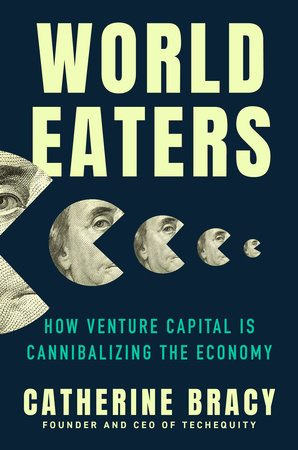
"The venture capital playbook is causing unique harms to society. And in World Eaters, Catherine Bracy offers a window into the pernicious aspects of VC and shows us how its bad practices are bleeding into all industries, undermining the labor and housing markets and posing unique dangers to the economy at large. VC’s creates a wide, powerful wake that impacts the average consumer just as much as it does investors and entrepreneurs.
In researching this book, Bracy has interviewed founders, fund managers, contract and temp workers in the gig economy, and Limited Partners across the landscape. She learned that the current VC model is not a good fit for the majority of start-ups, and yet, there are too few options for early stage funding outside of VC dollars. And while there are some alternative paths for sustainable, responsible growth, without the help of regulators, there is not much motivation to drive investors from the roulette table that is venture capital.
World Eaters is an eye-opening account of the ways that the values of contemporary venture capital hurt founders, consumers, and the market. Bracy’s clear-eyed debut is a must-read for fans of Winners Take All, Super Pumped, and Brotopia, an appealing 'insider / outsider' perspective on Silicon Valley, and those who are fascinated to look under the hood and learn why the modern economy is not working for most of us."