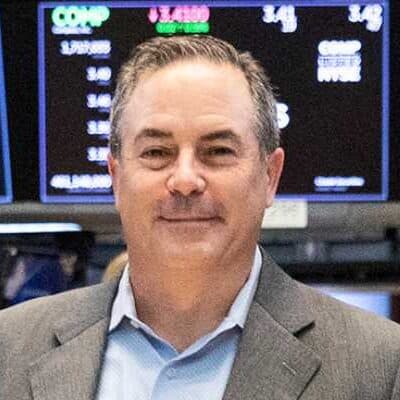
Stocks & Markets Podcast: The Next Market Catalysts With Noah Weidner
Are we in an AI bubble? Chris Versace and and TheStreet’s Noah Weidner discuss shutdown implications, Big Tech earnings, and expecting the unexpected.
You've reached your free article limit
You've read 0 of 1 free Pro articles.
On this episode of the Stocks & Markets podcast, Chris Versace is joined by TheStreet’s Financial Markets reporter Noah Weidner.
The two discuss the current government shutdown and how it could impact the economy and the market. They also tackle the question of whether we are in an AI bubble, examining it from the demand and capacity sides of the equation.
Amid big bank earnings, Chris and Noah then look at where there is continued opportunity in 2026 and why Big Tech earnings will help determine the market’s next inflection point.
All that and much more in this freewheeling conversation at the New York Stock Exchange.
Transcript
CHRIS VERSACE
Hey folks, and welcome to the latest Stocks in Markets podcast. I'm Chris Versace, portfolio manager of the Street Pro portfolio. Joining me today here at the lovely New York Stock Exchange is Noelle Weidner, the street's chief markets reporter. Noah, thank you so much for joining us.
NOAH WEIDNER
Thank you for having me.
CHRIS VERSACE
Now, this is kind of an interesting time. Now where we're at an interesting like crux, if you will. Yeah. We're coming off a recent sell off in the market given renewed us China trade tensions. We're at the mouth of the September quarter earnings season. Big banks are reporting markets not exactly falling in love with what they're seeing, but how are you doing?
CHRIS VERSACE
How am I doing?
NOAH WEIDNER
Well, I'm here, so that's a great story. This is a great start.
CHRIS VERSACE
And just so everybody knows, it wasn't exactly the smoothest of trips given the nor'easter.
NOAH WEIDNER
It was not. That's more of my weather. I'm out in Seattle and, you would expect to see more of the, dramatic weather, like, I think on the West coast, northwest. This time of year. But I feel like every time that I come to New York, a little bit of Seattle in the northwest follows me. When I was here last September, it was pouring, couldn't get out.
And this time I had five rescheduled flights just to get here. So just, you know, waited it out.
CHRIS VERSACE
But you're here. Are you properly caffeinated?
NOAH WEIDNER
I have not had a coffee all day, but I know there's a lot of coffee.
CHRIS VERSACE
There's a lot of coffee. Doesn't sound like you're staying true to your Pacific Northwest roots.
NOAH WEIDNER
No.
CHRIS VERSACE
But we'll talk more about that later.
NOAH WEIDNER
Absolutely.
CHRIS VERSACE
What's your take in the market? My take, and I say this because we've had, with the exception of the last couple of days, a really strong environment. September bucked this trend. You know, the beginning of October was good. We're hitting new highs. Are you concerned that perhaps we were you know market's near-term a little over its skis. Got to get through earnings.
What's the fed going to do. Yeah all these things now what are you thinking about.
NOAH WEIDNER
I think there's a lot of folks that are kind of operating in the dark. The lack of economic data I think is the highest concern among a lot of people I've been talking to over the last few weeks, is sort of operating on, like, I guess you call it alternative data, or at least alternative data points. And you've seen some of the payroll data that's come out, like ADP continues to put out their data, dump their data and put it out.
And then you're looking at some of these other like, I guess, soft data indicators like consumer sentiment continues to sag. Not not by like an amount that it's like really dramatic, but it's enough that people are thinking like, okay, so like where are we at? And I think the answer is we don't we don't really know which I don't think anything in that sense has really materially changed.
I think even if you have the economic data come out in the last few weeks, a lot of investors would be like, well, I think we need a little bit more to understand where we're going. But at the end of the day, I don't think anything has materially changed with the Fed's trajectory. It looks like we're still on track for one, probably two cuts by year end.
And then the picture I think gets a little more blurry from there out, but the kind of at least admitted as much where they're where we should be going or where they think we should be going based off of what we had. I don't know if anything that we've seen changes that.
CHRIS VERSACE
I you know, to me, it's kind of an evolving landscape, but that's always the case with the fed. You know, you mentioned that we're not getting a lot of data. I would counter that folks who just only rely on go on federal government data. Yeah, that they're not really doing their job because there is another world of data out there.
The one I just saw that was kind of interesting was the cash freight index for September, where they actually showed a sequential hiccup compared to August. That's kind of counterintuitive with, you know, a slowing economy. But then again, that was September before the government shutdown. And I think here and now that the longer the shutdown goes on, and I think public markets and this other one that I can never Parnell's call sheet.
Yeah. Is saying about 30 days, you know, maybe a little bit longer now. Yeah. You know, that I think will be a speed bump for the economy. How much the fed reacts to that. You know, I don't really know. I think the bigger question is, you know, what is this alternative data saying. Because what we did get from ADP and from the Carlisle numbers were very weak economic numbers in terms of job growth for September.
Yeah. You know, but what else are we going to start seeing? And do we see more federal layoffs only? I use that in air quotes 4000. Yeah. But that adds and that probably means that was a net loss of jobs in the month of October.
NOAH WEIDNER
So yeah. And I suspect I'll be very interested to see once we actually get the full count what that actually looks like, because the federal government has admitted that, like part of their policy, at least during the shutdown, and the Republicans plan to lay off, particularly a large number.
CHRIS VERSACE
Of massive, massive.
NOAH WEIDNER
Massive, massive layoffs of specifically Democrat positions. So I don't know what that ultimately pans out to. They have already at the CDC brought some people back. They laid off at one point.
CHRIS VERSACE
And they brought some people back, I think, behind the CPI calculation. Yeah, because they have to for Social Security.
NOAH WEIDNER
Yeah, they they brought back some folks, I guess they need like 2 or 3 weeks of, of people working on that to get that out the door.
CHRIS VERSACE
Yeah. And I think they promised that there will be a September CPI by the end of October. What I find fascinating about this timing, though, is when the fed meets, which I believe it's the 27th, 28th. Wouldn't it be ironic if the CPI number happens to come out after that?
NOAH WEIDNER
Yeah. I mean, I'm not sure that that's going to be, too helpful in this policy meeting. I think it might be it might be fair to call it a bit of a sunk at this point and just and just chalk it up to what is already on board.
CHRIS VERSACE
But if you let me float this wild theory to you, right. So if you're the Trump administration and you want lower interest rates a lot, you know, but you want a strong economy, you know, so, you know, if there isn't a lot of data coming out and you're, I won't say purposely keeping the government closed, but you're not exactly rushing to reopen it either.
As you mentioned, they kind of want to make some moves against their, you know, their opposition, let's call it, you know, to the extent that we hear but more about, you know, federal layoffs and already, you know, that weak data that we talked about, it could the thinking be that perhaps the fed might need to do more sooner?
NOAH WEIDNER
I definitely feel like that is an argument. I also think that it would be kind of against that. Will we rely on the data positions, specifically Jerome Powell and a number of other members?
CHRIS VERSACE
Well, but but you got negative ADP net data for September.
NOAH WEIDNER
That is true.
CHRIS VERSACE
Another week data for you know September and then more layoffs. And the fed has said that they're more focused on the employment market now.
NOAH WEIDNER
Absolutely. I think that they're probably at least based off of the past. How they look at like, different data points seems to favor a lot of those government. It should be a less number. Yes, even. I mean, obviously, because those are the numbers that they get. They say, okay, great. That seems to agree with all the other data that we have coming in.
I don't know if that means that it's going to result in them doing anything sooner. But I think that ultimately the employment picture might also be a little distorted by like, what? What even is the government layoff number or like what what is that? Is that a significant contributor as it has been like the last few months.
Right. Like is that is that a thing that really affects the broader economy? I think maybe some of that thinking might be playing in here. I don't know to what extent. But I don't think that based off anything that's happened in the markets the last few weeks that we're looking at a material change in policy because it feels like we're kind of just in a freeze right now.
CHRIS VERSACE
I think that's right. I do think the next known data point is going to be the fed beige Book, which we get on Wednesday afternoon. I'll be reading it. I'm sure you'll be reading it. And then, you know, we'll be sharing our thoughts on that. But, you know, if it supports some of the other data that we've gotten, I think we're likely to get, you know, those two other fed rate cuts.
But if it falls out of bed materially, I think that might change things. Fair to say.
NOAH WEIDNER
Yeah, I would agree with that. Okay.
CHRIS VERSACE
Let's let's move on. Let's talk about the other big topic and uncertainty really two things. One, renewed concerns about the AI bubble. And this renewed us China trade uncertainty. We're going to talk about both. I'll let you go first with whichever one.
NOAH WEIDNER
Yeah. I think kind of running abreast of all of this is, is this just debasement trade that has kind of come back from the, from the dead. And I think it might be animating some of the bigger concerns is you see the dollar falling, and if you look at like the S&P against other like currencies when adjusting or, sorry, other markets adjusting for currency like the S&P is actually like one of the least, well-performing markets in like the West this year.
You see the dollar falling dollar indexes rebound a little bit. You see gold rising very rapidly. So you kind of have I think this like acute risk, like awareness that is existing. And then at the same time you have all these people that are really animated and excited about AI and, and I think they're slightly concerned now about, oh, this is starting to feel a little bit more like an FTX situation in terms of how legit are the spending numbers that are coming out?
Does this strike you as kind of weird that all these businesses are doing so?
CHRIS VERSACE
So you're referring to the fact that there's a lot of, potential co-mingling of dollars with open AI in Nvidia and who they're back.
NOAH WEIDNER
Yeah, absolutely. And so I think that kind of like co-mingling of, investments and in terms of, you know, making these like vendor what resembles vendor finance deals, is a listening a lot of e-commerce here is how legitimate are they? I don't know, I've talked to a bunch of folks that are not really that concerned about it because of the differences that the large tech incumbents today make a lot of money from their core businesses.
AI is kind of a moonshot project for them. And so when you're talking about like AI investment, they could just turn that off at any time. I mean, you know, they're spending a lot of money. Like, I did a story a few months back where I looked at how meta blew through substantially all of their cash, on and then moved to the, the property and equipment, the PPE, any part of of their balance sheet and all of that was capital, spending on AI.
And then they went and tested private credit to get even more money to build AI. In theory, you could kind of, just to a certain extent, start making these investments. If you said, well, this isn't really working out anymore. These are not substantially contributing to the business yet. Well, of course they are large costs, making these tech businesses very capital intensive, I think.
CHRIS VERSACE
I think if we were to listen to Microsoft, ServiceNow and some other companies, I think they would take the other side that they are seeing, robust adoption. They are seeing it driving improved pricing. And, you know, I think Microsoft is now saying that the capacity crunch that they expected to, you know, be over in the second half of this year is going to extend well into 2026.
And I and I, I think when we look at that as well as, I adoption and more importantly, usage statistics, my sense on it is that and I'll give you this, we're not in the first inning, we're not in the second inning, but we're a ways away. Yet from inning seven. Inning eight. Yeah. So it's hard to tell, I think.
But we're probably somewhere between 3 and 5. Absolutely right. And if we're having this conversation again, and I hope we are in 12 months or 18 months, then I think, you know, again, based on the updated, you know, adoption and usage figures, we might be saying that, you know, what the incremental rate of adoption or incremental rate of usage is slowing.
And I think that's the time to be concerned.
NOAH WEIDNER
Yeah, absolutely. I think that people are still, on the whole very optimistic, you see that the market fell on Friday and then to I think on Monday and Tuesday we're getting like big announcements from both like Broadcom is is is partnered with open AI. That's coming back to the forefront then. Aam yeah we got all that. And everybody is suddenly making positive announcements.
I think the question at this stage is I think kind of against the backdrop of like OpenAI rolling out saw it to their like social media like video app. The question is are we building consumer apps here? We're making an enterprise case, or are we building a product that's going to solve big problems? And I think some of these these elements are competing with the overall.
Is the spending even going to happen? Is the is the large dollar amounts that we see. Is that actually going to happen? Right. And is there demand to like I guess supplement that spending? Because at this point OpenAI does not have the cash flow to make all of this happen.
CHRIS VERSACE
No no no no. But I it's also interesting, though, when you hear OpenAI, OpenAI are doing these things like how are they doing it? Is it open AI themselves? Is it part of Project Stargate? What does that mean with Oracle. And because Oracle throughout is you remember a couple of weeks back some very big numbers. Yeah, that really caught the market off guard.
And I think they have an I believe they have an analyst day or an investor day coming up later this month.
NOAH WEIDNER
Yeah. More color on how they got to their nearly half $1 trillion backlog I think is kind of necessary because people saw that. And maybe I think overlooked the fact that the quarter was it was fine. And I think investors are more sold on like what's coming down the line over the next 5 or 6 years. We're talking about half $1 trillion in backlog.
It probably rose in this quarter as well. If the spending is any indicator, I think the key question is if we've learned anything from the last few months with businesses making commitments of, oh, we're going to spend this amount of money on infrastructure, we're going to make this investment in the United States. How much of this money is actually going to end up invested?
I think that that is a key question that a lot of investors are a little skeptical.
CHRIS VERSACE
So you're raising the historical buyback question where buyback programs get supersized and is it a cosmetic effect designed to help, you know, Bui stock prices, maybe the program gets done, maybe it doesn't. But I will say of late, I've seen more companies completing programs and reauthorizing their programs. And I think when we look at, you know, even just some recent numbers, you know, in like the PC market, the smartphone market, you know, we're seeing more AI enabled devices ship.
I think that bodes well for AI adoption on the consumer side. And when we talk about, you know, whether it's SAP, you know, ServiceNow, like I mentioned, CRM, Microsoft, others, we are seeing AI adoption continue on the enterprise side. So I think we're going to see rising capacity levels. Sorry, rising, capacity utilization levels inside these AI data center infrastructure markets.
And I think that means that at least for 2026, maybe into 2027, I think we're going to see more capacity. Come on stream. Yeah.
NOAH WEIDNER
I have no doubt about the ability of them to expand or expand capacity. I think it's about the demand, right. How much how much demand is there? I think the enterprise size decided it still remains to be a little seeing. There's obviously a lot of spending that enterprises are making into building AI into their products. I think the reception has been, I think you could call it a little lukewarm from consumers.
You you take a little bit of a read of like, how is how is customer service enabled by AI and doesn't seem like a lot of people are too enthusiastic about being met with an.
CHRIS VERSACE
I don't know, but, you know, I think the the question there is especially like this holiday shopping season, right, where, you know, surprisingly, consumers are using AI to identify gifts, and there are now tools inside of AI like ChatGPT to go buy them. Yeah. So I, I think that the concern near term over usage in adoption, yeah is a little overblown.
NOAH WEIDNER
It it might be, but I think it ultimately comes down to if there's enterprise demand, it's going to be it's going to be fantastic. But consumer demand I think is a little bit more questionable because the majority of questions that people are asking, I like on the consumer side, I like ChatGPT, like OpenAI and anthropic.
CHRIS VERSACE
They're asking relate. They're asking relationship questions. Noah.
NOAH WEIDNER
That a small amount? Yeah. They're asking I'm understanding questions like these are these are products that are supplanting Google. So naturally the edge case is going to be advertising. The question is how quickly can you scale up an advertising business, an e-commerce business shop? In business, it doesn't really seem to be compatible with kind of like the pipe dream that was originally pitched by a lot of these AI companies.
Oh, are we going to, like, solve these big. It's never been, I think, anthropic ad that they're running right now. There's never been a better time to have a problem, but you can have it solved so quickly. I think that some of the bigger problems, I don't really see the consumer looking for help with those, at least at this stage.
They need to be shown in.
CHRIS VERSACE
My biggest concern. My biggest problem that I needed to have answered was I have these ingredients in my refrigerator. What the heck can I make with them? Fantastic question. And I got a champ answer.
NOAH WEIDNER
So, and you were happy with the result?
CHRIS VERSACE
I dined very well that night. Probably better than if left to my own device then.
NOAH WEIDNER
Then that is a great advertisement for who helps you with this.
CHRIS VERSACE
That would be ChatGPT.
NOAH WEIDNER
So shout out to ChatGPT on account of that. That's, Fantastic. All right.
CHRIS VERSACE
So so I think we can put a pin in this part of our conversation where we both agree that there will be more capacity added. Your question is, are we going to see the demand to fill that capacity? You know, come as people think it will. I'm a little more bullish on that.
NOAH WEIDNER
I would consider myself, a very much so in the camp of stay tuned.
CHRIS VERSACE
Okay.
NOAH WEIDNER
Paradigm enterprise I can see it. Consumer people are going to pay if the credit prices go up, if they don't expand, you know, the the use cases in a visible way. Those are big questions.
CHRIS VERSACE
I think it's going to continue to get better. And we're going to wind up using it more and probably in ways we haven't thought we will. But we'll stay tuned. We can we.
NOAH WEIDNER
Can stay tuned.
CHRIS VERSACE
Okay. So, we talked about the fed. We talked about a, let's talk about, US-China trade. You know, the question that I was asked earlier today is, do you think that Trump and XI are going to meet in South Korea? And I said, I do. Yeah, I think they're going to meet. And I think all the all we're seeing now, you know, with the latest back and forth on them is just kind of saber rattling, which we've seen before setting the stage for the conversation they're going to have.
And I think I read somewhere that if you look at classic game theory, you're kind of poking your opponent looking to see if they're going to back down before you really negotiate.
NOAH WEIDNER
Interesting. And that's an interesting theory. I think if you look back at since Trump second term started, this is just kind of on brand, right? Yeah. I mean, every every single economic negotiation is like a match, right. And it's almost not so much about the actual negotiation than it is about, this country is taking from us and they're not giving anything back.
And we need a better deal. And it's all of the small little things that add up to eventually you get some sort of deal,
CHRIS VERSACE
Some sort of deal. Some. But not not the in your face big threatened if it doesn't happen. Yeah.
NOAH WEIDNER
I, I think look in April when the all of the tariffs got announced in the Rose garden, I think that at the time the market was.
CHRIS VERSACE
You mean with that ridiculous chart with a.
NOAH WEIDNER
Giant chart brought out and I honestly I need to find out who does those giant charts. I could use a few of those. You know, I think Wall Street was to be completely honest, a little lax a days ago about it. They were a little clueless, like, these were all the things that he said that he was going to do.
And so, like, if you're still in the midst of a tariff program, if you want to call it that in the market is correct, like correct, it is now come back to all time highs. What happened on Friday? I'm a little surprised that Wall Street is still surprised. I mean, sure, there there are a few like punches here and there.
Surprise like surprises in a Trumpian term. But you know, at the same time, like, this is par for the course. Why are we still surprised that we're we're poking the bear here.
CHRIS VERSACE
Were you surprised that that announcement came Friday at 5:00? And by Sunday night, he already started to soften his position a little bit.
NOAH WEIDNER
I think there are a lot of theories that are outstanding for why you make an announcement, on a Friday evening, Friday afternoon, you know, and I think in journalism and in reporting, it's like you drop an announcement you don't want anyone to pay attention to after after, you know, noon on Friday, obviously, the market did pay attention.
Yeah. You.
CHRIS VERSACE
Know, well, it was leaked that he was going to do something. Yeah. And then we had the 100% tariff announcement, you know, Friday at five. So the market was already selling off.
NOAH WEIDNER
Yeah. And then we wake up on Monday. Yeah. And everybody realizes, oh.
CHRIS VERSACE
I think I think the words were from the president. It's going to be fine. And I think people will kind of breathe a sigh of relief, still not knowing what the actual rates might be.
NOAH WEIDNER
It is a little strange to me, and maybe this is just this is just my viewpoint on is it is a little strange how they put so much stock in what he has to say when they didn't listen to what he had to say when he was running for office, like they were blindsided in April when he said, oh, tariffs for everybody.
And then he walked it back. And, and people were still freaking out. But then when he says it's fine, we're all the all these months later when he says it's fine after a few days of big tariffs are coming. Yeah. Huge. Got to be huge. Everybody's like okay Monday is going to be normal. Monday is going to be great.
Let's get the lasagna out and let's celebrate. You know.
CHRIS VERSACE
Yeah I mean it's he has a habit of going big and then kind of walking it back. And I think the market's becoming you know hip to his game so to speak. I mean I wouldn't say that he's a one trick pony. But we've seen this trick you know several times. Yeah. And I think the market's getting a little hip to it.
NOAH WEIDNER
I think a big question that's kind of like sitting. And I'd love to know your opinion on it is how the tariffs might even fare once they go to the Supreme Court. Because we're having all these discussions about the tariffs. A lot of the people I've talked to over the last few weeks working on stories are mixed on whether or not the the eventual striking down of the tariffs would be really good or really bad for businesses and the economy.
What are your thoughts?
CHRIS VERSACE
I think it depends on if it happens. Right. Yeah. So if if they do get struck down that's going to, you know, present a complicated picture of what needs to be paid back, by whom, you know, and where does it go.
NOAH WEIDNER
The refunds.
CHRIS VERSACE
Right, right. And then at the same time, if they're if they're with if they're sorry kept in place, then I think we're back to the drawing board of, okay, where are these negotiations? Where do we wind up. Because like we still don't have a trade deal with China, right? It's been extended. It's been extended. And I think that's why folks are really anxious to see what happens.
You know, between Trump and XI and South Korea later this month, maybe we start to see some real progress on that front.
NOAH WEIDNER
I would argue that probably above all else. And yet China is a huge trade trade partner. I think then they're at their second largest trade partner after Mexico. Now,
CHRIS VERSACE
Top three.
NOAH WEIDNER
Top three definitely up there. It depends on which stats you look at. No doubt about it. I think that there is a bigger elephant in the room. I would say that is the eventual reveal of these tariffs. We're having these negotiations doesn't matter at all. I mean, the two prior.
CHRIS VERSACE
Courts, what do you what do you mean by the reveal?
NOAH WEIDNER
No, the review of the review.
CHRIS VERSACE
I'm sorry. Yeah. I'm sorry.
NOAH WEIDNER
I guess you could call it the great reveal. Yes. If the two prior courts decisions are are upheld in the Supreme Court and the tariffs are struck down, we're talking about there's going to be new ways of implementing tariffs. More questions like in the Rose Garden in April. How does this affect the existing tariffs, the existing negotiations, all these investment commitments that countries made in tandem with businesses in their countries to restore domestic capacity?
How much of the how many of these promises are going to be made good if this this eventual decision is you know what we looked at those two decisions and we said, okay. Yeah, tariffs are looking kind of illegal. There's no basis for emergency power use here. And how does Trump react to that. Because he's indicated a willingness to find new ways to.
CHRIS VERSACE
Oh I'm I think he's a man with an agenda. And I think he is going to find however he can, however he can to get what he wants. You know, and good, bad or indifferent, he's dragging us along with him.
NOAH WEIDNER
I think the question is, where do you go next? If you're if your first way of implementing tariffs is, is, well, you can't use emergency powers. And what's your second option? You know, and I think does that introduce a lot of question like does it. Well it does it questions for the market.
CHRIS VERSACE
You would say questions I would say does it introduce renewed uncertainty for the market. And it sounds like you're thinking is it good?
NOAH WEIDNER
I'm thinking the answer is yes. Yeah. Now of course, this is all based on the assumption that the Supreme Court goes with God, which is the two prior court ruling saying, you know, this is you can't use emergency powers to implement tariffs in this, in this broader prospects. I think the question is, you know, if it does happen.
And it doesn't seem to be something that's like bubbling up, becoming.
CHRIS VERSACE
A we're not hearing a tremendous amount about it. So it could be one of those kind of out of nowhere, I won't say Black Swan events, but it could be something that triggers something should it rear its head.
NOAH WEIDNER
Yeah. And I would say it's it's probably likely that barring a China trade deal being announced, it could be one of the largest elements of how investors play in order for it and how the how our stocks trade, even if we have strong earnings, we can get to in a second, which I think everybody is expecting strong earnings.
I think that if the tariffs are are thrown out, that's probably going to just put us in a renewal of, of what happened in April and what we've seen subsequently in various times where he came back to the table and said, hey, we're going to have this tariff on this country. And, oh, now we've got to deal with these guys and invest all this money.
We're gonna have to start over again. Yeah. And the question is, as you go into 2026, you have a midterm election next year. Does that go anywhere? And it certainly looks like it's going somewhere. But where.
CHRIS VERSACE
NOAH WEIDNER
The big questions.
CHRIS VERSACE
These are big questions. And I think we'll have to stay tuned to you had mentioned moving on to earnings. Let's do that. We're at the mouth of earnings season. Big banks have started. Investment banking activity looks good and trading activity looks good, but the markets are not really jumping up and down. I think that's partly tied to the fact that there's some uncertainty about, IPO activity in the current quarter given the government shutdown and the SEC is not reviewing, you know, filings there might be a little bit of a speed bump as a result in the IPO market.
But I was sitting here earlier today talking to Carolyn Woods, saying that, you know, I do think 2026 will be and will continue to be a good year for banks. We'll continue to see, you know, a pickup in IPO activity and probably, better M&A activity as deal hurdle rates come down. Should the fed deliver those rate cuts that it's kind of telegraphed.
NOAH WEIDNER
Absolutely. I think the like last small I don't know how big it is. I think we're still constantly pricing that. Here is the extent to which private credit is a legitimate concern after this tricolor bankruptcy. And they have a significant amount of write downs from banks are coming out in private. Credit, for the unacquainted, is basically non-bank lenders.
But sometimes banks lending to businesses that in general seem to have a little bit of a riskier profile. And the bankruptcy of one of these large auto part, I guess, Merchandizers retailers, if you want to call it.
CHRIS VERSACE
I think first auto. Right.
NOAH WEIDNER
Yeah. First Auto, which owns, I think tricolor, a few other businesses. Obviously the business, there was no money. So, so there's now a fraud investigation. It might be an isolated incident, but of course, I think there was a significant amount of write down. So JP Morgan wrote down over $100 million.
CHRIS VERSACE
There were some questions about Jefferies and some others as well.
NOAH WEIDNER
Yeah. There's a lot of businesses like that out in corporate America that are kind of just like, borrowed a lot of money. Obviously, they've got a lot of leverage. They got a lot of, physical property. They got a lot of leases. And I think it remains to be seen how they can adjust in this economy.
CHRIS VERSACE
Now, when you say this economy, which kind of brings us full circle now. Yeah. What are you seeing on this front? Are you. Because. Yeah, it seems like things are slowing like it's not as forthright as me. Like the economy is ex. Right. So you've had to think about, you know, different buckets. Is it. You know, are we talking manufacturing.
We're talking services or are we talking about the consumer. Yeah. What what are you saying?
NOAH WEIDNER
I think this question is a little regional as well. There's a lot of lakes.
CHRIS VERSACE
Great.
NOAH WEIDNER
You know that's perfect about certain states are in recession or they're tipping over or they're looking great. And a lot of the states that are capturing I data center spin, I think like data center spending alone was a significant contributor to GDP, was I.
CHRIS VERSACE
Believe were.
NOAH WEIDNER
Spending was almost a non player.
CHRIS VERSACE
I believe that, the stat I saw is that I didn't say the data center, excuse me, has eclipsed consumer strength.
NOAH WEIDNER
That that checks out. Given all that we've seen that consumer is still in a in a kind of state of saying one thing and doing the other thing, like there's a lot of evidence that consumer is still doing sort of fine.
CHRIS VERSACE
And I think in certain parts of the country it well there's that. Yeah. It depends. Are we talking lower income consumer, upper income consumers up or doing well up.
NOAH WEIDNER
Obviously driving now about half or more opinion bending depending on the stats. And you know, I think that one of the like microcosms of this is that where like I'm seeing is like in the southeast specifically, which has been really driven by housing, like a significant number of small businesses in the southeast have been in the homebuilding sector, and they've been developing.
I guess one way to call is like completing reconstruction. Like we we stopped reconstruction and, after, the Civil War and all this land was left cheap. We didn't continue developing it. We didn't build the necessary infrastructure. The state governments have all this cheap land, all of these large apartment builds and like a home, like, I don't know if we would call them just as large builds of hundreds of homes finally happening.
A lot of people are like a like a magnet moving to these lower cost havens. And we're attracted in part because they were cheaper. And it seems that people in the southeast are making less money than people in the northeast or in the northwest or in the West Coast, regionally speaking. There are some concerns with that.
Obviously, when your homebuilding sector has been frozen out for now, almost two year over two years, when you have other industries that are, you know, extremely reliant on interest rates, so you do have a case of have and have nots here. I feel, where certain parts of the country are kind of insulated by technology, large capital expenditure spending, like, like these large build outs, and have like a large base of affluent consumers that are willing to spend the southeast now.
Not really that and there's kind of another potential headwind coming in the sense that right now the government is shut down almost exclusively because Republicans and Democrats cannot quite table. That's right, to make a deal on health care, which such as the story of the the last two decades in American government.
CHRIS VERSACE
Correct. But I think this time around, it's a will deal once we're no longer shutdown.
NOAH WEIDNER
And I don't think the Democrats are in any position to trust them on that. And why and why should they? Every single time that they've attempted to make a deal hasn't kind of been made in earnest, say, when did their own thing anyway?
CHRIS VERSACE
So so who gives in their.
NOAH WEIDNER
It seems after, the Trump administration's announcements, I think to this morning, they don't plan to give in. They, they plan to direct all of those tariff revenues to work. Yeah. It's hard to find as much money as they can to pay the troops and somebody else.
CHRIS VERSACE
So I'm going to reiterate the question who has to give in?
NOAH WEIDNER
I mean, knowing how Democrat leadership operate, it's probably going to be the Democrats. I mean, they're a, it doesn't matter how you feel it to look at the Democrats. I think Donald Trump said it best. It's like I really he said, I really thought that they'd fight me. I really thought they put up a fight, you know, they haven't.
And I get I get that the Republicans run all of the branches of government, like they are decisively in control of them. And, you know, to get that 60 votes, I mean, you can never change the rule or you can go get the 60 votes, right? But to be fair, you know, the Democrats, what are they going to fight?
What are they going to put up, fight off, you know, with.
CHRIS VERSACE
Who are they going to put up to fight? I think a lot of people are wondering as well.
NOAH WEIDNER
Absolutely, absolutely. At this stage, it seems to me that the Republicans will eventually likely fold. And that's just because the people that are on the fringes of the party, the Marjorie Taylor Greens of Freedom caucuses, are kind of wised up to like, yeah, they I think it was Marjorie Taylor Greene that is started making a lot of sense recently and alarming people on Twitter x whatever you call it.
CHRIS VERSACE
Saying I'm sorry, you said making.
NOAH WEIDNER
Sense, making sense to people. Something to the effect of like, our party doesn't have a plan on health care and said, yes, we have to make a deal with the Democrats. And you have, you know that the speaker of the House saying, the way Obamacare was implemented is really insidious. And it and you can't undo it like, it's just it is what it is.
CHRIS VERSACE
And I think this is when President Trump said something along the lines of referring to Marjorie Taylor Greene. I think she's gone crazy.
NOAH WEIDNER
I think that a lot of folks, including a lot of a lot of moderates, are saying this is probably the first time that you've ever seen her sort of like making a cohesive statement that that kind of contradicts the president, like in a lot of big. Yeah, yeah. And I think the base in general is the Republican base in general is being very cautious right now because they don't want to alienate the president.
No. Very strong and, you know, powerful leader, for the Republicans getting a lot of things done, obviously a go getter, obviously a guy that's accomplishing a lot of the policy goals that have been the product of 60, 70 years of the conservative project. But at the same time, I think that they kind of reckon that all kings eventually, you know, they're not kings.
And that is just they're.
CHRIS VERSACE
Usually they usually.
NOAH WEIDNER
Die. They usually do. Yeah. And and that's not something that anyone should look forward to. No happy about. But, it is a reality. What happens after a reign is over. And in this sense, it does seem that, like Donald Trump is, is running the show. A lot of the base is being cognizant of what might come next.
Especially given just the flurry of controversies. And I think, you know, one of those is going to be health care is going to be this spending you're looking at, like the amount of money specifically like there's 18 of the 24 million marketplace land holders are in states that voted for Donald Trump. So if their health care costs more than double, in some cases, Marjorie Taylor, Greens districts and found that a plan could be as much as four x.
We're talking about a significant headwind for.
CHRIS VERSACE
I, I will say that I have talked with folks, about health care and whether they're independent business people or they're inside companies as they look forward to 2026. The amount that companies are supporting is falling. And if you're an independent contractor, you are going to see four times, potentially more than that in terms of what your health care costs for coverage are going to go to.
But let me let me just hold it there because that is a headwind for consumer spending and other things, which I don't think a lot of people are focusing in on. Yeah. But before we wrap know, we are again at the mouth of earnings season. What group. And it could be I data center. What group. What sector did you think is going to potentially make or break the earnings season.
NOAH WEIDNER
Make or break. Well, I mean the obvious answer is going to be tech. Anything technology. Right. Because they're they're just so big. They represent such a significant, you know, part of our markets.
CHRIS VERSACE
Well, the other way you could answer that, Noah, is, hey, Chris, what are the top six or 7 to 500?
NOAH WEIDNER
So read off the stocks, the top 7 or 8 that are shared between the S&P 500 and the Nasdaq.
CHRIS VERSACE
That's the same list.
NOAH WEIDNER
It is the same list, maybe nine. Jury's still out change every day.
CHRIS VERSACE
So that's the group.
NOAH WEIDNER
I think that I think objectively it's probably tech to a lesser extent. I think a lot of people are looking for health care, industrials, a lot of these other industries to kind of pull out some surprises. Right.
CHRIS VERSACE
They're looking for the more I think the the hope is the market widens out a little bit. Yeah. We get better breath. We get potentially, you know better than expected earnings with that breadth. And that can kind of move us a little higher into the end of the year. Let's understand that typically October, November December tends to be seasonally strong.
Yeah. Although as we saw with September, you know, sometimes what history does not always repeat itself.
NOAH WEIDNER
Absolutely. You know, there's the famous saying of nothing ever happens and, I, I, I don't want to be the person to say that anything is going to materially change, and look like a clown making that determination.
CHRIS VERSACE
I think all you're going to say. No, it is. Stay tuned.
NOAH WEIDNER
I mean, I think stay tuned is a is a is a fair answer. But I mean, what would you expect is you expect technology companies have been doing fine and doing well all day, all year, all day, also all year, you know, to to make a material change and, and their third quarter earnings I mean no, I think materially really breaks I don't think that we're in for any real surprises.
Maybe the odd one out Tesla of the companies that we were just talking about, the 7 or 8 largest, the odd one out Tesla with the expiration of that EV tax credit, I got these last minute sprint sales that might pop up and look a little excited.
CHRIS VERSACE
But that was yeah, pull forward right into the September quarter. So the question is what's the guidance. And I think to your point, GM just announced that they're going to have some one point plus billion charge on their EV business because their plan is not unfolding as expected.
NOAH WEIDNER
Yeah, I think it remains to be seen if Tesla is a technology company.
CHRIS VERSACE
More than a car, more.
NOAH WEIDNER
Than a car company. And I think that it has always been the promise of what is the next big thing for Tesla, whereas, you know, a lot of other technology company is kind of it doesn't really feel like there is a next big thing until you had AI. It was just like, okay, well, search is still making a lot of money for Google.
And, you know, people are still buying iPhones for Apple. I think that in many ways, you know, that that is the big question is this market can continue to run with those few and powerful.
CHRIS VERSACE
All right. Well, yeah, we're going to leave it there, Noah. And I'm going to use your words. Stay tuned, and we'll have you back to talk more about it. All right.
NOAH WEIDNER
Fantastic.
CHRIS VERSACE
Awesome. Thank you know folks, that is you know a wider the streets markets reporter. You should be reading his stuff over at the street.com I'm Chris Versace. Like I said pro portfolio manager. And we will be back with a fresh episode of the Stocks and Markets podcast before you know.