Stocks & Markets Podcast: The Hidden Forces Driving the New Gold Rush
Chris Versace and David Miller of Catalyst Funds discuss the golden recipe for the yellow metal's next leg higher, bitcoin's selloff and more.
You've reached your free article limit
You've read 0 of 1 free Pro articles.
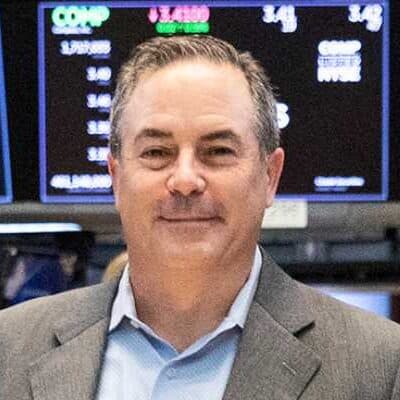
On this latest installment of the Stocks & Markets podcast, Chris Versace is joined by David Miller, portfolio manager of the GOLY ETF and CIO at Catalyst Funds.
David explains why buying by central banks, especially in emerging market nations, has driven the demand for gold, and why that buying is poised to continue as the dollar is debased further.
We tackle the question if the recent selloff in bitcoin is a meaningful tailwind for gold, and David shares what he sees as a serious problem with fixed income that many people don’t notice.
More Pro Portfolio:
- Adding to 2 Hard Hit Holdings... and Our Plans for 4 Others
- 23 Portfolio Signals Across 8 of Our Themes
- Weekly Roundup: 'Software-mageddon' Takes the Market on a Wild Ride
Transcript
CHRIS VERSACE: Hey, folks, Chris Versace here. And it is once again time for another Stocks and Markets podcast over at TheStreet Pro. Happy that you can join us. As you know, I am the portfolio manager for TheStreet Pro Portfolio. But we've got a special guest with us today. And I'm going to argue that the topic, well, it's not only going to be timely, but it's going to be something that we're extremely interested in given a few of the positions that we have in the EPS diplomats basket.
With that, folks, let's welcome David Miller, Portfolio Manager of the GOLY ETF. That's G-O-L-Y. He's also a CIO at Catalyst Funds. And you may remember him from a past conversation we had about another Catalyst Funds ETF. David, welcome back.
DAVID MILLER: Great to be here. Thank you.
CHRIS VERSACE: Now, the last time we spoke, we talked about, if I remember correctly, the Monopoly ETF you had. And I found that to be a fascinating conversation. What I'm happy to talk about today is something that's a little more germane, a little more in the headlines. I'm talking, of course, about gold. I want to cue my Austin Powers impression. Gold! Which is really pretty bad, I have to admit.
But before we get started, plumbing the depths of gold, what's driving it, the big increase that we saw in gold prices earlier this year, the pullback, where you think it's going. Talk to us a little bit about the GOLY strategy.
DAVID MILLER: Yeah, so the idea behind this GOLY strategy, or the Gold Enhanced Yield ETF, was that historically, gold has done very well. It was under $300 an ounce back in 2000 versus-- $300 an ounce back then versus roughly $5,000 an ounce today. So huge price run up. But there'd always been this old argument against gold, which was that you never got a dividend or yield with it. It wasn't a productive asset like a stock or a bond or real estate where you get a rent check.
But there wasn't a reason historically that if you wanted it, you couldn't have it both ways, meaning that you could get the price returns of gold and get a yield-- in this case, 5% distribution yield paid monthly-- stacked on top of the price returns of gold if instead of just buying the physical gold bars, you instead bought the gold futures contracts on the futures exchange, in which case you'd only have to put down a few percent as down payment or collateral in Treasury Bills to get the price returns of gold from the gold futures. But then you'd have the money in your portfolio that you could then put to work generating income in a portfolio of investment-grade corporate bonds, which in this case would throw off a 5% yield to maturity, intermediate duration, A-rated or better. So higher end of investment quality.
And then you can really have it both ways. So that was the idea behind this GOLY ETF is for people who didn't want to have to choose between the inflation protection that you get from gold and the income that you get from a fixed income portfolio. So you could have them together in one wrapper.
CHRIS VERSACE: But I also think, David, I heard you mention two words, gold and futures. And I think when a lot of people hear the word futures, they tend to think, oh my goodness, this is overly complicated. Can I do this? What's an easy way to handle this? And I'm guessing that combining this strategy with the ETF wrapper and all the benefits associated with ETF, you're trying to make this a very easy, elegant solution for investors.
DAVID MILLER: Yeah that's right. If you wanted to trade gold futures yourself, you'd have to get what's called an FCM account to trade those futures. You'd have to post collateral. What we wanted was a simple, elegant solution where people could have it done for them. They'd get their gold price return from gold futures. They'd get their yield from bonds without having to go to the trouble of trading individual investment-grade corporate bonds or trading gold futures on the futures exchange.
CHRIS VERSACE: Got it. OK. So I think what we also need to point out before we get into gold is that the GOLY ETF, it's not only gold, but there's a number of other high-quality bonds that are also in the portfolio as well. Correct?
DAVID MILLER: That's right. So we're taking A-rated or better bonds that are components of the iBoxx investment-grade corporate bond index. And we're building a portfolio of those bonds. So these are like JP Morgan bonds, Goldman Sachs bonds, Verizon, large blue chip companies, Anheuser-Busch.
And for every dollar that comes into the fund, roughly $0.90 of that dollar is going into investment-grade corporate bonds. $0.10 of that dollar is going into short-term US Treasury Bills. And then we're using those Treasury Bills to post them as escrow to get $1.00 worth of gold futures exposure. So we get a full price return of gold from the gold futures, and we get the full income of a bond portfolio from the investment-grade corporate in the Treasury Bills.
CHRIS VERSACE: I like it, I like it. So let's shift, David. And after talking with that nice overview about gold-- because I think a lot of people are interested in it, and I know you have a lot to say on the topic-- what do you attribute this explosion in gold prices, really since August of last year, to the run up that we saw into this year?
DAVID MILLER: Yeah, so there's several moving pieces that are really propelling gold prices. And to break those down, so you have one piece that started, I'd say, back in 2022 when Russia invaded Ukraine. And what happened when Russia invaded Ukraine was the US wanted to do something to punish Russia for violating Ukraine's sovereignty and invading Europe. But it wasn't clear exactly what to do.
So they did some things. They seized oligarchs' yachts and things of that nature. But another thing they did, which had a pretty huge impact on the relationship of the US dollar and the petrodollar to other countries' relationships with our currency, is we weaponized the SWIFT banking system against Russia to seize roughly $300 billion of their US dollar denominated assets, primarily Treasury bonds, Treasury Bills.
And the problem with doing that was-- well, it certainly did punish Russia-- we also shot ourselves in the foot. Because the second that we seized Russia's assets, if I was a Chinese central banker, and I held $760 billion of US Treasury Bills, and I just saw that my ally Russia had $300 billion of theirs taken as punishment for invading Ukraine, and I knew that I might have an upcoming conflict potentially with, say, Taiwan, the last thing I'd want to do is give the US the latitude to be able to just seize that $760 billion of US Treasury Bills as a potential punishment. But I'd much prefer to have $760 billion of gold bars, if I was that Chinese central banker, sitting in a vault in Beijing that the US government couldn't get its hands on, that would be a real hard currency asset.
And it wasn't just China thinking this. It was basically every emerging market nation that we don't have a perfect relationship with. So that really got the ball rolling in 2022.
And then we did things that further exacerbated that, like threatening 100% tariffs on a number of these countries, going in and seizing Venezuela's dictator, the conflicts with Iran. So a number of these have really exacerbated or poured fuel on that fire of breaking the relationship of what has always been known as the petrodollar, or using the US dollar as a Treasury reserve asset for other countries and replacing that with gold.
CHRIS VERSACE: So I don't want to put words in your mouth, David, so please correct me. But I think one of the things you've identified is, to the extent that President Trump remains a volatile figure, raising concerns on again, off again on the geopolitical front, that's good for gold.
DAVID MILLER: Yeah, that's certainly good for gold. And there's no question about that that is good for gold. But we also have a whole other dynamic that got started even before Trump came into office, which was both parties have been spending like drunken sailors. If you look at what happened in COVID, we had a $6 trillion deficit. We used to run $600, $700 billion deficits in 2018, 2019. And then the way we sought to remedy the inflation that printing $6 trillion created was we went ahead and created the Inflation Reduction Act, which was essentially printing a couple trillion more dollars, free money, reduce inflation.
CHRIS VERSACE: Yeah, anything but.
DAVID MILLER: Yeah. And the Republicans follow that up with the big beautiful bill, a couple trillion more of deficit spending. So if you have $38 trillion of debt and you keep spending $2 trillion more than you bring in in tax revenue, you're really deliberately debasing your currency versus all other assets. And obviously, nobody can print gold. And that is very good for gold. So you combine these factors, and that that's been explosive for gold prices.
CHRIS VERSACE: So all right, gold prices have been explosive. They ran up 5,400 earlier this year, have pulled back. Are you a gold bull, David? Do you think they're going to return back to those highs? I know other folks have price targets for gold that are even higher than what we've seen.
DAVID MILLER: As long as the US government intends to and they have enshrined in law running large US government deficits, I don't see a scenario where the US dollar doesn't continue to get debased further versus gold. So does that mean the purchasing power of gold will go up? No. Does that very likely mean that the price of gold will go up versus US dollars? Absolutely.
CHRIS VERSACE: OK. But again, I didn't hear-- and I'm not trying to put you on the spot. But do you have a rough price target that you've shared with folks, or just higher?
DAVID MILLER: So I think there's two dynamics that lead to my price target. So if you say, OK, we got a $1.9 trillion to $2 trillion US government deficit and we've got a $38 bordering on $39 trillion debt, that tells you all by itself that we should get about a 5% dollar debasement annually just from that deficit spending.
Now, the second factor driving this is we had 1,000 metric tons of gold buying by central banks on net in 2023, 1,080 metric tons of gold buying in 2024. And then last year, central bank spent even more money buying gold on net. So you combine those two factors, and I think we're headed for 10% to 15% annualized price appreciation in gold, driven by those dual engines of deficit spending combined with central bank net buying.
CHRIS VERSACE: OK. And do you expect it to be volatile? Because I've got to think that with the surge that we've seen in gold prices, that you have folks who are long-term investors. But we all know that-- no pun intended-- the shiny new thing can get a lot of attention, and it can make it increasingly volatile and subject to short-term fluctuations. Do you see that happening or continuing?
DAVID MILLER: So I think the volatility in gold will continue. I think the bull market in gold will continue. But I think this day that we had over a week ago where gold sold off roughly 10% and silver sold off 27% really changed that dynamic.
So we had a really, really, incredibly steady run up in both the price of gold and the price of silver ahead of that new Fed Chair announcement and some of the increases in margin requirements on the futures exchanges for both gold and silver. And then that, I think, changed from a retail dynamic after that sharp sell off, after a big parabolic move, in both gold and silver.
Although, I look at this as two different dynamics. I think there's the central bank dynamic, which you can think of as the ocean deep currents that tend to keep going in one direction persistently and don't change a whole lot. And that's the central bank buying. And that's the really big-picture, long-term persistent moves.
Because if you're a big central bank, like, let's say you're China, and you want to dump $760 billion of US Treasury Bills and replace them with gold, you can't do that in a month. You can't do that in a quarter. You can't do that in a year. Or you would drive the price of gold totally ballistic, and you'd crash the US Treasury market. You have to do that slowly, persistently, and on a multi-year or even decade-plus time frame. And that, I think, is the big underlying bullish undercurrent for gold combined with the deficit spending.
And then you have this separate dynamic, which is retail buying and selling. And the dynamic with retail is they have a lot of fear and a lot of greed. And it keeps oscillating back and forth and back and forth. And that was persistent greed up until that breakdown. And now that people saw that, wait, silver can crash 27% in a day, gold can go down 10% in a day, this isn't a straight line move up, I can actually potentially be down here, I think you're going to see that volatility continue ever since that move. And I think that volatility with the retail community has shifted from persistent buying to that oscillation between fear and greed.
CHRIS VERSACE: OK, two questions spring to mind based on what you said. If the deep currents are this central bank buying and you say it's a multi-year process and it began with China 2022, I believe you said-- here we are 2026-- how far into this multi-year central bank buying are we, do you think?
DAVID MILLER: Well, so first off, they were already buying even before 2022. It was kind of a natural course. But they really picked it up in later '22 and well into 2023 and further accelerated that in terms of total spend thereafter. But I think these dynamics, Trump threatening large tariffs against a number of countries, really created a second dynamic that it wasn't just about, Is there debasement from deficit spending? Is there a situation where there could be weaponization of the SWIFT system? to a default of using US fiscal policy and/or tax policy as a weapon against other countries to get what we want.
And as soon as we went down that path, it really firmly cemented this situation of de-dollarization or the breaking of the relationship of what's been known since the '70s as the petrodollar, where all oil transactions would be conducted in US dollars. And that really moved towards a lot of countries using the dollar as a core reserve asset. We're now in a situation where many countries are gradually shifting off of that.
CHRIS VERSACE: OK. So my second question, I think it kind of ties to what you just said. There's been reports given the huge sell off in crypto over the last couple of weeks, week or so, that folks are now back to favoring gold over crypto. Have you seen this? Does that make sense? Is that a potential incremental tailwind for gold?
DAVID MILLER: Yes, it is somewhat of an incremental tailwind for gold. But I think the individual speculative activity is still pretty small relative to the central bank persistent buying activity. I think really what happened with crypto was-- it was connected to gold in some respects. But the bigger issue was crypto, for a while, was the primary very speculative asset or meme stock equivalent. And then we went from just crypto to crypto and meme stocks. And then we went from crypto and meme stocks to crypto, meme stocks, and precious metals. And frankly, that just divvied up whatever money was going into speculative activity further away from crypto.
And then I think second, crypto has always been a bit of a high-beta type asset, kind of correlated to the NASDAQ stock exchange. And I think we're seeing that play out somewhat with the software sell off move, that Bitcoin is almost trading more like software than it is like electronic gold, like a lot of people were describing one narrative.
CHRIS VERSACE: I don't think I've heard electronic gold put together before, but I can see how that happens. We will stick with the gold miners that we have in the ETF basket-- sorry, the EPS Diplomats basket that we have in the Pro Portfolio. David, a lot of ground covered. Anything we didn't talk about before we get out of here?
DAVID MILLER: I think the real core thing that people really need to think about, whether they own this GOLY ETF or something else, is how they denominate their life savings. Because there's a serious problem with fixed income that people don't notice as much on a day-to-day basis, but is incredibly painful on a decade-plus basis, or especially on a multi-decade basis, that if you think about it, $1.00 today is worth roughly the equivalent in terms of purchasing power of about, say, $0.12 in the 1970s. If you look at what's happened to the bond aggregate over the last decade, the total returns have been about 1.9% annualized, and that is a positive return.
But there's a key framing around that, which is, well, what happened with inflation? If you look at inflation in health care, housing costs, and education, over the last decade, it's been running about 5% annualized, which really means that somebody who held a fixed income portfolio lost roughly 30% of their purchasing power on net in an asset class they thought was supposed to be safe. And yet not only did they lose 30% of their purchasing power, but they also had to pay taxes on that yield along the way.
Nobody can print more gold. So if you're going to hold a fixed income portfolio, we think it makes more sense to do that in a hard currency denominated asset like gold that nobody can deliberately debase like they can the dollar. This isn't unique to the dollar. There's not a single currency in existence ever that hasn't been debased over time relative to what it used to be decades or even hundreds or thousands of years ago. They've all been debased, with the exception of precious metals like gold or silver.
So I think that's a core way that people need to think about risk. Risk isn't just about loss of purchasing power because you have a dollar today and you had a dollar in the 1970s. You lost the majority of your purchasing power. The real risk, in many ways, is much bigger in terms of loss of purchasing power than it is just loss of principal.
So I get that people feel safer when they own, say, a money market, but there's a lot of risk there. It's just that a dollar is always priced in a dollar. If you compare a dollar to anything else, it's actually very volatile. And I think people need to think about that a little bit more holistically and ensure they don't let the government tax away their purchasing power.
CHRIS VERSACE: Oh, fascinating. To me, it sounds another reason why everybody needs some exposure to growth stocks, no matter what their age, David.
DAVID MILLER: Growth stocks certainly do a great job of maintaining purchasing power, too. It's not just gold. But if you keep it in dollars, you're essentially letting the government do a big shadow tax through all that deficit spending.
CHRIS VERSACE: All right. Well, David, where can folks go to learn more about the GOLY ETF and some of the other Catalyst funds?
DAVID MILLER: So on our ETF front, on GOLY, it's on our strategysharesetfs.com website. Or for our mutual funds for Catalyst, you can go to catalystmf.com or catalyst mutualfunds.com plural, and that has our mutual fund lineup.
CHRIS VERSACE: All right. Thank you so much, David.
DAVID MILLER: Thank you. It's a pleasure.
CHRIS VERSACE: All right, folks, that is the latest episode of the Stocks and Markets podcast. We'll be back with a fresh episode before you know it.