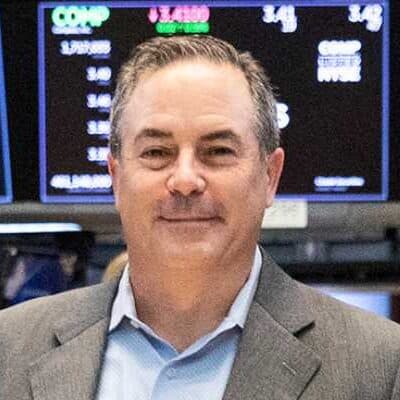
Stocks & Markets Podcast: S&P Indicators, Fed Moves, and Portfolio Strategy With Bob Lang
Chris Versace is joined by the Pro Portfolio's technical analyst for a discussion on price action, the put-call ratio, EPS Diplomats and much more.
You've reached your free article limit
You've read 0 of 1 free Pro articles.
In this week’s Stocks & Markets Podcast, Chris Versace is joined by TheStreet Pro’s Bob Lang for a sweeping conversation that begins with a technical look at the S&P 500 and key indicators to watch, and ends with member questions. In between, Bob explains why price action is a key metric that he follows and shares his take on the put-call ratio and how to use it.
Chris and Bob detail why they both see the December-quarter earnings season as an important development for the market, and why how the market reacts to near-term reports will be telling. Bob explains why he is tracking the consumer discretionary space, and Chris adds which part of that he is taking a look at for the Pro Portfolio.
The two also talk about recent developments surrounding the Fed, who Bob likes as the next Fed Chair, and why the market may be getting it wrong about rate cuts in 2026. The conversation ends with Bob looking at the chart of Arista Networks (ANET) and asking Chris about the Pro Portfolio's EPS Diplomats strategy.
More Pro Portfolio:
- We're Locking in Big Gains on This Holding Reflecting Portfolio Discipline
- Consumers Are Spent, France Hack, U.S. of Old and More Investing News
- Weekly Roundup: Portfolio Gains Ground Amid Key Data and News
At the time of publication, TheStreet Pro Portfolio was long ANET.
TRANSCRIPT
Chris Versace 0:04
Hey folks, welcome to the latest edition of the Stocks and Markets podcast. I'm Chris Versace, Portfolio Manager of TheStreet Pro Portfolio. And as we move deeper into the first month of 2026, we of course want to take a technical look at the market, but also get some other insights from our good friend Bob Lang.
Some of you are likely familiar with Bob, but if you aren't, in addition to the charting work that he does for the pro portfolio with the street, he also writes a couple different articles, including ones on options, one on bearish bets, and I'm sure we'll touch on what he does over at Explosive Explosive. Excuse me, Options.
As well. But let's get to the here and now. Bob, my good friend, always awesome to talk to you.
Bob Lang 0:48
Great to be with you, Chris. And I hope it's not too late. I I I know there's some rules about wishing people happy New Year and how long during the month of of January. It's good until, but it's, you know, it's the middle of the month right now. I'm going to wish you a happy New Year and wish all of our our our readers and and subscribers a happy New Year.
As well too. But you know, as we get on towards the end, towards the end of January, Chris, I will stop saying it.
Chris Versace 1:13
I hope so. I hope so. But Bob, we have other good news to celebrate. Fingers crossed on this. You know that I have some personal developments going on. I'm happy to share that it looks like I will be moving.
Bob Lang 1:19
Yes.
Well, you know what we have we we did Chris, I'm going to offer this to you. We we we did a huge renovation in the house here in New England and I've got plenty of room here for you. So if you and your and your family want to want want to schlep it out here to to New England.
Chris Versace 1:34
Mhm.
Bob Lang 1:43
The weather is similar. We do have a winning football team out here in the Patriots and we have a game coming up this weekend, so you know.
Chris Versace 1:47
So stop. Just stop, stop. I'm not going to argue about football. We don't have to worry about basketball or hockey. As far as the weather being similar, we both know that is not true. I will seed that you probably have better Italian food up there than I get down here in the Mid-Atlantic.
Bob Lang 2:06
Fair enough.
Chris Versace 2:07
All right, all right, all right. Well, let's let's move on, Bob. I want to start very simply because every Monday you do a chart for the pro portfolio about the S&P 500. Now yesterday when you kind of wrote it up, you said, and I want to get this right, so just bear with me as go the first five days of January.
Bob Lang 2:18
Right.
Chris Versace 2:27
So goes the month. OK, so we're past the first five days. What are you seeing in in the chart of the S&P 500?
Bob Lang 2:36
Well, Chris, the SP500 chart for the past six weeks, seven weeks had been basically going sideways and with a very narrow range. And that that can be explained by the low volatility index, the VIX that we that we often talk about the VIX being about 14-15%.
Chris Versace 2:45
Mm-hmm.
Bob Lang 2:56
Tells you that the market players are rather complacent right now and and that complacency eventually is going to get smacked in the mouth because you know, most people think that, look, the market's just going to go up every single day forever. We don't have to worry about the markets ever going down. You know, why worry about anything?
That's the prevailing thought, right. But as as the markets were were going, have been going sideways for the past six weeks, I have to say I was very impressed by the fact that with every opportunity for the markets to break down, even during a seasonally strong period in December, they did not do that. So as we lead up into.
Chris Versace 3:32
Mhm.
Bob Lang 3:35
And you could, you could look at it two ways. Well, the market's resilient and it's preparing for good earnings coming out over the next 7 to 8 weeks or the fact that the market is already overbought and already priced in a lot of those good earnings and is ready to come down. So you you have two schools of thought there and two IBD ideas which are very valid.
And you know, hopefully it's the first one rather than the the the latter one that that we're going to encounter.
Chris Versace 4:00
Well, well, hang on, hang on. So let let me let me ask you, what school do you fall into?
Bob 4:06
Yeah. Well, I have to look at the the mark, the markets with a much more of a macro view, meaning I'm looking at the whole, the economy as a whole, right. I don't look at things in sort of a micro view when I'm when I'm investing or trading, I certainly do that. But when it comes to looking at the the markets overall and which direction I think they're going to go into. You know I have to start off Chris and and and look at the GDP number. The GDP number in Q3 with productivity was extremely strong and that that is generally not a one off. However you know we we we did see that GDP now estimates from Atlanta and a couple other ones.
Have a lower estimate for Q4 and for 2025 than than what we produced in in Q3, but still coming in at 2 1/2 to 3%, which is kind of where where they're where they're at right now is still a very, very strong economy with low inflation.
Decent job growth, nothing huge. We saw last week a good job growth, not great. And consumer spending, retail numbers came in strong yesterday. You you you talked about it and there's nothing to argue about.
Chris Versace 5:17
I mean, look, look, those Visa, MasterCard numbers say about 4%, you know, maybe a little bit better for the holiday season. So that's typically November, December and you take a look at the year-over-year growth, just use the November retail sales report up 3 1/2%.
When when you strip out some things that tells you that spending likely accelerated in the month of December and we saw that with initial comments out of the ICR conference as well from companies you know from various companies that you know were presenting they they tend to pre announce or give some updated outlook.
Most of them are about two months into their quarter, 2 1/2 months now and we we of course shared that thought. But so so Bob, let me let me just ask you though because you you also said though in your note yesterday that the indicators are mixed but the price action remains bullish and and you said that is dominant.
So can you just just touch on that a little more and explain what you mean by that?
Bob Lang 6:18
So the indicators that I look at, Chris, are basically I look at momentum indicators, a lot of momentum indicators, so and money flows. So when when the price action started to stall out about 6 1/2 weeks ago, we're talking around towards the towards Thanksgiving or just before Thanksgiving when the price expectations started to slow down a little bit. Those momentum indicators also started to slow down and they they give the appearance that the the market indicators are telling you that the market is bearish. But that's not true. It just simply means it's slowing down. You know, maybe go on the freeway, driving your car 95 miles an hour and then you just slow down to 75, you're still going fast. You're just not going fast as you were before. So it's that's the analogy there. So I think the market has just slowed down a little bit, but it's still propped up the bullish indicators on the price action are still there, the candles which I look at.
On the go, no go composite indicators are blue and that indicates strongly bullish. So we always defer to the price chart as the number one indicator. It is the king of all indicators price chart and then the volume right behind it. But all the other indicators tend to support what's happening on the price chart or not and if they don't.
Then there's a divergence there, but we always defer to the price chart as the most important part of the technical.
Chris Versace 7:44
OK. So when these indicators that you look at indicate maybe a slower path ahead, which is what I think you just said, how do you differentiate that between a potential pullback in the market, just trading sideways and then you know?
Bob Lang 7:56
Right.
Chris Versace 8:01
When do the alarm bells go off that tell you it's it's something more right? I I I won't say a correction 10, you know which is down 10% to 20%. You know we we can see that for individual stocks but more for the market when when do you start to get nervous?
Bob Lang 8:05
Well, I I tend to get a little bit nervous when I see the market doing something that not a lot of people are talking about. Meaning if the markets, if the indicators are are showing me like a rise in the put call ratio or if the futures market is starting to get wobbly or if the breadth numbers are are are poor. Now I look at breadth at a very very carefully, very closely and we talk about it a lot and you know when there's a divergences there, which all breadth is, is up, down issues, you know how many stocks are going up versus how many stocks are going down. I also look at new highs versus new lows, how many stocks are making new highs versus new lows and that has been a very strong indicator for the most part.
So I look at all these things and and when I I start to get a little bit nervous, Chris, when some of the secondary indicators start stacking up against what's happening on the price action, I always, again, always defer to what's happening on the price action. But look, you know, if you got one thing over here and then you got 20 things over here pulling it down.
Chris Versace 9:17
Mhm.
Bob Lang 9:17
You know, you have to recognize that, pay attention to that and see, you know, there's something coming down on the horizon.
Chris Versace 9:23
Now you just mentioned the put call ratio and I know Helene Meisler tracks that very closely. I believe she had a piece out last night that said it it jumped up to a level she hadn't seen since I I think it coincides with this 6-7 week period you know ago that you just referenced. Can you like what what are you seeing on that?
Bob Lang 9:34
Yeah.
Chris Versace 9:43
That from.
Bob Lang 9:44
So the put call ratio is generally a good a good tool to analyze over a series of days or or weeks. 11 number in particular one reading from one day isn't particularly useful, but but if you use the the put call ratio over 5, 7, 8, 10 days.
Chris Versace 9:52
Mhm.
Bob Lang 10:04
10 days it's much more meaningful. Even a 10-day moving average of the put call ratio is is extremely useful. So one one such reading is is important to, you know, raise an eyebrow at, but not necessarily to to act upon. If we get several days in a row of high put call readings, it simply means that.
Chris Versace 10:16
Mhm.
Bob Lang 10:24
Investors are getting nervous and they're buying puts and in a big way, and if it hasn't had any effect on the markets yet, it soon will.
Chris Versace 10:33
And when you say a high rating, well, what's an example of a high rating?
Bob Lang 10:37
High reading on the on the put call ratio would be above .8, maybe up close to one. And when we get days, Chris, several days in a row where the markets swoon and go down a lot, you see that put call ratio starting to rise because what's happening it says you know when people see the markets going down, they start reaching for protection.
Late in in the in in the cycle here to be doing that, you know the market's already gone down, but still people are worried that Oh my gosh, I'm going to lose everything. I better go buy some put protection and end up buying it right at the right at the exact wrong moment. But when that put call, when the put call ratio starts to rise after several days in a row, the market's going down.
Chris Versace 11:11
Right, right.
Bob Lang 11:17
Chris, then we we start to see that that becomes what what we call a buy signal. If you're a contrarian like me and you say that you know most people are late to the party anyway. So I want to, I want to get, I want to get back in and and start buying things when people are basically throwing the baby out with the bath water.
Chris Versace 11:34
And I'm curious, you know, we are here right at the mouth of the earnings season for the December quarter. It's very important for a couple of reasons. One, obviously the quarterly results, but two, companies will issue their first hard look at the coming year and expectations, you know, I track this very closely are pretty high.
Bob Lang 11:49
Yeah.
Chris Versace 11:53
You know, per FactSet the S&P 500 EPS is supposed to grow more than 14%, so accelerate compared to what it did in 2025. And of course that 14% is 2026 / 2025. So as I think about that, is it, is it, does it make sense that we would see the put call ratio?
Bob Lang 12:07
Right.
Chris Versace 12:13
Rise ahead of this, just just given the potential, you know, let's just say that the market's been on a strong run, recent new highs. People are getting maybe a little nervous about what companies may say given, you know, the number of uncertainties out there.
Bob Lang 12:28
Yeah you you you have to go out there with some protection. You know if you if you if you go out and and go out of your house and you you you see some clouds in there but you don't see any precipitation you still might bring an umbrella with you you know and and just in case and.
Chris Versace 12:42
Right.
Bob Lang 12:44
And that that's that's what we're talking about here. You've got to have some protection to cover yourself just in case something, something comes down that you're not ready for or not prepared for. Look, markets go down without ringing the bell. You know, nobody, nobody, nobody rings the bell and says, hey, look, we're starting to sell here. They do the opposite when they want to buy Chris. You know what they you know they tell.
Chris Versace 13:02
What? Hang on. I'm going to say a little inside joke between you and I. Don't give it away. Nobody told me.
Bob Lang 13:04
people that want to buy.
Well, that's right. That's right. Yeah. And nobody, nobody ever, nobody ever, nobody ever says anything. Look, you know what? When when it comes to big money, moving money around the markets, they're they're whispering, telling people, hey, look, we're buying, pass it on. This is, you know, if you want to go back, you know.
Almost 20 years. This has happened back in the financial crisis, Chris. I mean, a lot of a lot of banks like Goldman Sachs, you know, we're telling people, hey, look, we're buying the markets, you know, pass it on. But when they were selling the markets back in in the late 90s nobody was saying a word at all. They just go ahead and sell the market and then they say, Oh yeah, yeah, come back on CNBC or Bloomberg or Fox and say, yeah, yeah, yeah, we sold weeks ago. Well, what are you doing? What were you doing? So it's the same sort of thing. You know, it's just you you don't have, you don't have that that warning there. So we have tools, we have opportunities there to do that.
Ourselves and you know, I I think that you know adding put protection is one of those things that that I I talk with people a lot about every single day, Chris and they they they they don't do it enough and because they're worried about spending money and losing money.
Chris Versace 14:18
You're you're always a big fan of having some degree, some level of protection on which means puts that I know that I know and we have used you know some inverse tool is inverse ETF pools that hedge the portfolio from time to time and you know we we constantly revisit that we we rethink that.
Bob Lang 14:28
That's right. Yeah.
Yeah.
Chris Versace 14:39
I'm not saying that we're going to do it anytime soon, but you know, if the opportunity presents itself and we need to, we of course will. With that, Bob, let me just ask you, near term, just in your, you know, crystal ball, we may get a pullback, but do you see any warning signs, at least as we sit here? Here today, realizing timestamp that a correction is on the horizon?
Bob Lang 15:04
No, I don't. And but you know, as of right now, I listen, you know what? When when you look at a chart of of the S&P 500 or the NASDAQ or the Russell 2000, you you see the stocks climbing with higher highs and higher lows. Remember something I'm trying to. Picking tops is kind of a tops and bottoms is a fool's game. The most important top, Chris, is the last one, right? So you know, people pick tops all the time and they're wrong and it's just the last top that that really matters the most. Have we seen that last top?
I don't know. I'm not sure. I'm not quite sure we have yet. So until it's confirmed to the downside, then I can't tell you that we're going to that we're going to have a correction error or a pullback or how deep that pullback is. It could be 2%, 3%. All I know is this is that when when the S&P 500.
Gets stretched out away from the 50 day moving average as much as it is right now. We're talking about three 2 1/2 to 3% away. There's generally a a a reason for the markets to come down and retest that area. Now coming down 3%, Chris, where the S&P 500 is right now, that's 200.
Chris Versace 16:05
Mhm.
Bob Lang 16:17
Handles. Well, right, 210 handles worth 7000. That's going to feel that's for a lot of people that's going to feel like death dropping 200 handles, especially if it happens in about 3 or 4 days. But that would be just your normal general correction corrective period coming back down and testing some of those levels. So if if you want to say that.
Chris Versace 16:19
Well, I yeah, I mean, look, it makes perfect.
Right.
Bob Lang 16:37
You know, be prepared for something. I would say that's the right way to go.
Chris Versace 16:40
You know, it's funny that you call out that perspective, right? Because there's absolute, you know, an absolute drop in the S&P 500. There's the percentage drop. I think you're right to focus on the percentage drop. And you know, for folks who may have read error, I'm sorry, 1929. The book out by Mr. Sorkin.
Bob Lang 17:00
Andrew Ross, Yeah.
Chris Versace 17:01
Yeah, when you go back into that in the 19291930, the Dow was in the hundreds.
Bob Lang 17:08
Yeah, yeah, well.
Chris Versace 17:09
So you know, if you think about the size of the drops it had back then and you think about the percentage, boy, but but you're right though, the higher the market goes, the larger the absolute drops will become. But even though the percentage numbers still might be 1 percent, 2%.
Bob Lang 17:27
Yeah, when when when the SP500 was 4000, a 2% move was 80 handles. Today a 2% move is 140 handles. So you know there's a huge, huge different, huge differential there in in how the the perception of how that drop is viewed and and whether you know.
Chris Versace 17:35
Right. Right.
Bob Lang 17:46
You feel like you're gonna you're gonna lose more money on a on a on a 2% drop today than you would maybe, you know, five years ago.
Chris Versace 17:54
All right, let's move on. Is there any sector or any company that you are watching most as we kind of get either get ready for the December quarter earnings season or that you think is poised to shine in 2026? Company or sector?
Bob Lang 18:11
Well, I I think if the if the job market remains strong and and I know there's certainly some validity to what the Federal Reserve members have been talking about with the jobs report, it's come down a lot, but I think we're just kind of I think the job market is somewhat normalized, Chris. I think we're right back to some sort of normal growth area of of jobs and people still have jobs and jobless claims have been coming down. So people are working. And as long as they're working, Chris, I think they're going to spend money 70 plus what is 72% of the economy is basically.
Chris Versace 18:44
Round numbers 2/3, yeah, yeah, yeah.
Bob Lang 18:46
3 thirds the economy is all based on consumer spending. So I think I see some opportunity, Chris, in in in some of these consumer discretionary names. We're not just talking Walmart, Amazon and Costco, which Costco is, you know, came up with some huge numbers last week and the stock is ripped higher. It's making a move towards the 200 day moving average as we speak and it's it's I think it's going to make a run towards those all-time highs eventually pretty soon, sooner, sooner rather than later, but.
Chris Versace 19:16
I would say it paid to be patient with Costco.
Bob Lang 19:20
Yeah, we've been very patient with that and and and you know, frankly, I I think unfairly we've been beaten up by some of our subscribers and by saying, you know what, what are we doing with this thing? Well, you know what I mean?
You said it several times. We're gonna be patient. We're gonna wait. This is a this is a Primo quality company that you don't you you when you have a Costco, you don't sell a Costco, right? You don't you you don't get rid of it out of your portfolio. It's a it's a core holding.
Chris Versace 19:46
Yeah, I no, I mean look what what I, I, I, I think Costco got beaten up a little bit because some folks around if I remember correctly, September, October, November, there might have been a slight dip in the year over year growth compared to the prior month. But the context there is you have.
Bob Lang 20:10
Yeah, yeah, yeah.
Chris Versace 20:13
Continue to do that. So it just tells you they continue to take, as I like to say, consumer wallet share. And The thing is when we size them up against other companies, whether it's Albertsons, Kroger's or wherever, it's to me apparent. So as long as the data continues to hold.
Bob Lang 20:15
Yeah.
Chris Versace 20:32
Right. Supportive we can we can afford to be patient with that and perhaps later this year there will be a nice catalyst, perhaps, perhaps a special dividend. You know we will see, we will see. So. So is there any particular company in the consumer discretionary space that you're, you know, kind of warming up to that you're getting a little excited about.
Bob Lang 20:55
Well, you know, I I I haven't warmed up quite yet to the restaurant names. They just haven't really impressed me yet. There's been some names that have started to do better, like Cava and Chipotle. It just can't seem to get out of its own way. Some of the other fast food places, Chris, like McDonald's, look pretty good. Wendy's, but.
I would say that on the consumer side, the retail side is where I've had a lot of my focus and we're not just talking Amazon and Walmart here. Obviously those are two of the chief retailers that that I like to look at and obviously Amazon more of a hybrid retailer, not because they got the technology, but I'm you know what I I looked at.
Chris Versace 21:26
Right.
Bob Lang 21:35
Games like Victoria's Secret and Urban Outfitters and even American Eagle, which we we talked about quite a bit in the past. These companies, yeah, these companies came out with huge earnings last time around and and that we usually you know what I've I've I've.
Chris Versace 21:44
Long time ago, yeah.
Bob Lang 21:52
Found that over time earnings tend to come in in in groups of three. So you know they come up with a good earnings report. They're probably going to come up with two more just like that. So I look at it, I look at a name like Victoria's Secret, all right and.
Chris Versace 21:59
Right.
Bob Lang 22:08
Obviously a store that you and I don't shop at, but that's OK.
Chris Versace 22:11
Hey, speak for. Hey, speak for yourself.
Bob Lang 22:13
So I heard the CEO talking about the at the last earnings report, Chris. I think I wanted, I wanted to share something with with what she said that might blow you away here. They sold with with huge competition there in in in in that space.
Bob Lang 22:29
They sold more items at regular price than they did at discount. It's I I mean, I I how do you how go ahead.
Chris Versace 22:32
So, you know, it's it's funny you say no, no.
So no, go ahead cuz I want to pull something up that I wrote yesterday and because it speaks to that point.
Bob Lang 22:40
But. So, so in a in a in a in a fierce environment with strong competition that's always discounting merchandise for them to come out and say that they sold more, more stuff, obviously they've got good products that people want to buy.
But I I mean, some of that stuff is just grossly overpriced, but still people are buying it. They're paying regular price for stuff and that's you can't get higher margins than what they're getting when people are paying regular price for for merchandise at their stores.
Chris Versace 23:05
Yeah.
I will admit that, you know, October, November, given everything that we see about inflation, consumers, you know, more consumers living paycheck to paycheck and and other data points like that, I I was very skeptical of retailers going into the holiday shopping season. I was skeptical about their volumes. I was skeptical about their margins, more importantly, because of if it was a competitive Christmas and people were pulling back or just being more selective trading down to like, you know, Five Below, TJX or what have you that there would be more discounting to move product and you know building on what you said and this is what I wanted to point out, American Eagle announced yesterday that their fourth quarter to date comp sales through Saturday, January 3rd up high single digits and and they they lifted their fourth quarter operating income, right. So for they originally they said it's going to be 155 to 160. They said no, no 167 to 170. So that tells you the margins are holding up.
Really better than expected. And the other sweeping comment I would make is between American Eagle, Abercrombie, Five Below. Those were some of the companies that were at.
The ICR conference yesterday. Comparison. You look at Shake Shack or First Watch. Much lower comp sales.
Bob Lang 24:47
Yeah, yeah, yeah. So that's why I'm, I'm a little hesitant right now with the restaurants. I I think that people aren't going out there spending. I think that people are more more likely staying home and and cooking and and rather than than going out. Of course that trend moves up and down, you know there's peaks and valleys in that that may that may change in the spring, summertime of of this year, but for now I'll tell you what right now I think that where the where the where the hot areas are to buy stocks has got to be in this in this retail. You got to be selective here, but I certainly think that there's at least, Chris, at least a half a dozen to 10 names that you can look at and and and make some make some good money on.
Abercrombie and Fitch had stand out yesterday because I think they lowered their their their revenue. They had a shortfall in fourth quarter so they came down quite a bit but they up up until then stock was on a roll, was up was up over 110% in about.
Four months, incredible run for that stock, but it pulled back a little bit yesterday on on the 12th of January. But you know by and large the stock is still doing really well. They're still doing a lot of sales and I think that there's again, there's a lot of other names out there we can jump at.
Chris Versace 25:58
Yeah, I think I'm, I'm, you know, based on what I saw out of the ICR conference yesterday, I think we're going to see some very nice results from one of our retail holdings in the portfolio, TJX. So I'm kind of excited for that. All right. So you're watching the retail names. I in the first half of the year, I'm kind of keeping an eye on one part of the.
Chris Versace 26:19
Housing market, not home building because I am a little still concerned about that part. But I do think that as time goes on, Bob, we could see perhaps if the consumer is a little bit stronger, if the housing market doesn't pick up and I don't think it will, I'm talking about new construction, I think we'll see consumers pivot back to repair and remodel because it's hard to believe, Bob, but the pandemic started five years ago. Six years ago. Yeah. Yeah. So you think, yeah. So you start thinking about. So you, you have that one year afterwards where people were going crazy doing projects. You know, we're on that cusp where you, you're a homeowner. You know what I'm about to say. These things are money bits. You've got to continue to.
Bob Lang 26:48
6 years ago. Six years ago. Yeah, it was March 2020, I believe, right?
Yep.
Chris Versace 27:06
Kind of revamp, refresh and do some things and I think people might do that in advance of perhaps putting their homes on the market as mortgage rates come down. We will see, but that's that's one of the things that I'm watching.
Bob Lang 27:16
Who? Well, well, taking it to another level, Chris, you know it was the same thing that I'm talking about with retail. I mean how about a name like a Home Depot or Lowe's? Obviously Walmart is in that same, is in that same group too and maybe Target to a lesser extent, but you know even Builders First Source, which was the name that we had in the portfolio.
Chris Versace 27:28
This, this is the thing, right? And you, you know, I I get my backup about this. You really have to know what you own. What's the business? What's the business exposure? So we held office hours the other day.
Bob Lang 27:38
Time.
Chris Versace 27:53
And someone asked the question about Builder, right, Builders First Source. And I said, you know, from a repair remodel perspective, only about 25% of their business is in that market. About 2/3 is tied to single family construction. So I would put Builder on the side. I would think more about, you know, what are people.
People likely to do, you know, are are they likely to paint? That's Sherwin-Williams or maybe PPG Industries. Are they likely to replace, you know, their carpet, their flooring? That could be an Armstrong world. Are they likely to do cabinets or some other type of, you know, work that could be a Masco? So that that's the way I'm kind of thinking about it and they sell their products at home.
Bob Lang 28:30
Mhm.
Chris Versace 28:33
People at Lowe's, you know, wherever. So it's, you know, at the kind of a kind of, you know, what's what's the repair remodel? I hate to use this expression bullet and put it into the retailer gun. Do you know what I mean? So if if if Home Depot and Masco and sorry, Home Depot and Lowe's and others are benefiting from a pickup and repair remodel, well, what are they selling? That's what I want to be buying.
Bob Lang 29:00
Right. That's right. Yeah. Chris, I have a question for you unrelated about about the Portfolio now with. Yeah, yeah.
Chris Versace 29:02
Hold that thought. Hold that thought because I I I want to get to one other thing that is a Bob sweet spot topic. And then when we move into Q&A, because I have a couple member questions, you you can ask me that question. Is that OK?
Bob Lang 29:23
Sounds great, yeah.
Chris Versace 29:24
Excellent. All right, Bob. So you and I talked quite a bit offline about the Fed. No surprise, we saw a lot of noise this week about what the DOJ may be doing, may not be doing about Fed Chair Powell.
I personally think it's a lot of noise. I think, you know, to the extent the argument is put forward, they're trying to pressure Powell. I would agree. I don't think that's going to happen. However, I think Powell is going to be remain the straight shooter that he is. What do you think?
Bob Lang 29:58
I agree 100%. And and frankly, you know, he's got a job to do. He he he's doing work for the American people. He's there until May and he's going to stay there until May and do his thing. He's not going to be deterred by anything that any politician has to say about him and it tries to muddy up name and and what what he's doing. He's done a great job for almost eight years now of running the Fed through a a difficult time during during COVID. And did they make some mistakes? Absolutely 100% you know with the whole transitory thing and and then it was the language was not.
Chris Versace 30:30
Yeah. Oh yeah.
Bob Lang 30:37
Remember when he first came in in 2017 not understanding how to talk with him?
Chris Versace 30:41
I I I'm sorry. Who? Who? Who nominated him?
Bob Lang 30:46
Oh, it's President Trump. Yeah, he brought him in, right?
Chris Versace 30:48
Right. This is the guy who didn't know how he got the job, right
Bob Lang 30:51
Right. That's right. He he he brought him in and look you know what I mean he he's done a a great job of helping to you know correct mistakes that that that that the committee has made. And look it's not a it's it's not an infallible group. They have a lot of opinions and views and so forth much you know it's a smaller version of what's happening in the what what happens in in Congress. You know you got a lot of people with a lot of different views representing a lot of different factions and and regions and and and they they they're it's no different in the in the in the FOMC. It's just a little bit more conciliatory at times but I think by and large, Chris, you know I I this is all noise as you said and I think if the market reacted poorly to it yesterday, especially Sunday night when the futures were getting drilled, we saw the the result of that in the first 10 minutes of trading on Monday morning on the.
Chris Versace 31:41
Mm-hmm.
Bob Lang 31:50
On the 12th, the markets rallied back and all those losses were wiped away in about 10 minutes. So.
Chris Versace 31:57
Yeah, well, I I I agree. You're 100% correct. I I think the fact that Tillis came out and supported Powell and then even overnight, a lot of the other central banks around the world have come out in support of Powell. My my perspective is that, you know, I think folks try to read too much sometimes in into what Powell has to say. And I I I think the simplest thing to do is just listen to what he says. I mean, he he does a very good job of laying it out and kind of telling you what they're watching, what you and what we as investors need to pay attention to but I for some reason people don't want to do that and I I just find it bizarre at times. But do you think he stays on as governor?
Bob Lang 32:40
No, I agree. Yeah.
No, I think he's moving on. He's he's had experience in the in the in the private sector. He's been working for private equity firms before. He's a lawyer. So I I I think that he's he's he's moving on to do to do other things and may you know just quietly move aside like Ben Bernanke.
He did. And you know, obviously Janet Allen had a little bit more high profile obviously because she came and became Treasury Secretary under Joe Biden after her stint as a Federal Reserve chairwoman. So I I don't think that Chair Powell will.
We'll go to that, go to that length anymore. He's going to go back in the private sector, probably maybe work in media or something like that. But I think that he's, he's pretty much done with the Federal Reserve after this is over.
Chris Versace 33:30
All right, two quick questions. Who do you think will be the next Fed chair or who would you like to see as the next Fed chair?
Bob Lang 33:35
Yeah. Well, I think I, I would like to see Kevin Warsh who was a former Fed governor was has some experience from back in the mid to early 2000s. He was there during the financial crisis. So he has some experience with dealing with those sort of disasters. I think Kevin Warsh would be a great chairperson. He he understands the independence of the Fed is extremely important. He's a consensus builder. He does have a view of that's often different. He he's not really right there with the rest of the group. He's a little bit to the side, but that's OK. You need that at times. And again, here's a guy who who knows people who are on the on the committee, who knows a lot of economists and he, he, he can, he can get the job done. Now Kevin Hassett, who's the other Kevin, who seems to be one of the favorites, would also do a good job. I just don't. I'm not really sure about his experience with people on the on the committee and whether there's going to be too much influence on him, Chris, from President Trump. We've already seen that happen with Stephen Marin, who's on, who's a new appointee from late last year on the committee, and he seems to be voicing an opinion of President Trump through his through his mouthpiece on the committee.
Chris Versace 35:02
Are are you? Are you calling him a sock puppet?
Bob Lang 35:06
Sure.
Chris Versace 35:08
All right. So that that that's a perfect segue though, because I believe he's calling for 150 basis points in rate cuts this year. The market sees, let's just say much less than that. JP Morgan came out on Friday saying they don't see any rate cuts this year.
And they think the next move could be higher sometime in 2027. We'll see a lot of data to go between now and then. What are you thinking? Do we get one, maybe two rate cuts this year and and if so, if so, when do you think they might be?
Bob Lang 35:41
Here's the thing is, well, first I want to, I want to answer that, take that first part before I answer my question, answer your question. So there's a lot of analysts out there that that have views and and put predictions out there, but they they they really don't know what they're talking about.
Maybe there's a potential other reason for for making those outrageous statements or remarks. Let's let's get the market down a little bit so we can get some people in there to start buying it. That's the old classic style of doing doing business in in in markets. Now the other thing is that you have to remember that a new Fed chairman is going to likely be a little bit more aggressive than Chair Powell, who's been always been a little bit more conservative when it comes to monetary policy and you you have to believe that the market is not pricing in enough rate cuts right now. And that is also another reason why I think the market can stay or remain bullish because when there's a dovish policy there, it it doesn't necessarily mean, Chris, that the mark that the the the committee has to cut rates.
For the market to go up, it's the perception of the committee leaning in that direction that matters more than what they actually do. So if the perception is that the Fed is going to cut rates from here down to 3%, for instance, then as long as it's out there in the future, the market will stay, stay elevated.
And continue to to rise. I I think that we can get the Fed funds down to 3%, perhaps 2.75 if we get a few more good inflation readings, but that that's all all down the road and we'll have to see what what happens, but I I don't see us going, going as far down as 150 basis points more, but I do see cuts happening before we have to have to raise rates, raise rates again.
Chris Versace 37:48
And just so folks, we're taping this early the morning of Tuesday, January 13th, the December CPI report yet to come out, be out in about, you know, the next half hour. And then we have the PPI report tomorrow as well, OK.
Let's move into Q&A.
Bob, I'm going to give you 2 and then you can get to your question.
This one comes from member Emelius. I hope I get this right. This is the question. Did we ever get a retest on the market pullback before Thanksgiving? I recall a segment with you and Bob and he said he'd feel better about the market if we got a retest of those lows, but after the low volume trading week of Thanksgiving, are we feeling tepid about the market from a technical standpoint because this never happened or did I miss something and did it retest?
Bob Lang 38:34
So I'm looking at the chart right now Chris and and no we didn't. We we came down to that 100 day moving average which is interesting because that the day before or two days before you texted me and said hey are are we looking at that 100 day moving average as an area where where where I think the market's going to bounce?
And I said it's possible, but you you actually signaled that before me or before anybody's ever said anything. So congratulations, Chris. And so, so, so if anybody, if if anybody wants to say, hey, I called the bottom, it's absolutely you because that was the bottom and we bounced off of there off that 100 a move.
Chris Versace 39:00
Thank you. It takes a village, Bob.
Bob Lang 39:13
Average just before Thanksgiving. So to answer the question, no, we didn't test that level, but that's OK, right? What is, what is a what is their textbook definition of a bullish move? It's higher highs and higher lows, right? It's not. Come down, come back up and retest it. That's that's nice to to make sure that bottom is solid. But as of right now that low level is at 6580. We're at 6970. We're almost 7% above where that low level was. I think it's safe for now as long as the market continue to go higher. We could come back down and test that level on a on a major correction. That would be an 8% correction. That wouldn't be tragic. It would, it would, it would certainly be a concern, but it wouldn't, it wouldn't be tragic. But I think coming back and and and testing that, not testing that level is not a bad thing.
Chris Versace 40:05
OK. OK. And the kind of baked into that question, are we feeling tepid about the market? I think your comments earlier say no, but you are being watchful.
Bob Lang 40:14
Right. Being careful, being watchful here. And look, you know as again it all comes down to earnings, Chris and and you you you talk about it all the time and you know if if the earnings estimates are so rosy, but the companies still actually deliver on the bottom line.
That is going to help people you know feel good about the markets and feel good about companies and feel good about the economy and the market market multiple can can maybe elevate and go higher because you know that that that bottom number right is is going to is going to get larger and larger and that multiple is gonna is gonna is gonna shrink and the markets can continue to go up if you know if if the estimates are being hit.
Chris Versace 41:02
So I I will say this, you know I I think that as we go through the next couple of weeks earnings are going to be very important. I think the next couple of days you know we have big banks this week and then we get it starts to diversify next week. We want to watch the market's reaction to these earnings reports because you know we we all know that if a company comes up short or guides lower, the stock's probably going to trade off. What I want to see is does it take a beat and raise quarter to drive stocks higher or set a different way if a company just reports in line, guides in line?
Does the market react positively to that or negatively to that? That's going to be very revealing, I think, about where we are, but let's move on. Buy low, sell high as a question. Arista Networks, he's been very persistent. I want to make sure we answer this very simple, Bob, what do you see in the chart from a fundamental perspective?
Chris Versace 41:58
I still like the name. We have room to pick up more stock in the Portfolio, but from the chart, what do you see?
Bob Lang 42:05
Well, I'm, I'm not too bullish on the chart right now. It's it's it's kind of flirting with this 200 day moving average one more time, you know. So technically we're kind of in a what we call a no man's land. You don't really want to buy it. You really don't want to sell it here.
So it and we're kind of in a in a in a range. I mean if you could you could box out the range between 117, 115 all the way up to about 140. So we're kind of in a 25-27 point range right now and yeah I.
I I don't again, I don't see it really moving one direction or the other. It could be in the sideways range for weeks and months, you know and and and not and really frustrate everybody who who's long in the stock. But I think it's a good high quality company. They're in the right space and we we bought it for the for a purpose for a reason.
Because of of that attraction to the to the area where Arista Networks is at and you know, eventually I think shareholders are going to get rewarded.
Chris Versace 43:06
Yeah, I think that, you know, look we we've been here before with with some other names in the portfolio and I think as long as the data and I people are probably sick of me saying this, but as long as the data is constructive, you know we'll we'll continue to own the names if we start to see a change in the data or the underlying thesis becomes significantly challenged. Then I think we have to revisit the position, but we also have to bow to the technicals as well. OK, my friend, your turn.
Bob Lang 43:33
Chris, I have a question for you about the Portfolio. Late last year you introduced something called the EPS Diplomats to the to the street pro portfolio and by and large huge success first quarter of of that we introduced it, I believe it was the fourth quarter of.
In October of 2025 you we found eight, yes.
Chris Versace 43:56
Let me let me just correct you there before we go any further. We introduced it at the halfway point of the fourth quarter and yes.
Bob Lang 44:05
Halfway in the fourth quarter. OK, so, so, so about what, November, middle of November of?
Chris Versace 44:10
Seven. No, to be to be specific, I believe we talked about it the week before, said we're going to do this and we went live November 17th and I'll beat you to the punch, Bob. The the the basket of eight stocks in the balance of the fourth quarter returned about 4.6%. S&P 500 was up about.
I'll go one step further because I know you're going to ask for the first seven trading days of 2026, the new basket is up as of last night's close 4.35% S&P 1.44.
Bob Lang 44:46
That's that that's that's phenomenal performance. I mean you know 3 1/2 times more and you're only in there for six weeks of of the of the year of 2025. It's phenomenal. But you know why? Why, why, why, why make this change now? Why did we add this little segment to the Portfolio first time ever. And believe me, it was a it was a great move and I know a lot of the subscribers applauded you for doing that. But why? Why do this now when you when you did it?
Chris Versace 45:12
So it's something, to be honest, I've been thinking about for a while. You know, with my other hat at Tematica Research, we have a bunch of models, we have indices powering some ETFs in Europe, and I I wanted to do something that would. Well, let's just say it was the latest new thing that we wanted to bring to the portfolio. You know, we've instituted office hours. We have the podcast where we talk with folks. You know, we've done a variety of different things and you know, we continue to what I want to do is to continue to reinvigorate the Portfolio. Bring new things, bring new strategies in so folks can, you know, become better investors over time. That's why candidly, you know, we have all the charts that we have, you know, that you look at so people can understand that perspective. That's why we introduce the thematics as well.
But if you were to ask more specific, specifically, why EPS diplomats? You know, look, it's no secret that earnings growth, superior earnings growth drives multiple expansion. And when you combine that, wow, that is the basis of generating alpha in stocks.
So, you know, there's no other strategy out there like this. There's no ETF that I know of that focuses on the fastest companies, sorry, the companies growing their EPS growth at the fastest level on a consistent basis over multiple years.
And you know, look, we'll we'll run this the way it is. The biggest question that I get is why is it just 2% of the portfolio? And is it a fair question? Yeah, it is. But at the same time, you know, this is a very new concept that a lot of folks may not be familiar with. You know, there's a little bit of work involved. You know, at the end of the quarter we got to exit certain positions. You know, we have to buy back, we have to, sorry, rebalance and then start new positions. So this is very new to people and I wanted people to get their feet wet before we say we're going to take this to 3 percent, 4% and I will share that.
Could there be another model down the line? We'll see.
Bob Lang 47:35
That's great, Chris. I I'm tell you, I I I I know that the feedback from people has been tremendously positive about the changes, the addition to this EPS diplomats. And I believe me, I I I looked at the names when he when he first put them out there. I said I I looked at every single one of them.
I'm like, Yep, Yep. Yep, Yep, Yep. Ever since you put them out there, I knew, I I knew the names and I knew the companies and I knew what kind of earnings quality that they were producing at the time. And I said, Yep, Yep, as long as the market stays up, stays strong, even if the market isn't strong.
We had some gold names in there, gold miners in there and and you know and you know, I mean those those performed extremely well.
Chris Versace 48:15
Yeah, I mean, that was in the fourth quarter and looking at it now, you know, you got Equinox Gold, I am Gold, Kinross Gold, you've got a silver name in there.
Bob Lang 48:28
Pan American. Yep, that's right. So you know.
Chris Versace 48:31
Correct, correct. But you know the one thing I will say is that compared to the larger pro portfolio, there are this time around in this particular basket, there are some stocks with some higher betas. So you know we we could see some swings.
Chris Versace 48:48
You know, we don't necessarily screen for beta when we do the diplomats model. It's just really focused on earnings growth. So folks, you know, just don't be surprised. I'm not saying they're going to be volatile, but they could be volatile and the nature of the strategy is you know, kind of crockpot cooking. I hate to call it that. But we set it at the beginning of the quarter. We exit, you know, at the end of the quarter. Do we buy more during the quarter? We do not. We don't do anything. We let the strategy play out with the basket for the period.
Bob Lang 49:20
That's right. That's right. Well, congratulations, Chris. It's been a it's been positive so far and I'm looking forward to more positive from the Diplomats in 2026.
Chris Versace 49:29
You and me both. All right, Bob, you know, hey, listen, I always enjoy our our conversations, both formally and informally. You know that we folks, we chat, text, you know, all the time.
You know, as I, as I joke, it takes a village. And Bob is a great part of that village. He might even be the mayor, actually, the mayor of the village. But oh, that's right. That's right. Yeah. Tammany Hall, Alderman. Yeah, there you go.
Bob Lang 49:49
Thank you.
Alderman. They call me the Alderman over there.
Chris Versace 50:01
Anyway, anyway, all right, Bob, anything, anything new coming, any appearances coming up, Schwab Network or anything soon?
Bob Lang 50:08
Yeah, I'm gonna be on sometime in February on CNBC Navigator. I'll be on there in the segment over there from time to time. I'm doing Schwab and Yahoo and and those have been really, really great for and and also I think I.
Chris Versace 50:14
Excellent.
Bob Lang 50:27
Morgan Brennan is going to be taking over the morning show 5:00 AM and I I did a couple with Frank Holland on on Worldwide Exchange. So I think you're gonna have me on a couple one or two times during that segment. So I got to get up bright and early Chris, to get the gold on that one.
Chris Versace 50:46
You're a better man than I. So we'll leave it with that. And and folks, we are going to have Bob on a lot more frequently. So you know, to the extent you have questions and stuff, we'll be asking ahead of time. But thank you, my friend. I always appreciate, appreciate our conversations. And folks, that is this episode of the Stocks & Markets podcast.
Thanks for tuning in. We'll be back with a fresh episode before you know it.