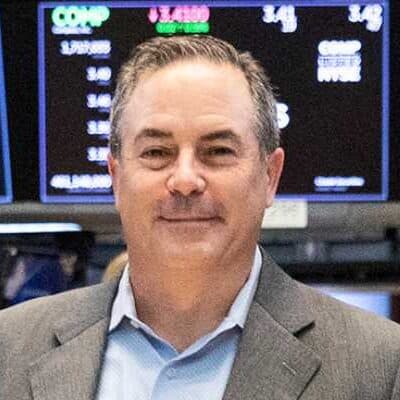
Stocks & Markets Podcast: Product Returns and the Economy With ReturnPro's CEO
Sender Shamiss joins Chris Versace to discuss the returns solution company's business, addressing retailer pain points, consumer strength, returns fraud and more.
You've reached your free article limit
You've read 0 of 1 free Pro articles.
In this week’s Stocks & Markets podcast, Chris Versace is joined by Sender Shamiss, CEO of returns solution company ReturnPro, which counts the world’s largest retailers, including Walmart (WMT) , as customers.
Sender provides an overview of the returns industry, one that is roughly $800 billion in size, and explains how returns factor into retail and branded apparel company decisions. Examining the relationship between returns and consumer spending, the two discuss why Sender remains bullish on the consumer.
The two also discuss how ReturnPro is embracing AI and other technologies to improve the return process, improving outcomes for retailers, and how retailers are embracing technology, including body cameras, to combat fraud.
More Pro Portfolio:
- Buying More of a Holding Mistakenly Caught in Crosshairs of Bessent Comment
- AI Police Reports, Auto Woe$, Disney Disruption & More Investing News
- Weekly Roundup: Reaping the Benefits of Recent Portfolio Moves
Transcript
CHRIS VERSACE
Welcome, folks, to the latest Stocks and Markets podcast. I'm Chris Versace, portfolio manager of the Street Pro portfolio. And you know, folks, it's fair to say that when you look at the calendar, we are quickly approaching a key time of year for consumer spending. And for realtors. You know it better as the holiday shopping season is now. We're all familiar with consumer shopping, but one area that is often overlooked for the insight it might be able to provide to us as investors is returns in 2024, the average return rate for all retail was 16.9%.
Online sales a little bit higher at around 20%. Brick and mortar clocking in at just over 10%. Now, shoppers may see returns as one way to get rid of the products they don't want, they don't need, or simply something that doesn't live up to expectations. But as investors, the return data may be insightful, especially these days given the lack of official economic data.
Joining us to discuss all of this and hopefully cleave away some learnings is Senator Seamus, president and CEO of Return Pro, founded in 2008. Today, return Pro offers the only complete returns solution addressing each part of the post purchase process from a point of return to the to the product. Getting back on the shelf.
Thank you for joining.
SENDER SHAMISS
Thank you very much for having me.
CHRIS VERSACE
Now, Sender I don't think many people appreciate what goes into managing a return product. You know, I know myself, I walk into Whole Foods. I have a QR code scanned. I hand it to an individual. But for the purpose of our conversation, tell me about the return industry. How should we be thinking about it?
SENDER SHAMISS
So it's an $800 billion issue. That's the first part of it. And I think people really need to kind of, come to terms with that number. It represents over 15% of every single thing sold in the United States. So if you have, you know, $5 trillion of the sales, 15% of everything sold gets returned. Not only is the problem massive, but a lot of people think that the product that gets returned just gets put on a shelf.
And that's never the case. Depending on the category, because we could be as low as 4% that gets restocked. Most of the items go back to return centers. Liquidation. Getting disposed. It's a real problem. And we've been solving it for 20 years here at return. So that's why the mission statement is solving returns. And that's the exciting part of what we do.
CHRIS VERSACE
Has the return industry kind of changed over the last, I don't know, 15, 20 years or as long as return Pro has been around. And I'm thinking about this because the way that people have buy things has changed. Not only brick and mortar and digital, but there's the influence of social media, Instagram, for example, with, you know, meta platforms really leaning into shopping.
And it could change further given the advent of AI and, the ability to shop, like what ChatGPT is doing, say, with Walmart.
SENDER SHAMISS
So I think the more disconnected the consumer has become from the physical brick and mortar retail, the easier it is mentally for a person to say, I bought all these things, I'm going to go return them. They don't see the exact impact of the returns. They don't see the shopping carts behind the customer service counter full of product, and all they see is a, you know, a button on on an online website where it's easy for them to press it and return it.
Additionally, you know, buying items online is never a perfect business, right? You're you're selling product through some sort of description and picture. You're not getting to touch and feel that product. So obviously the return rate online is going to be much higher. And the last 20 years is the kind of rise of e-commerce has occurred. And of course, Covid itself were the spike of dotcom shopping, occurred as well.
The return rate spiked as well with it. And I think there's been a lot of businesses that came about. We've been around for almost 20 years. We started serving brick and mortar, but we serve everything from brick and mortar to e-commerce right now. Full omnichannel integration. But you see a lot of these startups out there right now that are really, really focused on on e-commerce and different parts of the business.
Our business is unique, and from our perspective, we solve returns by tackling every part of the post-purchase experience. Meaning the physical size the supply chain recovers. I talk to a lot of entrepreneurs and a lot of startups, and they show me the really cool, snazzy ideas as it pertains to returns management. And I think, oh, cool, that's another really great feature.
But for the actual retailer and the consumer and the brand itself, all that really matters is solving the returns issue. And you're never really going to have a customer that comes up to you and says, oh, that's a great feature. It's, something I'm willing to pay for. Most clients are going to come up to you and say, how does this help me solve the problem?
And I think if you're selling a feature, it's never going to work in the business. And I think if you're solving a problem, that's a whole different kind of segment of it. Unfortunately, in the returns business, there aren't a lot of competitors. That's for physical problems. From A to Z, there's a lot of people who try or businesses out there to try to solve parts of the of the of the returns challenge.
CHRIS VERSACE
So of of the 15% that you talked about and as you try to solve this problem, you know, when the product is returned, sometimes it's resold. Refurbished can be recycled. What what tends to be, you know, kind of the the typical breakdown.
SENDER SHAMISS
So it's category specific. We handle over 400 categories. But I'll give you a general idea of what the kind of flow of a return looks like, the life cycle of a return or a day in the return. It depends on where it occurs. In most cases, returns occur brick and mortar, but obviously let's call it both brick and mortar.
And online there's a customer experience piece, a portal piece where a customer walks into a store or goes on a physical website, returns that product. There's a disposition decision made at that point, depending on the category, if it's a piece of clothing in apparel, most of the retail clerks of the return clerks can look at the item and inspect it and say, is it good enough to put back on the shelf?
And you'll find, you know, re shelving rates for clothing and apparel as high as 90%, even 97, 98%. But if it's something like consumer electronics, it may have data and data privacy issues on it. Somebody pictures, you know, information and whatnot. You can't just take that product and put it on a shelf. If it's a television, you don't know how it functions.
You can't ask a clerk to take a 100 pound, 80 inch TV out of a box. So you need to do something else with it. And these are the different things that occur within a retail store and the decisions that have to be made. No, you can't ask somebody, getting paid, you know, a, hourly salary in the back of a, in the front of a customer support desk or in the back of a retail store.
To make that decision, you have to provide them with software that makes that decision in real time, and that software has to make decisions based on a lot of information. That information is some of the information comes from our system, some of the information that comes from a client system, but together makes this very simple disposition decision. First of all, it cannot be restocked.
Secondly, it says if it can't be restocked, what's the next best shelf for it? Are we going to send it off so it doesn't, you know, travel around the United States for a bunch of time, goes to maybe a vendor, maybe a return center, maybe some sort of return hub, maybe an LTL center or something like that.
What do we do with the item? Do we take that item and and do we ship it to the next best place where it could actually be inspected, so we could put it back on the shelf as quickly as possible? Or if it can't, do we recycle it? Do we destroy it? Do we send it maybe to a different country where the kind of, dollar economics make more sense to touch that product if it's a cheaper item and all these things, you have to kind of factor in, to be able to make the disposition decision.
That's why even AI plays a very crucial role in making this decision, because it could be thousands of policies, millions of individual units that you have to make decisions in 4 or 500 categories.
CHRIS VERSACE
Right? Right. So let me ask you this. So you mentioned that you know about 15%, which is not too dissimilar from some of the average numbers that I quoted at the beginning. A little more for, online, a little less for brick and mortar. But in your experience, you know, are there, you know, and this may not be the right way to think about it.
Are there certain categories that are bigger offenders than others? Because I would imagine that clothing probably gets returned more than some others. And at the same time, are there certain categories that are very low on the return side?
SENDER SHAMISS
So firstly it's more than 15. It's more like 16.9, you know, and I think it's growing more and more. And you're right, clothing is the biggest offender. As people shift to shopping online they do something called bracketing. And bracketing just means I'm going to buy a bunch of the same of the same item in different sites. We all I do and I, you know, I do it two and I manage one of the largest returns companies on the planet, I think the largest.
But, I do it as well, you know, I'm not sure about the size. You know, maybe I had an extra burger to last week and. No, no, I'm not sure as to the size, and I have to figure it out. Maybe I'll buy a large. Maybe I'll buy a medium. Maybe I'll buy an extra large. Maybe I'll buy all three.
And, and they'll show up and I'll try on one. And if one fits and I like it, I return it. In most cases, that's what happens. But that's, you know, 66% of all my purchases end up getting returned from an apparel perspective, that's not the same in terms of power tools. It's not the same in terms of home appliances.
That's more of a commitment, right? A return on it's much, much more difficult than a return on a piece of apparel. It's not the same for, consumer electronics. So, I mean, the return rate does fluctuate depending on the category. The highest offenders or apparel. The second highest offender is going to be consumer electronics. Then of course, you're going to have home goods, power tools, appliances.
They all fit into different buckets, but they're all an issue. And apparel may have the highest return rate, but I don't think it's the most pressing problem. I think it hasn't, the highest return rate, but most apparel retailers and brands themselves, the manufacturers, the OEMs form, they they physically build the cost of the return into the price of the item.
Now, it would be nice if they solved the problem. Most of it gets restocked. Where the issue occurs is when you're buying furniture and it does when you're buying, you know, small appliances or power tools or consumer electronics. Those are the more difficult things because you can't just take, you know, USB stick or a mobile phone or a computer and put it back on the shelf.
Who knows what data exists on that. So you have to go through this whole process. No. If it's a $20 mobile phone or a $5, you know, USB stick, you know, you may not have that material value to plug it in, test data, wipe it properly, all that if you're paying certain wages in particular countries. So you have to make sure that that economy of scale works for you as a, as a brand, as a retailer, and of course, as a third party that offers these services.
CHRIS VERSACE
You know, it's it's funny that you say this because it makes me remember that there was a point and might have been during the pandemic, might not, that I ordered some, you know, some small things from Amazon. And when I went to return it, they they effectively said, don't worry about it. Just keep it.
SENDER SHAMISS
You know, very popular. So keep it. Algorithms are a part of it. They work in conjunction with something called the trust algorithm. So the way it works is it's basically an LTV algorithm, the lifetime value of a customer. And what it does is it basically says we trust Mr. So-and-so or Mrs. So-and-so, and, we trust them based on their lifetime purchase or maybe last six months or last year or whatever.
There's a margin built into it. And if your return rate exceeds that margin, it's a very basic calculation. They're never going to trust you to give them that item. But if over time you've purchased enough to allow them to absorb it and your return rate and your return practices or such, where you don't abuse the system, they allow you to keep certain items that are just not worth restocking when you have some other.
So we have these return algorithms, of course, as a part of our source. But we also have facilities in, you know, three countries. We have facilities in in Canada, in the United States. So you can sort of that is one or I know it's two separate countries. In Mexico we have three separate buildings. And in, in, Southeast Asia we have operations that do refurbishment.
And depending on what the algorithm says and what the cost of the of bringing the product back to life, we'll send it to these different, countries. Of course, we prefer to leave it in the country where it was sold. It's American good. We prefer to leave it in the United States. And we have, you know, almost 11 buildings in the US to, to process returns.
But it doesn't always work on a $10 mobile phone case. You know, it's not that easy to pick through it and make sure it functions and go through all that and then shelve it back and ship it and make sure there's a value or at least some some profit left to give back to the retailer or the brand that purchased it.
CHRIS VERSACE
So that's kind of the overview on the industry. But, you know, talking specifically about Return Pro, what is it that sets you guys, you know, aside from the others? Or let me I guess the right way to think about it is how do you compete in the market. And to the extent you can, can you just describe some of your customers to us?
SENDER SHAMISS
So our customers are the world's largest retailers, companies like Walmart, for example. We we really focus on the retailers and the brands. Those retailers serve and the brands that serve those retailers, which are, again, some 50,000 of the world's largest brands. Of course, they're not all our customers, but most of the major retailers are, we we have common improvement retailers.
We have big box retailers. We have very specific furniture retailers, you know, clubs, many large wholesale clubs as us clients. And for us, it's extremely important, to provide a value. And this really sets us apart. We provide three basic verticals really for but it's SAS, supply chain re commerce. And a part of the supply chain is the transportation itself.
But the supply chain we break into two portions, which is physically managing the, the, buildings that bring the product back to life and the transportation that moves the product efficiently across the different, kind of, elements of theater to make this happen. But the SAS itself, I think, is the key. It's kind of the most important part of it that returns portals important, the middleware that manages that connection between the brand and the retailer and ourselves to allow us to decrement, you know, purchase contracts and things like that.
And then, of course, the supply chain, us and the physical supply chain. So we both operate the supply chain and have specialty stores to manage it, like imagine a reverse warehouse management system. And then the recoveries bring it back to life. And so that's what differentiates us and differentiates us. If you look at the competitive landscape, there's a lot of people within those 3 or 4 verticals that the, you know, start ups or mature businesses that really focus on one part of it.
But if you're a retailer or you're a brand and you need a solution for returns, you're not really interested in buying a service you're interested in solving the returns problem means that you have 15% of your inventory is getting returned. It's sitting in some corner of the warehouse, and you need to bring it back to life in the most efficient possible way by losing as little as possible, not hurting the environment and throwing it out and not hurting your own pocket, and kind of not hurting your own brand, but allowing to just last anywhere to liquidate whatever our goal was to bring that product back to life for you and recover as much as we can for you. And that's kind of the clear differentiation between us and everybody else. Unfortunate. Or maybe fortunately for us, nobody else does it. There are no brands that do all of this. Even some of the bigger competitors, the bigger deals that have been in business forever, kind of the major logistics, parcel and freight companies, they just don't do it because they won't put the effort in to bring that product back to life.
Maybe they'll do some basic inspection, but they're not going to do, you know, deep refurb or they're not going to do re commerce, or maybe they'll do a part of the commerce, the B2B liquidation piece, but they'll never get into making sure the product ends up back on the marketplace, creating the APIs and the channels to do that.
That's unfortunate, because the more of us there are, the less of this product ends up in landfill liquidation and, and hurts the brands themselves that work. So hard to produce a brand to be able to sell in these massive, amazing retail channels.
CHRIS VERSACE
So I'll, I'll say, who is sender? I think there are some retailers or brand companies as you, as you call them, that really need to focus on what they're doing day to day, you know, putting out good product. And I think that ensuing pain point that you're describing, and as an investor, we love pain points. But that creates opportunity.
And obviously it's one that you're kind of capturing on. But let me ask you this though. So, you know, over 20 plus years that you've been at this, can you tell based on the level of returns how the economy is faring? And and if you can, what's it telling you now.
SENDER SHAMISS
Differently in this one of these things that are very cool because a lot of people ask us, can you reverse engineer sales based on return rates? And of course we can. You know, our customers are very, very those those numbers are extremely confidential. So of course we won't it. But I will tell you, it seems like, the consumer is strong and retail's good.
But you saw the market today. I mean, I'm not the only one that thinks that, it's, it's been a pretty good, season. A lot of people thought it would, because of tariffs kind of environment would be a bad, weak consumer and not so good holiday shopping season. It's turning out to be anything but that.
It's, it's turning out to be pretty good. Looks like a.
CHRIS VERSACE
Good. So hang on, hang on. I just want to be clear. You're saying. And I just want to be careful. I don't want to put words in your mouth. Right. So you're saying that based on the data that you've seen and the, the statistical analysis that you've done in the past, that your belief is that the consumer is, you know, opening their wallets probably more than, what a lot of other people think they are.
SENDER SHAMISS
Yep. They're not only opening up more, but they're opening up more often. And and that's not what was expected because of tariffs and kind of the base. But it looks that way that's for sure, at least in the short term. And we're happy about it.
CHRIS VERSACE
Now, let me let me ask you this though too, because, you know, I know for, the retail industry, the holiday shopping season is a big one. And I would think that the way it unfolds, your busiest time of year is probably after the Christmas holiday in January. But has that changed at all? And the reason I'm asking is we've seen Amazon kind of in a very stealthy manner, you know, have big prime shopping days.
You know, other times of the year we've seen competing offers target, Walmart. So is is it fair to say that the, the timing or the seasonality is slowly shifting?
SENDER SHAMISS
I think that the fear out there is because of tariffs. There's an inventory issue. So the consumer is stronger. But the question is will there be enough inventory for them to buy? Nobody really knows the answer to that, because nobody knows the kind of contingencies that these retailers made. During those windows of, you know, tariff relief that occurred when, you know, maybe the turf war kind of cooled down a little bit and they had, you know, 20, 30, 40, 50% tariffs rather than 200% tariffs on countries like China.
So I don't really know. But I do know that those are some of the reasons that are driving those extra days. And of course, just standard competition.
CHRIS VERSACE
Okay. So you know, so it sounds like, you know, investors can can learn something by paying attention to, the retail, and returns in the data. But what about companies? Right. So if I'm a company and I'm bringing out a product to market and I think it's great, and all of a sudden, you know, we're seeing more returns than we expected it could it tell me like, you know, this is a bad product.
You know, it's it's it's a miss, not a hint. Maybe it's priced wrong. Is there any information that companies can use to kind of become smarter about what they're doing.
SENDER SHAMISS
So I think that's one of the most important things. And one of the biggest selling features, the company itself, you know, the retailers learn a lot from the returns and they see the sales patterns, the returns patterns and whatnot, but the brands don't. And that information often doesn't make it back to the brands. And I think that it's very, very important for us.
And that's why a big selling feature of our size is to be able to communicate with the brand directly. It's part of our portal itself, and it's what we offer. And that data is extremely valuable to them because they learn themselves, not only what's getting returned, but where geographically, it's getting return. What stores? Why in those stores there's a higher return.
Is it fraud? What's going on? Additionally, I think retailers themselves don't have the time to focus on the returns in terms of bringing them back to life. They have the time to accrue a specific percentage, make sure it falls in line with the kind of previous years or or quarters in terms of expectation. But that's why they hire us, because they realize trying to do this very specialty task themselves is not within their core competencies, and they should focus on their core competencies and allow experts to deal with the returns in the ways that we do.
And it's why we've been successful over the years. I think those two coupled things, kind of dealing with the brands themselves, teaching them, leveraging our experience, leveraging our facilities, not moving it around the country a bunch of times in terms of return to vendor privileges and things like that, allowing us to bring those products back to life and even put them in a lot of cases back on the marketplaces, because we do have sway with those retailers and then the retailers themselves, enabling us to do that on their behalf and bring the products that they do already own.
Not everything is just simply a return to vendor kind of a policy where they own allowing us to bring it back to life and put it onto their marketplaces. Attracting a different customer base is really the key to our success and the key to solving the problem for them. So it's a win win. You know, we call it the triple win.
It's a win for the brand. It's a win for the retailer and it's a win for us.
CHRIS VERSACE
And is it wrong to think that this is an avenue for, the realtors or the brands to actually make money through returns? Is that possible, or is that just a misnomer?
SENDER SHAMISS
I think it depends on whom. Definitely. The retailer can make money off the return. If the majority of the returns are going back to the vendor by enticing the vendor not to transport the product, leave it within companies like ours, bring it back and sell it for at least something 70, 80, $0.90 on the dollar versus the ten $0.15 on the dollar they would get from a liquidation scenario for that same item.
So yes, it's a revenue driver. Would I call it a profit center? No, because they took a loss on it in the first place. When it was when it was returned. It's more of a recovery engine on that 15, 16, 17% basis points that they lost in the first place.
CHRIS VERSACE
And and I'm curious, so there are certain companies out there like TJX companies, Ross Stores, those guys who like to buy, you know, discontinued merchandise or something along that vein. Are they, you know, is that an avenue for return Pro to explore on the behalf of its customers or, or is that just off base?
SENDER SHAMISS
For sure. And I think companies like TJ Max definitely purchase Overstock. We a small portion of our business is Overstock. We focus primarily on returns. The TJ Max's are not buying returns. For the most part. They're buying restocking inventory because returns need to be inspected if they are buying returns. It's a very smart strategy and I know some of them do it, just not going to fill the kind of gap as wide as they can.
And over time, as these different retailers, the major retailers, you know, the the socks, the Nordstrom's, the ones that sell apparel must realize that there's extra hidden margin within the returns, even if they could put 50% of that 15 basis points or 16 basis points back onto the shelf and, and end up with an 8%, 8% of the items that were returned back on the shelf.
I mean, 50% of the items that were returned on the shelf, which is 8% of everything they sold with maybe a 50% margin, still 4% net to their bottom line. Sometimes their margins are 4%. So, I mean, every single return that you can resell at 80 to $0.90, is it is dollars that are going straight to your net margin.
And that's the way the retailers and the brands view it.
CHRIS VERSACE
Interesting. Okay. One other thing. Just building on your comment about the consumers being in better shape, and spending a little more than most people thought. You guys recently came out with your 2025 Holiday report, and I had a chance to, look it over, and I it echoes this more, I'd say bullish sentiment that you have is that is that is that correct?
SENDER SHAMISS
Does there is kind of weird element in there? I don't remember what the number was, but I think it was like 4 or 6% of of only 4 or 6%. View returns a serious problem from the, from the, survey that we did everything most were bullish towards returns and and understanding that it's a problem. And in in previous years, you know, 50, 60, 70% of retailers and brands saw it as a very serious problem.
And just this year, you could see that the underlying problem itself is a focus on tariffs. So there's still think it's a problem. They just don't think it's their number one serious problem. They think their number one serious problem are tariffs because they need to get the product on the shelf in the first place. And it also goes to core competency.
You know that kind of leads me to understand it's always going to be more important for a retailer to stock their shelves than to deal with the returns problems. That's why we need to exist to help them through that, because the 1,617% is not going away.
CHRIS VERSACE
So so let me let me come at this a slightly differently if I can. So you seem awful upbeat about your business. And if we say that, you know, 16.9%, call it 17% of a product on average is returned, it kind of you back into your enthusiasm. And that math tells us that, you know, people are buying more than what people might have thought.
Is that is that a fair way to think about it?
SENDER SHAMISS
I've seen retail sales go up year over year for less, you know, 18 years. And I don't see them going anywhere else. I think that the consumer sentiment, especially in the last like 6 to 7 months, have been stronger than anybody expected them to be. The only question I have is the same question I mentioned before. Do we have enough inventory to support it?
Right. Yeah, that's something I don't know.
CHRIS VERSACE
But no, but I but I would imagine though, to the extent that inventory is low, that is actually, helpful for you because it sounds to me that compared to others out there, given the systems that you've built, your ability to shrink the return timetable, if you will, is a competitive advantage.
SENDER SHAMISS
That's very, very important for the retailer because that product can end up on the shelf during that same season. So yes, you're very, very right. It's also a very unique kind of perspective. Do you want that product back on the shelf as quickly as possible? You also from a consumer perspective you want to shop earlier. If you're afraid of tariffs and you're afraid of retailers, you know, running out of inventory.
So you do see that and that goes to your holiday kind of specials, all these prime days and all these days for, for early shopping, I guess. I guess that kind of is the is the reasoning or at least the logic for, for some of the sales, increase that we're seeing.
CHRIS VERSACE
Have you seen your business pick up in October compared to like, you know, August and September?
SENDER SHAMISS
Very much so. But it could just be because of some new clients we closed. But we see some of the existing customers definitely pick up, especially the ones that that cater to, you know, a more, frugal kind of, segment of, of our collection.
CHRIS VERSACE
Yeah. I mean, everything that we've seen seems to suggest that the upper tier incomes continue to spend, but it's the low, lower tier ones that are really struggling. And our our thinking with the pro portfolio is that that bodes very well for them. Some of your work bodes well, I should say. Excuse me. For companies like a TJ or Ross Stores or the, Mart.
SENDER SHAMISS
That they do very well in these environments. Yeah, one.
CHRIS VERSACE
Hundred percent, 100%. Now, one other avenue that I noticed, in the report, was that rod. Now, you guys have really kind of called fraud out as a real problem. Let's talk about that for a second. And then I have a quick question that I want to ask as a follow up.
SENDER SHAMISS
So there's two types of fraud. I think, most people understand that there's organized fraud. And then there's, you know, just consumer behavioral fraud. Things that people don't understand is fraud. Let me call wardrobe or maybe you'll buy something, use it and then return it. Address, maybe a piece of electronics, a power tool. You fix something up and return it.
I don't think people understand. That's that's criminal. It's not something they should be doing on a regular basis. There's not actively, you know, you could buy something, use it and say, oh, this sucks. I'm not happy with the for the product. I'm going to go return it. But if you're buying it under the intention of returning it in the first place, that is fraud.
That is not something we're going to stop over time. So this kind of, purchase fraud is, is something altogether different, what we call, wardrobe buying. But the real and that's where the trusted algorithm comes in, and you figure out if that customer is worthy of it. And there's a lot of retailers that just see those kinds of patterns and block customers from being able to return at all.
But the more prevailing fraud is organized fraud. There was a theft ring recently that was caught by the CBP. The story broke about a month ago. Was, a group of criminals that were purchasing product across the United States from different major retailers, consumer electronics, Apple products, Samsung products, sending pictures and serial numbers to Southeast Asia.
Those items were being copied and then imported into the United States. And those imports were being, returned while the real items were kept and sold on the secondary market. You know, I mean, I can send you the article, you can Google it. There was a it was a pretty popular news on in our part of the world.
And those are very, very difficult to detect. There's also organized returns fraud where people were taught empty boxes, where the return, you know, fake 3D, printed items. There's a lot of this, though. There's fraudulent soap dispensers. That's how the fraud runs.
CHRIS VERSACE
You know, I hear stories like this, and I always think to myself, if only we could harness the power of this for good.
SENDER SHAMISS
So there are there are amazing companies out there, including ourselves, that are building sites to identify trusted customers. A lot of them from merchant companies are doing the, the do merchant processing and whatnot. But there's also companies out there that are building hardware that allow you to put that hardware in the store where. And we are doing that with, few partners right now.
And basically what but what you do is you could take a, a return, run it through this basic scanner, and they'll tell you if it's a fraudulent unit or not. Just by showing the clerk, in the store, if it's a if it's whole or not, it looks through, it has X, it has machine vision, it has AI, very, very smart technology.
And those are the kind of tools that that we need on the market to be able to detect this. CBP needs these tools. Retailers need these tools. Brand needs need these tools. It's extremely important to fight this, because this is the intellectual property of our nation and of these brands, and it's what kind of makes our retail unique.
CHRIS VERSACE
So you, Senator, you've mentioned AI a couple times, and I wasn't really going to ask you about it, but since you've mentioned it a few times, I'm just curious if you were to think about your spending on AI for Return Pro, you know, 24, 25, 26 do you see incremental spending each year?
SENDER SHAMISS
Yeah, for sure, but I don't I'm not going to quantify it as a.
CHRIS VERSACE
No no no no no no. I'm just I'm just looking for no, no.
SENDER SHAMISS
I don't mean it in a negative way. I just mean it's kind of impossible. The way I've seen the growth is within the individuals themselves. I think the best line I heard, and, you know, you hear all the time, we're not going to be replaced by these fancy robots doing all these jobs. We're going to be replaced by people who do the work we do, but they use AI instead of us.
And while we don't use AI, you know, somebody who's using AI is going to replace somebody who's not. And that's what's happening in the businesses, right? We have hundreds of engineers. All our engineers are learning how to use these tools. They've all adapted to them. The, you know, the they're working faster, the working smarter, or supply chain people are doing the same or ecommerce infrastructure is doing the same accounting.
You know, people in culture, every part of our business has been touched by it. We use AI as a business in terms of a selling feature to our client base, and a service feature on at the first point of return. But the first point of touch, meaning when you inspect and look at it in the first place, and at the point of resale, that's kind of the most important places.
But there's a lot of places in between that you use it as well. It's not so easy for a company of our size to, you know, merchandise, millions of SKUs. We have 100 million SKUs in our, in our database. We're not going to have, you know, an army of merchandizers like big box retailers do with thousands. So we need the tools to be able to merchandise in the same way that they can make sure that the pictures, descriptions, templates, all these attributes are correct.
There's no better use for AI than that, you know. And that sounds like a very simple thing, but there's a complexity around that. Figuring out the disposition that we talked about, whether you're going to send it to a different country, whether you're going to touch it yourself. That is a perfect use case for AI, because you can take all those factors, figure it out, and it's going to augment that like a human being would over time, based on current life factors.
Right? So these are the things that we're using it as a business. But every part of the business is using it. I just I love it, I think it's great and I think it's going to evolve. I think over time we're going to see other automation, humanoid style robotics that can help us with what's work in the facilities, which is a very hard thing for for us to do today.
You know, you see a lot of automation and fulfillment warehouses for companies like Amazon and Walmart. It's very difficult to do that with returns today.
CHRIS VERSACE
It's true. Well, I appreciate you sharing that because that that's a fantastic real world example that I don't think a lot of people are contemplating. I just want to ask one question on fraud. And maybe you're seeing you're seeing some of this, maybe not. One of the things that I've been reading about is, in order to combat fraud, we are seeing some retailers, put on their workers body cameras and they're adopting other measures to fight it.
Have you heard anything about that? I'm just curious.
SENDER SHAMISS
So they're really trying everything. You know, cameras are real strong deterrents because they're trying to catch these theft rings. It's the ring itself. It's the fraud ring that you're worried about. Somebody walking into your store, you know, taking an item off the shelf. Go to the customer service counter and say, here, I just bought it. Give me my money back.
When when they walk to the shelf. And you need to be able to combat something as silly as that, or something as complex as what I told you, which is the site where they're taking serial numbers and and duplicating items and returning those dummies. You know, you need to be able to do that. I think cameras are a good deterrent in the short term, but I think technology, we spoke about being able to peer inside a phone, being able to tell is that the real phone is that the real information, is that the real pencil, you know, is that the real soap dispenser or those are the real issues based on the the CT scanor the imaging of that item, the machine learning ability to look at the imagery and understand what it is from the packaging to the individual standing in front of you. All these things have to be made in terms of a very, very, very objective decision. And right now the subjectivity is too vague. And we just we just need machinery and machine learning to be able to do that better.
CHRIS VERSACE
Well, it sounds like you and I will be talking again as the technology improves. You know, before we get out of here, you were so generous with your time, your insights, anything we didn't cover that. We should.
SENDER SHAMISS
I think we touched pretty much everything. I just, you know, it's important for me to stress the fact that, you know, as a company, the goal is not to. And it's not a plug for business. It's really a plug for the industry. The goal is never to provide a service that says, we can do this feature or function for you.
The goal is to always take the product, put it back on the shelf for as low cost as possible, and sell it at the highest possible recovery as quickly as possible to reduce the impact of the return for the brand, the retailer and the consumer. That's the goal. That's what it has to be, and that's the most important part of the mission itself.
And that's what solving returns means to us.
CHRIS VERSACE
That is a great summary center. Now for folks who want to learn more about Return Pro and more about what we've talked about Today center, what's the best place for them to go?
SENDER SHAMISS
So return Procom would be great. Come to our site, contact us. We'd be happy to pick up the phone. There are amazing organizations like the NRF that are off purchase something called the Reverse Logistics Organization, and now it's called NRF Rev. If they want to learn a little bit about the industry itself. So there's a lot of good articles and information out there.
CHRIS VERSACE
Excellent, excellent. Well, we'll we'll be sure to put those links in the write up in the notes. When the podcast is published. Senator, thank you so much for joining me today. Can folks, thank you for tuning in to the latest stocks and markets podcast. We'll be back with a fresh episode before, you know.