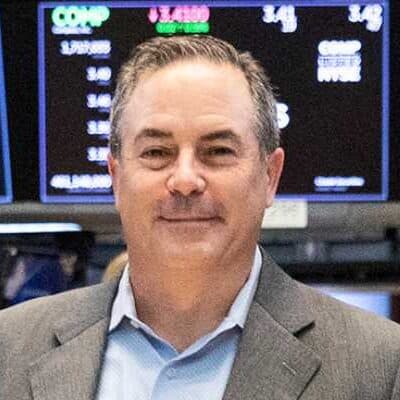
Stocks & Markets Podcast: Inside the Market’s Next Move With Lindsey Bell
CIO Lindsey Bell joins Chris Versace to unpack volatility in tech stocks, strength in cyclicals, and why time in the market beats timing the market.
You've reached your free article limit
You've read 0 of 1 free Pro articles.
In this new episode of the Stocks & Markets podcast, Chris Versace chats with Lindsey Bell, Chief Investment Officer of 248 Ventures and Chair of Better Investing.
Their conversation starts with recent tech-driven market volatility, emphasizing that the selloff in software and mega-cap names appears rooted more in sentiment and elevated expectations than weakening fundamentals, as earnings, cloud demand, and AI adoption trends remain solid. They note improving market breadth beneath the surface, with equal-weight performance and strength in cyclicals such as industrials, energy, financials, and AI-infrastructure plays signaling rotation rather than broad deterioration.
The conversation then shifts to the consumer and labor market, highlighting slow but stable hiring, low layoffs, positive real wage growth, and a K-shaped spending environment in which higher-income households remain resilient while lower-income stress is emerging — making jobless claims and retail commentary key indicators for 2026’s economic path.
The podcast closes with Lindsey explaining why time in the market matters more than timing it, that single headlines rarely change a thesis, and oversold declines can create selective buying and M&A opportunities.
More Pro Portfolio:
- We’re Trimming This Holding Before Earnings and Following a Big Run
- Stocks & Markets Podcast: Silver, Gold, Oil, King Dollar, and Small-Caps
- January Monthly Roundup: Stocks Slide Into February as Volatility Spikes
Transcript
CHRIS VERSACE: Hey, folks. Chris Versace here. And it is once again time for the latest stocks and market podcast over at TheStreet Pro. Joining me today, an old and good-- I shouldn't say old. That's not very nice. But a good friend of mine, Lindsey Bell.
You've seen her before. And if you haven't seen her here before, you've seen her on Fox Business. Maybe you're seeing her on Instagram where she's doing a lot of great stuff. But for those who don't know her, Lindsey Bell, Chief Investment Officer 248 Ventures and Chairperson of Better Investing. Madam Chairperson, as always, great to speak with you.
LINDSEY BELL: Thanks for having me. Instead of old, you can say I'm wise. How about that?
CHRIS VERSACE: Yeah. What's the word they use for wine? Not old wine, but it's--
LINDSEY BELL: Fine.
CHRIS VERSACE: Fine wine. OK. There you go. Very drinkable. Let's put it that way. Which, of course, you are. I always love chatting with you, Lindsey. What folks may not know here is that you and our other good friend, Bob Lang, we have our own little secret chat group where we share things that are catching our eye. And I value it quite a bit. You always have a lot of great insights, and I'm very excited about our conversation today.
Let's see. Where to begin, Lindsey? Market sell off. Software mageddon. Google raising capital, spending, earnings season halfway, rotation, value, small cap, dealer's choice, Lindsey. Where do you want to go?
LINDSEY BELL: Well, let's start with tech, because it's been an ugly week, right? Down like almost 4% in three days. That's not nothing to scoff about. The Mag Seven down 4%. And you said it, software, well, it's just absolutely getting crushed.
And so I think really when we think about tech from a bigger picture perspective, it's really about this high expectations for an outlook. Because a lot of these companies that reported this week, they had a good quarter. And even the outlook was pretty decent.
Some of them met consensus, and they still fell off a cliff because I think it's less about demand for AI. Everybody knows the demand is there right now. The question is how long will the demand last, and what's the return and the profitability going to be on all this spending that they're doing?
So I think it's an interesting conundrum for some of the bigger names in the space right now, because a lot of spending is happening. And a lot of companies are benefiting from it. But the question is, the market prices in everything ahead of time, right?
So we priced all the good days in. And now we're just like hanging tight or even taking some money off the table until we have better clarity on that profitability questions.
CHRIS VERSACE: I think there's some of that. But you're right. I mean, look, no matter where we look, right? ServiceNow, Google, Microsoft, Palantir, a lot of the names that are beaten up. Google not so much. But if you look at their businesses, you're right about the quarter. Very good numbers. The usual I'll beat by a little, raise the expectations.
But I would also say, though, that when we look at all of them, almost across the board, RPOs or backlog, all these numbers are up really strong, especially Google Cloud. And I think when we sit back and we try to triangulate some of these things, anecdotally we're hearing about companies that are yes, in 2026. They're starting to use let's just stick with AI. AI more. I think it's an adoption question. It's a usage question as that fans out.
But there's more cloud adoption as a result. And I think that's what we're seeing reflected in those big numbers that I just talked about. So I'm kind of comfortable. What bothers me though, is once again, rather than realizing what I'll call the rising tide that's going to lift multiple boats, the herd, someone's got to win, someone's got to lose.
In the case of software, you're getting destroyed. And what's fascinating to me is we had not only Jensen Huang of NVIDIA, Lisa Su of AMD, and whatever the guy's name is at Arm come out. And they're all like, this is ridiculous. OK? You need to understand AI is a tool. It's going to be embedded in software that a lot of companies are developing. It's going to help make better products. Not it's going to eat the world.
LINDSEY BELL: Yeah. No, I think that's exactly right. Some of these companies are embedding AI into their systems right now. And you're seeing, they have strong revenue, they have strong profitability. These things aren't falling off a cliff, but the stocks are getting beaten up like their days are over. Like they're going to the pink sheets, right?
[LAUGHTER]
CHRIS VERSACE: I hope not.
LINDSEY BELL: I think that's not true. I do think that some of these names too, when you look at them from a valuation perspective and a pricing perspective, were getting extremely oversold. So there could be an opportunity there. It's just what's going to be the appetite?
Because I think what's driving tech right now is more sentiment than anything. We talk a lot about the fundamentals and how investors think about it. But sentiment is playing an extensive role, especially in the software.
And I agree with you. I just think it's not fair to say it's a zerosum game here. I think that this is a rising-- AI is a rising tide that's going to lift all boats. And I think 2026 is going to be the year that productivity is really the return that we're going to see across industries, which is why you're starting-- why you're starting to see that rotation across the board.
CHRIS VERSACE: Interesting. I hadn't connected that rotation. But that does make more than a little bit of sense. So I like that. I will tell you before we get too far that what I'm watching, we're taping today on Thursday, February 5. This will be out later today.
I did write a note breaking down Google's quarterly results. And I did share that this continued pressure that you flagged when we started talking, it's kind of pressuring the S&P 500. It bounced down. It looks like it passed through its 100-day moving average. Looked like it bounced back later in the day. But I would say that this is kind of an area that we want to watch.
To the extent that we bounce off it like we did in November, that could be a time for folks to say you know what? These oversold stocks, and some in software, some elsewhere, could be a chance to improve my cost basis. Pick up a little-- pick up, excuse me, some shares.
So that's kind of what we're watching. But before we get there, Lindsey, quarterly results from Amazon. We got Trump making some noise tonight. And apparently, US-Iran talks kick off tomorrow morning. So quite a bit to watch on that front.
LINDSEY BELL: Quite a bit. And I think all of this has added to a lot of volatility in the beginning of this year. And when it happens, we get a little unnerved. It doesn't feel very comfortable. But that is the nature of the market, right? What do they say? It's a feature, not a bug.
And I think, especially when you talk about tech, have to remember that too. That tech is a higher beta sector. They have higher volatility. And so it's when-- these stocks can move quite a bit. The tech sector, I think the Mag Seven has had almost a 20% pullback like four or five times just in the last two years.
So I'd have to go back and double check my numbers on that, but they're still leading the market right now. But the interesting thing is we briefly touched on the rotation into small cap, into value, and industrials, materials, energy. Some of these other sectors are really performing well this year.
But when you look at the index, which is measured in a market cap weighted perspective, if you compare that to an equal weighted index of the S&P 500, it has been outperforming. Which it shows that the market is broadening. Those heavyweight names, the Mag Seven, aren't leading the charge anymore. But other sectors are picking it up, which is a positive.
But the interesting thing, Bespoke put a chart out that I found really interesting. When they looked at the sector performance year to date in the equal weight versus the market cap weight, the equal weight, you know which sectors have the most outperformance on an equal weight perspective?
CHRIS VERSACE: I'm going to guess-- this will be a bad guess. But let's just say consumer, utilities, and REIT.
LINDSEY BELL: So consumers was the second highest performer, but technology was the first one. So--
CHRIS VERSACE: Interesting.
LINDSEY BELL: Even though software is tanking, even though the Mag Seven aren't holding their own, there's other parts of tech that are performing well. And I think part of it is as the AI trade sort of expands, and you need different types of businesses to help facilitate the build out, the shovels, all the things. So I think that maybe that's what's driving it. But isn't that interesting?
CHRIS VERSACE: You sucker punched me, Lindsey Bell. You gave it to me. All right, one last thing, and I'll say that we should move on, talk about one or two other things. You know what a lot of this reminds me of our conversation? We're talking about these tech names and just renewed uncertainty.
Remember last year when everybody was really negative on Google? Oh, OpenAI is going to destroy this. AI is going to really obliterate search.
LINDSEY BELL: Oh, yes. Yes.
CHRIS VERSACE: Search has done pretty well. I think it rose like 18% in the December quarter. So pretty well. So, you're right. I think sometimes knee jerk reactions take over, emotions take over. I think we got to sit back and assess the data a little more closely and not necessarily think the worst is going to happen. But that's my take on it. Talk to me about the consumer, Lindsey. Talk to me about the jobs market. I think those two are very linked.
LINDSEY BELL: Yes they are. If you don't have a job, you're not making any money, and that means you can't spend any money. Which is a problem for our economy, right. No, so I think the consumer is like, they've been so resilient has been the word over the last year or two. We keep waiting for them to fall off a cliff here.
But I think what we are hearing from earnings, and then some of the data that-- jobs data that we are getting, I think it shows that there truly is that K-shaped economy. I mean, you heard it from what the banks had to say about the consumer. The lower-- delinquency rates are coming from the lower end consumer. The higher end consumer is benefiting from the stock market and housing market increases, right?
But when you look at consumer spending, we're still a little behind on what the consumer is up to as we enter 2026. We're starting to get jobs data. We should get the January report next week. We got ADP this week. It was OK. It was positive. You made that point. It was positive.
CHRIS VERSACE: Yeah. No, no. In our little super secret chat room, I did. I did. I said it was 22,000, right? Not negative. And when we look at even some data in the Challenger report that was out today, not the big headline layoff number, but rather intentions to hire somewhere between 5,000 and 6,000. We look at the ISM numbers on the services side. Still growing on the employment report. Manufacturing still contracting.
It says, Lindsey, we're going to have a relatively slow growing jobs market. And you know what's interesting about that is I remember reading something in the Wall Street Journal back in December. You know that sleepy time between Christmas and New Year's, there was some article about the Yale School of Management hosting a CEO summit.
And the key point was that the CEOs, in aggregate, said, hey, we're either going to make some layoffs or we're going to do really restrained hiring because we're not really sure what's going to happen. And I think that's really what's playing out for now. There is still some uncertainty out there. And I think this will be the new norm, at least for a little while.
LINDSEY BELL: Well, it's been the norm since like April of last year. It's been slow hiring. It's been low quit rates. Basically you only quit if you have another job. And layoffs, yes, they're happening. And you see a new headline every day, but they're still at very low levels.
I mean, they're steady. You look at the jobless claims data, it's starting to tick up a little bit, but nowhere near alarming levels. So people are employed enough to keep spending. The numbers through November, because that's all we have for consumer spending and retail sales, were really strong.
I expect that to slow down in January as it typically does. You do all your spending for the holidays, and you take a little bit of a break, pay off that credit card a little bit. But consumer sentiment is starting to turn around. I mean, I guess maybe it's only one month.
So the consumer is starting to maybe feel a little more optimistic about the future. You look at earnings, Chris. Earnings season has been spectacular. Almost 80% of companies are beating their earnings expectations. We went from a single digit. I'm looking at S&P Capital IQ number 7% expectation for earnings growth in the fourth quarter '25. And it's at 12 now. And we're only halfway through.
CHRIS VERSACE: To be fair, we're just about halfway through.
LINDSEY BELL: Right. That's what I said. I said--
CHRIS VERSACE: Yeah, just about halfway through.
LINDSEY BELL: And consumer names come at the end usually.
CHRIS VERSACE: Yes, exactly right. A lot of those retail names, I think, if I remember correctly, it's towards the end. I think it's the last week when we start to get the real wave of retailers, Walmart and TJX and Target and all that stuff. So I'm really curious to see what they say.
I'm curious about the outlook for the spring buying season, or the spring retail season. Because you look at that Challenger headline. You see and realize that a lot of that was powered that big layoff number by what we've already heard, right? From Amazon, from UPS, from Dow, Pinterest, and a few others.
It's really 5, 6, 7 companies. And we have a lot of other companies coming. So I'm going to be listening for more layoffs, restructurings, whatever you want to call it. Because I think the more we hear about that, the more consumers are likely to kind of tighten that belt, keep that wallet in their pants, so to speak.
LINDSEY BELL: Yeah. And I think you said it best. CEOs are really trying to assess what does AI mean for my company? Where's the productivity gains? Where can I find efficiencies with employees? But maybe I need to hire in other parts of the organization. And they just don't know that yet, so they're doing nothing.
But real wage growth, just to bring it back to the consumer, has and remains positive because inflation has kind of remained-- it's remained sticky above 2%, but it's below 3% too. So.
CHRIS VERSACE: For now.
LINDSEY BELL: For now, yeah.
CHRIS VERSACE: I only say that because-- and I'm-- believe me, I'm hoping that I'm wrong on this. But if you read between the lines on like the ICM pricing component data and what S&P had in their January PMI numbers, there's a real tug of war now between how much companies can continue to push price increases through.
And it sounds like they might have to really start taking it more on the margin line, but that might drive the need for more productivity, more AI adoption. So it's kind of fascinating how we move through this and connect all the dots.
And I think the one company that is getting out in front of this is actually PepsiCo, where they're talking about lowering prices. I just want to know, Lindsey, are they going to shrink the package? That's what I want to know.
LINDSEY BELL: Even more?
CHRIS VERSACE: Even more. Wait, wait. How many chips-- you can't-- it's OK if you get 3, 4 chips in a bag, right?
LINDSEY BELL: Right. And I'm still hungry. I need to buy three or four bags. See how that math works. Well, I saw-- it's funny, I saw in The Wall Street Journal, they were writing about this. And what struck me is they said that their customers were emailing them and reaching out to them complaining about the pricing. And so they wanted to address their concerns and their customers' search for value.
And I'm just like, you're making pricing changes based on emails? I would assume you make pricing changes on action. So in other words, they're not buying your product anymore. LIke, do you ever respond to emails?
CHRIS VERSACE: I'm going to say let's separate the marketing story from the data they track. Because you know as well as I do that I'm sure they're seeing the mix shift in their products. I'm sure they're seeing when consumers respond to sales.
I mean, I go to the local Harris Teeter. And there's a lot of flavored seltzer that is consumed in this house. And we usually buy it when it's like buy one, get one. Or my favorite at Harris Teeter, this is ridiculous. Buy two, get three.
LINDSEY BELL: Ooh. I only buy ever when it's on sale. That's how I am.
CHRIS VERSACE: I know. And you know what else I'll tell you? I have downshifted, because I'm a big popcorn fan. I now pop my own popcorn.
LINDSEY BELL: Like, in the machine?
CHRIS VERSACE: No. No, I go old school, Bell. I get out the pot, I put in some coconut oil, I throw in-- so what is it? It's a tablespoon of-- the pots on medium. Tablespoon of coconut oil, 1/2 a cup of kernels, and it's the strangest thing. You put a cover on it, and it pops. Who knew? And the cost is like pennies. Pennies.
LINDSEY BELL: I used to do that when I was a kid. Now I just-- I'm still doing microwave. Sorry.
CHRIS VERSACE: Oh, it's the worst. All that-- no. We'll talk more about this when we're done here. You can't do that. I'm too worried about you, Madam Chairwoman of Better Investing. You can't do that. Any areas in the consumer that you like?
LINDSEY BELL: Oh, good question.
CHRIS VERSACE: I'm just taking your comments about consumers holding up, K-shaped economy. Any sectors that you like? Because I know you usually don't dig a little deep on individual stock names.
LINDSEY BELL: Well, I like-- so I like companies that either cater to the higher end, obviously. But I also like companies that are offering value. I know you, I think, still own Costco.
CHRIS VERSACE: Correct.
LINDSEY BELL: And so any company that is catering to the lower end in that way by creating value. Because even the high end customers wants value. I can't tell you how many people that I've been surprised to learn that are shopping at Walmart over the last year.
I mean, you see it in their numbers. You hear them talking about them gaining share from the higher end. So I think it's companies like that that are just adding value for everyday items.
CHRIS VERSACE: OK. All right. This market rotation, you rattled off a whole bunch of areas that are benefiting. Any industrials, aerospace, anything catching your-- catching your eye? What's on your radar screen?
LINDSEY BELL: So I do. I am like-- I've been since late-- since like late last year, I've really have been on this rotation theme. This is like my call for the year, that we'd see this broadening out. And so I do like the industrials. I think there's opportunity in energy and financials as well. So more that cyclical bent.
CHRIS VERSACE: All right. So financials I agree with you. We have been long Morgan Stanley, Bank of America. But really, between the two, preferring Morgan Stanley just given the greater leverage they have to investment banking. And I think we're going to see that continue to hum throughout the year, especially with some of the big IPOs that are slated.
Energy, I hear you on that. We have a play in there as a data center derivative. Wink, wink. Eaton. We like that. Industrials though, are you talking cat? Are you talking deer? Big farm equipment, big construction equipment, or more general industrial areas?
LINDSEY BELL: General industrial. More of the names that are going to benefit from the AI expansion. So, yeah, the Eaton networking companies, things like that.
CHRIS VERSACE: Ah, excellent, excellent. I agree with you on the networking side. So I will check that box. As we move into the back half of the quarter, we're almost there. I can't believe it. Anything that you're watching? Whether it's more economic data, all this uncertainty that the White House likes to churn. Anything else on your-- that you're kind of, geez, I need to pay attention to this?
LINDSEY BELL: Really for me, it's all about the consumer. Because I do think that the consumer is teetering on the edge. And I think we could go either way. I just don't know how much longer we can be resilient. And so that's what I really am keeping my eye on. That's where I think it's concerning.
But also I think about it too from, we talked about some of the other reasons why the consumer has been resilient. But I think about it too in the '90s. Since mid '90s, over 2.2 million people lost their job between '95 and '96. And by '98, the vast majority of those people were re-employed, making about as much as they were previously.
And it was really all about that, the shift in technology to PCs and the internet. And so some jobs were lost, some jobs were gained. And I think we're just like in the middle of that. And I don't know if 2026 is the year, 2027, where we come out of the transition. And so I think that if the consumer makes it through this year, I think we could see more upside.
CHRIS VERSACE: So what are we watching that would be like a warning sign for the consumer or consumer spending?
LINDSEY BELL: Well, for me it's really jobless claims because that's more leading than the jobs numbers that come out. And then just watching-- for me, it's never sentiment for me because people say and do two different things, as you know all too well.
CHRIS VERSACE: Well, it's-- some of that soft data, the survey-based data, I mean, how's the question asked? Who's answering it? What's the mood? I'm like you, I'm much more of a hard data kind of person.
LINDSEY BELL: Yeah. And response rates haven't been great lately. I mean, the list goes on. But so to me, it's really watching the jobless claims and watching their spending. Where are they spending and what are they spending on?
And then also just looking for other areas because I do think there's this big shift. And you and I have been talking about this for a couple of years. The shift into entrepreneurialism. And like multi-job holders, that has been-- when you do look at the jobs data, you've seen the rise in that over the last year or so. And so I expect that to continue. And I think that's what keeps the consumer fueled and going through the transitionary period.
CHRIS VERSACE: OK. As you think about 2026, the year in full, obviously I know you'll be paying attention to earnings. I know you'll be tracking the data. How important do you think the midterm elections are going to be?
LINDSEY BELL: I think that it's just going to be-- it's just going to add more volatility around that time. It's all it's going to do. I think it's like you never invest if you're a long-term investor anyway. You don't invest for political cycles. Because if you look at the long-term chart, all the market, we've seen it all with the red and the blue stripes for who's president, who's in charge of Congress. And it's still up and to the right over the long term.
So it adds volatility. It gives you opportunity. It's like half dry powder, especially given where the market's been over the last several years. You can find opportunity in periods like that. So that's the way I think about it. How about you?
CHRIS VERSACE: Wait, wait, opportunity like maybe now?
LINDSEY BELL: Yeah. Like now, right?
[LAUGHTER]
CHRIS VERSACE: All right. So there's one other thing that I want to talk about before I let you go. You said this. We were taping a podcast a long time ago. And you rattled this phrase off. And it wasn't something that I really thought about or hadn't been thinking about up until you said it. But I want you to discuss it and why it's important, especially at times like this when people are getting frustrated. Ready?
LINDSEY BELL: Oh, boy. Let's see.
CHRIS VERSACE: Time in the market is more important than timing the market.
LINDSEY BELL: That's right.
CHRIS VERSACE: OK.
LINDSEY BELL: You know what? There's another quote that I saw recently. And it goes like this. It's that no one can beat the market. No, excuse me. No one can time the market. No one buys at lows and sells at tops. And if they do, they're liars. The only people that do that are liars.
I'm paraphrasing. That wasn't the exact quote. I should look it up. But it was-- basically, that was the quote. Somebody--
CHRIS VERSACE: Right. So I think, look, look. So if you're in some of these software stocks that are getting beaten up, and there's an over-- and an overcorrection here, they're oversold. There will be a time, I think, when some other data comes out. We'll see them bounce back.
Not everyone will be a winner, right? There are some business models in the software space that will get eaten by AI. But these other enterprise platform companies, Salesforce, ServiceNow, and some others like that, I think they'll be well positioned for the long term. But if you're offering like a service, a software service that OpenAI or Anthropic has a direct competitor to, it might be a little more challenging.
LINDSEY BELL: Exactly. And don't forget, I don't know if you're thinking about this. But also when stocks fall like this, and some of these software stocks do have valuable assets or valuable software or tools they are offering or services that they're offering, it makes them an M&A target too.
CHRIS VERSACE: You are 100% correct. I was listening to Bloomberg radio this morning, and they made that very point. That when you see such destruction in market cap, there are companies and private equity firms sitting on the sidelines that could really jump start a rebound or another wave of M&A.
And it's something that we need to think about. It's another reason, don't sit there at the screen watching every tic and tac, push back, do some big picture thinking. Try to connect some data points and realize, OK, not only are more than a handful of these stocks going to be higher in 12 months from now, but who's vulnerable?
LINDSEY BELL: Right. And I always say one headline doesn't change your investment thesis on any given stock. You need to go in and reevaluate. Are they innovating? Are they moving forward? Or are they stuck in their old ways and can't get things done and can't think in an innovative way? Then you need to reevaluate why you own it or if you should own it.
CHRIS VERSACE: I tell you, I'm going to leave it right there because this is why I enjoy our conversations. I enjoy our chat back and forth with Mr. Lang. Always good stuff, Lindsey Bell. Quick question. I know you're doing a lot more on Instagram. If someone wants to follow you there, catch these wonderful short videos that you're doing, what's the handle they should follow?
LINDSEY BELL: It's justlbell. Like, Lindsey--
CHRIS VERSACE: J-U-S-T, the letter l, B-E-L-L.
LINDSEY BELL: That's right.
CHRIS VERSACE: All right, we will have it--
LINDSEY BELL: On LinkedIn, too, for my longer stuff.
CHRIS VERSACE: All right. Well, we will make sure to link people up, and we will talk with you soon, Lindsey Bell.
LINDSEY BELL: All right. Thanks, Chris.
CHRIS VERSACE: Oh, I do so enjoy these conversations, folks. I hope you did too. That is the latest episode of the stocks and markets podcast. We'll be back with a fresh one before you know it.