Stocks & Markets Podcast: Inside Helus Pharma’s Breakthrough Depression Drugs
CEO Michael Cola breaks down the firm's breakthrough-designated psychedelics pipeline, Phase 2 progress, and what makes its treatments different.
You've reached your free article limit
You've read 0 of 1 free Pro articles.
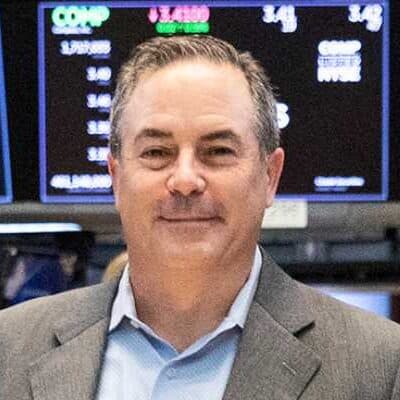
In this installment of TheStreet Stocks & Markets podcast, Chris Versace is joined by Michael Cola, CEO of Helus Pharma (HELP), a clinical-stage pharmaceutical company committed to helping minds heal by developing novel serotonergic agonists (NSAs). We discuss the opportunity ahead for Helus and the psychedelics space, as well as why Michael was excited to join the company in February.
The conversation pivots to Helus’ recent Phase 2 developments and breakthrough designation, with Michael laying out what he sees ahead over the coming several quarters for the company and why he is focused on growing the company’s net present value.
Investors looking for more information on Helus Pharma should visit the company’s Investor Relations page and review the latest Helus investor presentation.
Disclosure: TheStreet Pro Portfolio has no position in the shares of Helus Pharma (HELP). This conversation is provided for informational purposes only and shall in no event be construed as an offer to sell or a solicitation of an offer to buy any securities. The information described herein is taken from sources that we believe to be reliable, but the accuracy and completeness of such information are not guaranteed by us. The opinions expressed herein may be given only such weight as opinions warrant. The opinions offered in connection with this content are subject to change without notice. The opinions made known to you in connection with this content are not exclusive to you and may have been previously or subsequently discussed in other media. Comments made known to you in connection with the content: (a) may not be suitable for you; (b) do not take into account your particular investment objectives, financial situation, or needs; and (c) are not intended to provide investment advice or recommendations appropriate for you. TheStreet Pro was compensated by a third party to conduct this interview. Before making any investment or trade, consider whether it is suitable for you and consider seeking advice from your own financial or investment adviser.
At the time of publication, TheStreet Pro Portfolio has no positions in any securities mentioned.
Transcript
CHRIS VERSACE: Hey, folks. Chris Versace here. And on this installment of the Stocks & Markets Podcast, we're joined by Helus Pharma, ticker symbol HELP, a clinical-stage biopharmaceutical company committed to helping minds heal by developing NSAs. Now in December, the company was uplisted to the NASDAQ. In early February, Jefferies initiated coverage on the shares with a buy rating and a $22 price target. Later that month, Helus reported its latest quarterly results.
And yes, we will be getting into that. But more recently, Helus shared some very interesting phase II development results. Now, we're fortunate enough today to have brand new CEO Michael Cola join us to talk all about this. Michael, thank you so much for joining me today.
MICHAEL COLA: Pleasure to be here.
CHRIS VERSACE: So before we get started on Helus and your recent joining of the company, I just want to backtrack a little bit because I think that if we look a few quarters ago, call it 2024/2025 cycle -- the psychedelic space, mental health, it received a lot of attention, a lot of enthusiasm. And I think that kicked up again when Robert F. Kennedy Jr. was named Secretary of Health and Human Services in the U.S. But as we approach the end of the first quarter of 2026, what's the landscape these days?
MICHAEL COLA: I think the landscape is still very positive. I do believe there's a regulatory pathway that's clear to most companies and most programs, and you see multiple programs following that pathway. I think investors are still quite interested in the space as we're seeing readouts. And with the compass data and TRD, I think we're going to see our first approval, which, I think, is a major milestone for this area. So I think overall it's quite positive.
CHRIS VERSACE: So major milestones coming. You alluded to this back in February as well, but you joined Helus in early February. So what was it that attracted you to the company? If you want to think about it, why leave one thing to join this thing?
MICHAEL COLA: Yeah, so I've been tracking the space and actually have consulted for a number of companies. And my view when I was introduced to Helus last fall was that it was a unique opportunity. And the reason is when I just look at the foundation of the company, I believe it was built correctly. It's built on a foundation of science and intellectual property. And I look at the first two molecules as really extraordinary accomplishments, where naturally occurring substances have been engineered into real drugs with real drug-like properties that I think have a better chance of success, both from a clinical perspective and a regulatory perspective.
That core capability that the company has shown now twice in 03 and 04, I think can be repeated again. So to me, it's the opportunity to help as many patients as we can. The diseases that we're working in MDD and GAD are really difficult diseases. And I just think the approach that the companies had from the beginning is the right approach and will deliver a lot of value to not just patients, but physicians and also payers. So, to me, very, very attractive.
I will also say very much under the radar as a Canadian company, not a lot of people had really seen what the company can do. I think some very astute investors that I respect came into the company last fall, and, to me, that was real validation of how I felt about Helus then Cybin.
CHRIS VERSACE: OK, so a couple questions. You just mentioned 003, 004, but I also I need your help on this because NSAs or Serotonergic --
MICHAEL COLA: Serotonergic Agonists -- Novel Serotonergic Agonist. Yes.
CHRIS VERSACE: OK, so those things and then the focus on anxiety. Put all that together, and explain the why behind that?
MICHAEL COLA: Well, most of these programs in this class, these molecules work on a very specific class of receptors. I'm not going to get into the science in depth today, but those receptors are generally responsible for the internalizing psych diseases, and MDD and GAD are two of them. There's lots of other places to go, but I think the company rightly focused on the two of the biggest problems that are out there in depression and anxiety.
There's obvious overlap between the two areas. If you think about it clinically, there's probably close to 60% of the patients that have comorbid anxiety and depression. I do think the two programs are quite different in that they're using different molecules deuterated psilocin in 03 and deuterated DMT in 04. That was purposeful. We were looking for a shorter course of therapy in 04, and our deuterated DMT allows for that.
CHRIS VERSACE: And, Mike, when you say a shorter course of therapy, a number of treatments, number of visits.
MICHAEL COLA: Yeah, these drugs are quite unusual and different than anything I've seen in my career because they're administered only twice and they're administered 21 days apart, which is remarkable. When I think about the course of therapy, it's the in clinic time. It's how much will the patient tolerate. How much will the system tolerate the system being these clinics? And the feeling was -- and this predates me -- that for GAD patients, a shorter clinic time in that three-hour time horizon similar to what's going on with Spravato would be quite helpful.
CHRIS VERSACE: OK, and when we think about the current forms of treatment for anxiety, depression, as an investor, we tend to think of pain points, what are roadblocks, well, be it cost or time or side effects, in this case. How do these treatments, potentially, stack up against those? What makes them better other than just a compressed time frame?
MICHAEL COLA: Yeah, like most psych markets, both MDD and GAD are focused on efficacy. So when a physician thinks about how and when to use a particular drug, he's thinking, what are our response rates, and what are our remission rates? And remission is really where they want to get the patient. So that patient has a reduction in symptoms to the point that they are viewed as being in full remission and that is the goal.
I do think the existing therapies have unfortunately lots of liabilities. They have relatively minimal efficacy and at the same time have fairly significant side effects and tolerability issues. Particularly SSRIs, SNRIs. I mean, they are well-documented. There's weight gain. There's sexual dysfunction. There's metabolic issues. There's suicidality. So for a small gain, you potentially have some pretty significant liabilities.
Having said that, those drugs are extraordinarily successful. Most of them are generic at this point and do not cost a lot of money, but they provide, in my opinion, a relatively low bar for us to get past. Because I don't know that they help patients that much. If you think of their effect size on a scale of 1 to 10, they're like a 3. If you look at our first trial, which is the MDD trial with 03, we would be a 25 on the scale of 10 as far as our effect size.
So yeah, now it's a small trial. It's phase II. But particularly the first trial, nobody has ever seen data like that in major depressive disorder. That was two courses of therapy 21 days apart. And the most interesting thing to me is a veteran of psychiatric medicine is this effect seemed incredibly durable all the way out to a year. We just don't see that with acute administration of drugs in psych. I mean, everything's chronic for the most part. And just a remarkable, remarkable result.
CHRIS VERSACE: OK.
MICHAEL COLA: And again, back to why I'm here. I mean, trying to get that therapy to millions of people with MDD is a very, very noble goal for us to have as a company.
CHRIS VERSACE: So let's talk about that. Because you just mentioned you're in phase II, there are, obviously, other trials that have to come. But what is the path ahead? Or I guess for you as CEO, what's the task ahead?
MICHAEL COLA: Yeah, so the programs are both -- one is in phase 3 and the other one is phase 2 to be 3 ready. From this point forward, a lot of what we're doing is really execution-driven, particularly in 03 where we're in a pivotal trial. Our trial is called APPROACH. It should be reading out the fourth quarter of this year.
So it's really about getting the patients through the trial, driving them to our clinical trial sites, running a very clean and well-controlled trial and getting a really great data out the other end. I think that data could be transformational. It would be the largest MDD trial in it with an NAS. And again, if we have even half the result that we did in the phase II trial, it would be an extraordinary win for patients.
CHRIS VERSACE: And is the goal for Helus to then bring these products to market or partner with a larger pharmaceutical company, do you think?
MICHAEL COLA: So because these are in clinic products both of them and they require monitoring, it is possible for us to do the commercialization ourselves. If you think about how small companies go to market, it's generally as a spear with a very pointed approach to a very specific group of target audiences. And I think we can do that based on the fact that Spravato has really built a lot of these clinics and the capabilities sitting there ready for more products to run patients through it.
It doesn't mean the large footprint that you would normally have with a mass marketed drug. We think we can do this with a relatively small and efficient sales force. So I think the option-- back to your question, the option is there for us to take both of these products to market ourselves. At that point in time when we have that phase III data in hand, I do think there will be tremendous interest from strategics, and I believe what differentiates Helus from other companies is that Helus has the intellectual property. It has the composition of matter. It has the Orange Book listed patents.
And when a buyer comes knocking, the reason they call on a company is because they believe that that product is going to have exclusivity, and that exclusivity will drive very durable cash flow. So I think the options will be there. I do think we're, again, different and unique in that we have this IP portfolio that has been built over a long period of time.
And I think that also allows either us or a strategic to invest in the molecule in a different way. Because it has patent life out to 2041, you can do additional indications very efficiently with the same molecule and create a platform with the molecule itself. You can get a return on that investment because you have a much longer period of time of protection to get a return.
CHRIS VERSACE: Would that-- as a platform you just mentioned, would that potentially include licensing the molecule out for other applications for other people to explore?
MICHAEL COLA: I don't know how much exploration we would let them do. I do think it's important to maintain strategic control of the indications, but it certainly means potentially partnering with somebody here in the US, =. Possibly a geographic or regional type deal is possible.
CHRIS VERSACE: OK, now, in addition to this phase II news that you guys announced, I noticed that you guys have also made several additions to the team in the last few weeks. What's going on? Are you assembling your posse, so to speak?
MICHAEL COLA: Hopefully it's not a posse, but yeah. I mean, so I think the great thing about Helus is as I came in and got to know people, I think we have an extraordinarily good group of folks. There has been resource constraints in the past, and those constraints have limited particularly some of the leadership positions. So, yes, I think over the next, 6 to 12 months, there are positions that we're looking to build out.
CHRIS VERSACE: Excellent, excellent. OK, let me shift gears a little bit and just talk about the most recent quarter. So you reported on February 13. And if anyone were to look at the filings, which they can do. Ticker symbol HELP. Go to the SEC website. You'll see that the companies got -- it had no revenue and increased expenses and losses. And I think that goes to what you were alluding to a few moments ago, really ramping up for the trials that you're in with the expected results later in the year.
But at the same time, you're a new CEO coming in. How much of that might have been you clearing the decks? And how much of that do you think the worst is behind the company, so to speak? In terms of--
MICHAEL COLA: I've only been here five weeks. Yeah, I got it. I mean, I've only been here five weeks, so this was not a flush of expenses before I got here. I mean, the reality is this, again, very unique situation. On 03, the company went from a small phase II study to, well, phase I/II study to a pivotal trial in one giant leap forward. There are two pivotal trials underway today, and they really drive the expense curve.
As a pre-revenue biotech, we are a loss-making company. I mean, the reality is we have to spend to get to that inflection point where we, finally, at some point, break even and start spinning off cash. But this is just the nature of our business today. It's an extraordinarily positive problem to have. That you've got breakthrough designation, you've been allowed to speed ahead, but it also creates this situation where you have multiple layers of work that need to get done concurrently. So we have two pivotal trials underway.
We have a whole bunch of CMC work underway. We have clinical pharmacology work underway. Some of these activities would normally be spread out over a larger period of time, but because they're very compressed because of the BTD, the breakthrough designation from the agency. And it's a good thing to have. It's a good problem to have. But back to your earlier question. It's really operationally a lot that we need to make sure that we get right, particularly, over the next two years.
CHRIS VERSACE: OK, so I was just about to ask the time frame then for when you think that the largest component of your cost structure R&D might start to ramp down? We're in, again, March 2026. Is 2027 likely to be lower? You just said two years. Does that mean it's more like 2028?
MICHAEL COLA: I do think it really depends on our launch date and our pipeline. So, to me, it's less about reaching cash flow break-even and more about creating additional net present value, NPV. So as long as we have activities that are investable and grow the company, to me, the cash flow break-even milestone is less important.
Over the next two years, we're going to finish up our two phase III trials. We're going to submit an NDA and we're potentially going to launch a product, and we're going to prepare as if we are launching it and launching it alone. That will drive an expense curve. I don't think we've given any guidance for '28 or '27 at this point. But as we get towards that time period, we will. But the reality is, there'll be significant expenses between now and then.
CHRIS VERSACE: Understood. And you've got -- if I remember correctly -- about $195 million in cash coming out of the end of 2025. I understand that there might be some heavy losses, some big expenses coming. Is that enough firepower to carry you through? Or do you envision that at some point, if you're very successful and you've got to ramp multiple products at the same time, that perhaps more capital might need to be raised?
MICHAEL COLA: Yeah, so what we have guided to prior to me getting here -- and I stand by it -- is we will deliver the first trial approach and upon approach will most likely have to raise capital to finish the embrace and commercialization that embraces the second program. So yeah, I think capital raises or strategic partnerships to bring capital in are very much in our future.
CHRIS VERSACE: And just to make sure that the listener is clear, when you talk about the second program, is that 004?
MICHAEL COLA: Well, there's the second program, but there's also a second pivotal trial in the first program, 03. So the pivotal trials are larger trials. They're done in a way that support your submission to the agency. And the second trial for us is about 330 patients. There's also a long-term extension, which we will not have to have completed for our submission. But those are all the expense drivers, particularly over the next 18 months.
CHRIS VERSACE: OK, and if we were to look out in, let's say, three years, four years; not to hold you to this, but if things go well, where do you envision Helus being in three to four years?
MICHAEL COLA: Yeah, I mean, I think the sky's the limit for this company. I launched product with the kind of efficacy that we saw in MDD on 03 is a real commercial winner. I think it's going. You're going to go as fast as you can. Invest as much as you can because that molecule is going to be a great investment when you look at it from just an IRR perspective. And I just believe, if we have that clinical data, both on the efficacy and safety side, it will continue to be something we want to invest in.
So when I think about three or four years, that vision is to be a fully integrated pharmaceutical company with one product in the market and at least one more coming in behind it in a different indication area. But that's a vision. It's something that we work on every day. But we'll see how things pan out. I believe it's attainable, particularly, in the short run, which is for us three or four years.
CHRIS VERSACE: OK, and then just in terms of signposts to see if you're tracking towards that you mentioned some potential catalysts later this year. Are there any on the horizon for 2027 that you're eyeballing?
MICHAEL COLA: Absolutely. I mean, there is the EMBRACE trial, which is our second pivotal trial for 03. There are potentially data coming second half of the year for 04, although we're not quite sure what the timeline is for that as we're just starting this next phase of development. And, to me, also we'll have some regulatory milestones in '27 as we have a rolling submission with the FDA. Because of Breakthrough status, you can submit components of your dossier on a rolling basis as you finish them. I do believe those are meaningful milestones as well as we move towards, hopefully, an approved drug.
CHRIS VERSACE: So is it fair to say 2026, more of a year of blocking and tackling, 2027 more headlines, results, and indicate positive indicators?
MICHAEL COLA: Yeah, I mean, it's blocking and tackling. But hopefully within this year boundary we have some really significant top line data on approach. Yeah, that to me is the result of all that good blocking and tackling is producing a great trial.
CHRIS VERSACE: OK, great. And then just finally the flip side of the three to four year vision. And really as you coming in as a CEO, as you pointed out five weeks ago, what's the one thing from your perspective that you've got to get right or it's a potential big tailwind, big risk? Call it what you will.
MICHAEL COLA: Yeah, I mean, one of the reasons, I think, I'm here and why I was hired is to keep the trains on the track and running in time. And I think these next two years it's really about execution. I spent a little time at the beginning talking about the molecules because I think they're extraordinary. I think we have two real drugs on our hands, and it's up to us to make sure that we develop them properly, and they get to the patients that need them so much. And that's really about execution.
And we're a young company that's growing rapidly. And we need to have focus to make sure that happens.
CHRIS VERSACE: Excellent, excellent. Well, Michael, before we get out of here, I just want to see is there anything that we didn't talk about-- maybe it's more on the molecules or something else-- that we should before we wrap it up?
MICHAEL COLA: Yeah, I can't really think of anything. I do believe, in general, the only thing I think about is that this company is under the radar. We're going to try to raise the company's profile as we get closer to that milestone. But one of the things that is clear to me, after talking to a lot of our investors and the investment community, in general, is that there is a very strong belief in what we're doing in the pipeline. And we have to get-- we have to broaden that base of people who understand what the company is about and what we're doing, and the potential upside associated with it.
CHRIS VERSACE: Totally agree. Totally agree. That means, though, Michael, that we'll just have to have you back sometime in the second half of the year to get an update to see how you're progressing. And I think our listeners, our readers, our viewers would really appreciate that. What do you say?
MICHAEL COLA: Yeah, absolutely, Chris.
CHRIS VERSACE: OK, great. Now between now and then, for folks who want to get more or learn more about Helus, we will have some links to the company investor relations site. We'll have a link to the most recent investor relations page in the show notes. But is there any other place that they should be reading up, whether it's about Helus, in particular, or the industry that you think would make for some smart reading?
MICHAEL COLA: Yeah, so we're going to have an initiative over the coming months to get as much of our data out as we can through investor conferences, through medical and scientific conferences. And I would say the best place to see that is the website. There's a bit of a backlog of information that we're starting to work through. And I think it's all positive. We just need to get it out there in a way that people can understand.
CHRIS VERSACE: Digestible is the word I would use.
MICHAEL COLA: Yeah, absolutely.
CHRIS VERSACE: Excellent, excellent. All right, well, Michael Cola, thank you so much for joining us today. Folks, that is this edition of the Stocks & Markets Podcast. We'll be back with a fresh episode before you know it.