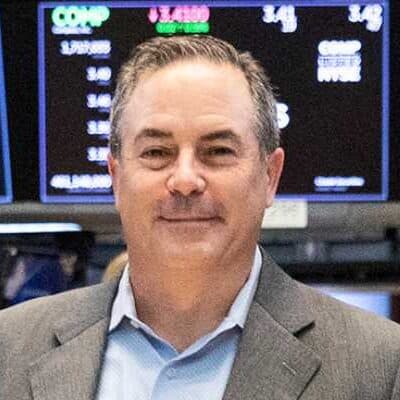
Stocks & Markets Podcast: Government Shutdowns and the Market With Louis Llanes
Chris Versace and Louis Llanes game out the shutdown, small-caps, housing, and where the S&P 500 might be headed.
You've reached your free article limit
You've read 0 of 1 free Pro articles.
In this episode of the Stocks & Markets Podcast, TheStreet Pro's Louis Llanes returns with Chris Versace to game out the government shutdown, what it could mean for the economy, and the market.
How might market seasonality fit into that equation, and what about gold? Can it continue to march higher? And what other areas are starting to fall on their radar screens?
Louis also shares his takes on three rapid-fire "this or that" stock questions. All that and much more, including some frank talk on the housing market.
More Pro Portfolio:
- We're Using a Market Overreaction to Scoop Up More of These Shares
- Stocks & Markets Podcast: Overbought and Staying That Way?
- September Portfolio Roundup: Defying History to Build on Our Gains
Transcript
Chris Versace
Welcome back to the streets, stocks and Markets podcast. I'm your host Chris Versace. And boy oh boy folks do we have a big conversation for you today as we not only wrap up the September quarter and get ready for the final quarter of the year, we're also dealing with the potential fallout of a potential government shutdown. Joining me to break it down and share his own insights, Street Pro contributor and our friend here at the podcast, Louis Llanes.
Now, Louis, before we begin and dig deep, deep, dig into all that's going on, I want you to give me an update on something that's a little more personal for you. How is the sale going up your house in Denver?
Louis Llanes
Well, it's not going great. This is a very interesting situation. So for those of you who don't know, I just moved to Austin not too long ago, and I put my house on the market. And what we've been seeing in Denver is pretty interesting. And every market's different. But in Denver we had a lot of new builds happen that are competing with, and they're offering a lot of incentives, but they're competing in the marketplace.
I live near that. My house is near Castle Pines, which is nice area and it's very open.
Chris Versace
Don't be shy, Lewis. Keep those stalkers out there. The full address?
Louis Llanes
No, I mean, it's it's you know, it's a nice area. Is very unique, right? I mean, how many, how many places do you have, like, buffalo roaming really close to you and elk everywhere. Oh, wow. But yet you could still oversee the city, and it's, you know, it's nice. But the market is very soft in Denver. There's been price reductions after price reductions, and we've seen more incentives come into play.
And, a lot of people were psychologically you could you could hear it from the agents. They were telling you, everybody is kind of waiting for a rate drop. And the fed and we were like, we had talked about the rate drop was like, already baked in the cake. And that's kind of what happened. Like what we talked about last time, the, you know, the the fed dropped rates a little bit and it really didn't have much of an impact.
But cycle, logically it had an impact on people. They're like, well, okay, they dropped and now maybe I should act anyway. It didn't have any material impact to the mortgage rates. So we saw picks pick up in showings there. But still no bite. My house is still on the market. I've had people close to, you know, they're wanting me to negotiate more.
There's just a lot of supply in the marketplace from two sources. One is the new builds. And a lot of those builders want to get things off their off their balance sheets. Right, right, right.
Chris Versace
And we are we are seeing them use a lot more incentives. And I think that's going to pressure margins in the back half of the year.
Louis Llanes
Yeah. And then the other other thing is a lot of people that were waiting and I saw that in my client base or client base, a lot of people that were waiting to sell the house just decided to put it out there. So now that supply has increased as well.
Chris Versace
So so I think when we spoke about this last time you were, your house was on the market close to 70 days, something like that. And you were saying that the average going for memory here at Denver Market was around 75?
Louis Llanes
Yeah, it was close to that. Yeah. And so so now we're past that and we're still seeing price reductions. I have seen some, some houses clear. But at six I would say maybe 7 or 8% off of the high that, that are off the listing.
Chris Versace
Price right now. Now, you might think I'm asking this as an investor, Lewis, I am, but I'm also asking personally because, as you know, my house is on is now on the market as well. And it has been very slow typically in my neighborhood. You know, homes are on the market for, you know, anywhere from one day to about a week and then they're gone.
And we haven't seen that. We've seen, you know, a pretty good showing at open houses. But I and we've had appointments and stuff like that. But I think you're right. The market has definitely softened. We've seen a couple more homes come on the market. Some that are listing above my house, some below my house. So it's kind of an interesting time.
As someone who is staring down the clock in the calendar, I will admit that we're contemplating yanking the listing and maybe revisiting it in January. Once we get through the holidays. Let the clock reset. I'm curious, are you thinking about that?
Louis Llanes
I definitely am, in fact, that's a conversation. I'm heading back to Denver. I'm in Austin right now. I'll be down there for a couple weeks. I have an office down in Denver as well. And I'm going to be talking, you know, with various contractors and various other people in the business to decide. I've considered, you know, lots of different things.
What I would do there. And you know what? It's not a bad idea just owning real estate in Denver because it's been, it's it's historically been a really good spot to be relative to other places in the United States. Not probably not as strong as where you are.
Chris Versace
Well, no, no, but hang on, hang on. Historically, that has been the case. Right? But you have to remember that Virginia, Northern Virginia, where I live, not only is it happened to be, you know, data center heaven with buildings from, you know, Raging Wire, Digital Realty, Equinox and of course, you know, other I'm using air quotes here at big tech companies.
But there's a lot of businesses that serve, you know, either the federal government directly or those parts of companies that serve the federal government. So, you know, there's this whole Doge thing at the end of September will be kind of interesting. But let's let's use that as a, as a transition because we're, we're we're sitting here taping September 30th, last day of the quarter.
It's been stronger than expected, especially September. But we're sitting here, Louis, do we get one do we not get one government shutdown? And if we do, you know, President Trump has threatened massively offshore. And then I believe he said something along the lines of we may we may do something even bigger than expected when it comes to these layoffs.
So I would suggest that if that happens, you might be in better position than I am.
Louis Llanes
So that that bet could happen. So I was thinking about thinking this whole thing through, and I, I kind of put it through a lens of game theory, like what is likely to happen. And I think the most likely outcome is still going to be a brief shutdown, despite all of the the drama. And the reason why is because it's much better for all parties for that to happen.
And, you know, Trump has, been historically, you know, he'll he'll talk a big game about, something very large happening. But if you look at the at the end of the day, it's usually a muted version of what he's what what he initially talked about.
Chris Versace
Yeah. He, he usually he usually gets out in front of things to say. Yes. And then you know, you get the other details and it tends to be a little, let's just say smaller than bragged about.
Louis Llanes
Exactly. And I think there's some reason for that. It's, you know, building the base. But, you know, at the end of the day, the political cost, there's a big drag on these, you know, if you if you drag it out, the political cost is bad on both sides. And, you know, if you look at it, the essential services are still going to be there.
Social Security, Medicare, TSA, air traffic, federal employees, you know, they go back to work. They'll they'll likely they get back pay, you know. So, typically I think what we'll see is some volatility surrounding that. I do think we will get a shutdown because that's the in my kind of scenario analysis, my base cases we get we get a brief shutdown and then the market wobbles a little bit on the headlines.
And it'll have a limited impact on equities. And we'll go back to business.
Chris Versace
So a couple questions there. When you say limited shutdown you know I I've written I've said this that we can get a shutdown. But it's really the duration of a shutdown that matters. If it's short was is you're kind of saying that's one thing. If it's a little longer, if we could look back to 2018, 2019 or even 2013.
Yeah. And no shutdowns. They impacted, you know, economic growth in in varying degrees. And I and I do agree with you that typically once you know, the federal government is back to work, you more or less we kind of make up for those shortfalls. Right. But but my question to you is when you say short a couple days, a week, ten days, what do you think?
Louis Llanes
Optimistically would be a few days, but I don't think it'll be just a few days just because that's not Trump's style. You know, I think there'll be a little more pressure being placed. And we probably will see some, drop in employment, you know, government employment. And during this process, because that is one of the games that the administration is looking for.
So that seems like to me, but I don't see it as being like multiple months, you know, because the political costs are way too great and there's too many other balls that are, you know, moving right now that could lead to a distraction. So I don't think that that's going to be a as long and, of an extension that some people think it might be.
Chris Versace
So what what about the outside thought? And maybe we can call it a conspiracy theory that, one of the positives that could emerge from this government shutdown and the lack of economic data we might get, including what was expected to be Friday's employment report and a wave of massive layoffs and rifts. You know, perhaps this pushes the the fed to do more in October than maybe the market was thinking.
What do you think about that?
Louis Llanes
Yeah, I think I think there's that that could happen. I think that could happen. That's I would say it's probably, you know, I'd put it at the 50% chance, scenario. I wouldn't I don't know that it's like a super probable event. I think what's probably going to happen is we're going to see, a little bit of softening here.
And, you know, like I had mentioned in our last podcast, I'm looking for more volatility in this quarter for various reasons. And this is just one reason. But, that I don't know how far and how much I could add to that conspiracy theory. But I would put it at just a flip of a coin, actually, as how I would look at it.
Chris Versace
All right, all right. So let's let's shift gears and talk about wrapping up the September quarter. Any anything really stand out to you other than the fact that maybe September bucked the seasonal trend?
Louis Llanes
Yeah, it bucked the seasonal trend. I think that we, you know, we're seeing some kind of micro market movements that's happening and technology that's driving it, you know, various industries that's that kind of drove that. It just kind of the way it landed. And, you know, and I don't know if you're moving towards this whole concept of seasonality or not into the next quarter, but I think that is a big part of how we need to view the next quarter is what happened in the prior quarter, because there is some, and I don't want to use too statistical terms because if I, you know, eyes will glaze over.
But there's there's this concept where, you know, what has happened in the last quarter does affect the next quarter.
Chris Versace
So, good friend of the podcast, Bob Lange, wrote something, as part of his weekly S&P 500 and chart analysis for the pro portfolio. And he said that, typically the last three months of the year are positive for the markets, especially when the first nine months of the year are positive for the market. And that's something that we have.
So does that play into what you're talking a little bit about in terms of seasonality?
Louis Llanes
Yeah, that is that is normally the case. So there's I look at it a little bit differently. You could you can make that assessment based on pure stats on price, price movement. But I look at it based on multiple factors. Basically I'm saying, okay, what is the valuation backdrop. What is the geopolitical backdrop. And then what is the technical backdrop in terms of immediately prior to the quarter?
Is it extended if I just go down the list, basically the the weight of the evidence would be more sharp. And it was still a positive fourth quarter, but a choppy positive for, fourth quarter. It doesn't it doesn't look like an exponential fourth quarter to me.
Chris Versace
Right. So if we were to think about that, you know, and I think about your comment about market valuation and thinking about how we've seen folks, Wells Fargo and others kind of once again ratchet up their, price target for the S&P 500. I almost think that, you know, this upcoming September quarter earnings season, get the quarter's results, get the updated, the updated guidance that could give us a period of sharp.
Louis Llanes
Yeah, I think so. I think that's one one thing that will give us chop. There's the political, unrest that's happening. There's there's a few things, you know, the Israel deal. You know, what's going on, you know, all the stuff that we're still, you know, looking at every day. And if you pick up the Wall Street Journal, all of those can also add to the volatility.
One thing that I look at as a technician as well is that if you look at the VIX, VIX is a very good indicator for many reasons. And you can look at it in different ways. But one way I like to look at it is just where are you in the range. And then what are the the lows.
The lows are they are they rising lows or are, you know, on the cycles or are they declining lows. And what we're seeing right now is we're seeing higher lows in the VIX. We're at the low end of the range right now in the current volatility cycle. But we're off those lows and moving up. And typically that you're more prone to having some kind of volatility spike in the next few months when you're in that condition okay.
Chris Versace
All right. So volatility rising uncertainty rising gold exploding could happen. Oh it's I mean it's already exploded. And it's been you know I guess technically overbought in the last few days. But is it possible Lewis. You see it going even further.
Louis Llanes
Yes. Okay. So here's what I think. I think that you're going to see a pullback in gold right. So I think back in September of last year I wrote a piece for the street called I want to say it was like, is the recent rise in gold a trap? Because at that time everybody was was saying, gold is going to go down, Gold's going to go down.
And in that article, I made the case that gold is probably going to go to 4600 an ounce. It just based on a lot of different things. So it's a yeah, you know, you're looking at the geopolitical risk. You're looking at the likely at the time I was saying the fed, the fed is going to have to drop rates.
And that was a year ago and they hadn't done it yet. And they are now doing that. And that does have a positive impact. That's kind of driving into it. Also, if you look at gold prices on an inflation adjusted basis and you look at prior rises in gold, it's not really that extended when you start looking at it from that perspective, like 2600 is actually would be a reasonable upside target.
And we're sitting at what, 33 something last I looked. So I think there's some room on the upside. But you know gold does and gold is a volatile instrument. So you know it's not volatile and it's absolute volatility. It's actually lower volatility than the stock market believe it or not. But it's what I mean by volatile I mean it moves up and down.
It doesn't trend smoothly. Gold does. It's kind of chops. So the way I would think about this is if if you don't have any gold then on pullbacks to buy some gold. I've been trimming from gold and I've written about that as well. Not because I'm bearish on gold, but because it's just grown so much that I look at the contribution to risk to my portfolios, and I just pair them back to get them in line.
You know, I don't want to overextend how much contribution to risk I have involved. So, so that's more of a portfolio management thing, but that's just me paring back my size. I'm still bullish on gold. So I think right now if you have a pullback, bottom line, I think you could pick up some gold if you don't have it.
You know. So and I think silver as well.
Chris Versace
Because okay what. So let let let's talk let's shift gears again and start talking about something you said before we hopped on the podcast. You said, oh busy day kind of trying to figure out where to go from here. So what what what are kind of the tea leaves that you're looking at, and how are you refining that thought to kind of make that decision?
Louis Llanes
Okay. So I'm kind of looking at so I don't know if you know this, you probably do know this. I have a bunch of scoring models that I run that I built. I started building them a long time ago, like before the, the, the.com bubble. I was doing a lot of quant working and I have this concept of quality, value and technical.
And I look at the whole market and those three dimensions in the equity markets in the United States. And so I have different buckets that I put them into. So like high, high technical companies, companies that are doing well momentum wise, that also are high profitable, you know, and then those that are not in that condition and those companies that are very strong values.
But the technicals haven't come to life yet, but they're high quality value. And they also have a good valuation metrics. I like to look at those because they're not correlated to each other. And and I'm looking at the market, action I can I can get a little bit of a sense about what are actually a significant sense about where the market is headed right now.
What I think is happening right now is that you're going to continue to see, money managers moving down the market cap spectrum and looking for those kind of, you know, grubs under the rock was a Peter Lynch that said, you can go and find the grub. Yeah, yeah.
Chris Versace
Yeah, yeah.
Louis Llanes
I think you might find a little bit more of that going on. And I think it's going to be a combination of that type of play, as well as finding those quality on a role. Momentum companies that have something new that is likely to have a lot of legs and will be changing the, landscape of a company like Robinhood, even though it's already made a big move up, that what's happening there is significant in the industry, and it's going to change that whole industry dynamic.
Chris Versace
Right. So I hear what you said on that first part, and I'm I'm the mathematician in me is oh, second derivative, third derivative type of plays sort of. And then yes. And then on the back part, you're speaking to me from a thematic perspective in terms of companies poised to benefit from structural change. So I can totally get on board with that.
My question to you is you have these baskets, how often are they reconstituted? Is it a quarterly thing? Monthly thing.
Louis Llanes
So so I have different different types of strategies. So the, the the strategies that I'm looking for more of the companies that are on a roll. High profitability strong strong price action. Those are reconstituted like every day okay. So you have to be more those rotate more the faster trading. And honestly over the long run that has outperformed even value plays or small cat plays or, and I even I recently wrote two articles like what we know what you know, momentum works.
Why do people pretend that it doesn't doesn't work, when all the data shows that it does? I was on a call with, gentleman who managed billions of dollars for, I would say, probably the best, largest quant equity shop in the United States. And, and we were talking about models and, you know, all of the models we were talking about was quality, value, you know, all of this, all your basic stuff.
Louis Llanes
Right? And then at the very end, it was momentum. And then and I, I recommend it, you know, make a few changes to this momentum model and you'll see him. He made a few changes. I got a call a couple days later and he said, that's the best performing model.
Chris Versace
Interesting.
Louis Llanes
And people like, pretend that momentum or like, you know, I think there's. And a feeling that it's not, it's not hard enough for one. And there's like a more there's not a moral high ground in it. And I got that, that phrase, when I was, I was a speaker at the CMT Association in New York, and I happened to meet a professor from NYU, and he mentioned that he's like, there is no moral high ground in valuation approaches or quality.
And, and and that really stuck with me.
Chris Versace
So it's interesting, right? Because I talk with Bob Lange quite a bit. Right. You know, I won't say it every day, but certainly several times a week. And I'm sitting there from a thematic and fundamental perspective, being like, well, blah, blah, blah, blah, blah, blah. And then the technician in him is like, Chris, you can't fight the momentum, right?
Chris Versace
Like, like you, you need to know when to let it ride. And you know, the the back and forth that we always have is okay. But how do I know when it starts to top out. Right. You know, I, you know, so it's this this this is where I think it all comes down to, you know, the combination of art and science, right?
Because there's certain, based on your experience, based on your perception, your lens, call it what you will. You know, you can zero in on that nice intersection of thematics, fundamentals and technicals and that that's obviously, you know, what we try to do.
Louis Llanes
We you know, one of the things I've kind of settled into tactically with that question, that problem of how do you know when it stops? I, I've just come to the conclusion is that you don't. But the way it works is that, you can have a probability that it's closer to the top ten to the than not.
And that's and all you could do there is position size differently and manage the risk. So what I, prefer to do is to let the profits run as much as possible because they can, you know, in order for you to make that average win much greater than your average loss, which is really important. That combined with how often you're right versus how often you're wrong, those are the key metrics.
But in order to get that spread to be bigger, you need to have some really big winners and you have to let them run. So what I just do is I'd like to, if if my risk is if the contribution to the portfolio's movement gets past a certain threshold, then I use I let that be the reason why I parrot back.
Chris Versace
Yeah, that's that's exactly what we do. So we have certain predetermined position sizes. That one once we cross that and especially if the stock is, you know, technically overbought, then we will start to take some profits. Even if the longer term thesis is very much intact. We have more upside to our price target and all those things. So to us it's just prudent risk management.
Louis Llanes
Yeah it's a good idea to do that. And the data actually shows that there's lots of, quantitative studies, empirical done by practitioners as well as academics that show that if you volatility adjust, that you drop some of your crash risk, if you will.
Chris Versace
Excellent. Good. Good to know. So let me let me bring us back on course because I think we got a little distracted there. You were you were starting to talk about, areas of the market that you're warming up to. You find a little more interesting and a little programing note. You know, don't give it all the way, Louis, because my understanding is we will be back here next week with a couple other folks sharing some, you know, big picks for the for the coming quarters.
So, folks, stay tuned for that. But just conceptually, Louis, what are you looking at? And, you know, if you want to slip in a name or two, feel free.
Louis Llanes
Well, I slipped in Robin Hood. I think Robin Hood, even though it's already moved a ton, I think you could still trade that, as one of your holdings that fall in the momentum bucket, you know? So I'm warming up to smaller companies. And I'm warming up to companies that have that still have like their technical momentum is rising and the valuation and the profitability is strong.
And, and I'm looking for those they haven't quite hit a catalyst yet and they're kind of overlooked. And they're they're not really overlooked. There's a smart investors are already putting money there, but they're not fully I don't think they're full yet. And I think a lot of portfolio managers are going to be kind of forced to put money there, because the flows I believe the flows are going to continue, and a lot of money managers are just going to have to keep going down the market cap spectrum at some point.
Chris Versace
Now. It's interesting. It's interesting you mentioned flows because I was reading today that and the name alludes me. Maybe you saw the similar article, but we're starting to see the, hedge fund community. After a wave of folks paying up for talent, there are a couple funds that are starting to say, do you know what? I'm packing it in.
I can't compete in this game anymore. And it leads me to believe that we're going to see some portfolio liquidations between now and the end of the year. Now, in the next, you know, six months, something like that. Not saying that it's going to pressure the market, but it could pressure some individual stocks. But it also means that that money gets reallocated and it needs to go somewhere.
So it's kind of an interesting time to be thinking about this, perhaps given the run up that we've seen in the mainstream market. That's another reason to be a little, not well, maybe incrementally bullish on some undercovered under loved areas, maybe even some small caps.
Louis Llanes
Yeah. And that's, that's true. I did not see that article. I remember, I can remember that kind of discussion coming to the headlines several times in my career. And every time, it's usually been like, like active management has gotten a little bit better than passive. And maybe that's maybe what we're heading into, because it's been hard.
Let's face it, it's been really hard to be passive. Whatever you have, a market like we've had recently, beating passive is really rough. But I think that that's, maybe changing right now. But I also, I think the hedge fund community, I don't know what the total AUM of the hedge fund community is relative to traditional, but I think it's relatively small.
So even if that happens, maybe it would just be a minor transitionary, impact that maybe you could profit from. Not something I have on my radar, but I'll have to keep that in mind. That's good information. Yeah. I think there is going to be a shift, you know, towards how people are going to invest. And I think the bond market is going to be the tricky part, or the things I've been seeing is that a lot of investors, they still want that, you know, a certain percentage of their portfolio and some safety.
And it's like, how do you get safety with a rising interest rate environment if that happens? Well, you know, there's certain things that can happen. A lot of I'm have been noticing in wealthy clients that they've been, you know, like unhappy with their short term yields. Now, now that they've been coming down. And I don't know at some point if they keep coming down on the shorter end, maybe that pushes some money into some higher risk short.
And bonds like, you know, like, like, mid-range, corporate bonds in terms of quality that are 1 to 3 year, I, you know, 1 to 3 year maturities. I think you probably see some flows there, which could have some impact on corporate financing and things like that. But one thing that's really on my radar, though, is this whole financial services industry.
I think it's just revolutionary what's happening there. You know, it's going to affect visa, Mastercard, all the brokerage firms. The regulatory environment is going to shift. We're going to have like a lot new a lot more new regulations because of technological developments.
Chris Versace
So is that AI driven, fintech driven fintech, you know, use stablecoin and AI or is it the whole Google.
Louis Llanes
All of that? Yeah. I mean, the tokenization, situation, the fact that we're still we still have this archaic one day settlement on stocks. Really? What are we doing that. So now, you know, I mean so like and then the fact that great companies that we've made a lot of money on for a long, long time like visa and Mastercard, you know, can they really justify the margins on settlements like they have now?
Given the technology that we have today? And how will they reinvent themselves? Can we expect those margins, those, those types of things I think are really going to affect it, affect the markets. You know, if you look at the some of the brokerage firms like Schwab, fidelity, Interactive Brokers and Robinhood and you kind of look at them as a group, like they each have different kind of game theory incentives, you know, like, like maybe Schwab will most likely try to fit all this new development or, you know, try to go after the regulators to, to regulate them harder.
Right. And, and Interactive Brokers will kind of maybe they'll stay more in their lane because they have a different marketplace, more of this right marketplace. And then, you know, fidelity is private, but they're probably they have much more eye investment as I understand it. So they'll probably adapt more towards and faster towards like what's what Robinhood is doing.
But Robinhood is just changing the, the, the whole, the whole thought process and the younger generation is, is driving that to that mindset.
Chris Versace
Interesting.
Louis Llanes
It's a it's a non boomer market. And it and as a Gen Z I love it because Gen Xers can can straddle it.
Chris Versace
Well right. All right. So so does this mean Louis that you'll be interested in the plan IPO when it happens.
Louis Llanes
Maybe you know I haven't looked at that in depth, but possibly.
Chris Versace
Okay. All right. Any, any parting thoughts? Louis, before we shift into the rapid fire question portion of the podcast?
Louis Llanes
No, no, I think I think I'm good. I think I've kind of told you everything that's on my top of mind, so.
Chris Versace
Excellent. Excellent. So I just wanted to get your quick reactions here. You know, I have not shared this with you, but, I did it last week with Bob Lang, and I think we'll be doing it kind of on a go forward basis. So as we move into the balance of the year, the holiday shopping season, we might have government shutdowns.
Other concerns. Louis, if you had to pick one of the two following stocks, let's hear it. You're ready.
Louis Llanes
Okay. I'm ready.
Chris Versace
All right Amazon or American Express American express. Why?
Louis Llanes
Just because American Express on a valuation basis, volatility basis, portfolio construction basis. Amazon I think is it's kind of like the, the Walmart, you know, I mean, Amazon's going to do fine too, but I think I would rather have I would rather own XP without digging into it too, too deeply.
Chris Versace
All right. Well the reason I would I like American Express, just for what it's worth, 70% of its pretax income, membership fees. That's all you need to know. It's a differentiated business model. All right. So what about, Tesla or Google?
Louis Llanes
Oh that's a hard one isn't it? I can't say can I give you percentages.
Chris Versace
Know that. Well, you know what? You know what? It's funny you said this because in the office hours that I ran last week, someone said, hey, Chris, I don't own either of these two stocks. Which one should I buy? And I said, well, and I did what you did, which is about 5050. So, you you can give percentages, but don't say 5050.
No, make a distinction.
Louis Llanes
It won't be 5050. Actually, I'll tell you. I'll, I'll pick, I would say Tesla first, which is going to be sacrilege for those people who are, you know, fundamental value guys. You know, there's plenty of reasons why not to own Tesla. But technically, I think I think in the end, just the innovation cycle and all that.
I think that you have a bigger potential upside, but I would size it small. And then I and then I would go probably something if you're a long term investor. So you have to ask me what your time horizon is, right. So if you're a long term time horizon I would I would kind of I would I think Google is is is got a lot of upside as well.
But there's so large and they have so much innovation that they need to go through with the AI and all that. And there's so many other players that are just kind of nipping at their heels. I feel like that would be a smaller weight, even though, you know, it's higher quality institutional sponsorship and all that. I would say I would give that like a 30% wait.
No, not a 40% wait and then a 60% wait on Tesla, which is sacrilege, I know.
Chris Versace
What about the other 10%?
Louis Llanes
Oh, did I not get to.
Chris Versace
Like.
Louis Llanes
A 60? 40 is what I meant to say 6040?
Chris Versace
Okay. Fair enough, fair enough. And then, because we're going into the holiday season, and, you know, consumers are a little cash strapped Walmart, TJX or Ross stores.
Louis Llanes
I'm going to go with TJX.
Chris Versace
Okay.
Louis Llanes
Good. Yeah. Yeah. Just because it's, higher on my on my scoring models in every capacity, I believe I'd have to pull it up from from memory. TJ, TJX is more solid just numerically I'm aware how I look at things.
Chris Versace
Okay, excellent. I'm glad you said that because we own TJX in the portfolio.
Louis Llanes
Oh good.
Chris Versace
So yeah. Yeah. Me. Yeah. Me. All right. Anything anything else before we get out of here,
Louis Llanes
What else could I say? I would just say the number one thing I'm looking at right now in the fourth quarter is to be picking up stocks, whenever you have these little pullbacks. Yeah. And I do feel like the quarter should be positive. Like, because the last time we were I was on I was pretty I sounded really bearish.
And what I was basically saying is we're heading into a sub chop, but I was, I was it kind of in a bearish mood? But I think.
Chris Versace
That day personally speaking.
Louis Llanes
Yes.
Chris Versace
Yeah, probably had something to do with the house in Denver.
Louis Llanes
I was just going to say my house wasn't selling that day. I just got bad news that day. So. That's why that's why I love quantitative analysis that keeps me from making bad mistakes, at least to some degree. Because of my mood. That's the.
Chris Versace
Thing I get that, I get that that's the.
Louis Llanes
Biggest thing that can cause people to to go to have problems, you have to know yourself.
Chris Versace
Well, I think it's that and there's there's the danger to be to fall in love with your stocks, be overly emotional and try to will things to happen because that just it just doesn't work. You know, I can say that from experience. I'm sure you could sympathize from experience. And yes, if I had to say to folks, you know, it's it's you hear so many people say it, it's so true, though.
You've got to remain cold blooded, you know, and just be harsh. I mean, I hate to say it, but you got to be harsh.
Louis Llanes
Yeah, look at the look at the evidence. And then, have some. And so, like you said, it's art and science. The science part can help you stay rooted.
Chris Versace
Yeah, yeah, yeah, I agree, I agree. And then the other thing, just to round it out is something we didn't say it earlier formally, but, you know, stick to your discipline, stick to your rules.
Louis Llanes
Yeah, definitely. I mean, if you're going to change a rule, make sure that you've done the homework to make, you know, if you do need to change the rules. But to change the rules often, that's bad. You know, you should be studying lowest.
Chris Versace
That means they're not rules. That's all that means. True. Yeah. Anyway, anyway. All right, well, listen, I thank you for joining me today, Louis. It's always a great conversation. I'm excited for next week to hear your stock pick for the fourth quarter. I, I'm sure the listeners will be tuning in. I'll be, working mine up as well.
And with that, folks, that is this week's episode of the Stocks and Markets podcast. As you as you've heard me say just now, we have another big episode for you next week. We look forward to having you back. Thanks for listening.