Stocks & Markets Podcast: Going Hypersonic With Starfighters Space
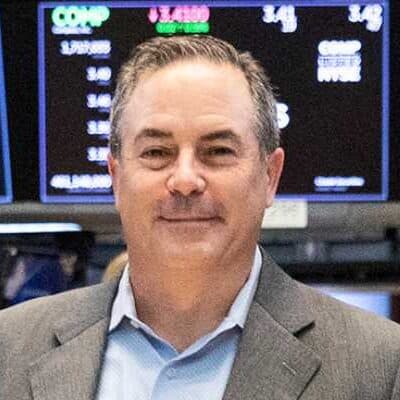
Tim Franta, Starfighters' new CEO, and Chris Versace discuss the rapidly growing space market, satellite launches, hypersonic rockets and more.
You've reached your free article limit
You've read 0 of 1 free Pro articles.
Welcome, folks, to the latest episode of the Stocks & Markets podcast. This time around, Chris Versace is joined by Tim Franta, the new CEO of Starfighters Space Inc. (FJET), whose customers include Lockheed Martin (LMT) , GE Aerospace (GE) , Innoveering, Space Florida, and the U.S. Air Force Research Laboratory.
As the company’s name implies, we’re talking about the rapidly growing space market and its role in both commercial payload and satellite launches, as well as hypersonic rockets, an area of growing importance for the U.S. national defense.
While Starfighters is classified as an emerging growth company, Franta explains the multi-year opportunities across the company’s commercial and defense-related end markets, as well as how it can leverage cost savings between the two. He also shares two catalysts that have the potential to re-ignite investor enthusiasm for the space industry.
More information on Starfighters can be found at the company’s investor relations page and in its latest investor presentation.
More Pro Portfolio:
- Buying More Palantir After Enterprise Extending Partnership
- Tracking 24 Portfolio Signals Across 9 of Our Investing Themes
- Weekly Roundup: Market Jumps on Tariff Ruling, But Braces for New Trade Moves
Disclosure: TheStreet Pro Portfolio has no position in the shares of Starfighters Space, inc. (FJET). This conversation is provided for informational purposes only and shall in no event be construed as an offer to sell or a solicitation of an offer to buy any securities. The information described herein is taken from sources that we believe to be reliable, but the accuracy and completeness of such information are not guaranteed by us. The opinions expressed herein may be given only such weight as opinions warrant. The opinions offered in connection with this content are subject to change without notice. The opinions made known to you in connection with this content are not exclusive to you and may have been previously or subsequently discussed in other media. Comments made known to you in connection with the content: (a) may not be suitable for you; (b) do not take into account your particular investment objectives, financial situation, or needs; and (c) are not intended to provide investment advice or recommendations appropriate for you. TheStreet was compensated by a third party to conduct this interview. Before making any investment or trade, consider whether it is suitable for you and consider seeking advice from your own financial or investment adviser.
Transcript
CHRIS VERSACE: Hey, folks Chris Versace here. And this is the latest Stocks and Markets Podcast brought to you by the Street Pro. And I have to say, we're super fortunate today because we're speaking with newly anointed CEO Tim Franta about Starfighters Space, ticker symbol FJET. And this is a company that went public in mid-December to quite a stir, I have to say, looking back at the stock price chart.
Now, for those who don't know much about Starfighters, it's the only commercial company in the world with the ability to fly payloads at sustained Mach 2 plus. And it has the capability to launch those payloads into space. Current customers include, well, you know some of these names, Lockheed Martin, GE, Inoveering, Space Florida, and probably most importantly, the US Air Force Research Laboratory.
Now, Tim, thank you so much for joining me. I really want to dig into this. And we'll touch on some things that you're seeing as the newly appointed CEO.
TIM FRANTA: That's great. So newly appointed is correct. It happened Sunday night.
CHRIS VERSACE: Yeah, I mean, I was going to save this till later in our conversation, but since you just mentioned it, it being really recent, I think the outgoing CEO was one of the founders of the company. The company's only been around for about 3 and 1/2 years, maybe 4, if I remember correctly. And he was 72 years old. So this is kind of a natural transition with the IPO being behind the company, no?
TIM FRANTA: Correct, And let me just give Rick Svetkoff all the credit because prior to Starfighters Space, there was Starfighters Inc, which owned the aircraft. And Rick acquired the only private supersonic fleet in the world that could go Mach 2 on a captain salary and then located at the Kennedy Space Center. And it was an absolutely remarkable achievement. And then Starfighters Space helped make that applicable to space, launching in space, and also for research.
CHRIS VERSACE: OK, OK, well, let's dig into this a little more now, Tim. So I kind of did the less than elevator pitch introduction for the company. But now that you're going to be well voiced in explaining what the company is, what they do, and the opportunities, give us your elevator pitch for Starfighters.
TIM FRANTA: Sure, so we're a little different from other launchers. First, there's a huge market right now for research and development and testing and evaluation. And our fleet of fighter Jets, the F-104s, can fly at high altitude at high speeds. And that will get the speed to space.
But before that, and I know you'll ask about revenue later, but one of our streams of revenue will be for the federal government for hypersonic research. We currently have two contracts. And we're looking forward to two more. One is with the Air Force Research Lab, which has pretty much been completed. And then one coming up is the Defense Innovation Unit. And there's two other big ones out there.
So to give you the highly technical pitch, when we fly like this, we're doing hypersonic research. When we fly like this and let the rocket go, we're doing space. So the great thing about that, it's the same platform. It's the same technology. It's the same communication. So we get twice the bang for the buck by doing hypersonic research and developing to space.
CHRIS VERSACE: So let's talk about those two opportunities. Because you're right, you're leveraging the same capabilities, the same infrastructure. But they're two very different opportunities. One is more on the commercial side. One is more on the defense side. So let's break these down a little bit.
So on the commercial side, we're talking about launching small satellites predominantly into space. And you mentioned, you have some competitors out there. I would imagine folks like SpaceX, I would imagine folks like Blue Origin, and some others?
TIM FRANTA: Well, the big guys. So we're at the smaller end of the payload size. So really not competing with SpaceX or Blue Origin. But it's the Rocket Lab size down. And we love Rocket Lab.
CHRIS VERSACE: What's driving the smaller payloads, I guess, is my question because there's been a lot talk about SpaceX and satellites. But I think you're focusing on what's called the Low-Earth Orbit, or LEO market.
TIM FRANTA: And let me first stress two things. We're going to suborbital space first. So when you say payload, that is for suborbital because those go up, will go up for about 15 minutes in space, have about 15 minutes of microgravity, and come back down. That's what we're doing first.
So the great thing about that is you can test your payload, whether it's a electronics, or a thruster, or a battery, or something and get that time and space. But it doesn't cost you the amount to get into low-Earth orbit. It's a much cheaper.
And as you know, in business, risk mitigation is huge. So the more you can fly, the more you can test, the better off you are before you send something into space. And then after that, so then 18 months, two years after that, we'll be doing to low-Earth orbit, which takes a lot more energy to stay in space.
So payloads can be in orbit or suborbital. Satellites can only be in space because they orbit the Earth. So that's the difference between that. And so I perpetually tell people on the street, yeah, a payload is somewhere on an orbital. A satellite is only when it's in orbit, an low-Earth orbit or whatever. So that's one thing I cannot tell you for the IPO, through the Reg A, I kept having to change that out. They would say satellite.
CHRIS VERSACE: Well I appreciate you taking us to school on that because we're scratching at the surface of this. And you, of course, have been steeped in this for some time. But you just said something, Tim, that really caught my ear, which was lower cost. Why is what you're doing lower cost than some of the other solutions that are out there?
TIM FRANTA: So prices are coming down everywhere. But with us, though, it's our first stage. So the aircraft, the F-104, as a first stage, is a well understood vehicle, easily maintained. It is a high performance aircraft. So it is difficult to fly, but it's well understood. Our costs are well understood.
And just to give you an example, almost half of all rocket fuel for any rocket, it doesn't matter what it is, to get about to 50,000 at about 600 miles an hour. So that's almost for any rocket. That's where the cost average.
But us, we can make it-- well, our plan is to make it to about 42,000 feet at around to 1,200 miles an hour. Yes so we have a more efficient first stage due to the aircraft. And then if we didn't have to come back, we could do that on 300 gallons of fuel. So our first stage is very inexpensive.
The other thing, too, is because our rocket, especially our suborbital one, will be relatively small, is that we plan to order them and get economies of scale. So I'll not be ordering one rocket at a time as I'm doing for development, but we'll be ordering 6, 12. We'll get economies of scale, just by the order.
I don't have to order one avionics system. The integrator can order 12. And you get discounts and economies of scale. So the one thing I did say, because you did ask about the market and the recent surge for small payloads and satellites, we're at truly different age.
And I've been trying to think of a metaphor. And the one thing I would say there's a huge difference for apps after 2007. Before 2007, apps did not exist.
CHRIS VERSACE: Right, thank you, Apple. Thank you.
TIM FRANTA: Yes. So it's very similar because no one knew what was going to happen with apps. They thought they knew. And some of them were 100% correct. But there were so many organic things that happened with apps and market-driven things for apps. The same things with space.
There are six big categories people use space for, communication, imagery, and so on. But if space is cheap enough and expensive enough, we're going to get a lot more research. And there will be apps in space that can be used.
And especially now with the new technologies, there's going to be uses for apps. I mean, uses for small payloads that no one has dreamed up yet. There's also a backload of payloads. And some of that is due-- part of it, so I don't want to slam the academic community, but they spend almost 100% on their payload. They want to get free rides from everybody.
So whether it's the federal government or NASA, they want to get free rides. And now, they've have to be paying SpaceX and Rocket Lab as rideshare. So they are starting to get more commercial. But the academics have been a little neglectful on the ride cost.
CHRIS VERSACE: So you mentioned a large backlog. And I can imagine that there's, up until recently, a relatively small number of people that can-- or companies that can actually deliver the payloads and deliver the satellites. So just help us wrap our heads around this, Tim. Is this backlog measured in quarters relative to launch, or years?
TIM FRANTA: Oh, so I have one payload, I don't know if it'll fly, but on the list, that was developed by the Air Force Academy that I believe is 20 years old. So that's at the far extreme. It probably has to be redone.
No, I would say close to a decade of backlogs. But again, so that's not true for the commercial side. They adapt and adjust. But that is for the civil and academic side, there's a huge backlog of small payloads.
CHRIS VERSACE: OK.
TIM FRANTA: But again, they are adjusting. I do have say, Elon and SpaceX have really taught them about rideshare. So some of the academics are very sophisticated.
CHRIS VERSACE: So outside of fuel costs, which you just mentioned, is there another big factor that we need to be mindful of as we think about these types of launches?
TIM FRANTA: Sure, so for us, we will require a very small crew. It'll be 15 people or less to launch. And we can actually launch twice a day. So we're also going to go for a high cadence. So that's another thing. And that reduces cost, especially if we can launch twice a day.
The other thing too is with an aircraft, unlike a set launch pad, we're a movable feast. So we can either fly to other locations to launch. Or if we have to move 10 miles north on the range, we can do that. So we're very tailored. At the Space Center here, we have about 120 degrees we can launch from.
CHRIS VERSACE: So are you less sensitive to changes in weather. Well, not really, because-- we can because we can move to the next day, but we only fly during clear weather.
TIM FRANTA: As a matter of fact, we only fly during clear weather. And we have to be careful of the waves offshore because if our pilot ever had to eject, we do not want him to eject, it can be a sunny day and there can still be 20 foot waves. So the weather has to be clear. And we have to make sure the oceans are good for recovery, if needed.
CHRIS VERSACE: And you recently, I think as soon as this past week, had some news with GE Aerospace and Star Launch 1?
TIM FRANTA: So yeah, so we have some critical design reviews in the next week. So looking forward to that. And yeah, now as CEO, there are things I can say and cannot say. By the way, that was the first big lecture you get as CEO. It's fun, about what you can say and what you cannot say. So we will update you later about that. But that's quite a learning experience.
CHRIS VERSACE: That's fine. And we don't want you to say anything you shouldn't. But for the audience, a CDR, or Critical Design Review, what is that? And then in the stage of things to look for, where is it-- is it the beginning, the middle, towards the end?
TIM FRANTA: Towards the middle. Let me go through our steps to space, because that's what we call it. So one doesn't get to space in one fell swoop. You get there by steps. So the first steps are simulation. You simulate what you want to do. And you see what the computer says. So simulation is the first step.
And then you start doing modeling. And modeling about how it's going to interact with the vehicle and everything, you start designing. So then you do a preliminary design. And then you do-- and then we accomplished, in August, but all the data got done in December, we had some very successful wind tunnel tests.
And the wind tunnel tests were to prove a couple of things. And that's at scale, 1/72 of the size of the vehicle. But it was to the main reason was to show clean separation from the aircraft. So we had it in a mock tunnel, and wind tunnel. And then it separated from the aircraft. And we got 10 good clean separations. And we got a lot of data from that.
Because that was successful, we could go on with our critical design review, which is more integration of other things. So I would say that's smack dab in the middle. Now, the one thing that will save us time in the future is that a good number of things that will be on Star Launch 1 will be on Star Launch 2.
So if they're certified in Star Launch 1, it'll use the same attachment adjustment mechanism by the same lots of other equipment. So Star Launch 2 isn't starting over. It's increasing size.
CHRIS VERSACE: So, and again, not to put words in your mouth, and we want to be mindful of what you can say, conceptually, this relationship with GE Aerospace, is this a 2026, 2027 revenue opportunity, maybe longer?
TIM FRANTA: So it could be longer. It could be quicker. But I also do have to say one thing about us, because I've been around the block a little bit of time, Starfighters has some philosophies. We will not be dependent on-- and this is nothing against GE, but we will not be dependent on one contractor.
So we love GE, but we are not going to be dependent upon-- we can go to other contractors, other suppliers to build things and develop things. We have found this has been a mistake for decades. And it's one of the reasons Elon brought a lot of stuff in-house. We plan to stay a small company. We would not bring everything in-house, but control over cost, and design, and time is very important.
And the other thing too, to be quite honest, space is over really hard-- launching things in space is over 60 years old. I should be able to pick up the phone and say, hey, I need this avionics system. It should not be I have to put out a bid for a specific avionics system. So there's many things like that that's now just picking up the phone and ordering a telemetry system, an avionics system, and things like that.
Certain things have to be specially designed, but there's a lot more off-the-shelf technology now. So we're agnostic on a lot of things. We will do what's best for the vehicle.
CHRIS VERSACE: But hang on, though, so that, to me, that seems to suggest that the time to market would be faster. But you're also leveraging common components and common technology. That should benefit your cost structure as well.
TIM FRANTA: Exactly. That's right. And the other thing about that, it does a lot more than that. If something's been flown before and it's proven, it reduces my insurance. So there's things-- so one of the last things we have to do is provide launch insurance, or to get launch insurance, and other types of insurance too.
CHRIS VERSACE: You mentioned earlier, having to mark up some documents regarding the IPO and such. So on the road show, and what has been messaged by Starfighters to investors, when do you expect commercial revenue, Tim?
TIM FRANTA: So for hypersonics, right away. For space, it will be down the road. And we can-- I don't want to say put we're putting everything in the CDR, but our scheduling for the next 18 months, it should be good. And I have to release that all at once. So we'll do our forecast in the very near future.
I know, you often ask people, what's your greatest worry? What's your greatest fear? My fear is not failure. My fear is the typical space industry worry, things sliding to the right. That is the number one fear because 99% of the time, you can find an engineering solution or an operation solution. It's just sliding to the right is my biggest fear. And I try to do that. I try to reduce risk. I try to reduce time.
CHRIS VERSACE: OK, OK. So let's pivot a little bit and talk a little more about the defense aspect of what you guys are doing. You're partnering with, as I said earlier, with the Air Force Research Lab to develop and test hypersonic rockets. This is for national defense purposes.
And for folks who don't know this, my understanding is that hypersonic rockets and related projectiles, they travel, I couldn't believe this, between 5 and 25 times the speed of sound, or for the layperson like me, somewhere between 1 and 5 miles per second. Pretty impressive.
TIM FRANTA: Yes, so there's a ton of work for Starfighters there and the national interest. Let me just give a little history because it's relevant to why the US is going to be committed for the next 10 years. So roughly in 2017, the US was number one in hypersonic technology.
And then slowly after that, China and Russia creeped up. And there were two telling events. One was the start of the war in the Ukraine. One of the very first targets was the Air Force Supply Depot for the Ukrainians. And that was hit by a hypersonic missile.
So that woke everybody up. And one of the reasons that's so important is, as you just mentioned, the speeds are so fast, the radar dishes don't even have time to come back around to track them. And if you can't track them, you can't deploy any countermeasures, even if there are countermeasures. So it just happens so fast.
So the Russians have launched-- it's in the single digits, I believe, number of hypersonic missiles, but they have been in very targeted areas. So that meant they went up to the top of the heap and surpassed the United States.
The other scary thing that happened, this was probably four years ago, if I'm not mistaken, and boy, this got a lot of people's attention, China launched a hypersonic missile that went all the way around the world. Yes. And they had it crash back into China, so that no one could retrieve the parts. And that was pretty scary.
CHRIS VERSACE: So hang on, Tim, are we in the US, are we behind? Is that kind of what you're saying?
TIM FRANTA: So, technically, yes, but let me tell you, it has been a pleasure in the last, probably the last year. So before, the military would have lots of contracts, and I mean, had many contracts. And they would go to big, big players.
And then oftentimes, you'd see one major failure. And the Pentagon said, no, we're not doing that anymore. So they have two large contracts now that have many players on them. And there are a couple of big integrators, but people like Starfighters are on there, and many other teams.
But it is to accelerate testing and development, which then accelerates actual deploying. So the Pentagon now is for how do we increase research, how do we increase testing, and how do we then get these to the people who can use them? So things are moving very fast at the Pentagon. It is absolutely brilliant. I'm probably going up next week or the week after.
I cannot tell you, it made me feel safer knowing the new philosophy is to get things tested and ready. And as a lot of it is avoiding the old traps. Many of the contracts are OTAs, other teaming agreements, so that you don't have to go through all the rigmarole to be a qualified contractor.
A lot of people are teaming together, you would think are our competitors. But it is truly remarkable what the Pentagon is doing for hypersonics. And the President also issued an executive order that also helped.
CHRIS VERSACE: So let me just ask this question to sling a little bit of this defense lingo around. So you don't necessarily need to be the prime on this. You could be a subcontractor. You could partner with some of the big companies, whether-- I think Lockheed is already a partner of yours, but others out there as well?
TIM FRANTA: Yes, and Starfighters also, philosophically, we're not exclusive. We're non-exclusive. So we can partner with more than one people. Let me give you another example, which hasn't even happened yet, but for certification of some other aircraft that the Pentagon has developed, you cannot use the same aircraft to test an aircraft.
So because you can have the same failure if you're testing two F-35s or something. And so in the past, Starfighters has been used to do things like that. But one thing that we can do, haven't been approached yet, but we're also a very good target because we move at Mach 2.
So if someone has a new detection system for Golden Dome or hypersonic program, we can fly in as a target. We have a very low profile. It's less than a meter. So we can fly as a target and see if you can detect us at Mach 2, hopefully you can detect a missile at Mach 5 or greater. So we have all sorts--
CHRIS VERSACE: Sorry to interrupt, Tim, but I didn't think about this earlier. But how is it that you guys are positioned as Mach 2 plus, and there aren't many other players out there? Because that seems like a pretty big advantage.
TIM FRANTA: Yes, so, one, thank the founder of the company because he knew they were valuable. And then certain things happen. It's not that the US lost capability. But what happened is we went away from dogfights.
So, the F-14, F-16, F-35, you can now be miles away from your person, your combatant, and just release a missile. You do not have to be that close. So you could be at Mach 1.6, 1.8. Whereas, the F-104 was designed to be on a high altitude interceptor. Its whole purpose was to go that fast and do that.
So the requirement for speed went down because weapons got better, and targeting got better, and everything else got better. But it's sort of sad because 25 years ago, me and you could fly to Europe and break the sound barrier. That is not true today. That is not true today.
So it's the same thing happened with the military. They did not need to exceed Mach 2. But we maintained the capability. The other thing, too, is the Italian government, the US government realized Starfighters had this. And they have been very helpful in keeping us to maintain that capability.
CHRIS VERSACE: Excellent, excellent. So when we trace these two opportunities back on the commercial side and the defense side, it sounds like the hypersonic defense side is probably going to be a nearer source of revenue, really tied to government contracts. What type of visibility, generally speaking, does that give you? Does it give you several quarters, multiple years of visibility?
TIM FRANTA: A decade.
CHRIS VERSACE: A decade.
TIM FRANTA: I mean, the two big federal contracts now are for five years. But they'll be-- so at least five years, but in the foreseeable future, I mean, these things take time.
CHRIS VERSACE: OK, so just again, conceptually, for folks who might be new to this, there is the contract out there. There are certain hurdle rates or targets that have to be hit. Funding is released. Is how that works?
TIM FRANTA: Yes, and let me share two other things about the contract. So one, the contract is not a set amount, which is great. It also has in there work for others. So if NASA or a NRO or somebody needed something, they could use that contract, which means they don't have to do a contract with us, they just have to issue a purchase order.
Hey, we need this Mach 2 flight to do this and this. We don't have to do anything. We have to negotiate nothing. Our prices are listed. So the work for others, for other federal agencies, is great. That also, another thing, that speeds processes up.
Because if one agency sees, hey, this could work, they can immediately test it and not have to go through contracting. So the work for others is absolutely great. The other thing I want to say about commercial, the bulk of the contracts now with the federal government are commercial contracts as opposed to government contracts.
So they are commercially buying something that is a service that's available. So that also speeds things up too. So it may be a commercial contract with a government funder. Now, we will still disclose which is government funded, even though it's a commercial contract versus what's 100% commercial contract.
Then saying that, though, some of our partners, if a prime then leases the contract to us, that's a commercial contract. So we are conscious of what's federally funded directly, what's federally funded through a prime, and then what is truly commercial.
CHRIS VERSACE: And then when you report your results going forward, a lot of companies, they will share dollar value for backlog or remaining performance obligations, total future contracted bookings, all of those type of things. Do you envision releasing something like that so people can track your progress?
TIM FRANTA: Yeah, we'll release what we're supposed to release and what we have to release. And we are working through some of the classified parts that we can't release. Because we couldn't say, Starfighters got a blank contract for x. But we're learning for that. But again, the bulk of the contracts are now commercial contracts.
The other thing too is the Pentagon has been very open about when things need to be classified. As in the past, programs at the start were classified from the beginning. Well, when you're trying to find a regular valve, why is that classified? It's just a regular valve I can buy off the shelf. So as opposed to the entire program classified, the Pentagon is very good about later stage development is classified, not the earlier stage.
CHRIS VERSACE: And then I just want to do one last tie together between the commercial satellite business and the defense business, payload and satellite, and defense business, because you said this earlier, and I just want to double check it, that the platforms that you're using for one are used for the other.
So there's not a lot of incremental development needed. It sounds to me like you're getting paid to develop and do one, and you can harvest the benefits, and potentially better margins, on the second.
TIM FRANTA: That's exactly right. That's the strategy. And again, I have to thank the Pentagon because that's what they want us to do. They want us to be commercial providers. So the one thing I'd like to share, because people think about commercial satellites for lots of reasons, which are commercial. But us being on the smaller side also has some advantages. For example, I think Lloyd's of London is going to be one of our biggest fans because it costs--
CHRIS VERSACE: Insurance.
TIM FRANTA: Yes, because it costs a lot to launch a huge satellite on a big rocket. So it could be a $250 million satellite, a $90 million launch. And prior to that, though, you want to upgrade your satellite. So you want to fly a new thruster, a new battery, or something.
So we could, for way cheap, just send up the battery. And it can be tested in orbit. So that would not be a commercial satellite. That would be an R&D satellite for a commercial company. But we think Lloyd's of London would love that because, as you know, in the past, all of a sudden, you see something like a solar panel doesn't last as long as they said or things like that, or they use too much fuel in their thrusters, or something like that.
Things like that, units and components can be tested on smaller satellites. And we expect that to be a good portion of our-- becasue we cannot launch 32 Starlinks at once ever. But we can launch one thing that can be tested and used. So we're more of an Uber for space than a trucking company.
CHRIS VERSACE: That's an interesting comparison. OK, OK, well, let me, before we get out, I have one more question, or actually two questions. The first one would be, given your time with investors over the last several weeks, what's the one thing that folks are not really getting? What is not gelling for them that, in your opinion, they're missing?
TIM FRANTA: Well, actually, our investors are pretty sophisticated, but I think the public in general, it's time for engineering and then time for regulation. Things take time for the regulators because their number one duty is to protect the uninvolved public. That's what they call them, the uninvolved public. So safety and we-- and then after that, for us, is our pilot.
So just amount of regulation, and it has gotten much better. I have to tell you, the FAA, the federal ranges, everyone has gotten better in the last five years. I had a meeting on Monday that went extremely well. So the federal regulation is coming down and still protecting safety, but I think that's it.
But the other thing, too, that I think the investors, but maybe not the general public. I cannot tell you how exciting this time is. I mean, I cannot tell you, I lived on the Space Coast most of my life. But 14 years ago, we had 12 launches a year. We're going to have over 150 this year. So yeah, the bulk of that is the Falcon 9 and SpaceX, but yes.
CHRIS VERSACE: And so that's 2026. Where do you see that 2027, 2028? Is it going to continue to grow at a substantial rate?
TIM FRANTA: Yes, we are having traffic problems that we're dealing with. So yes, so that's the other good advantages about the F-104. We, as of today, we can fly an hour 30 minutes before a Falcon 9 and an hour and 30 minutes after. So that is great for us.
But we are looking at other spaceports. And we should be having some news. And it's not to leave here, but it's to expand. And every spaceport has its advantage. The closer you get to the equator, the more momentum you get. So you get a little more pull.
There's other federal ranges that have certain equipment that'd be nice to fly out of. So we are looking for our expansion. But getting back to the excitement, in April, we're going to go back to the moon. And then the other thing that's out there, and boy, aside from the being overwhelmed at ringing the bell, I can tell you, every person-- I mean, every person asked me about the SpaceX IPO, every single person there.
CHRIS VERSACE: Well, that is going to be big news for a number of reasons, including the size of that transaction. Are you watching that as a barometer? Because I would have to think that the extent it goes well, that's probably good for Starfighters.
TIM FRANTA: Oh yes, I think for the whole industry. And remember, it helps everyone on down the line. So the other thing, too, a personal story, and I don't want to say it's ironic, but in a previous life, I was Chief of Staff for the Florida Space Authority, which was the state's space agency to promote commercialization.
Unfortunately, we started when there was none. And so one of the things I did, I was Chief of Staff at the time, I applied for a grant at the Space Center to pay for a road that bypassed the security gates. This was huge because in order to get around the Space Center, literally, the bypass through the Space Center was closed at night.
Literally, the gates closed, and you had to drive all the way around the Space Center. So the state now said we should build a bypass. So the state put up half the money. And NASA put up half the money. And so filling out the application at the last minute, because everything was done, the State Department of Transportation asked for the name of the road.
And I didn't panic, I put down Space Commerce Way. And so I named it Space Commerce Way. And then for about 11 years, there was nothing on the road. And so I felt, OK, I'm an idiot, I shouldn't have named it Space Commerce Way.
Then all of a sudden, SpaceX happened. Then all of a sudden, Blue Origin happened. And so there's now airbuses on the road. And Blue Origin has over 1,000,000 square feet, if not more now. So now, it's like-- I was a genius. I named it Space Commerce Way.
CHRIS VERSACE: Well, I'll tell you something almost as funny. So I reside in Northern Virginia, which a lot of people think of as data center heaven. And it is, at least for now. But there is a fair amount of government contractors out here, including, some for SpaceX. And there is a road known as-- and I kid you not-- warp drive.
TIM FRANTA: There you go. So I think the market is getting more sophisticated, by the way. I think, and by the way, a lot of influencers actually pay more attention to the space than they do other things. I think it's from personal like.
So sometimes, we have to be careful what we say because, all of a sudden, they'll really get into it. So it's going to be an exciting few months between going back to the moon, the IPO, and everything. And it is truly exciting. I am truly looking forward to the next 18 months. It's going to be something. And the other thing that I did not know for the bell ringing, in the last minute, is that you have to give a speech before you walk on out.
CHRIS VERSACE: True, true.
TIM FRANTA: And so I had a few minutes to think before I walked out. And I said Starfighters believes that space is the future. And we'll meet you there.
CHRIS VERSACE: Oh, very good. I like that. That's very good.
TIM FRANTA: So yeah, I had about two minutes before I had to tell that before I walked out to ring the bell.
CHRIS VERSACE: Excellent, excellent. Well, Tim, thank you so much for joining us. It sounds like-- and you really just said it, the next 12 to 18 months are going to be interesting. A lot of developments to watch. And I'm hoping that you'll come back and give us an update two quarters or so from now.
TIM FRANTA: Definitely. And thank you very much.
CHRIS VERSACE: All right, thanks, Tim. And thanks, everyone, for tuning in to this episode of The Stocks and Markets Podcast. Check our links and notes below. In the write up, we're going to link to Starfighters' latest investor presentation and more. So you can continue to do your homework on what sounds like a very interesting, compelling opportunity, especially if you're a patient investor looking for something in the space environment.