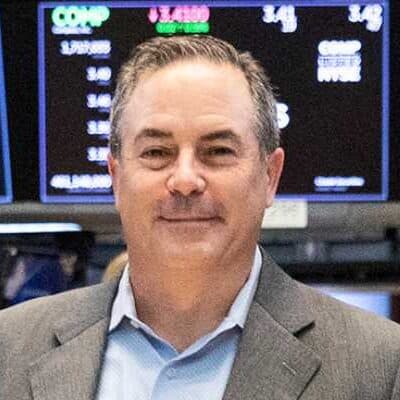
Stocks & Markets Podcast: Getting Ready for 2026 With Freedom Capital
Chris Versace and Ed Maguire discuss changing tax rules, digital infrastructure, investment banking, AI and more notable things to watch.
You've reached your free article limit
You've read 0 of 1 free Pro articles.
On this episode of the Stocks & Markets podcast, TheStreet Pro’s Chris Versace is joined by Ed Maguire, Head of Research at Freedom Capital Markets. As we head toward the end of 2025, the two discuss where Ed sees opportunity in 2026 and what the markets may be overlooking.
While the outlook for digital infrastructure remains compelling, the two also exchange views on upcoming tax changes that should benefit corporate cash flows, how the Eurozone earned more from collecting fines on U.S. companies than taxes, and why the IPO and M&A market should remain vibrant.
The two also have an interesting conversation on the Netflix (NFLX) -and Paramount (PARA) bids Warner Bros Discovery (WBD) , a possible solution for the movie theater dilemma, and a quick conversation on Wednesday's Fed decision.
More Pro Portfolio:
- We're Locking in a Big Slice of Gains in This Holding
- Seasonally Picky Shoppers, Hypersonic Upgrades, More Investing News
- Weekly Roundup: Marvell and These 5 Holdings Propel Portfolio Higher
Transcript
CHRIS VERSACE
Hey folks. Chris Versace here, portfolio manager, TheStreet Pro portfolio. And it is time for a fresh Stocks & Markets podcast episode. Going to cut right to the quick this week. Going to be bringing in our guest Ed Maguire, Director of Research at Freedom Capital. And we'll be talking tech and much more.
Ed, welcome to the podcast.
ED MAGUIRE
Great to see you again, Chris.
CHRIS VERSACE
That's right. You are a repeat guest. And I'm so happy that we can kind of come back and revisit some of the things we talked about. You know, several months ago, I think it was early September when you were on last. And here we are moving through December and getting ready not only for the end of the year, but the fresh 2026.
Now, as we think about this, you know, I tend to look back and be like, what surprised me, what turned out different than what I was thinking might, you know, might have happened at the beginning of the year. When you think about that. What what kind of jumps out at you?
ED MAGUIRE
Well, I'd have to say I've been really surprised at how resilient the, this this surge in interest in, artificial intelligence infrastructure has been. I think, when we looked at the beginning of the year, there were concerns that we that sentiment might have been overdone. And in fact, it might have been underdone. And looking back at the earnings commentary, just out of interest following the third quarter, we saw guidance, CapEx guidance and also revenue guidance just going up across the board.
So I think the there's there's a lot of credence to the argument that we may still be in very, very early innings of this, this long term investment cycle.
CHRIS VERSACE
I agree, I agree, I a few weeks ago I wrote a piece about how we're tracking not only AI adoption across the enterprise and the consumer, but really the usage of it. And when you trace it back, whether it's, you know, the mobile phone industry, the smartphone industry, you tend to hit these tipping points. But yet when you look at the explosion in, you know, broadband connectivity, the consumption across the network, you know, it tells a slightly different story.
And I think as a result, usage as well as adoption, you really have to kind of take a dual approach. But to your point, Ed, I don't think we're anywhere near that. In fact, I just wrote a note on OpenAI state of the enterprise AI report that just came out a couple of days ago, and lo and behold, they agree. Ed, can you imagine...
ED MAGUIRE
Not talking their own book? Of course.
CHRIS VERSACE
Yeah, exactly, exactly. And that's the other point that I made. But but, you know, at the same time, though, I think, you know, as we see adoption and usage continue to rise, whether it's, you know, this nice report from OpenAI, we see some of the Anthropic announcements with Snowflake, with Accenture. You know, we have much more to go in terms of that enterprise adoption.
And that's not even counting the consumer adoption that's likely to start, you know, accelerating. If a lot of folks are correct about what this Google backed, you know, AI enabled Siri could bring to the iPhone.
ED MAGUIRE
Yeah. No doubt. I think we're starting to see, you know, just in anecdotally, you know, the use of, you know, Anthropic or Gemini or, Grok or, ChatGPT really are replacing the old search and search engines. If you if you recall, back in the late 90s, we had, a whole bunch of, of, search engines like excite and of course, Yahoo was a, was a search engine.
And then these, these folks from Google put all these servers up and, and and really turned it into what turned search into a, into a brand name. But now we have this new generation of tools. It's providing, you know, so much more insight, so much more value to the users that I think, you know, we really are in a new generation of, you know, information access and retrieval.
CHRIS VERSACE
Agreed. You did leave out my personal favorite. Favorite? Excuse me? AltaVista. But, you know, I'm dating myself.
ED MAGUIRE
That was a good one.
CHRIS VERSACE
As we go through the holiday shopping season, you know, I know a lot of folks are focused on the enterprise side. I just alluded to the consumer side of AI adoption. Do you think that the holiday shopping season can really be a big catalyst to drive consumer AI adoption?
ED MAGUIRE
Yeah, it's a good question. I think you know it. My view is it's likely to be much more incremental than, you know, than than a real, yeah. Yeah, I, I would say, I wouldn't say call it necessarily catalyst or, an inflection point, but I do think you'll see people using a lot more intelligent search functions, using, using generative AI to, to come up with, with great ideas and, and certainly what, what we're starting to see is that the technology is getting infused into, really every step in the, in the, in the value chain from, you know, the producers and the manufacturers who are figuring out how to make better products all the way to, the consumers who are, you know, trying to figure out the best product fit. But also, just the growth of, you know, we have so many of these connected products that have become really, you know, we're very accustomed to wearing smartwatches and, you know, or asleep rings and other sorts of connected, devices.
I think it'll it's certainly going to be a big Christmas for, for those types of products.
CHRIS VERSACE
Are you, on your Santa's wish list? Any meta Ray-Bans ad?
ED MAGUIRE
Well, thinking about that, I think those would be, those would be, pretty nice. I got to get some wraparound Oakleys that'll allow me to see some metadata of, all right around everybody that I meet using facial recognition. I think that would be pretty cool.
CHRIS VERSACE
I yeah, I think it would be cool. I think ultimately, you know, the. We'll see. Personally, I think the jury's out on that. But we'll see. I it's me. It's all about the use case that that's kind of why I alluded a few minutes ago that I know folks are really looking forward to this AI enabled Siri that Apple is going to be bringing out, you know, spring 2026.
But we've started to see folks get, you know, potentially overexcited about the impact I think we need to see, really what does it do? How does it make things easier. And then we can kind of gauge the impact on the potential iPhone upgrade cycle.
ED MAGUIRE
Well, we know that the tech industry never, you know, over promises or never gets overly excited.
CHRIS VERSACE
About an ad ed ad. You're forcing me to sit there and tell the story about. I remember sitting there in 1999, I think it was an Ericsson, analyst day, and they were like, 3G is right around the corner. It's coming next year. And 3G did not show up for several years after that. So, you know, we'll see.
We'll see. But but talk to me about going into 2026, Ed, because I know, there's a couple things that on your are on your radar screen. I think, you know, one of them is, it sounds like the continuation of AI adoption usage and the corresponding demand for digital infrastructure. But there's some other things on the horizon, too, that you and I were chatting about before, namely, you know, something on, taxes, something on the, on on other landscapes that folks may not be really queuing in on just yet.
ED MAGUIRE
Yeah. I think 20, 26 is, is setting up to be, I'm pretty bullish on the economic prospects, at least in the United States. We have, some major tax changes coming that are going to allow for, you know, immediate depreciation of capital expenditures, not just of of products and capital equipment, but also real estate that is to be used for manufacturing.
For instance, if you want to buy, real estate to build a factory, you can deduct the entire cost from your taxes. Of course, if you don't use it in ten years, that that benefit goes away. But there are a lot of these incentives that are designed to encourage, in a lot of, you know, capital investment in the U.S business investment.
And I think that's really, that bodes well because his business invests, certainly that that follows with, you know, demand for products, hiring, of course, as we see investing and downstream, there are a lot of beneficiaries of this. So I think that is, not an it's not something that people have been focused on a lot, but I think it gives us a really good set up looking into 2026 and that that, you know, and the benefits are going to go across the board.
It's not just going to be tech, it's not going to yeah, it's it's going to be any type of product or you know, or equipment that a business could use.
CHRIS VERSACE
Yeah. Yeah. I'm thinking about I'm thinking this through as, as you're mentioning this and if we're talking about, you know, we lump in real estate and, you know, building, manufacturing capacity, new locations, greenfield locations, for example. It means we're going to have more construction demand. So the kind of flow through to companies maybe like United Rentals or Martin Marietta, but it also means another layer of demand for power and electricity.
You know, and we're already seeing utility capital spending move higher. Right. So that pain point folks are concerned about could become even more of a greater one.
ED MAGUIRE
Yeah. I think one of the interesting themes that I've been looking at this year and, could you continue to look at next year, is the, the investment in into data center data center capacity, not just for AI, but more broadly, you know, the, the, the use of, data centers for almost, you know, any type of, you know, any type of use case, you could you could think of what's, what's really interesting.
There's a, there was a study by, by JLL. They had the North American Data Center report, halfway through this year. Apparently North American colocation vacancy is down to 2% right now. And pre leasing of all construction is 73% through 2027. And you've got investment in a lot of areas of the country. Well, including where I, where I am, new Jersey. But, you know, Dallas Fort Worth, you know, a lot areas where power is not too expensive. Columbus, Ohio. Atlanta. Phoenix, Northern California. I mean, there's there's a there's a big cycle underway. And you also have some really interesting you've got interesting companies that own a lot of these assets, like, Digital Bridge, and very likely very familiar with Digital Realty Trust and Equinix and, maybe applied Digital.
But there are also companies like American Tower, and then, companies that are focused on, you know, construction and automation, like Johnson Controls or Quanta Services. Jacobs Granite Construction, those are going to be all really interesting, companies that have, I would say quite fall dance core dance cards over the next several months, if not.
CHRIS VERSACE
Years. So it's interesting, right? You talked about for folks that are doing the actual building activity, not necessarily the equipment. Right. That's correct. Arla caterpillar, for example, or or some of the others out there.
ED MAGUIRE
Yeah. It's and it's it's not just the, so there's, there's old there's electrical equipment that's needed, there's power and we can get into, some of that, some of the developments there. But there's, you know, there's, there's construction and engineering services. A friend of mine actually is, part of a, a group of, digital architects called the infrastructure masons.
And they are they're struggling to find enough qualified people to to help design and build these data centers. It you know, they they're not necessarily in glamorous locations, but it's the this is this is a career path that if I was, giving advice to, to a recent college graduate or somebody looking to go go to school to have a, have a great career, I mean, learning all of the aspects, you know, the physical, not just the tech, but but also learning how to, manage energy and cooling.
It's, you know, these are these are big problems that are really multi-decade cycles that are that will provide great employment for, for people.
CHRIS VERSACE
As well. I can back you up on that, because my understanding is that the demand for, electricians, union electrician risks, especially extremely high demand given the prospects for the data center buildout. And it's it's a pretty good living.
ED MAGUIRE
It is, it is and it's, and, you know, great electricians who become, master electricians can really write their own ticket. So, I have a, I have a nephew who, moved out to Colorado and works in Aspen, and, and he is, really riding high. I mean, you can buy it. You can be buying a house in the early 20s without having to having any college debt. So it's, it's it's a great path.
CHRIS VERSACE
Excellent, excellent. Ed, talk to me a little bit, too, about, the US, EU landscape, because it seems to me that there's some other things going on here, just like your comment about taxes that, that folks are not really, let's just say paying full attention to what's going on.
ED MAGUIRE
Yeah. It's it's remarkable. I think what's, just in the last few days, the EU, announced a fine of €120 million, against X, formerly Twitter for, transparency. But basically, you know, this is this seems to be the EU business model. I saw a statistic that in 2023, the EU collected more money in fines from U.S. companies than it did from, then EU based tech companies paid in taxes.
So regulation around, you know, GDPR and the Digital Services Act, is is becoming a real point of contention. I think we'll start weak. This could spill into, I think, geopolitical, you know, conflict in a way or economic conflict. I mean, we've already we saw already saw tariffs early this year emerge as a, as a major cudgel for policy.
And I think this, that, you know, first of all, there's a principles around free speech, which are I think they're some different views of how that should be handled between the US and the EU, but also as a as it pertains to multinational companies. I mean, our, our US companies do dominate, you know, the landscape of technology and the fact that they must comply with the most stringent, you know, data custody standards in Europe.
You know, it creates a lot of additional overhead, a lot of additional cost. I think, you know, many of the, the regulations are were certainly initially well intentioned, but they do have the, the effect of, you know, slowing down growth and progress and innovation. And what what it does highlight as well is how, how much better a, a place for innovation, for innovators. You know, the United States is you know, even with all of our shortcomings.
CHRIS VERSACE
Do you see, I, I, we usually don't get into politics, right. We usually kind of are more, policy specific, but but just generally speaking, we've seen, you know, Trump in the white House really start to push back on, you know, what it is, what it claims to be overregulation, the, the the, the impact on cost. Like you were just alluding to, you know, I think yesterday, you know, Trump kind of commented with ag equipment, for example, that, the prices they've, they, they've ballooned, but it's all due to this environmental regulation.
We're going to get that cleaned up, cut it back. And I'm thinking about what you're saying about the EU at the same time, where they think the amount of regulation there is also rather steep. Do you think like as part of this, you know, trade negotiation or resetting of the playing field that Trump could potentially go after the eurozone for its degree of regulation?
ED MAGUIRE
Oh, absolutely. I think the, I mean, it was the, the policy implications of, of the, of the tariffs or, you know, directly, focused on reducing the barriers to, the US, for instance, being able to export its own products into the EU. It's, I mean, obviously around, digital products and technology, it's a little bit different because you're not moving a physical product in.
CHRIS VERSACE
Tell me you're, you're you're. You're talking about exporting, you know, foodstuffs, so to speak.
ED MAGUIRE
Yeah. But I think we need that. But the, the, I think the, the the the battle, space may be expanding into, you know, information services and, you know, tech companies, social media of course, but also how, you know, how how our tech companies do business in, in Europe. And I guess what's what's interesting is that you can compare the number of, of companies that have that, you know, multiple hundreds of billions of market cap that have been launched in the, in the EU in the last 30 years versus the US. And it's I mean, it's, it's pretty lopsided right now.
It seems like the EU is much more concerned. They're concerned with safety. And they're not as concerned with sort of personal freedom. And the US is, you know, very dynamic. And of course, we you know, we have, the lion's share of, of the most innovative companies.
But then, that, of course, you throw China into the mix. And China has a combination of both. They have this, this control, this state control, while they also are, you know, quite, accommodating to to technological innovation.
CHRIS VERSACE
Well, we'll have to see how it all plays out. I, as I think about, you know, what? You just said, that it does remind me that we are starting to see the eurozone regulators go after Google and others for what they're doing, and I so I think this is the meet evolving conversation as we move through 2026.
But let let's also talk a little bit about, this extremely big deal that's gotten a little contentious of late. Netflix/Warner Bros Discovery, and now Paramount coming in on the side. And just as a side note, I don't know if you noticed this or not, but it looks like one of the PE firms that's, advising Paramount. Jared Kushner's firm, are we, or should we be surprised by this Ed?
ED MAGUIRE
This is part of a broad consolidation of, digital entertainment and, I mean, entertainment overall. I mean, one of the one of the interesting parallels that I would point out is that the music business, has seen over the past probably 15 to 20 years, a large trend of back catalogs being monetized by private equity, remember?
You know, remember the there was initially the David Bowie was the first to monetize, but a lot of the the big artists have, you know, have sold off the rights to their, to their publishing. And that's and it's kind of consolidated.
CHRIS VERSACE
And that includes your own favorite son in the State of New Jersey.
ED MAGUIRE
Yeah. That's right, Mr. Springsteen. Mr. Springsteen also. Yes, he he was one of those. And it's at the same time that you've had this, consolidation, and selling off of these rights, or publishing rights, it's also become incredibly cheap to produce your own content. So, we have, you know, millions and millions of do it yourselfers who are able to compete on, you know, broad distribution platforms.
Whereas the, you know, the, the mature industries are consolidating. I think you're seeing, a similar, trend play out with, you know, with Netflix looking to acquire the Warner assets and obviously Paramount, it seems that they've been, they've been in, they, they've been in negotiations, you see, of course, Kushner's firm was involved with, taking out a so, you know, digital gaming, the whole, video game industry has, has been consolidating ever since, you know, Microsoft had acquired Activision, and now you've got EA and a few of these others.
I mean, you do have this, that, you know, this, this, this consolidating market. And it's coupled with, I mean, if you think about digital gaming, right? We have, Roblox, which is, a company that, one of our analysts just launched coverage on. I mean, they allow millions of people to create their own experiences and monetize them.
So it's it's in many respects that's democratization of creativity for the masses. While the, the, the big studios are all getting rolled up and, and and taken private. So it's, it's an interesting trend. You saw it in music. I mean, as as, as all those catalogs got taken up, taken away by, by private equity.
It it's it you can with software and a laptop. You you can do what, what would have cost, you know, tens of thousands of dollars to to do in a studio. Wow.
CHRIS VERSACE
Years ago. No, I mean, well, I mean, look, there's no question that content is king. And I agree with you that between the processing power, the cameras, the features, the software, the broadband connectivity that we have today and AI tools, you know, the ability to create content is probably, you know, cheaper and faster than almost ever before. Right.
But when we think about the big entertainment experience and that brings us back to, you know, Netflix, Warner Brothers, Paramount, who do you think is actually going to win? Do you think it's going to be a Netflix Warner Bros. tie up? You think you think the comments that, the, the Middle East backing the Paramount deal, the, you know, those funds that could be a wrench and, you know, Netflix, you know, walks away with it.
ED MAGUIRE
Yeah. It's a it's a great question. And I think the, really the future of the, of the movie theater experience as well is something that's, that's at issue. Hollywood is has been, has been suffering, over the last couple of years in the in the wake of the writers strike in the pandemic, I heard a statistic that the number of production jobs in Hollywood is has declined by about, but by about 40% from about 140,000 to about 100,000.
So, so the industry itself has reached a stage of maturity where it's starting to contract. The, you know, the few I, I don't have a a great read on what the future is going to be. I do think there is a there is a counter to the cyclical trend that you're seeing a lot more people showing up for in-person events and, and, you know, certainly the, you know, your Live Nation's and MSG Entertainment and some smaller companies like venue are investing in the live experiences because people do want to connect, you know, person to person.
So, you know, so I think that in many respects that, you know, that experience will continue. But the, the content or the material is, is going to be, I think fully a lot more, a lot more fragmented. We just haven't seen a great, Hollywood itself seems to be, maybe, maybe in terminal decline at this point.
So it might be time for the Indies to, to carry the torch and we might see, maybe a new, a new player on the scene.
CHRIS VERSACE
So, you know, as I think about that, you know, I obviously look at, you know, the various theater chains, Cinemark, AMC theaters, Regal was acquired a few years ago. You know, obviously that that's a bad landscape for them. But I do wonder that because there is that big screen experience that people love, I just wonder, as I think about all of this, given the cost to go to the movies, the cost, you know, not just for the tickets, but for the snacks and everything else.
It's obviously cheaper to be, you know, watching it at home, streaming it on on the increasingly larger TV grater sounds down sound, system. Excuse me, but I do wonder, though, if perhaps the, megaplex movie theater days are over, perhaps we we see a return to the movie theater that has two screens or four screens. Easier to program movies play for a longer period of time.
Kind of like when we were kids.
ED MAGUIRE
Maybe even, maybe we could bring back drive-ins or even the old silent movies where you had the the movie theater, and,
CHRIS VERSACE
I don't know about that.
ED MAGUIRE
It's actually pretty interesting in the, you know, in the symphony orchestra world, there are the New York Philharmonic and the New Jersey Symphony do a lot of concerts where they'll screen the movie and then play the soundtrack live.
CHRIS VERSACE
So I was I earlier this year, I was up at, Carnegie Hall and saw that with La La Land. Fantastic.
ED MAGUIRE
It's, it's it's a new thing. I think people like that. Maybe if you were to add some some popcorn and, table service, it might, like, really turn into something.
CHRIS VERSACE
No, no, no table service. I am the only against table service at the movies. I find it very disruptive. I don't want someone, you know, eating chicken wings and having someone pass a basket when I'm trying to pay attention to what's going on, I don't want it. Wow. That's why that's why I. I won't say I boycott the Alamo movie theater, but I will not go.
ED MAGUIRE
Well, maybe maybe we'll we'll we'll get these, get screens so people can talk back to the screen without bothering the people next to them.
CHRIS VERSACE
I don't know, I don't know, I don't know, I, I love going to the movies. I well, I just wish that there was, you know, there's got to be a lot more great content to go there. But sticking with this idea of the smaller movie theaters, you know, just just as a movie buff, I think it would allow for better programing because you're you've got less screens to fill.
You could be a little more creative in what you're filling it with. Whether it's, you know, old movies, foreign films, what have you documentaries like, you know, seeing I don't know if you've watched this or not, but Ken Burns latest, The American Revolution.
ED MAGUIRE
Oh, yeah.
CHRIS VERSACE
Yeah. Fascinating stuff. I, I would almost love to see that on the big screen with the big sound.
ED MAGUIRE
Yeah. And you can, you could couple that with discussion groups and panels afterwards. That would be, really interesting for people who want to talk about the, you know, what they've seen.
CHRIS VERSACE
There, you there, there's your live part live in-person event. Yeah. Excellent, excellent. One one last question or to add before we get out of here, I remain pretty positive on the IPO market and M&A activity. I think falling regulations, in the US in 2026, lower interest rates will kind of keep that, keep those markets going.
Good for the big bulge bracket investment banks. What's your take on that?
ED MAGUIRE
Yeah. It's, 2025 was it was a good year. I think people, halfway through the Liberation Day, shock to the system, threw everybody for a loop. But what we're starting to see is that 2025 setup to to be a pretty good year. And, there's a there's a nice robust pipeline ahead. The companies that are poised to go public are bigger and more profitable than ever.
We're also seeing, you know, the Russell 2000 is starting to, to recover as well. So I and if we start to see, you know, a real easing of some of the regulations around, around listings and compliance, I think that could lower, because Dodd-Frank, requirements really had caused, the, the bar for going public to be so high that it made it really difficult for smaller companies to go public.
And if and if we can see an easing of some of that overhead, I think it'll be. And it'd be great to, open up the, the markets to a lot more, small companies, small to mid-sized companies, make it make it easier for investors to find and help to fund great new ideas. I think we have a we got a good year ahead of us.
There's still quite a bit of work to be done, but those are, you know, a lot of what we're seeing here, at least with the business friendly administration in the US, the contrast with the EU's focus on monetizing regulation. I think we can, we can bring a lot of value to investors, right here at home.
CHRIS VERSACE
Okay. Last question, Ed, and this is this is a big one. And I have to ask it only because today's podcast is being shared on Fed Day. So the market widely expects the fed to deliver a 25 basis point rate cut later today. Growing thought that the comments could be what folks would interpret as a hawkish cut.
Now that's out there in the market, I would, I would I would share with you that my bigger concern is not the rate cut itself, it's the number of rate cuts that the fed could telegraph as it updates its set of economic projections. So kind of weigh in. Where do you come in on this? Is it the rate cut itself in Powell comments. Is it the shape that we get or is it something else.
ED MAGUIRE
Yeah, I think we are we're embedding, future expectations are a lot more important than that, than the cuts themselves because the, you know, once once we get to the decisions, you know, the, the, the direct, we haven't had a surprise in a very, very long time. You know, I do think there is, you know, we've been in a bit of this Goldilocks economy, but there's certainly enough signs of, challenges.
And I don't and I do want to temper some of the optimism, around the markets with the fact that, you know, we are still we still there's still a lot of people that are really, really struggling with inflation and the the unemployment rates creeping up. Obviously the concerns about the a difficult job market, I think, do provide incentive for you know, and more easing.
Fernande, you know, easing fiscal policy. I would say, you know, I don't know where we're going to go. I it feels like this, this again, this Goldilocks, state that we're in, is is likely to continue for a while. But, a lot of what the set up here is, is looking forward to when rates go down.
And, remember, we've got I don't remember how many trillions of dollars that are locked up in residential real estate that. Oh, yeah, I had says kind of kept the residential market from, from so, you know, you're showing a little bit more liquidity. But if we get a couple of these rate cuts and we start to see, you know, refinancings and housing sales really taking off, that's going to unlock, you know, a, a torrent of, of liquidity. I think that will, that could really help rise, raise all boats.
CHRIS VERSACE
So I, I'm inclined to agree with you. The one thing I'll throw in there is I think we need to see job creation pick up, especially when it comes to the housing market. Yeah. You know, it's not just lower rates, it's the it's the powerful combination of lower rates and job creation that really spur the housing market. But and that's a topic that you and I can revisit in the first half of 2026. What do you say?
ED MAGUIRE
I think it sounds like a great idea, Chris.
CHRIS VERSACE
Excellent, excellent. Ed, thank you so much for joining me today. Wonderful. End of the year.
Happy holidays. Have a great holiday season. All the best to you and your family. And we'll talk more in 2026.
ED MAGUIRE
Thank you. Have a great one.
CHRIS VERSACE
Excellent folks. That is this episode of the Stocks &Markets podcast. Thanks for tuning in.
We'll be back with a fresh episode before you know.