Stocks & Markets Podcast: Frothy Valuations and Focusing on the Longer-Term With Ed Maguire
Chris Versace and Freedom Capital's director of research discuss AI, biotech, healthcare, automation, and other secular drivers of disruption.
You've reached your free article limit
You've read 0 of 1 free Pro articles.
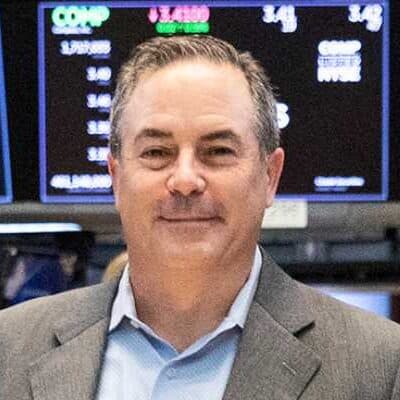
In this week’s Stocks & Markets podcast, Chris Versace is joined by Ed Maguire, Senior Director of Research at Freedom Capital Markets. Tariffs, questions on earnings growth, and Fed policy have the market is focused on the near-term, but as Chris and Ed discuss, many secular changes are unfolding that offer investors longer-term opportunities.
With that in mind, the two discuss multiple investment themes poised to play out over the coming years. Both agree AI will be a driving force of disruption, and Ed names several companies he thinks are well-positioned. Chris and Ed also spend some time on why healthcare is ripe for disruption, and how it sits at the confluence of multiple structural changes.
More Pro Portfolio:
- We’re Adding to This Public Safety Play After Powell Sends Market Higher
- Young People Treats, Cautious Consumers, AI Stock Boost & More Investing News
- August Portfolio Roundup: A Busy and Net-Positive Month for the Portfolio
Transcript
Chris Versace
Welcome, welcome welcome, folks. Chris Versace here, portfolio manager of the Street Pro portfolio. And this is the Stocks and Markets podcast I think you'll agree that name is well let's just call it pretty self-explanatory. Now we and the rest of Wall Street we're all back from the Labor Day holiday is you think about it some folks, they're concerned about the market's valuation following, you know, a string of record days for the S&P 500 in August.
Others they're questioning EPS growth prospects for the second half of the year and into 2026. But others, they're looking to position themselves as we get ready for the October, November, December year and push for the markets and head into 2026. All good questions and in some cases, good concerns. In fact, I wrote all about those in the August monthly roundup for the Pro portfolio.
If you haven't, I'd suggest you might want to read it maybe once, maybe even twice. But to help us think more about these questions and concerns here on the podcast, as well as touch on some of his transformative themes, please welcome Ed McGuire, Senior Director of Research at Freedom Capital Markets.
Ed, how are we doing today?
Ed Maguire
Always good. Chris, it's, it's great to be on and thank thanks for, thanks for having us.
Chris Versace
Happy to have you. You know, you are from the same firm from a good friend of ours, Mr. J. Woods. And and, you know, we love Jay. Jay is always, informative. Insightful. Always gives us something to think about with a little wink and a laugh along the way. And, I'm sure you're going to do the same.
But before we get started, Ed, you know, you kind of tip something to me. When we were talking before we started recording that, you. Much like myself, you've got a steeped history, right? Following stocks, looking at the market. And just just give us a thumbnail sketch, if you can, as to, you know, where you made your bones, how you got started touching on your experience and software along the way.
Ed Maguire
Sure. I started in, in research, actually, at, CIBC Oppenheimer covering enterprise software and, right about the time that, software as a service began to emerge, and I was at Merrill Lynch for, almost nine years, spent a little time in investment banking, but I covered, it security and infrastructure applications, business analytics was an early focus in, in the early part of the 2000s.
And then I spent seven years at, CLSA, where I covered all software but did a lot of work on thematic, topics, because one of the kind of the more interesting aspects of technology is that you have innovators that are constantly pushing the envelope looking for the the next, you know, Bill, the next application or business that can that can really reach or touch a billion users.
And that was, that gave me a taste for a lot of long term thinking. I had, spent a little bit of time at a Japanese bank prior to joining freedom. But we're here building up a, a brand new research team in the US. And freedom is actually a publicly traded, firm. Ticker is for most of the businesses outside of the U.S currently, but currently has, 10,000 employees.
And research is very important for us because our mission is really about highlighting, you know, how do we connect ideas with investors and technology, you know, has always really been kind of close to close to my heart because you find the you find some of the most innovative and forward thinking, entrepreneurs and, businesspeople and inventors.
You are allowed to, to try almost anything and fail, which is, which is really one of the beautiful aspects of, of the, the culture that we have, the culture of innovation in, in, in America, in the United States with, you know, with our venture capital ecosystem and, and engineers and, entrepreneurs who are willing to fail, but, but willing to pivot, and often willing to just, fall on their face and, and, and get up and reinvent themselves many times.
And that's what makes the sector so interesting. But it also powers almost every other industry that, that we touch on a daily basis.
Chris Versace
All all good points said. But, you know, I have to say you had me at thematic as, as, as folks know, I, I'm really big on, thematic investing and identifying multi-year structural changes and isolating the companies that are poised to benefit. While, as I like to say, sidestepping those that are either getting left behind or they're hitting pronounced, you know, structural headwinds.
So, but I want to talk a little more about, you know, thematics shortly. I really kind of want to jump in to some of those issues that I mentioned at the top. You know, we're we're just back from the Labor Day weekend. You know, the S&P 500 is hit, you know, multiple record highs. What are you thinking about in terms of the market as we get ready for the year end push.
Or are you concerned more about valuation and earnings growth. What what are you thinking it sure.
Ed Maguire
This is I mean we've had a year of an enormous amount of uncertainties. I think the underlying US economy seems strong, but there are signs of a weakening on the edges around on employment. You have, a bubble around. I, I don't think I'm exaggerating to say that there are some you're going to go what you're.
Chris Versace
Going to go with that dirty word.
Ed Maguire
Frothy. Well maybe maybe we call it a bit frothy valuations. So, there's, you know, there are concerns that, you know, some of the we've got concentration in the S&P and in technology. You have, you know, these mag seven names that are that have been driving so many of the of the of the stock gains in the broad market.
But underneath the surface, I think what you see is, is there are so many of these, these and long term trends that are playing out that are really transformative, in particular, you know, adoption of AI in, in, you know, really characteristic ways that will help redefine business process. You've got an enormous amount of investment.
The trend right now with capital investment, building out data centers and infrastructure. In a way, it's somewhat reminiscent of the build out of, the, the, the telecom infrastructure back in the, you know, the late 90s, I think, you know, investors should be should be cautious of being kind of overly optimistic, about adoption. But, you know, I think if you're pointed to the, to the appropriate Northstar and you focus on themes and then apply stock selection for the best companies and best management teams, that's a good way to, to, both ride the waves to the upside.
And, and whether any stormy weather.
Chris Versace
Well, I, I appreciate you validating what I do, but and without weather and we and to be fair, we we've never spoken before. So the fact that you're kind of coming on and saying that is, I appreciate, your, your perspective on that and it's very reinforcing for the work that we do with the pro portfolio. But let let's talk a little bit about this.
I, you are correct that the S&P 500 is, you know, kind of clustered around the top, you know, 7 or 8 names. Of course, most of them are kind of the Max seven. But yet I think when we kind of look at where we are in, like, let's say AI adoption in the enterprise or with the consumer, we're still to put, you know, in the old baseball analogy that everybody on Wall Street seems to love.
I think we're like in the second, maybe third inning where we're not we're not anywhere close to the halfway point. I don't think.
Ed Maguire
Now I would agree, and I think it's it's really easy to look at, you know, certain certain industries that have been, you know, that have been very visibly digitalized, for instance, like, like e-commerce, I mean, the, the percentage of, of, retail, activity that that went through e-commerce, I believe, went from around 2% in the beginning of the century, around 2002 to, almost 20%, if not, not more than that.
Just over the last couple of quarters. So, you know, we've we've really seen an enormous transformation there, but under, you know, under the hood, you know, when you look at, you know, businesses, you know, businesses across, you know, health care, energy, infrastructure resources, manufacturing, some of the, what you consider, you know, more legacy industries or are, you know, slowly adopting technologies to, you know, to help optimize their, their processes and and what's, what's transformative about this is it's not just about, you know, efficiencies or, you know, eliminating human employees.
A lot of it is about, well, driving, driving top line growth. You know, optimizing operations and, and managing risk. So the ability to instrument and draw data from, from physical processes and then be able to analyze that data. I mean, I think this is the people have been working with data warehousing technologies going back, you know, into the 1980s.
So many of the principles for data analytics and the application of analytics to, you know, to management processes has been around for decades. But now what we've had is we've had breakthroughs in, in machine learning and, and what people call A.I.. So there's a lot more of an ability to, you know, to apply advanced analytics and, even predictive or anticipatory analysis to the business processes.
But, you know, I, I was a huge, proponent of growth in what people used to call the internet of things. I think we still call it the Internet of things. But if you think about, you know, the billions of sensors that can be deployed into into the physical world that that will generate data that can be analyzed, that is unprecedented.
And we've got a long way to go. There's there are a lot of physical issues that we need to or physical constraints that have to be dealt with. Battery life, the, you know, the challenges of, of, connectivity and communications, you know, certainly, you know, having enough power to, to ensure that all of those servers and data centers are running, and then, of course, there's always the human elements, like how humans add value to any process.
I mean, I think with even though there are, you know, a lot of many meaningful concerns about how I it may be eating into, you know, certain types of employment. And I don't I wouldn't say I come out either on a, you know, highly dystopian or, you know, techno optimist side. I would say I'm kind of in the middle there.
There is churn and there's there's disruption. But all business effectively benefits from human judgment, human relationships. And you have to look at those, those aspects of a, of an organization or, or an entrepreneur or, or, you know, or even an industry where that human element can't really cannot be, you know, it can't be obviated by a machine.
It can be extended.
Chris Versace
So as we think about this being in the early innings, and obviously there is some industries and sectors, let's call it that'll be, you know, further ahead in their adoption, some that are still, you know, in their infancy. So some work somewhere in that crawl to run perspective. And or are there areas that you think are ripe for AI adoption that folks aren't really paying attention to?
And I, I ask that because, you know, in the port and the Pro portfolio, we have Axon Enterprises and Axon. You know, most folks think of tasers, body cameras, but they don't necessarily clue into axons, you know, software services business, the cloud that they have and how they can drive productivity inside public safety by bringing AI to market.
So yeah, you know, that's one example. But are there any that, you know, you think folks are not, you know, capitalizing on or not paying attention to?
Ed Maguire
Well, I would I think the, you know, the entire manufacturing sector, where you have I mean, certainly aerospace and defense is, is an area where, you know, you have a lot of, you know, heavy, heavy machinery, heavy, discreet machinery. There there are, you know, I think a lot of these, these industries are not they they talk about industrial technology, but but, you know, I would say that, you know, one interesting area is, smart cities or smart spaces, the the the the real estate industry, is, is an area or it's a sector where you have a lot of, a lot of subsectors, things like multifamily, industrial, office space, but public spaces. But the the ability to apply technology, for instance, to, not just improve public safety, which is what people associate with cameras, but also, for instance, to be able to, enhance a, a customer experience, with helping to, for instance, reduce lines or queues it at, you know, at large public venues, you know, the ability to, to, have more anticipatory, services that, you know, the businesses can provide, you know, for instance, for tenants, for commercial tenants or, people living in their homes.
I think that's a lot of these advances proceed very steadily, but you don't really notice it because it's, it's I guess it's a bit of a slow boil.
Chris Versace
Interesting, interesting. Are there, you know, are there any particular companies you think that are best positioned? I know a lot of folks talk about Nvidia, obviously, and to be clear, we we own Nvidia in the portfolio. But are there other other software companies or even other chip companies. For example, you mentioned IoT. You know, I'm sure you know, folks will be thinking of like maybe a Qualcomm or a Skyworks or something like that, their roles in the IoT market, or are there any, you know, less obvious needs that you think folks should be thinking about?
Ed Maguire
Sure. Well, you know, I, I'd say that, you know, in, for instance, in, in semiconductors, I mean, you obviously have, you know, the, the big names like, you know, Nvidia and, and, you know, Taiwan Semiconductor, but, but even some of the smaller name, the companies that are, enabling the design of, of systems like Cadence Design Systems or synopsis are, are really interesting.
They play an incredibly critical role. When you look at, you know, industrial machinery, I think some there's some very interesting names in that, like, you know, Johnson Controls or Rockwell Automation, or Xylem, where, where you're dealing with, you know, physical infrastructure. And these companies have been thinking a lot about, how to apply, intelligence to the, the data that they collect to manage their physical systems.
Chris Versace
Interesting, interesting. So Rockwell Automation is one that we've kind of looked at in the past. And I think, you know, from a portfolio perspective, we'll be looking at it again. So that that's actually kind of an interesting one, for me, but above and beyond AI, because I think a lot of folks are kind of keyed into that.
Yeah. What what are some of the other strategies that you've identified in your ten transformative themes?
Ed Maguire
Sure. Well, one of the one of the biggies is, we call it smart health. So, this application of, technology to, to gene sequencing is, incredibly powerful. I mean, right now, I, I think the latest estimate is there are about 1200, publicly traded biotech companies and maybe another, 1200 that are that are private, that are worth looking at.
But, the cost of innovation and the pace of innovation is, is, you know, so deeply impacted by, this, you know, this, this broad, you know, the theme of, the chief genomic sequencing. One thing, actually, I'd like to like to highlight that was really influence all along the way has been the, the appreciation of, exponential change.
And also, and the flip side is the, the cost curves that, that accompany, advances in not just technology. So I think Moore's Law is pretty well understood. But there you know, there's there's, you know, there's Comey's law. They're they're law. They're, are similar phenomenon that, that accompany, you know, storage, community, compute the communications and bandwidth.
But also the cost of, of sequencing the human genome has dropped by like 99% in, you know, since, Craig Venter, you know, first sequenced his own genome. And when you get those, you know, the decline in costs, I mean, it's it's really driving some, some unbelievable breakthroughs, particularly in, in oncology. And I wouldn't say that there are any specific names, because I think you got to be pretty well, well versed in the science to, to invest, effectively.
But, I think the impact on, on potentially life span, even in our lives is, is is really revelatory and transformative.
Chris Versace
So maybe and I'm not saying that there is an ETF for this, but maybe given your comment, maybe an ETF is a safer way to kind of play it for folks that are kind of interested in dipping their toes in the water but don't have the resources, so to speak, or the time to really investigate. I think you said 1200 companies.
Ed Maguire
Yeah, yeah. And and I think there's, a similar argument that can be made really across the, what will largely call health care, life sciences. Advances in diagnostics or robotic surgery, for instance, is is pretty well known. I think people are, many people are aware of of what DaVinci, DaVinci surgical is, is able to do.
But you you also have, you know, even just the, the ability to, to automate a lot of the processes in our, you know, the, the tangle hairball that makes up the US health care system, applying AI to, to to payments and, you know, approvals and processes, the administrative aspect of the health care, industry is, it's offers an enormous amount of, of potential for value creation.
Chris Versace
I agree. And when you think about the size of the health care market, you think of the demographic tailwind with the aging population. There's so many facets, I think, to the health care market that there's a way, whether it's to squeeze cost out, you know, deliver a better experience, what have you. I, I would not be surprised if I, I wouldn't say robotics robots or robotics, but let's call it AI and some other type of automation.
Really transforms that business.
Ed Maguire
Yeah. It's one of the big impacts of, of the, will that we have it we have I do a couple things happening in demographics, right. You know, lifespans are increasing in the developed world for the most part. And then fertility rates are dropping. So there there are a lot fewer younger people, a lot more a lot more older people.
And, in countries like Japan, you're seeing, a lot of, innovation around these, you know, personal robotics and, and I, I don't know that human humanoid robots, you know, necessarily become a thing. You know, we have to, you, you know, we have to look at what what function that a robot can can, bring to bear.
But, you know, we certainly saw during the pandemic, even just service delivery robots, for instance, in, in hospitals or in hospitality, the ability to, just, you know, automate a lot of these, these rote tasks that humans need to do. You know, they're certainly not they're not going to replace, you know, the sympathetic, voice of, you know, of a nurse or a doctor.
They may not.
Chris Versace
Hold that thought. There are companies using A.I. to make phone calls to assisted living facilities where people have little to no family visitors so that they can kind of talk with them, see how they're doing this sort of thing. So I, I think there's a lot more going on here.
Ed Maguire
It, well, I, I recall, a few years back, I was at a one of the Singularity University, conferences called Exponential Finance and, Bob Pisani actually had me on a panel and, he one of the the comments that he made was he felt that the movie her, which was about, the guy falling in love with the with the AI voice was going to be, in many respects, the most important sci fi movie, you know, of the decade, if not the century.
And I don't think he was really exaggerating.
Chris Versace
We don't we don't need to go down the path of folks getting relationship advice from ChatGPT. Do we?
Ed Maguire
Yeah, probably better to avoid it, although that might end up being a little bit better than, that, that, that, that, that friend who's a little bit off kilter.
Chris Versace
I don't know who you're hanging out with it, but, you know, maybe we'll figure it out one day anyway. Anyway, back back on topic. We we were talking about, health care and how it's kind of ripe for disruption. You were talking about genomics. I, I tossed in, I, you know, let me let me step back a little bit.
So you kind of talked about using thematics in a multi-year outlook, and I, I kind of, talked about how I think about thematics, and I apologize, but I didn't ask you. Right. How do you kind of identify and structure, some of the themes that you see because, candidly, it's a it's a question I get all the time, which is, oh, how do you come up with a new theme?
And it's not, that simple, you know, and I say that because I think it's a simple mistake to be like, and I'll, I'll use one notable example, 5G. And I was like, no, 5G is a technology. It's not that's not the theme. The theme is more call it the connected consumer digital infrastructure. You know something along those lines 5G, six G, 4G, 3G, they're all aspects of that connectivity.
So kind of with that, how do you think about the Maddix and how do you craft a theme or no, when you have a theme, not some kind of trend?
Ed Maguire
No. It's a it's a great question. I, I would say what I like to do is I like to start from, from first principles, which is to identify, you know, a long term secular trend. So, this, this if you're a trader, you know, you, you're going to be a lot more focused on, for instance, short term earnings or, you know, fed announcements or near-term catalysts.
But, you know, when you think, think about how Moore's Law represents this doubling of of, you know, the amount of compute that can fit in a, you know, an, a meet on a, you know, on a chip. I mean, that has proceeded pretty much uninterrupted through, through wars, recessions, boom. I mean, it really has, you know, that that's a long term theme.
And there are a number of those, so thinking about, okay, declining costs of, of information technology, what that does is that lowers, you know, barriers to innovation. You have these, you know, the accelerating power of AI and machine learning, where we have we have these breakthroughs where they, you know, certain functions can can be done by machines better than, better than humans can, you've got this, you know, global connectivity, phenomenon where you have, now I think it's, you know, we've gone from, you know, maybe 15% of the of the Earth was connected to the internet 20 years ago to now we're we're coming close to about 80% of
all humans are connected. We talked about demographic changes and, and, you know, again, not just, the aging, of the, of the, of the world of workforce, but but also, this, this new generation Gen Z brings a whole different they have sensibilities, and they'll be responsible for, you know, trillions of spending power and then.
Chris Versace
And, and let me let me just cut you off because, did you see there was a study out this week about I haven't.
Ed Maguire
Seen it yet.
Chris Versace
So it's about the holiday shopping season. And this is this is fascinating. Overall, expectations are that, holiday shopping, holiday shopping, spending per person is going to fall about a little over 5%. But when you kind of dig into it, right, the boomers are are going to continue to spend somewhat argue because they have the money.
Gen Z, on the other hand, which drove the outsize spending last year, they're going to cut their spending by 23% in 2025 compared to 2024. And that. Yeah. And you mentioned Gen Z is kind of like a, like a lightning rod of sorts. And I that that just kind of jumped out at me when I, when I read that because that's, that's a massive amount of, you know, spending not only being cut, but it's such a 182 compared to last year when they drove the upside.
Ed Maguire
It's well, certainly it's a reflection of, of, I think some, some challenges that for instance, a recent grads are facing in the job markets. I also think there is a, you know, there is there is a longer term trend at work. I mean, when you when you look at, people becoming digital nomads and, and this whole, you know, if you think about, you know, turning something into a service where you turn software into service, into a service, this, this idea of being able to virtualize almost anything and buy whatever you need, work on demand and, and do whatever you need, on, you know, on or get whatever you need on demand actually results in more of a, an asset light life if you think about. Right. You know, consumerism is about acquiring a bunch of stuff. And of course, if you have a big house in the suburbs with a big garage, that's where you end up storing your stuff. But if you're if you're young, if you're, are living in a city and actually urbanization is one of the big or big trends too, we've got, oh, 50% of the world's population is living in cities right now, and that's expected to be over two thirds by 2050.
So, you look at this, this broader trend of, of, you know, virtually virtualizing what you need. We had, obviously short term rentals, through Airbnb that what people used to call the sharing economy. Yeah, some of those ideas will work, some of them won't. But, there's a there are a lot of, you know, a lot of Gen Z are actually happy to work online.
They're, they have the virtual workplace. They can live in a cheap location. And a lot of them are really interested, more interested in experiences than things. This is actually one of the one of the other themes that, that we were exploring. Was this the kind of the rise of, of of wellness, we call it better living.
But, you know, we got gotta give a lot of credit to the millennials, of course, who have raised the game on, having, you know, smart foods and, and, being very cognizant of, of sourcing, you know, where their, where the food and drink comes from. But they also people like experiences. They like the, you know, they like to go to wellness centers, I mean, walk down any, any, any street in, you know, in an affluent big city and you'll see all, all manner of, spas and, and and services for people, you know, everything from, you know, Botox and, and and tanning salons to to vitamin IV drips, which are a big. All right.
Chris Versace
I'll, I'll share this ad. I, I did try to book a massage recently. Couldn't do it that way. Booked out so that that's kind of a positive data point, but, you know, I, sorry. And I was going to say didn't have an automated.
Ed Maguire
There's no, there's not a robotic massage. I think that might be next.
Chris Versace
I, I did inquire for that. I was going to ask you, how do you do your due diligence on this stuff in.
Ed Maguire
Well, remember, Peter Lynch, of course, one of the one of the all time greats investing, did a lot of his, he picked up a lot of his ideas by by walking around. Now, we don't have the shopping malls that we used to have. Right? You got it. You got to get out in the world and and and travel.
And not just not just the big cities, but go into the, you know, the more forgotten parts of the, of the country and, and see what people are doing and how they're living. And, that can, that can tell you a lot about what's happening, even more than trying to read it in the newspaper, because that's or the or online is at work, right?
Ed Maguire
Nobody reads newspapers anymore. Those have all been digitalized. Yeah.
Chris Versace
Totally agree. In fact, on this bookshelf behind me is the Lynch book that you're casually referring to one up on Wall Street, which is a great read, probably one of the best books. And, I think the story you're referring to is how he trailed his wife and her friends at the mall. And one of asking her questions about if I remember the story correctly, legs, pantyhose and why they were such a big hit with women and that he turned that into a sizable investment, from what I recall.
So no, I totally agree with you on that. And any other themes that we should explore before we get out of here?
Ed Maguire
Well, you know, I, I would say one of the big one of the big areas that I'm very focused on is, trust and security. I think it security is going to continue to be, a huge, a huge business that requires innovation. And when I was an analyst that used to cover security, I, I liked it because it wasn't a technical, a pure technology problem.
It was, an issue of human imagination. And there are a lot of deviant humans, trying to do, nasty things and steal, steal money. And of course, cryptocurrencies have made it all the, all the much easier for people to, to do things online. So, you know, security's a big focus. And I think the last area that I think is really fascinating is, is digital finance.
I was, I was, I was I wouldn't say I was early into crypto, but I was a, I became a convert to the the principles around decentralized decentralization and, decentralized finance, back in 2017 and 18, spent a lot of time in the sector, and I, I kind of feel like that crypto assets may or may not be something that, investors want to explore beyond the, you know, Bitcoin or Ethereum.
Too far, it's it's very risky. But the concepts of decentralization, blockchain and and certainly stablecoins this potential for having, you know, global frictionless payment systems and, you know, being able to create value exchange networks among people, without having a, you know, a central, arbiter or authority is incredibly promising. And there were a lot of amazing ideas, I think, that were that surfaced in the, the one of the bubbles before the last couple of bubbles in crypto.
But it looked at I see a lot of parallels with the internet in the 1990s. Right. Remember, people used to make fun of Pets.com, like, oh gee, yes, yeah, pet food over the internet. That's, with with a little sock puppet. I think that was set.
Chris Versace
I it's not called Chewy's today.
Ed Maguire
Yeah, it's about a two. It's doing about $2 billion a year, if I'm not, mistaken, it's it's a big business. So you may only be a couple of decades ahead of things. And that's of course, that's always the challenge, right? In, in in investing, if you want to be early, but you don't want to be too early, because if you're too early, it might be wrong.
But try to anticipate what's coming over the horizon. I think the most interesting opportunities actually lie at the convergence of these big secular trends I was talking about.
Chris Versace
As I said, if the only thing I like more than a one strong thematic is the intersection of multiple thematics, nothing better than multiple tailwinds blowing on a company's business. So I, I agree with you right there. And before we get out of here, anything we didn't talk about that we should.
Ed Maguire
Well, I, I'd say we we've we've covered a lot, but, you know, I do think that, we got.
Chris Versace
I got something for you at two quick two questions. Here we go. Is the fed going to deliver a rate cut in September? Yes or no?
Ed Maguire
I'll say yes.
Chris Versace
Okay. Second, we have a bunch of tech company events coming up over the next couple of weeks. Apple with their event next week. Meta has, connect the week after Google is going to be introducing some new devices, I think, late September, early October. Which one do you think will be the most interesting?
Ed Maguire
Well, I there's, a lot of these are already priced in. I think what, what Google is doing, you know, particularly around AI, is going to be particularly interesting. So I'll be to keep my eye on that.
Chris Versace
All right. The Google event. All right. And I agree I agree with you. I think early on this year a lot of folks were kind of downplaying the potential for Google seeing AI more as a threat to it. And it's, you know, key search business. But I pushed back Ed saying that the combination of search, YouTube and all the other data that they collect.
Wow. Think about that from an ability to train their models very different.
Ed Maguire
Where we really are going into a new generation of opportunity. And yeah, I think I come out on the maybe, maybe I shake out as an eternal optimist because I always I do see the bright sides. And I think even when you have market corrections or even worse there, that creates, you know, great opportunity and there's nothing better than the, the collective and aggregate and individual imaginations of, of the incredible entrepreneurs that we have in this world that we have in this country.
And I think that's that's enough of an engine to continue to drive continued value gains, you know, over the long term in, in our, in our markets.
Chris Versace
Excellent, excellent. And, for folks who want to, you know, read more of your thoughts kind of follow what you're saying. What's the best place for them to go?
Ed Maguire
Sure. Well, you can find me on LinkedIn under, Ed McGuire. And at Freedom Capital Markets, where we're publishing, I published, a piece called Future Paths, a month ago. And if you find me on LinkedIn or if you reach out to our, our team at Freedom Capital Markets here, we'll we can make sure you have a copy.
Chris Versace
Excellent, excellent. Ed McGuire. Freedom capital markets, thank you so much for joining me. And going to reserve the right to bring you back. I'm sure we'll have more themes to talk about in the future. And folks, thanks for tuning in to this episode of the Stocks and Markets podcast. We'll be back with a new one for you. No.