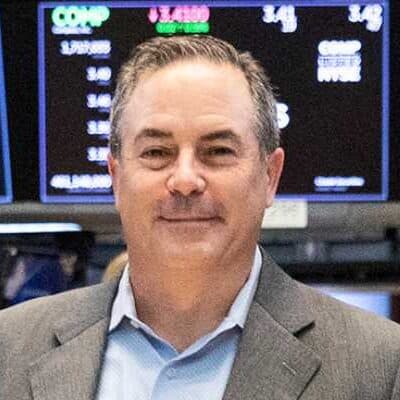
Stocks & Markets Podcast: Consumer Spending Stocks With Eric Clark
Chris Versace and Accuvest's CIO discuss quality companies, identifying great brands, and one of the biggest investment themes there is.
You've reached your free article limit
You've read 0 of 1 free Pro articles.
On this episode of the Stocks & Markets podcast, Chris Versace is joined by Eric Clark, CIO at Accuvest Global Advisors and Portfolio Manager of the Alpha Brands Consumption Leaders ETF (LOGO) .
The conversation begins with the current market retracement, upcoming earnings from Nvidia (NVDA) , and thoughts on the AI trade, before it pivots to the consumer and consumer spending. Eric discusses the strategy behind the LOGO ETF and how he’s developed the proprietary framework that powers it.
Much like we do at TheStreet Pro Portfolio, one of Eric’s strategies is to follow the money, something that has helped evolve the starting universe behind the LOGO ETF. We also discuss why focusing on quality companies pays off in the long run.
Companies mentioned during this include: Amazon (AMZN) , American Airlines (AAL) , American Express (AXP) , AT&T (T) , Blackstone (BX) , Capital One (COF) , Costco (COST) , Chipotle (CMG) , Delta Air Lines (DAL) , Goldman Sachs (GS) , Home Depot (HD) , IBM (IBM) , JPMorgan Chase (JPM) , Lowe's (LOW) , Macy's (M) , Mastercard (MA) , Netflix (NFLX) , NextEra Energy (NEE) , Nvidia (NVDA) , ServiceNow (NOW) , Starbucks (SBUX) , Taiwan Semiconductor (TSM) , T-Mobile (TMUS) , TJX (TJX) , Under Armour (UAA) , VF Corp. (VFC) , Visa (V) , and Walmart (WMT) .
More Pro Portfolio:
- We're Putting Our EPS Diplomats Model to Work
- Foreclosures Jump, AI at Work, GenZ Locked Out, More Investing News
- Weekly Roundup: Rate Cut Re-Think Rankles Market, But This Is Our Focus
At the time of publication, TheStreet Pro Portfolio was long AMZN, AXP, NVDA, COST, NOW and TJX.
Transcript
CHRIS VERSACE
Welcome, one and all to another episode of the Stocks and Market podcast. I'm Chris Versace, the Pro Portfolio manager over at TheStreet Pro, and we're coming at you about a week before one of my most favorite holidays. Yes, I am talking about Thanksgiving. It's not because of thepie. It's not because of the cranberry sauce. It's just rather, I think that, you know, everyone has something or someone to be thankful for.
But as we all know, the Thanksgiving holiday is also becoming a barnburner when it comes to holiday spending. Increasingly, retailers are bringing forth a wider and extended array of Black Friday shopping deals to capture the disposable spending that consumers are willing to part with. Here to talk about that, his view on the market in a hell of a lot more is Eric Clark, CIO of Accuvest and portfolio manager of the Alpha Brands Consumption Leaders ETF, which trades under the ticker symbol, and I kid you not, LOGO, L O G O.
Eric, welcome to the podcast.
ERIC CLARK
Hey, Chris, how are you?
CHRIS VERSACE
I'm you know, if you heard, I'm I'm trying to get into fighting shape so I can consume a lot of carbs next week. How about you?
ERIC CLARK
Well, I my favorite is apple pie, so I've. I've, I've pulled forward the Thanksgiving, and I started apple pie, this week, much to the chagrin of my wife. So I'm super pumped for football and eating some really good food that we don't seem to eat. That often other than on Thanksgiving.
So it's I love that week too.
CHRIS VERSACE
And, you know, a little secret that I've heard that some people use. Eric, I'm not saying that I do it. You don't need to say if you do it, but, I have heard that some folks make a last minute change right before they sit down for the Thanksgiving dinner. Trading, you know, jeans, corduroys or slacks, as some older folks might call it, for sweat pants.
ERIC CLARK
Maybe. Maybe a little expansion of the waist. Correct. Always a good decision.
CHRIS VERSACE
Well, before we get before we get there, let's talk a little bit about the market environment we're in. I want to get, you know, your take on, the consumer landscape in particular. And, you know, tell me a little more about, logos. So, so with that, as we're taping this, we're we're in the midst of a continued pullback in the market.
The S&P 500 is just officially crossed into a 5% pullback. It's below its 50 day to 50 day moving average. What are you making of this is is it another garden variety pullback. Or do you think there's something more going on.
ERIC CLARK
No I don't I don't think there's something more I mean you know the market has been hinting that through narrow breath, you know the number of stocks that are outperforming the S&P has been contracting. And so, you know, sometimes that's because of something that's happening. I mean, this year it's been kind of I just saw off a really interesting fact.
62% of the stocks that are in the Nasdaq index are negative on the year. So that just tells you what kind of market it's been this year. And so it's been it's been one of the most narrow markets a for breadth and outperformance versus the S&P on record. I think the the only other two were 2023 and 1998.
And both years after were pretty good for the S&P. And the market was a little more broad. So I think this is just a normal pullback. And you know we do have some you know we have some slowing economic growth heading into the end of the year. Now we have a little bit of a pause on whether the Fed is going to cut rates in December. I know that was really important you know for the markets. But they're going to cut rates whether they cut rates in December. To me it doesn't really matter. The they have air cover with the employment situation. And I think they're going to have some more air cover when inflation kind of tails off a little bit. And, you know, we're going to start getting that government data here. Probably next week or the following week. So we'll be able to catch up.
CHRIS VERSACE
So you're thinking that it's you know you're not so much went to the December for the Fed rate cut. Even though the market is readjusting its expectations. And that that can always be a little volatile. You're thinking is that over time we are going to see rates continue to move lower. And I agree with you on that, especially since we know that Fed Chair Powell is out in May, and the odds are that President Trump is going to appoint someone that is, let's be honest, a little more agenda friendly.
ERIC CLARK
Yeah. And you know look, we have midterm elections next year. We know how politicians like to act around elections. They like to to make things look a lot better. And, you know, the economy has been a little sluggish with tariffs. You know, consumer consumer sentiment is at all-time lows. I mean, we are below the level we saw in 2009.
Right. That's a pretty extreme reading from a consumer sentiment perspective. And those have historically been pretty contrarian indicators too. JP Morgan. You know when they do their their chart deck every month, they have a good chart in there that shows, you know, when when consumer sentiment is where it is now. The Ford returns tend to be on average 24%.
So again I you know, inflation is a little stickier than all of us would love. You know, the $9 Chipotle burrito in 2019. It's now 14 or 15 bucks. So so consumers are dealing with a lot of persistent inflation in their real lives. Regardless of what the what the government tells us, we feel it every day. But and that's driving some of our consumer behavior.
And within LOGO we have to reflect that. You know, if consumer spending is really broad and consumer sentiment is really good, then we tend to own a lot more consumer discretionary names. When consumers are a little more cautious. This K-shaped economy where the top end of the K, the upper income where you have assets, you have homes, you're doing pretty well. You're feeling pretty well and you're spending pretty well. But the bottom of the K people are a little cautious about their job security with potentially AI and how that's going to affect jobs and job availability. And we're a little bit nervous about spending and we're being very choice fall, which is why we're, you know, looking for deals.
And, you know, this is the time of year when you get really good deals, whether it's through Walmart or Target or through Amazon. You know, we're certainly going to be looking for good discounts wherever we can find them for for the holiday shopping season.
CHRIS VERSACE
Right? Right. Totally agree. But before we we go down that path, I just want to get your kind of mindset for the market environment. And and the reason I'm asking is that, you know, we're sitting here the day before Nvidia reports clearly, you know, the biggest, holding in the S&P 500, the Nasdaq composite, the Nasdaq 100, a lot of people are looking for it to be kind of a, I won't call it a watershed moment, but the maybe an inflection that helps pull the market out of these recent doldrums.
With that in mind, how are you preparing for that earnings report, if you are or how are you preparing? You know, the LOGO portfolio for it?
ERIC CLARK
Yeah, I mean, we we don't own Nvidia. First off, we have in the past we own Taiwan semi. I feel like Nvidia in particular. Yes. It's the market constantly seems to need reassurance about things.
Every quarter Nvidia and the companies that are surrounding Nvidia have told us that there is a massive amount of demand at the consumer and at the corporate level for AI and the big issue is obviously power.
You can't throw up a power plant in a weekend. So, you know, this is going to be a persistent issue from a capacity perspective. But the demand is there. And you know, so so for for me semiconductors obviously Nvidia everybody's going after Nvidia now because you know when you're the leader people are always trying to take some of your market share.
So whether it's Amazon with Trainium or whatever the we love Taiwan Semi in particular because they're going to benefit no matter where the demand comes from for semiconductor chips. But yes, I certainly the market is hinging on Nvidia. Frankly I think it'll just be a clearing event when they report. I think they'll the demand is still fine. You know, they're still not baking in any China revenue.
So any positive development there in the future will be a positive catalyst back for AI. And you know, it's funny AI in the tech trade really started to roll over. I don't know if you saw that Sam Altman, Brad Gerstner interview. It really seemed like that was the moment where people were worried about open AI and all the all the deals that they were, they were cutting in their ability, their inability or ability to to pay for those deals over time.
But, you know, it's we've we've probably heard this, this scenario before, but I do believe it's true in the short term. The market tends to over expect things in the long term. I think we're under appreciating the value of AI. And I've heard a really good reports that talk about AI deployment and and you know, you can't just put out some chat bots and call it good.
You know, your your corporate infrastructure needs some reworking to implement AI if you intend to get great benefits, long lasting, broad based benefits. And that just takes some time.
So, you know, it's probably one of why our second biggest holding, and I'm sure we'll talk about it, is service now because they're helping companies deploy AI across the enterprise. And that's the way you get the full benefit of of AI. So I think it'll be a clearing event on earnings.
I don't expect anything bad to come out of the report. VIX options expire right around the same time. So I, I suspect we'll have a little bit of a relief rally after that moment. And you know, in the end the AI revolution is still in place.
We just still think from our portfolio we're more focused on the benefits that every company can get from the deployment of AI and, and how that affects their operating metrics. And and we know operating metrics improving is a direct correlation to to stock performance. So we're just looking at names that will you could you deploy AI. And when you do we're going to start seeing step up in earnings and margins and and revenue to employee data and all those kinds of good metrics. And then the stock should follow.
CHRIS VERSACE
So so you're a believer in the fact that we're let's let's just say I hate the early innings of the AI trade. And I also hate calling it an AI trade, because I do think it is a structural change that's unfolding ahead of us. So I would argue that we're probably, you know, late third or fourth inning to stick with the baseball analogy, I continue to watch rising adoption and usage levels, and I've seen some of the same reports you're talking about.
There was one in particular from IBM that talked about the silo ization of data across the enterprise, whether, you know, there are certain data in HR or in other facets of the business that need to come together in order so that I can really deliver on the promise. And I agree with you that ServiceNow is extremely well positioned to do that.
We own ServiceNow in the pro portfolio, and that for one of those reasons, I also like the positive makeshift they're seeing with AI and pricing and what that means for their margins, which I think is something you were kind of hinting at as well, although in a larger sense. But how does how does ServiceNow fit into the logo, strategy?
Because it seems predominantly to be driven on the consumer unless I'm missing something.
ERIC CLARK
No, it's a great question. I mean, when we talk about spending or consumption, naturally the first place that people go is consumer spending. I mean, it's that alone is 60 trillion a year all around the world. If you, you know, I think a McKinsey report, a few years ago looked at, you know, consumption 60% of world GDP is household spending money on stuff they want and stuff they need.
So there isn't anything larger than household consumption. But businesses CapEx, innovation spending is really important too. And even government spending, you know, if you look at the components of GDP, it's consumer spending and business investment, which is, the dominant part of, of, of GDP. And so the goal of this strategy with logo is what what are consumers doing with their wallet?
How were they spending? How are they feeling? Which brands do they really feel loyal to. And and you know, in many cases fiercely loyal to and and but then from a business perspective, what brands are B2B brands that are really helping other businesses generate more sales, better customer loyalty, better operating efficiencies, things like that. And so, you know, and frankly, a lot of the businesses have have understood that the brand is really important.
You see Oracle cloud ads, you see you know, you see CRM with with Benioff and, and who's the guy from Texas? I always forget his name. The actor.
CHRIS VERSACE
Oh, Matthew McConaughey.
ERIC CLARK
Matthew McConaughey. Yeah. I mean, so, so you see these businesses doing great advertising to build their brand. And so the goal of this is identifying really relevant, important brands that are tied to consumption. And so, you know, we're bringing those in with consumers as well as as businesses on the CapEx side.
CHRIS VERSACE
So it sounds like, Eric, you're you're following the money, which is kind of one of the strategies that we employ with the portfolio. And I think that's great. You know, I just find that you want to capture company, you want to capture the companies that are benefiting from the spending that is happening. And as we've seen, you know, spending can shift.
You know, just take a look at the consumer inside the US. You know, we've used to have, you know, a lower, lower income class, middle class, you know, upper middle class wealthy. And increasingly it's become bifurcated. So much so that we've got more consumers living paycheck to paycheck, yet the the upper echelons are driving in excess of 50% of overall spending.
ERIC CLARK
It's it's I don't know that it's a great development in this country. You know, we have more and more people that are at the bottom end of the K, which is which is a problem. And, you know, certainly that's why we own things like Walmart and TJ Maxx. I mean, we, we, we spend a lot of time here as a team trying to analyze demographics.
Right? We know that we have this wealth transfer, this hundred trillion over the next 30 years that's going to trickle in from older, from older consumers down and, you know, older, you know, we tend to peak in our spending at that's 60, 60 years old. And and it kind of trails off a little bit.
And so you have, you know, you have a persistent drip of 2 to 3 trillion a year going from older generations who save but also spend to younger generations who spend but also save. And so part of the thing that we're, we're doing in logo is, you know, the investment theme is really important. You know, we are all, you know, if you're younger, you're spending, but you're saving for your retirement. And and so we have Goldman Sachs in there. And we have we we love our American Express cards. And you know, a big slug of money is going into private markets.
And, you know, those stocks have lagged this year. But they're raising gazillion dollars. And with money moving from, you know, on the margin from from public markets over to privates. And so the dominant brands there like Blackstone, KKR and Apollo. So this is this is a very eclectic group of leading companies or brands serving really important consumption themes with a mind for what's happening demographically here and abroad.
And there is a risk management component to what we do. I mean, you know, if if our view was that we saw a high probability of odds of a recession, then we would probably, you know, convert some of our, our higher beta, more economically sensitive names to more staples and health care type of names. You know, more Walmart, more Costco, those kinds of names that tend to do well because their businesses aren't nearly as cyclical.
CHRIS VERSACE
Right? Currently, you guys are not really heavily invested in the Defensives. Isn't that right?
ERIC CLARK
We're not. We're we're you know, we're we're a little o you know, just because of the low weight of consumer staples in particular, it's usually like 5% in most indexes. We're almost 10%. But you know, it's it's basically Walmart and Costco on the on the staples side. And they are just everyday parts of our lives. But we there have been times and our strategy we've been running this, strategy, you know, the ETF was launched on May 28th, but we've been running this strategy since 2016.
There have been times where we've been 40% in heavily defensive business models, plus holding a ton of cash to because we were cautious about the economy or cautious about the markets. But, you know, our data suggests, yes, we're always going to get some volatility. And the reasons for the vol tend to change over time. But but from an economic perspective, the economy is still doing pretty good.
Consumers are generally still doing pretty good. We see it in the spending data. Yes, it's a little lumpy because, you know, two thirds of the economy are a little are being a little more choice ful. And in some ways you know, they're they're they're deferring certain parts of spending on the discretionary side as they save up so they can take a good vacation or now so they can go and spend on, on, you know, the holiday spending. So it's not as it's not as smooth as it, as it usually is lately because of inflation. But, you know, there's a lot of levers that we have to pull in the strategy to kind of adapt to whatever economic environment we see.
CHRIS VERSACE
So you you said a second ago that at times your cash levels are elevated. Are they elevated now or are you seeing opportunities as the market has kind of pulled back.
ERIC CLARK
Now we're we're fully invested. Now, if anything, you know, when when the market tends to pull back, I think we all get a chance to upgrade our portfolio. There's always a few things that got away from us that we just from a price perspective, we're just going to be very, you know, rigid about not chasing and getting into this FOMO, the fear of missing out sometimes, particularly of really high valuation stocks that we might like as a business.
But you know, just get get away from us. Robinhood is a good example. We own Robinhood. We sold it. It's pulled back pretty meaningfully, you know. So so for us we're on pullbacks. As long as we don't feel like there's a recession or an imminent you know, major, major problem for the market, which we don't we tend to use the opportunity to maybe trim some things to be able to add some things that are now on sale back in a range that we feel we feel comfortable. That's as good portfolio management type of action.
CHRIS VERSACE
I agree a great you can't be afraid to, you know, as they say, ring the register, you know, and redeploy that capital elsewhere. I, I agree with you. You know, it's being prudent. It's it's key to what we have to do in these jobs as portfolio managers. Now, you mentioned a couple other companies that we also own in the Pro Portfolio.
So it's interesting that we have, you know, a number that kind of line up for different reasons. American Express, but you also mentioned Costco. And, you know, I think Costco has been a bit of a frustrating position, for many folks, despite the fact that they're lapping, you know, simply impressive comp sales, comp sales numbers. And they're doing so with another layer of impressive comp sales figures.
The stock just doesn't seem to be catching any footing. At the same time, you've got companies, Starbucks, you've got, Chipotle, even even more recently, Home Depot putting out you know, dismal comp sales numbers compared to what Costco was doing. It tells me that, you know, consumers are flocking to Costco. You know, company's done a great job leaning into, you know, grocery and food, fresh foods.
But, you know, that's my perspective on it. What's your perspective? What keeps you bullish on Costco?
ERIC CLARK
Yeah, I mean, when you delight customers, they are so loyal. And you have a lot of pricing power that that is a wonderful thing to have for a business that's part of people's everyday life.
Plus they're still growing store count around the world. That's important. You know, you you still want future growth. And you know, this year, like I said, the market has been so narrow.
Staples in general have been a big underperforming area, you know, which is fairly normal. You know, if people are chasing higher momentum, high valuation, low profitability from a style factor perspective, they're probably going to leave staples alone. Right. So so they haven't Costco's business has been doing incredibly well. I mean, it really started in the pandemic. You know, when behavior is forced to change.
And so we do that change and then we get a good experience. We just keep doing it. And so they had this step up in in in consumers and and subscriptions that they haven't lost. And so the business is just firing on all cylinders as consumers are still, you know, kind of tightening their belts. And this isn't just a lower income, you know, you have no 150, $200,000 clients, customers that are spending more time on e-commerce at Walmart and still loyal, fiercely loyal to to Costco.
So I, you know, Costco was obviously at the upper end of the valuation range and historically, it can struggle when it's up there. That's since been you know, we're back into kind of a normal range. And I don't know why. You know, the people would expect a company like Costco to be trading at 15 times earnings. I mean, this is a staple of life, incredibly predictable business, growing every year.
And, you know, I, I wouldn't be shocked if they in December they do, special dividend. They do that every 2 or 3 years. We're about do that's 15 or 20 bucks a share probably from a special dividend perspective the based on the last time they did it. So you know we've actually added to Costco as it's come down because you know again that's just portfolio management.
Sometimes you when you love something and you see the business doing really well in the market for whatever reason puts it on sale, you take advantage of that because we're long term holders. We've owned it since 2016.
CHRIS VERSACE
So you just said something that that really caught my ear. You said when you love something, now I understand when the data lines up and it supports everything. You know, your thesis that it makes sense to kind of lean in. But I find that emotion can be very dangerous. It can really lead to bad decisions. And I think Charlie Munger has got a couple fantastic quotes on that.
How do you balance that so that you aren't overwhelmed by love or or panic or concern?
ERIC CLARK
I mean, it's a great question. I mean, you like you said, data is really important, right? We have we have what's called the brand screener. And this is we have to we have 200 and we're going to 300 here because I reconstitute that list of, of great brands every year in December. That's kind of our, our universe from which to choose.
And so, you know, the goal was if you're going to dedicate to anything, you want to have a dedicated universe of stocks to choose from. And so when we know that we are choosing stocks from a prescreened list of dominant leaders across industries that we think are important to track, we're at least picking from a, you know, a great group of businesses.
So I look at the data and that data I pull in from Bloomberg, a massive amount of operating metrics. So at any given time I can run that report and see real time information about all the operating metrics of all these companies. That makes sense. And so I certainly want to make sure that the business is still firing on all cylinders.
If it isn't listing, every business has a slowdown. If it's a temporary slowdown, that's fine. If it's a permanent slowdown where there where some competitive threat has come in. And certainly, you know, AI is a is a competitive threat for some businesses, particularly on the technology side. But we don't see any of the data that supports anything wrong with Costco the business.
And so when the stock comes down and the business is still firing on all cylinders, you get a chance to to make that decision to add it. So we definitely lean on the screener. Because that's a great one place to see lots of good metrics to make sure that the data isn't telling you something, that the stock price has already started because stocks tend to front run, you know, weakness or strength in earnings that are that are to come.
CHRIS VERSACE
Now, I agree with you that you want to be an owner of great businesses. That gets back to obviously, you know, Uncle Warren Buffett. You know, we they buy businesses, not stocks. But how do you start and identify these great brands? Are there certain criteria that you screen for that, you know, goes into creating this universe?
ERIC CLARK
Yeah, it's what we do is we said, let's let's go try to find brands where they live. So let's go sector by sector. And within each sector there are industries and sub industries. Let's go through that whole analysis and let's thumbs up or thumbs down if you are, if you are an industry or a sub industry, that's deemed tied to the consumer spending or the business investment theme, then let's keep that industry. If you're not, let's discard that completely. And then within each one of those industries, let's run some some screens, revenue growth, free cash flow, market caps, you know, to to kind of highlight market cap. We we set a minimum of a billion and above on the market caps spectrum.
So we look at ROI size I mean it's a it's a pretty long list of of of operating metrics that we look at.
And then we just create a little ranking system and we stack rank each one of the companies across all those industries. And then we decide how much exposure we want in each one of those industries, based on how relevant we think it is to the spending theme. You know, because let's use home. You know, home Depot just reported a tough quarter today.
Let's use home improvement. You know, let's say we have ten different companies in that industry to choose from. The reality is we can get three and get 90% of the total revenue in the industry by just choosing, you know, Home Depot, Lowe's and maybe, maybe 1 or 2 others. So so the goal is to capture the bulk of the revenue in the entire industry with just the most important companies.
I look at it like a hotel, you know, the hotel only has certain slots to fill. And we were using 200 every year, so I only have 200 slots to fill. So you really got to earn your way into that index. And then you got to earn your way into the portfolio, and then you got to keep earning your way into staying in the portfolio.
So there's three different kind of levels there. We are moving up to 300 because there's just a lot more companies to choose from. So that's a it's a really fun analysis for me to do. I've already started that. And we'll finalize that the first week of December.
CHRIS VERSACE
Any any surprising additions that you can share?
ERIC CLARK
Not not yet. We're just looking for other industries that are just showing up, you know, could be in the software industry. You know, like when Uber went public, we obviously had there wasn't even a ridesharing or mobility category. So we added that when Airbnb went public, we added that. So, you know, it's just as fun to add new names as it is to kick out names that are just, clearly irrelevant, right?
We kicked Under Armour Out years ago. We kicked Kohl's out. We kicked Macy's out. You know, so there are there are lots of particularly in the retail sector. There's lots of brands that just for whatever reason, Sears, you know, 15 years ago, Sears was a lot more relevant, right. At some point, you know, they just you start to see the data year over year start to deteriorate.
And then at some point there's a hard stop where you say this companies just lost their way and we have no interest in having them as part of our universe. So that's a, you know, it's it's a sign of the times to see how new companies come in and disrupt businesses or companies. Legacy companies get lazy and they just lose their way.
CHRIS VERSACE
You know, I almost wonder if you've done kind of a short analysis on the ones that you've kicked out. Right? And I say that because, you know, in my other hat, we develop a lot of thematic strategies, and we've always kind of thought about companies benefiting from structural change and righting those, those tailwinds. And, or you want to invest in the companies that are avoiding the headwinds.
So, you know, you know, you kind of think about it, go long tail winds, short headwinds. I'm wondering if there's something similar here at play. Or it could be a play.
ERIC CLARK
Oh, we've thought about it. When we look at the data. I mean, what a wonderful short Under Armour was. VF Corp, right. A house of legacy brands that are just irrelevant in most cases.
Right. They have a massive amount of debt. So. So it would be a very interesting long, short, long, highly relevant, short, rapidly becoming irrelevant.
That would be a pretty interesting strategy for sure. Right.
CHRIS VERSACE
Oh, interesting. Interesting. And just one other question, and I think I know the answer. But, if we take a look at, you know, the logo portfolio, there's one other aspect to it that is want versus need. And when I think about want, particularly at times like this or sorry need, let me rephrase need, you know, consumers continue to need things like mobile service.
They continue to need things like electricity. And just given where we are, are some of those in like a T-Mobile and AT&T because of brand in your universe? Well, as certain utilities, you know, Dominion, Power, Con Ed, whatever may not be in because they're not really branded companies.
ERIC CLARK
Yeah. That, another great question. I mean, we've owned T-Mobile in the past. You know, T-Mobile's and Verizon, they tend to be very stable, predictable businesses. You can categorize them into the staples. And so those areas have not been of interest to people because people were chasing high beta names. But they certainly particularly T-Mobile has a place for in that needs category.
So, so so yes, the those kinds of businesses would absolutely be part of the broad universe. We have, NextEra energy. And from a utility perspective. But utilities are tough.
They're just so regional. You don't get a you don't there isn't really one opportunity to get something that's, that's broad based. But, but I know that we will be adding.
Just to go back to your one question of is there anything that you might be adding, you know, this, this consumption supply chain as part of the the overall a piece of the puzzle is a is an important, you know, component of the index. And, you know, obviously Boeing is a good example for for for instance Boeing. We clearly Boeing doesn't sell planes to individuals.
But we go travel and we go on vacation on Delta in American, etc.. And they need to buy planes. And then you can even take it one step further. We're looking at Trans Diamond Hiko. Those are the companies that serve. Yeah the aerospace industry. And so without one the other can happen without that happening. You know you can't go on travel.
So so being willing to have some of the supply chain vendors one could argue semiconductors, right. The brains of our computers and our phones is all semiconductors. They're not selling individuals. So semiconductors, but you can't use all the tech that we use as part of our everyday life without the brains in semiconductors. So why wouldn't you want to, you know, add some of the consumption supply chain brands to that mix as well?
CHRIS VERSACE
Yeah, I think it all comes back to following the money where the spending is being felt. Kind of like we talked about earlier, whether it's on the enterprise side or the consumer side. Eric, let me shift gears before we wrap up here a little bit. The holiday shopping season, what are you expecting? I think it's going to be a little more challenging than some of these early forecasts have led on.
I know the government shutdown is over. Back pay is coming, but I think I think the consumer is still very selective, very hesitant.
ERIC CLARK
I agree the data the data shows it. And we're going to get Walmart reporting on Thursday. I think they'll they'll talk about that. They they always do. You know I still you know consumers are we're all interesting right. Watching what we do relative to what we say is really important because, you know, the soft data has been really dreadful all year long.
Right? Yeah. And then for most of it, for most of the year, you see pretty decent spending data. Know and you hear it reported from Visa and Mastercard as well as American Express and Capital One had a great quarter. So we might be we might be feeling a little miserable. And we might be feeling a little uncertain about our job security and about the tariffs and, you know, all the things that are happening in DC.
But consumption is part of our DNA. But but we are being mindful of spending money and saving money where we can. So I certainly think the holiday shopping will be about where can we save money, but I still think we're going to get that first trillion dollar retail sales. It just it just feels like we're close enough that we'll, we'll do that.
And you know, again, the, the upper part of the K, they tend to do 50% or more of the spending and they're feeling pretty good. We heard it in, in some of the luxury goods like those stocks.
Obviously they they were big beneficiaries in the in the in the pandemic. So we all over consumed in some of those areas.
And then they had the catch up. Those stocks have really been pretty bad performers. And then have recently caught life. But Richemont, which is, you know, a luxury brand, they had a great quarter. LVMH finally had a better quarter with some decent trends, or Mez has actually done pretty well. So, you know, we think if you're at the upper end of the K, you're going to continue spending on the things that you normally spend. You're not really worried too much about inflation, even if you don't love spending more. And then the rest of us are going to be focused on, hey, is it if I can save money by going to TJ Maxx or Burlington or Ross Stores, I'll do that if I can save money by, you know, timing my purchases around some of these prime days and I can, you know, do it in a little bit in advance of my typical holiday shopping.
I'll do that right. Consumers are really good at adapting, which is which is terrific.
CHRIS VERSACE
And we just have to follow where they're adapting to Eric.
ERIC CLARK
Absolutely. And that's why I spend such a massive amount of time listening to earnings calls and more importantly, the Q and A, the Q and A for an earnings call is really where you get the good nuggets, because then you're the management teams are are off script. And you can you can listen to, you know, the tone of their voice.
And you know I spent a lot of time listening to the Q&A.
CHRIS VERSACE
And I used I used to spend a lot of time listening. What I find now through some of the services that are out there, I spend my time reading transcripts of the calls more, you know, I'm going to and it's great because I can have, you know, the last two calls, you know, sitting next to me while I'm reading the new one.
And I can have a couple from recent companies that reported as well. But that's but, you know, that's just me that, that that's just the style thing for myself, so. But, but I agree with you. You know, it's, you need to move past the canned comments in the, first part of the call and really dig into the Q&A.
No question about it. Eric, you've been very generous with your time today. We covered quite a bit of ground, everything from the current market environment to what you're looking for later this week. Nvidia, Walmart. But also some of the strategy behind the logo ETF. Is there anything we didn't talk about that we should before we get out of here?
ERIC CLARK
No, I just want to to remind people that, you know, the current investor class seems to be much more short term oriented than than we were probably when we were growing up in the industry.
I mean, I've been in I've been doing this 30 years now and, and and I'm so I'm not a short term focused. Everybody wants that immediate hit of dopamine.
And that tends to force them to chase, you know, smaller groups of stocks. And you know, this year it's obviously been in low profitability, highly speculative type of names. And that works until it doesn't. Don't be afraid to. Also for your long term portfolio and the stability of your portfolio, don't be afraid to to chase quality because long, you know, most of the time high quality businesses that with good operating metrics, good network effects, good pricing power, leadership positions, they tend to do really well.
And when when we started this, the view was, listen, if the market tends to do 10 or 11%, then in theory good businesses, you know that have those good operating metrics and market share capabilities, etc., good management teams, they should compound better than that. 10 to 11, call it 13, 15, whatever it is, it just depends on, you know, what part of the cycle you're in.
And now you're getting a chance to get a lot of those quality businesses on sale. Because I saw I saw I forget the the source, but I saw a chart, recently that showed the quality. Style factor has underperformed the market by the widest margin since 1998 or 1999. And historically, when you know, the when quality tends to underperform by such a wide degree, it has a pretty strong snap back.
And we saw that after 2022, you know, those names because of inflation and interest rates going up, they struggled and they had wicked good years. I mean our our other strategy was up like 45% in 20 in 2023 because we looked at our businesses and the business was doing just fine. Nobody cared. And so I feel like that's where we are in the market today.
You're getting a lot of good businesses that are not, you know, not trading as if they have really good opportunities and they really do service. Now is another, you know, good reminder of that. The stock is on sale. I just can't buy enough of it down here. As well as a lot of the other names Amazon comes to mind. In particular, Netflix is our biggest holding. I think that's you know, that's a gift down here. After this split. So you know, I don't be don't be afraid to also barbell your your your momentum basket with things that are quality and that are maybe underperforming where you can, you know, the next wave of outperformance probably comes from something different than what's what's outperformed here.
At least historically speaking. So that's, that's the benefit of a diversified portfolio. And and lastly, you got to have exposure to the largest theme in the world. And that's consumer spending. Every portfolio is chronically underweight. The theme for some reason, mostly because brands tend to live in industries that are underrepresented in indexes. Consumer discretionary is only 10% of the S&P, comm services is only 10%, staples is only 5%.
Those three sectors alone are really where most brands live. And so, you know, if you're a passive investor, you're definitely not getting exposure. And, you know, Netflix has been a terrific performer, 31% a year since the IPO. And it's like 3% of the index. It's absurd.
CHRIS VERSACE
It's the best FAANG performer.
ERIC CLARK
And yet unless you bought it specifically, you definitely didn't get the benefit of that 30 plus percent ride by in a passive index. I mean even can you imagine after analyzing it that amount for that long, it's still a fraction of a position in the S&P. That's there's a reason to go outside the indexes as part of the portfolio.
So that's that's that's all I let's let's all have a great holiday and maybe eat a little too much, get some exercise, watch some good football and and just remember that volatility is usually your friend. If you have a a longer term time horizon. And we're getting some vol right now for people to take advantage of.
CHRIS VERSACE
I agree my, my message to folks has been we've seen this before, you know, a couple of times last year, earlier this year, it's the time when you can pick up quality companies, to use your word, Eric. At much better prices, companies that are benefiting from multiyear structural tailwinds. And you just have to pick your spots, you know, follow the market.
And if we do kind of retest that 5% pullback in the S&P 500 later this week, and we see the pivot come boy there'll be the opportunity to do some smart things won't there.
ERIC CLARK
Absolutely. And oh lastly just mention the website. You know if anybody wants to get any more information on on the logo ETF. It's it's very simple logo etf.com. You can set up a, you know a time to chat with me and my team. You know I tend to to to to try to create some content every week just because I love talking about consumer spending and and brand relevancy. I geek out on it. So I'm always happy to chat about it. I'm just thankful for the time.
CHRIS VERSACE
You just took the very last question out of my mouth, which was, Eric, where can folks find more about the LOGO ETF? Obviously it's logoetf.com. Eric, thank you so much for joining us. And, we're going to reserve the right to call you back because I do want to hear when you're ready to talk about it.
The change in this universe that you're upsizing from 200 to 300 potential, you know, companies to choose from.
ERIC CLARK
Let's do that. And that'd be great.
CHRIS VERSACE
Awesome. All right. Thank you, Eric. And folks, thank you so much for tuning in to this episode of the Stocks & Market podcast. We'll be back with a fresh episode before you know it.