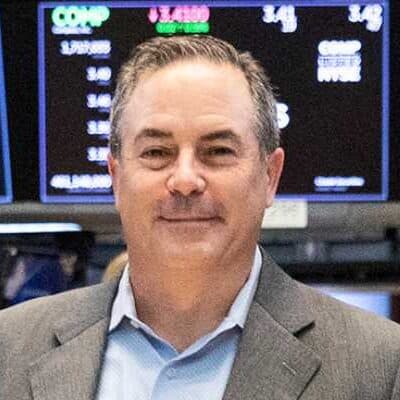
Stocks & Markets Podcast: Coffee Talk With Black Rock Coffee CEO Mark Davis
Chris sits down with the newly public company to discuss its culture, what differentiates it from competitors, and ensuring a quality cup of coffee with a disciplined growth plan.
You've reached your free article limit
You've read 0 of 1 free Pro articles.
On this installment of the Stocks & Markets Podcast, Chris Versace sits down with Mark Davis, CEO of newly public Black Rock Coffee Bar (BRCB) .
The conversation begins with an overview of Black Rock Coffee and its emphasis on the customer experience and how the company differentiates itself from its competitors.
Mark gives us his take on the current state of the consumer and how Black Rock is contending with higher coffee prices as part of the company’s cost structure.
Ahead of the company’s first earnings release as a public company, Mark discusses the company’s current business mix, its long-term growth target, and why AI is not in the mix
For more on Black Rock Coffee, see its Investor Relations page or its filings with the SEC.
More Pro Portfolio:
- We're Ringing the Register on Qualcomm After AI Chip News Drives Surge
- GM Cans EV Vans, L’Oréal Gets AI Makeover, More Investing News
- Weekly Roundup: Another Record High for the S&P 500 and Pro Portfolio
Transcript
CHRIS VERSACE
Folks, welcome to the latest Stocks and Markets podcast at TheStreet. I'm Chris Versace, portfolio manager of the Pro Portfolio. And today we have a special treat as we sit down and talk about simply one of my favorite items to consume. Yes, we're talking about coffee. And in full disclosure, folks, I have to tell you, I simply have way too many ways to make coffee in my home.
But as you're probably be happy to hear, not one of them is a big machine. As I like to say, no thank you, plastics. But it would seem that I am not far from being alone in terms of consuming a lot of coffee. I say that because, according to the spring 2025 National Coffee Data Trends report, 66% of Americans drink coffee daily, and the demand for premium coffee continues to rise.
Joining me to break all of this down and talk much more about the coffee market, as well as his company's opportunity tapping into it. Mark Davis, CEO of the newly published Black Rock Coffee.
Mark, thank you so much for joining us.
MARK DAVIS
Chris, I appreciate you having me very much. We're thrilled to be here.
CHRIS VERSACE
Now, Mark, you guys are kind of a rare gem in the financial markets. I say that because you're one of the more recent and in quite some time, you only public restaurant companies. You went public back on September 11th. And if I have the numbers right, you priced the IPO around $20 a share. And companies like Raymond James Jefferies, William Blair and others, they've all got price targets between 24 and 32.
Did it. Did I get that right Mark?
MARK DAVIS
That is correct. Yes. Okay.
CHRIS VERSACE
Okay. Now I up before we begin, Mark, I also have to say, special thanks to you because you're doing something that a lot of companies don't do, which is we're having this conversation in the midst of your quiet period. You know, you close your quarter recently just like a number of others, but you're not going to report until November 11th.
So I want to again, thank you for doing this, but also be mindful that you are in the quiet period. And that, of course, is going to shape our conversation. Now, Mark, with that being said, for those that are not familiar with Blackrock coffee, just just give us the 411 you.
MARK DAVIS
Sure. I am blessed to be a part of a company that is going to be a bold consumer brand. It's going to be rooted in culture and community. And I think the first thing I would come back and say is we really have an emphasis on the barista and the experience. Having grown up in the industry, everybody on our team and everybody within the company works real hard at making sure that we realize the baristas are our point of difference.
And I would say the way that they connect with the guests, the way that they, build that community and that experience cause this frequency and in turn helps us build, a great brand and a great company.
CHRIS VERSACE
So when you say that, it almost sounds like there is a, neighborhood feel familiarity with the barista. They know you. You know them. So there's a kind of a relationship there, which seems a little different compared to some of the other companies that are out there.
MARK DAVIS
We work real hard at explaining to the baristas that that experience is so rare that, Chris, if you were coming through and they know who you are, they know what your drink is. They're able to connect with you on a call it a family type level that really, really matters. And I think if you and I sat back and said day to day, week to week, how often does that happen to you?
Especially for a drink that's going to be 6 to $7. That's pretty rare. And so we believe that when we talk differentiation, that is really going to be the point of difference. And we work real hard not only to take care of those baristas, but to give them a career path where they can have a great experience and in turn, have this great career within a good company that allows them to move their goals both professionally and personally.
CHRIS VERSACE
Okay, okay. Now let me just tie a couple things together and touch on something you just said. You know, you guys are have. You guys started off originally kind of Drive-Through coffee bars, but you've expanded and I think the vast majority of new locations that you're opening have, seating areas, what you guys call lobbies. You're in about 170 plus locations across seven states.
And your focus, this is where the 6 to $7 comment comes in. Premium caffeinated beverages. Did I miss anything there?
MARK DAVIS
That's exactly right. So Jeff Hernandez, Daniel Brand, the original founders started Beaverton, Oregon, one shop. And again that is grown. One of the things that Jeff call it 2013 established was, hey, there are people that want the drive thru experience. They want that quick, convenient outlet. And then there are people that want the connection. And so they went ahead and added the lobby back then.
And then we have amplified it. And I think the thought is that whether it be third party, whether it be using the app, whether it be the drive through every store, every store has a drive through or that lobby, you're going to get that great experience and that great connection that's differentiated.
CHRIS VERSACE
Okay. And when most folks think about, you know, the coffee market and the experience or something like the experience that you just described there, there's the usual cast of characters, right? Starbucks, Dunkin Pete's, Coffee Bean, Dutch Bros and others. You've also got companies like McDonnell with their cosmetics trying to horn in on the beverage business. It's a competitive field, but at the same time, Mark, you know, this is just my perspective.
One man's opinion, if you will. You know, the big gorilla Starbucks has become what I like, refer to as the McDonald's of coffee. And I say that, you know, having tried to get a well crafted double tall, upside down, dry cappuccino these days, it's very tough. So how, you know, when people ask you about this competitive field.
And I understand the part on the barista. But when it comes to an execution business, how is your go to market? How do you really you know, for all intents and purposes, compete with these folks?
MARK DAVIS
Sure. You know, I think if you start first with that experience, we want everything to be under 90s. So we would work real hard from the time you place the order to the time you receive it, that you're going to get it in 90s. I think that alone is differentiated. When we rolled out the app and we rolled out that that ability to come in and pick it up quickly.
We put governors on it, where the idea was generally that if you and I were standing in line, we would not get past or we would not have a barista making someone else's drink while you and I are in the line. And I think the thought they're going back to that experience is I want to make sure that the customers that we have, we do right by.
And I think while there is a desire to grow the business and do it in such a way that you can push third party, you can push the app, you can push all of these things. We try to make sure that in each of those cases that we're fast, that we're accurate. Now, I'd also tell you we small batch roast.
We've got this high grade of coffee. We've got two roasters currently, one in Vancouver, Washington, one that's going to be in Tempe, Arizona. And when you think about that small batch, we will roast the beans and you will have those beans used for your drink within 14 days. And so the thought there is if we're friendly, if we're fast, if we're accurate, and I give you a high quality beverage, especially at a good value proposition, you're going to come back often.
And I still believe that when you look at the competitive landscape, I believe at the moment those qualities differentiate us from other people.
CHRIS VERSACE
Got it. Got it. Okay. And we'll, we'll we'll touch on this later. But just given the geographic positioning of those two roasters that you mentioned, if you were to expand further, which I suspect as part of the plan, that that tends to be one of the, key tenets of, of companies like yours trying to grow their footprint, and their business over time.
Is it fair to think that you would have to contemplate other roasters in order to keep that quality level, that time frame that you mentioned?
MARK DAVIS
That's correct. And and if you thought about our geographic placement at the moment, we're in seven states. Furthest state that we are east is going to be Texas. And so when you think about that alone, those roast trees should be able to support at least 200 to 300 stores based upon their capacity. We are currently looking at adding a third roastery that, to your point will be further east.
And the idea would be that we would continue to small batch roast. Again, great flavor profiles, great freshness. And in turn, when we do that, that would give us the ability to continue to grow our concept and move further east within the United States.
CHRIS VERSACE
Got to love it. One of the things that we have to talk about, and I understand you guys use premium beans. As you just mentioned, but coffee prices have kind of been on the rise this year to, to put it mildly, especially when we look at them on a year over year basis. Now there's tariffs obviously there.
There's whether that's also an influence on coffee beans. And it looks like that we might be getting a little bit of relief depending on what happens on the trade front, between the white House and Brazil. But you know, how are you seeing coffee prices? How do you kind of hedge on coffee prices? Assuming you do.
MARK DAVIS
So I, I would start going back to Jeff and Dan. We buy our beans from eight different origins. And then we have Justin Lesher who is our head roaster and handles all of the roasting facilities. We are able to move between those eight origins and come up with the best flavor profile, the most consistent flavor profile, while also paying the appropriate price.
And again, keeping our prices as consistent as possible. And so using an example, if Brazil had higher price because of tariffs, we are able to move to Mexico. That has lower price based on no tariffs. And what Justin has done, which has been exceptional for us over the last year, has been able to regulate that so that our recipe stays consistent.
We do about 90% of our sales out of our medium roast. And would that consist that flavor profile. And again, him being able to use different origins, we have less of the, variability that maybe other concepts get.
CHRIS VERSACE
And I don't know if you guys have disclosed this or not, Marc. But, you know, relative to your cost structure, how much is coffee?
MARK DAVIS
So coffee is going to be a pretty small percentage of what we pay with when you look too at our cost of goods. When you look at most coffee companies, dairy is going to be where they spend most of their dollars. And so I would say again is a credit to the team. We have done a really great job managing in, and I think what that's done is provided a really consistent value proposition for the guest.
CHRIS VERSACE
Got it. So, coffee and dairy, you know, I think those are the two that most kind of focus in on labor. How does that kind of fall into the mix?
MARK DAVIS
So we have the benefit at the moment that, you know, a new innovative company that that I think when we go out and look for baristas, we have just this unbelievable pipeline. And we've been really fortunate to have great baristas. One of the things that we have doubled down on this goes back to when I grew up in the industry, is we try to show everybody this is a career versus a job.
And when you think about starting at a company that's got 160 plus locations, there's a lot of opportunity to grow. And so what you see is with the acumen we're teaching them. And then you add the profit sharing and you add some of the other initiatives. We've got a performance based culture where we have a score card and they can win trips, and they rank against one another in the whole bid.
And what you find is, as much as they love the acumen, and as much as they love the profit sharing and the career path and all the above, what they really love is to compete against one another. And so we've got this great competitive landscape. And as such, as they perform, the company does better, but they also receive profit sharing and they're able to move up within their career.
CHRIS VERSACE
So just out of curiosity, since you kind of mentioned the competitive environment, is there anything like a, you know, latte off or anything where you bring people in to see who the, you know, the best barista is in the region or the company or anything.
MARK DAVIS
So we certainly not only did they help us innovate with the menu, we will give away T-shirts. We will give away, stickers, things like that where they help create those as well. And I think it gives you that ownership. And there are certainly individuals within the organization that are viewed as the very best, fastest, most accurate, friendly baristas we have.
CHRIS VERSACE
Okay. Okay. I have to ask, you know, before we kind of move on a little bit, just given the nature of your business, what are you seeing kind of with the consumer or are you seeing consumers continuing to spend, or are you starting to see them become a little more hesitant, maybe trading down in your menu and anything like that?
MARK DAVIS
So we've had really strong same store sales and even better, same store transactions. Really proud of that and how the teams have been able to continue to grow our business. I think generally speaking, when the economy is tougher or when the economy is good, everybody wants that experience and wants that value proposition. And Chris, I would use you that I think you, your family, your kids, anyone you know doesn't have an issue necessarily spending the 6 or $7 as much as they expect the experience that goes with it.
And so yeah.
We are a big believer that if we deliver on that experience that we should be able to continue to grow the transactions. And as such, you'll see the same store sales leveraged into profitability.
CHRIS VERSACE
Get on it. Yeah, I kind of view it as a little bit of a guilty pleasure. You know, those little things that you're going to buy, you know, kind of no matter what's going on in the economy, that's not true for everybody. But that's just kind of the way that I see it. So if the consumer is holding up, well, let's say, the other thing that I wanted to pick your brain on is margins.
And the setup is this, a lot of the economic data that we've looked at is kind of pointed to input prices continuing to rise. But companies, some companies, I should say having a tougher time passing through, those higher costs. So it begs the question about margins. So I want to get, you know, a take on this from you, Mark.
You know, we're ready. You do you think in your margin profile and without putting too much, you know, pressure on you, is there room to drive the margins higher? If so, what might be some of those levers?
MARK DAVIS
Sure. I would say is a newer company that's growing awareness. We have an opportunity to continue to grow the average unit volume. That's that's where I would start. And I would say that beverages as a whole and and you're very clear on all of this tends to have very strong margins. You know, I, I think when we talk about our particular situation, we really doubled down on I not only want Chris to come more often, but I want him to go and tell his friends, and I want to grow the AUV.
And when I look at our current profitability, we have very strong profitability. And with any AUV growth that's going to leverage and put us in a great place.
CHRIS VERSACE
Okay, so you're talking more to use, you know, business school or economic terms, more fixed cost absorption and capturing incremental margins as that incremental person flows through the store.
MARK DAVIS
That's correct. I would say, generally speaking back to your comment on Cogs. Back to your comment. Labor. We have already very strong margins in both case. And I would say that as a company, I want to make sure we're taking care of the team, and I want to make sure you continue to get that high quality product based upon the quality of beans we buy, our energy drinks, etc..
And so when I look at that, I tend to go, I don't have a model issue when it comes to margin. What I need to do is continue to provide an experience that grows the AUV, and that'll work out great for everyone.
CHRIS VERSACE
Got it. And to the extent that we see some relief on overall coffee prices, I understand the strategy that you laid out that's helped you kind of, you know, more than weather the storm, let's call it. But to the extent we get some coffee price relief or even dairy price relief, that could be a nice additive for your margins.
MARK DAVIS
That's correct. I think each year when we think about the commodity prices, we pay minimum wage, all that type of stuff we ideally would like to take as little price as we can. I think we've got this great model with the experience that if we can in turn continue to provide that back to the value proposition, we should have success for a very, very long time.
And I think as we make decisions, all of them are based on a long term perspective.
CHRIS VERSACE
Right. But I think to to to be respectful of you and your peers, when we tend to see price increases due to commodity inflation, we tend not to see the prices come down when the, commodity, you know, inflation, reverses and abates. Do you know what I mean?
MARK DAVIS
Sure. And I and I think when you look at and I will use us as an example, when we think about price or whatever it is typically surrounding minimum wage. You know, I think to your point, the, the cost of goods, the cost of beans has fluctuated. Some call it in the last year. To your point, my hope is that that costs kind of evens out a little bit.
And again, you know, as you think about everything going on with the tariffs today and all the above, but but generally speaking, I would still go back and say we have an excellent model at the moment. And literally if we can grow those sales, I think that works out great. And that comes back to the experience and that comes back to making sure the product we deliver is the right quality.
To your question about, you know, again, prices going up or down, I would say, generally speaking, as you look at price over the last two, three, 4 or 5 years, we have tried to keep that low and tried to keep that as consistent as we can be.
CHRIS VERSACE
Okay. Okay. And then just on the margin front, the product productivity front. Curious on your take on this, based on your comments, maybe this is not something you're doing, but I want to be clear just in case I'm wrong. I we're hearing a lot about that. You know, obviously software companies are talking about how adoption and usage is happening, but we are also moving from other companies about how they're using it to reduce their, cost structure, improve their productivity.
But I, I'm, I'm kind of unsure about this for you guys, Mark, because of the emphasis of the barista or do I have it wrong?
MARK DAVIS
No, I, I think you're exactly right on. I, I think it would be contradictory for me to look at you and say, hey, that human experience, that relational aspect is so important to us. And then I'm going to work hard to figure out ways to become more efficient and go to the AI perspective. I go a step further that for a long time, there are the ability to have these automated espresso machines, and we still have the baristas that grind it and make the shots, pull the shots, make the drinks.
And I think part of that is, again, that you're truly in a coffee shop with that connection. And I think that's a point of difference.
CHRIS VERSACE
I do like my retro shots, Mark. That's all I'm going to say about that. Okay. All right. Let's, let's, let's talk about, growth a little bit because, you know, from, from my perspective, having looked at, you know, companies like yours in the past, there are a couple different levers, levels, levers. Excuse me for growth. There's the obvious, you know, footprint, footprint expansion, but there's also menu expansion.
You know, Starbucks notably did this a long time ago when they, you know, moved from just really beverages into food. But you guys already have food. And I know you're soon going to be adding some, egg bites. I saw that in the in the S-1 filing, but is there a larger menu, you know, move to be made?
MARK DAVIS
So I think when you think about beverage, we are trying to make sure we provide the very best beverage that you can buy and the experience that goes with it from a food perspective, we've tried to make sure that there is not a veto vote. And so when you think about that, what I don't want is for you to come to our shop and make the decision that you need to go somewhere else for the food.
Got it. We did launch egg bites. We launched that in July and it has gone just extruded narrowly. Well so that's that's terrific. And I think when you come to a shop what we want is you get your favorite beverage, but you're also able to get an egg burrito, egg tacos, the egg sandwich, the savory items. You're also able to get a pastry if you want an inside of high quality.
And I think when you package the two together, we want to make sure there's a great value proposition. The other part of it is I want your drink out in 90s and the food has to work with that. And so all of this is based off quality experience, great products, including the food in fast and accurate fashion.
CHRIS VERSACE
So, you know, several of this is maybe a little off topic, but just really sticking with that. 90s several years ago there was, you know what at the time was a breakthrough. I think Turbo Chef was the name of the company and the, ovens that they had that could quick cook food. Is that still the case, or have you guys worked to develop any type of proprietary machines or relationships because of this very tight standard that you have?
MARK DAVIS
So we use Turbo Chef. You're exactly right. And when you think about it, we do not, again have any prep within our stores. And so when you think about it, it is commissary based. It comes in. And what we're able to do with that is have high quality fresh products. We can heat up, works with the drinks and in turn delivers on that experience.
CHRIS VERSACE
Okay. And since you've introduced food, have you seen a nice increase in the attach rate?
MARK DAVIS
We have. And so when you look at food, when we initially did it, it was granola bars. It was pastries. It was some donuts.
CHRIS VERSACE
Easy stuff.
MARK DAVIS
Yeah super easy super fast. And I think what you've seen going back to your question around the Turbo Chef is the savory part of our business has really grown. It's fantastic. And I think in turn, we're getting more attachment. And as such, you're seeing the frequency of the visits increase.
CHRIS VERSACE
And I assume that, that also translates into higher average check. Right.
MARK DAVIS
That does. Yes, sir.
CHRIS VERSACE
Okay. Okay. So that so any other plans for the menu, whether it's, you know, seasonal drinks to bring more people in or, just another, you know, leg up in the menu. You know, you said egg whites in July, anything for 2026 or have you guys not talked about that?
MARK DAVIS
So we continue to innovate. You know, I think we have Jessica who is our CMO. It has been excellent. She launched the loyalty program for us back in July of last year. And it's really been successful. When you look at the altos, we do, up to 5 to 6 a year. And again, they have drink offerings. They have food offerings.
We're currently doing the Pumpkin Blondie, which sells very, very well. That's a coffee based item. And then we've got the sour candy fuel, fuel being our proprietary energy drink. It's got gummy worms in it and all this different stuff, and it sells incredibly well. And I would go back to Jessica and her team that as they continue to innovate, what you're seeing is those short little windows where we bring new drinks on really helps the company, helps the baristas, new products, innovative.
All the above.
CHRIS VERSACE
Okay, okay. Real quick, I didn't ask this before, but since you mentioned fuel. What? What's the rough breakdown? Mark? Coffee, food and energy drinks for fuel. Your your proprietary label.
MARK DAVIS
So when you look at one of the points of difference, we are going to be, you know, upwards of 60% coffee. So that alone is going to be differentiated. And again, with the higher grade of coffee, the quality you'll see within our mix that we have an Americano as an example is one of the top ten, which again speaks.
CHRIS VERSACE
To the quality.
MARK DAVIS
I think when you look at the fuel the fuel has. And again, prior to, let's call it a year and a half ago, it was in roughly that 20% range and continues to grow, which is excellent. And then I think when you look at our food, our food has again, was in the lower percentages and is continued to really jump here as of late.
CHRIS VERSACE
So it sounds like simple math. It's probably like 15 to 20%.
MARK DAVIS
A little less than that at the moment, but certainly moving in that direction.
CHRIS VERSACE
Got it. Okay, okay. And then just on geographic expansion, 170 stores plus or minus. As part of your IPO roadshow, were there any longer term targets that you shared?
MARK DAVIS
So we did. You know, I think going back to the East is the most important thing we want to make sure of is we continue to have that personal experience that fuels the loyalty and drives the growth. We want to make sure that we have the right quality of people, that when it comes to a store near you, you have the right experience.
And so we conveyed that we would grow at 20% a year. We'll continue to do that. And what we said, and you can see this in the filing, was that within ten years we were going to be at 1000 units. And that's really compounding at 20% a year.
CHRIS VERSACE
Yeah, yeah, yeah. Okay. And that's ten years from 2025.
MARK DAVIS
Correct
CHRIS VERSACE
Yes, sir. Okay okay. So I mean, so I think one of the digs on your let's just call it largest competitor is that there are too big for their britches. Right. That you know, if, if you're going to turn around Starbucks. Right. 15,000 stores more on the international front becomes very tough. And I think that, you know, a thousand stores, it sounds like a lot.
But compared to others, I think it allows you to really have a tight rein on the quality, which is what I think you can. That that's a message you continue to hammer. Is that is that lost on people?
MARK DAVIS
Well, I would say that generally when we are asked by investors, how fast can you grow? Can you grow faster? We always come back to we want to make sure that the quality of people, we want to make sure that the experience that we're known for continues. And so when you think about that, we believe that we can grow at 20% and do that in a very, very strong fashion.
I don't have any desire to grow faster than that. And, and I think, you know, when you look at our size and scale, I think what it really says is that we have a long path where we can continue to grow and continue to exceed expectations.
CHRIS VERSACE
So it's not trying to put words in your mouth, Mark, but to the extent that we see you announcing maybe a quicker rollout of groceries, that would be a signal that your footprint expansion is likely to accelerate.
MARK DAVIS
We won't exceed 20% growth. We will stay at the 20%. You know, when you look at our seven states, Chris, I think there's a lot of runway to be able to grow in the States. But I would also say that we continue to look at other states and, and how that works for us within our development.
CHRIS VERSACE
Grow Mid-Atlantic, Mark the Mid-Atlantic Virginia. I'm just asking that question because earlier you said that the two existing roastery should handle 200 to 300 stores. So it stands to reason that, you know, if your long term target is 1000, there's going to be more roasters.
MARK DAVIS
Yeah. And I, I would say, you know, when you think about the importance of treating our people well, you and I talked earlier about running a company you can be proud of. We run four shifts a week out of our roastery, and on the fifth shift they are cleaning, they're repairing, they're making sure that all the equipment's in great order.
Don't have any desire to have them work overnight. Don't have any desire to have them work split shifts. You know, again, as we push really hard on the culture and experience for you as we do that for our teams, we also do that for our roastery since. So I think when you think about that scale that you're speaking to, generally speaking, we don't want to get to a place where we are putting more pressure on them, and as such, we try to stay ahead.
CHRIS VERSACE
Got it. Okay, okay. Before we close, Mark, I kind of commented on something earlier about, you know, some of the price targets for your stock. 24 to 32. You know, I think we can both say that's a little bit of a big range there. And so I would ask, you know, really on behalf of the audience, right, folks that have that upper end, you know, price target, 29, 30, 31 whatever, whatever it is, what is it that they're seeing?
What is it they're communicating, that keeps them enthusiastic and believers in the Blackrock coffee story compared to, let's say, folks that are at the lower end, 24 or 25, whatever it might be. What are they missing? Can can you help us understand those two things?
MARK DAVIS
Yeah, I Chris, I would say and it's interesting, you know, since we've gone public, I rarely will look at the stock price. I try to stay away from that a little bit. I would that is.
CHRIS VERSACE
That is the best thing for you to say because any management team that manages to the stock price, it's going to be a disaster.
MARK DAVIS
Yeah. And I, I would say that for those that believe in us and would bet on us, I think they believe that a proper first culture, that experience really, really matters. You know, as we spoke to earlier, we've got a terrific model. I think when you look at the group that believes maybe we are lower on that particular range, the question becomes, hey, newer company, can they execute?
MARK DAVIS
And I would say, generally speaking, execution and accountability is one of our very, very best qualities. And I would bet on us, I think what we as a team have said is we're going to continue to execute, we're going to continue to look at the long term, and we're going to do that by taking care of our people.
MARK DAVIS
And I think, again, to what you and I spoke to earlier, hire the right people, train them well, give them the ability to engage with the with the gas. Then all of it works out. And that's what we're going to do with regards to the stock price.
CHRIS VERSACE
All right. Final question before I turn it over, you mark in your mind, as you kind of look out over the next, call it 2 to 4 quarters, you know, what's the biggest risk you see ahead?
MARK DAVIS
Well, as I said, you know, I, I think we've got an excellent model. You know, Bobby who handles our development, we've got a pipeline. We've got a pipeline on people, all of that type of stuff. We have run our company over the last three years is a public company. So again, what we commit to, we want to make sure we show up and and establish those goals.
All of the above. With that, I think when I look at the risks of this, it would be developed at a pace where we don't put the right people in the positions, and then we lose the experience and we lose the culture. And so Clay, who is our operator, Will, who helps us on the people side, everybody has really doubled down and making sure the training, the culture, the experience is there.
And I think as long as we continue to execute on that, we should have a really successful long run.
CHRIS VERSACE
Okay. All right, Mark, this is where I turn it over to you. You've been so generous with your time. Anything we didn't talk about regarding Blackrock coffee or something? You know, about the larger coffee market? Maybe my coffee habits. And anything that we didn't talk about that we should know.
MARK DAVIS
I've enjoyed this very much. I at some point. I know you're an East Coast guy. I'd love to have you out. And you can spend time with the baristas and see it. I think that'd be great, but I'm super appreciative of your time.
CHRIS VERSACE
Well, thank you so much, Mark. And I will say that, I look forward to continuing the conversation, as you guys, you know, continue to go out and execute. I think this is a story that we're gonna want to pay attention to. And at some point, we'd love to have you back.
MARK DAVIS
I love it, I'd love to come back. I've enjoyed it.
CHRIS VERSACE
Excellent. Well, Mark Davis, CEO of Black Rock Coffee, thank you so much for joining me on today's Stocks and Markets podcast. And folks, we'll be back before you know it with the Freshly brewed episode. Stay tuned.