Fed Sees Two Rate Cuts Ahead but Update Says 'Stagflation'
Data over the next few months will indicate if we have two or fewer rate cuts this year.
You've reached your free article limit
You've read 0 of 1 free Pro articles.
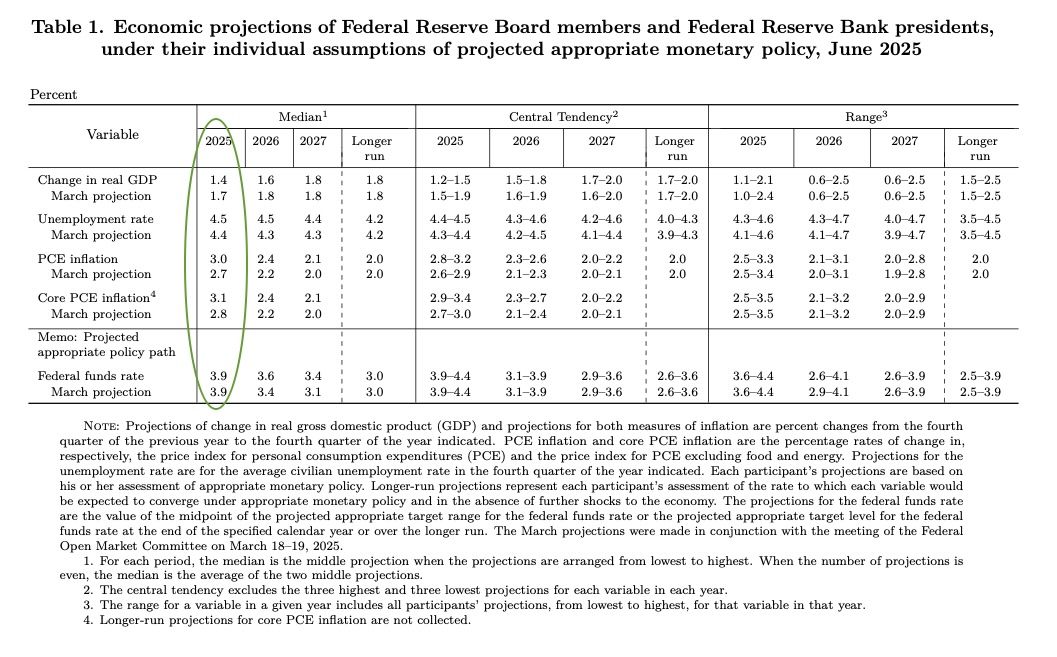
The Fed has published its monetary policy decision following its June meeting, and as expected, it left the fed funds rate unchanged and continued to telegraph that two 25-basis point rate cuts remain on the table for this year.
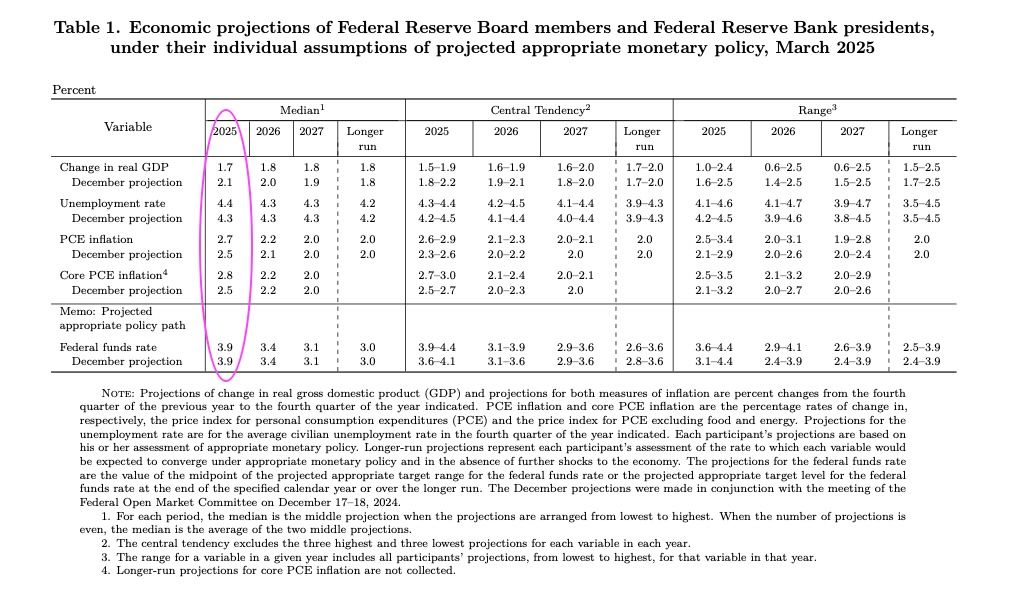
We see that as market-friendly, but when we look at the changes in the set of economic projections (SEP) for this year, there is little question Fed Chair Powell will reiterate that the Fed will remain data-dependent to determine what’s likely ahead for for monetary policy. We say that because the updates to the SEP skew more stagflation-ish, showing slower growth this year and next year, but inflation expectations ticking higher.
We expect that Powell will touch on the puts and takes for those revisions but ultimately reiterate that the Fed will continue to follow its marching orders for stable prices and employment. That is likely to frustrate folks who think the Fed needs to cut as well as those who look at the updated SEP and see no reason for the Fed to deliver a rate cut this year. The reality as we see it is that Powell and crew will have to see more data to determine the real impact of tariffs on the economy and inflation.
So far, the data points to an economy that is still growing, and as we pointed out in our opening comments on Wednesday morning, job creation has continued. And at least for now, the June SEP update shows the potential for two rate cuts this year. What we see over the next three months, and by that we mean data for July, July and August, and on the trade deal front will tell us if we’re likely to see the September SEP update keep two rate cuts on the table for 2025 or something less.
As we get ready for Powell’s comments, which have been known to move the market and provide some additional policy color, here’s a look at the June SEP and March SEP figures: