Winners and Losers as Trump’s 'Zombie Tariffs' Shamble On
Global markets are reacting to a significant legal blow for the Trump administration.
You've reached your free article limit
You've read 0 of 1 free Pro articles.
So the U.S. Supreme Court finally came to the only decision it could make: U.S. President Donald Trump’s tariffs are illegal. But what does that mean?
The court ruling confirms that the tariffs set new taxes on U.S. companies and consumers, something only Congress can do. The president certainly doesn’t have carte blanche to impose new import taxes at whatever level he desires, for whatever reason he wants, hiking tariffs to levels not seen since Smoot and Hawley ushered in the Great Depression.
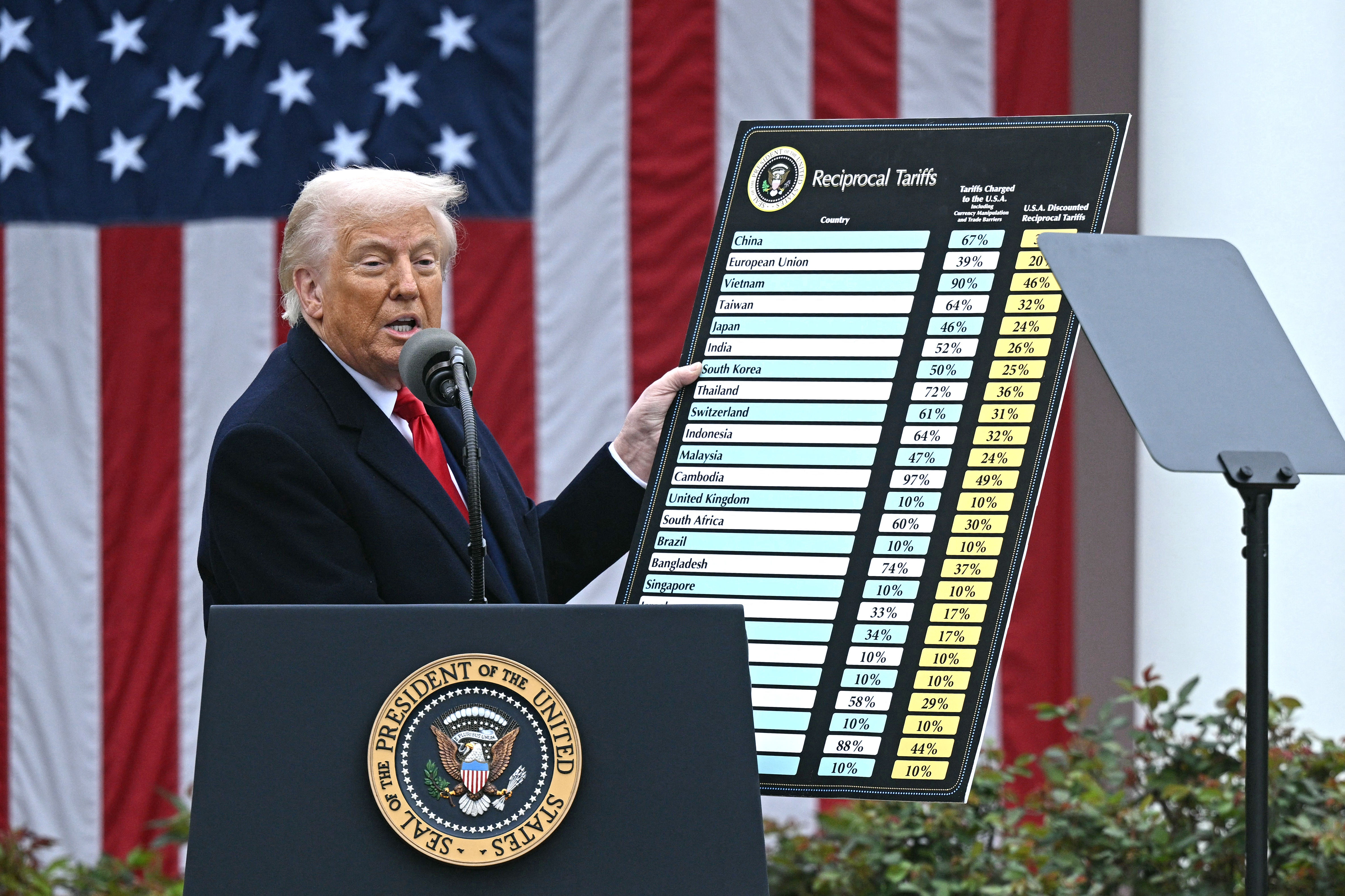
The Supreme Court ruling only covers the tariffs imposed by Trump under the Emergency Economic Powers Act of 1977. That law allows the president to regulate trade in response to a national emergency that represents an “unusual and extraordinary threat” like war, or an oil crisis.
As the justices point out, the law doesn’t mention tariffs at all. It surely would if the intention was to give the president the power to impose import taxes without congressional approval. Among the many other problems with the Trump administration’s use of tariffs is that no sane person would argue the United States is experiencing an economic emergency with essentially every other nation on earth, including uninhabited places such as Heard Island and the McDonald islands, which are volcanic barren rocks near Antarctica that are home only to seals and penguins.
FedEx First in Line After Court Decision
Kudos to the court for coming to the conclusion that Trump had clearly overstepped the mark. Justices Clarence Thomas, Samuel A. Alito Jr. and Brett Kavanaugh dissented in the 6-3 decision, but Trump appointees Neil Gorsuch and Amy Coney Barrett voted with the conservative Chief Justice Roberts and the court’s three liberal members to undermine the central tenet of Trump’s trade policy.
There will now be a messy process where companies can seek a refund. The Supreme Court put that process back in the hands of lower courts and the U.S. Court of International Trade. The likes of big-box retailer Costco Wholesale (COST) , Chinese electric vehicle maker BYD BYDDY (HK:1211), and camera maker GoPro (GPRO) joined a long line to sue the U.S. government prior to the court ruling, while FedEx (FDX) became one of the first to demand a “full refund” after the court decision was handed down.
Trump is not backing down, despite the heavy legal defeat. He insists that he will use other laws to impose other tariffs, which will almost certainly be ruled illegal, too.
Maximum 15% Tariff Under Obscure Clause
Trump has now seized on the 1974 Trade Act, using Section 122 of that law to impose a 10% tariff on the rest of the world. That section, which you can read here, does allow the president to impose a “temporary import surcharge” of not more than 15%, for a maximum of 150 days, but only to deal with “large and serious” balance-of-payments deficits. The tariffs must be applied broadly and cannot target any specific nation.
However, a balance-of-payments deficit is not the same as a trade deficit. When a country has a free-floating currency, it depreciates or appreciates accordingly, and in effect cannot fall into a balance-of-payments deficit.
While the U.S. dollar has depreciated around 9% since Trump has been in office, that’s not unusual, and certainly not a balance-of-payments emergency.
“The main causes of the decline are Trump’s erratic tariff policies themselves and his aggressive calls for the Federal Reserve to cut interest rates,” noted the Peterson Institute for International Economics.
'Arcane and Inapplicable' Law
Trump’s pivot to an “arcane and inapplicable” trade-law clause “will elicit further legal challenges,” the institute added. It’s most likely that the tariffs will simply lapse after 150 days, while congress shows little appetite for imposing fresh tariffs.
Trump’s team may simply be counting on the 150-day window as sufficient time to concoct other tariffs under yet other rules, likely on national-defense justifications or findings of unfair trade practices. And those tariffs would also elicit further legal challenges.
Even when he was simply a private real-estate developer, Trump’s first response to any business defeat was to sue. The Trump administration appears to be counting on similar logic during his second presidency, using various “arcane and inapplicable” laws to introduce tariffs that will, ultimately, also be ruled illegal.
Trump could order the refunds process to start immediately. But instead, he is stringing out the legal process to its full extent. “I guess it has to get litigated for the next two years,” Trump said, declining to confirm whether the government would honor corporate refunds.
'Zombie' Tariffs Keep Shambling Along
Economist Paul Krugman noted that this means U.S. importers and consumers will be in the grip of “zombie tariffs,” tariffs that “should be dead, because they were clearly imposed illegally, but that somehow keep shambling along.”
The use of tariffs stems from a fundamental misunderstanding by Trump that a trade deficit is somehow negative. In fact, it’s the result of a wealthy nation trading with a poorer partner, the equivalent of a billionaire going into the local corner store and buying a bunch of cheap stuff. The billionaire hasn’t “lost” or been “ripped off” because they bought a bunch of goods. The corner-shop owner isn’t somehow richer than the billionaire because he or she sold goods they bought or made for a few bucks.
Although Trump insists the global tariff will be the maximum 15% allowed under the new Section 122 justification, they’ve initially gone into effect at 10%.
The biggest winners now that tariffs are leveled at 10% would be nations facing the heaviest tariffs: Brazil, with its 50% tariff; China, with 50% negotiated down to 20%; most of Southeast and South Asia, where Indonesia faced a 19% and India had knocked tariffs down to 18%. The “losers” would be nations where the United States runs a trade surplus, such as the United Kingdom, which had already agreed a 10% rate.
U.S. Companies, Consumers Paying Price
But, in fact, there are no winners out of tariffs. The losers are the U.S. companies importing goods at a higher cost, and U.S. consumers paying higher prices. From January through August 2025, U.S. importers swallowed 94% of the tariffs, while overseas exporters only lowered prices slightly, according to a recent study by Federal Reserve Bank of New York economists. The ratio paid by importers did fall to 86% by November, but tariffs remained as inflationary extra taxes driving the cost of goods higher.
It would be positive if the Trump administration took the Supreme Court loss, and moved on, away from the misguided tariff approach. Some Democrats apparently fear the Supreme Court decision could be good for Trump, since tariffs are almost universally disliked, by a ratio of 3:1 in the case of independent voters.
But Trump persists. Why?
“The obvious answer is that Trump can’t bring himself to acknowledge defeat,” Krugman wrote to subscribers. “His tariff strategy is, by any reasonable standard, dead, and the tariffs should be dead too. But they won’t stay dead; they just keep shambling along.”
The use of Section 122 already means that Trump can’t use tariffs selectively, for instance to punish Brazil for convicting former president Jair Bolsonaro for his attempted coup, or to punish Canada, Mexico and China for the illegal trade in fentanyl. And any Section 122 tariffs will expire in five months at the latest.
Asian Markets Get Modest Boost
In the meantime, we can watch for movement among the largest U.S. importers, as well as the stocks of major exporters into the United States.
The momentum is with the U.S. importers rather than international manufacturers. FedEx shares are up 32.0% so far this year, and Costco has risen 16.4%, both companies likely to see margins improve even if their refund requests are delayed.
We can also watch the stocks of U.S. companies with extensive global supply chains such as Nike (NKE) , up a modest 1.6% on Tuesday to move it to a 1.3% year-to-date gain. Nike shares remain 18.4% lower than their level prior to Trump's April 2025 tariff announcement.
Tuesday is the first day for investors in China and Japan to react to the Supreme Court decision. Chinese markets resumed trade on Tuesday after the Lunar New Year holiday, while Japanese markets were closed Monday for the emperor’s birthday.
There’s been only a mild nudge higher. The CSI 300 index of the largest listings in Shanghai and Shenzhen is up 1.0% on Tuesday, its first day of trade since February 13. The exporter-heavy Nikkei 225 in Tokyo is up 0.9% on Tuesday, just off its all-time closing high set earlier this month. Hong Kong stocks, which were trading Monday and shot up 2.5%, gave most of that back on Tuesday, down 1.8% for the day.
Indian stocks inched ahead on Monday but gave back any gains today to end at a three-week low. The Sensex remains 3.4% lower year-to-date, investors more concerned about the impact of artificial intelligence on outsourcing and software stocks.
U.S. companies must weigh the political cost of demanding refunds. Global manufacturers have attempted to shift around production, expensive and time-consuming efforts that are hard to unwind. If there’s a positive out of the tariff debacle, it’s that it has certainly pushed companies such as Apple (AAPL) to expand manufacturing away from China, largely into Southeast and South Asia.
Uncertainty remains, with Trump sure to attack the Supreme Court ruling in Tuesday night's State of the Union address. What we can say for sure is that the state of Trump’s tariff policy is in disarray. But those zombie tariffs lumber on.
At the time of publication, McMillan was long AAPL and BYD.