Why Next Week Is Key as Trump Heads to Asia
Here’s what kind of progress we can expect in talks with Japan, India and China as Trump makes his first trip to Asia in his second term.
You've reached your free article limit
You've read 0 of 1 free Pro articles.
It’s hard for investors to tune out all the geopolitical noise at the moment, most of it stemming from the White House. We have daily pronouncements that threaten, then walk back massive tariffs, talk tough on security, and suggest sectors such as software will soon face hefty export-control restrictions.
But with U.S. President Donald Trump heading to Asia for his first visit during his second term, we can anticipate potential good news in terms of U.S.-China, U.S.-Japan and U.S.-India relations.
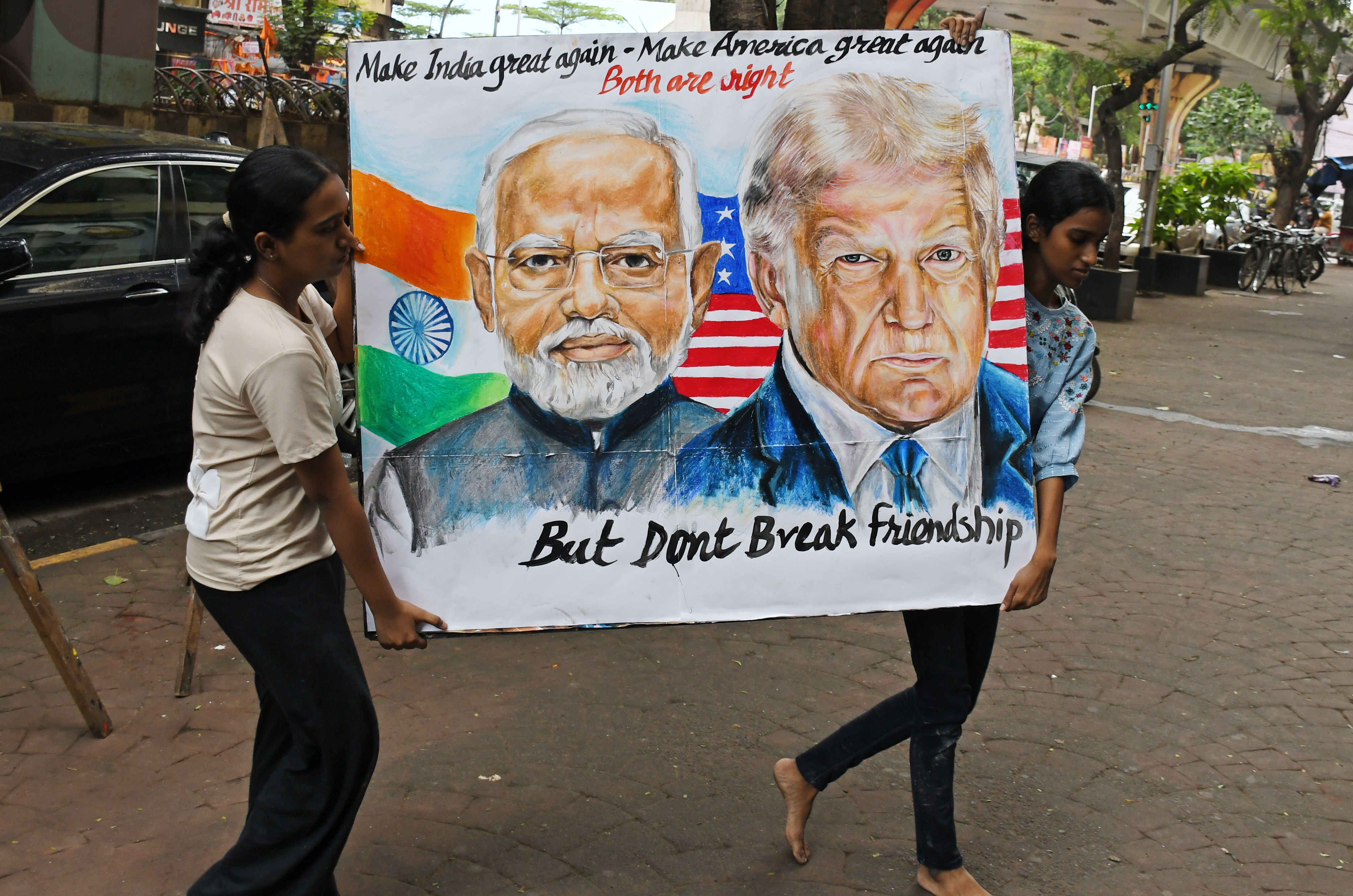
Trump inevitably talks tough from a distance, then plays extremely nice in person. He’s due to meet in person with newly installed Japanese Prime Minister Sanae Takaichi as well as Chinese President Xi Jinping and Indian Prime Minister Narendra Modi.
The pressure will be on the “Dealmaker in Chief” to deliver results from those meetings. We know a “Phase Two” trade deal with China has been a key goal of Trump’s tariff policy.
Itinerary Kept Surprisingly Quiet
Although the White House has, strangely, kept Trump’s itinerary close to the chest, he has said he will first visit Malaysia, which hosts the ASEAN Summit of Southeast Asian nations on October 26-28.
Southeast Asia has been lower on Trump’s priorities, and Trump has never been keen on the niceties surrounding these multilateral conflabs. In fact, he’s skipped many such meetings in the past. But the summit in Kuala Lumpur will bring together the 10 member-nation heads of state in one place.
I would expect that to be more of a “meet and great” than anything. Most Southeast Asian nations are looking to improve existing trade deals that set tariffs at 19% for most ASEAN members, or 20% in the case of Vietnam.
Meatier Talks in Japan
Trump is slated to then fly on to Japan. This gives him the chance to congratulate new PM Takaichi in person, after she took office on Tuesday. I outlined the implications of her victory on Tuesday.
Takaichi is a disciple of Shinzo Abe, Japan’s longest-serving prime minister, who had a warm relationship with Trump. She will seek to rekindle that flame. The White House team will also be familiar with new trade minister Ryosei Akazawa, who negotiated Japan’s U.S. tariff deal agreed in July.
We may get further details on Japan’s pledge to allocate US$550 billion into the United States, money Japan says will mainly take the form of loan guarantees for Japanese or Japan-backed companies, rather than direct investment. Trump is also due to meet Emperor Naruhito, as well as to address U.S. forces at a naval base in Yokosuka, part of greater Tokyo.
Takaichi, who is working on a domestic stimulus package likely to exceed last year’s ¥13.9 trillion (US$92 billion), is also rustling up a purchase package to present to Trump. That includes sweeteners on deals for Ford (F) F-150 pickup trucks, U.S. soybeans and U.S. liquefied natural gas, according to Reuters, all topics that would be music to Trump’s ears.
Takaichi will also likely present deals to Trump earmarked as part of the US$550 billion package. Both governments will review those deals before Trump makes a call. Takaichi indicated during her leadership candidacy that she feels Japan’s 15% tariff deal with the United States is unfair. She now says she’ll honor it, but let’s see what details emerge next week.
Calling Next on Korea
Trump is due to arrive in Japan on Monday and leave Tuesday, literally a flying visit. He’ll then likely proceed to South Korea for the APEC Summit. But it’s unusual for no official itinerary to be released.
“I’ll be in Malaysia, I’ll be in Japan, I’ll be in a couple of others,” Trump said at the start of the week. “We’ll be sort of doing a little bit of a tour.” But the White House has not confirmed the exact nations he will visit.
The APEC Summit will take place October 31-November 1 in Gyeongju, near the coastal industrial cities of Ulsan and Busan. It will give Trump the chance to meet both Xi and Modi. Although India isn’t a member of APEC, which assembles nations that border the Pacific, Modi has been invited as a guest.
APEC nations combined account for some 61% of global output. So if Trump is going to close more specific trade deals with China and India, now is the time to do it.
Trump is flagging progress on both fronts. Coincidentally, this week, he held a celebration at the White House in honor of Diwali, the Indian Festival of Lights, during which he called Modi a “great person” and a “great friend of mine.”
It appears that India will agree to scale back its purchases of Russian oil, in exchange for concessions on trade. At the Diwali event, Trump said he’d spoken with Modi that day. “We just have a very good relationship. He’s not going to buy much oil from Russia,” Trump said, lighting a lamp in the Oval Office. “I love the people of India. We’re working on some great deals between our countries.”
There is still scope for disappointment. Modi wants to have something substantive to announce, and hasn’t officially confirmed his presence in South Korea. So talks behind the scenes to give both sides something positive to announce continue.
China Talks the Crux
China, meanwhile, imposed worldwide restrictions on rare-earth minerals earlier this month, essentially with this Trump meeting in mind. It gives China something to offer — besides cooperation on the illegal drug trade, and a deal to start buying U.S. soybeans after scrapping purchases this year — in exchange for hoped-for concessions on semiconductors, and tariffs in general.
I would expect good news as Trump plays nice with Xi and Modi — exactly the kind of nationalistic autocrats that Trump admires. This should be good news for Chinese and Indian equity markets.
Trump has indicated a willingness to lower tariffs on China to push through a deal. “We’ll make a trade deal on, I think, everything,” he predicted in the White House. “It’s going to be a great trade deal. It’s going to be fantastic for both countries, and it’s going to be fantastic for the entire world.”
Betting Markets Pay to Do Nothing
There’s always room for disappointment should Trump come away empty-handed. But his staffers deferred a planned trip to China into next year to allow the White House time to negotiate with China. This may not be the final deal, but I expect progress.
By the way, in case you’re fretting about the will-he won’t-he back-and-forth on Trump’s pronouncements, we can safely tune a lot of that noise out. Your best response may well be to bet that what he says will happen, will not happen.
You would have made a US$12 profit for every US$100 at risk if you had followed that path. That’s similar to the 13% return generated by the S&P 500 over the same timeframe.
Betting that Trump will do what he says, meanwhile, would have netted you a US$20 loss.
That’s according to Bloomberg’s analysis of 300 markets made by Polymarket, based on actions directly initiated by Trump this year.
“Our advice: Exhale,” Bloomberg’s columnists write, noting they’re not giving investment advice but just reporting the findings. “Keep paying attention, of course, but exhale. Patience is a virtue.”
At the time of publication, McMillan had no positions in any securities mentioned.