Why Chinese Stocks May Continue Their Strong Run Under Trump
While we hear that higher tariffs under Trump are a 'promise,' what is the end goal? Here's what investors should expect to happen.
You've reached your free article limit
You've read 0 of 1 free Pro articles.
Asia-focused investors are eyeing a Trump 2.0 presidency with trepidation, ahead of his inauguration this coming Monday. But in a mirror match to the “Trump bump,” which has all but disappeared for U.S. stocks, there’s a mounting sense that a Trump White House may be better for Asian business than it has been under the Biden administration.
We will soon see. I was talking last night with a U.S. university administrator who is in Hong Kong for a short spell, and was surprised to find Kellyanne Conway in town at the same time. Conway, senior counsel to Trump in his first time around, told a financial forum here that tariffs are a pledge and a “promise” not a possibility.
We shall see. But what is the end goal of Trump tariffs?
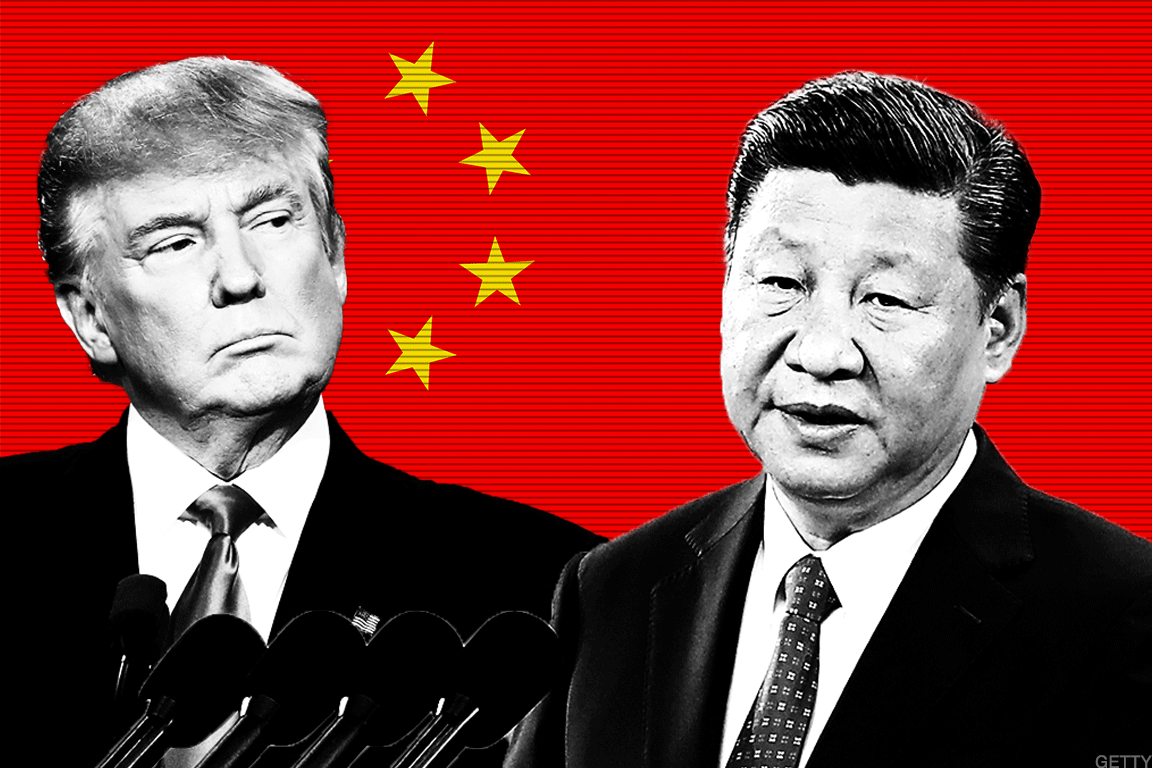
I’m betting that Trump is angling once again to use tariffs as a negotiating chip as he looks to “win” another trade war. Ultimately, a trade deal results in closer ties between the nations, not greater distance.
Trump is a dealmaker. So I expect him to dust off the “Phase 1” trade agreement he struck with China — which China has by no means fulfilled — and use trade taxes in a way to strike a deal that appeals to his voter base in farm states and Rust Belt industries. He’ll seek to engage with other Asian nations in a similar way.
And I’m not alone.
“There's been a whole lot of buzz around Trump's plans to impose a new round of tariffs on Chinese imports, but the hysteria may end up peaking some time in 2025,” Marko Papic, chief strategist at BCA Research, says. “The tariff threats are a negotiating tactic, one that President Trump will use to both strike an eventual new deal with China and to extract ancillary concessions out of Beijing.”
Of course, there’s no real winning in a trade war. Trade is a two-way exchange. Someone has to be buying, and someone has to be selling, for it to work.
And tariffs are not paid by “China” or Mexico or Canada, or Greenland for that matter. If they are U.S. tariffs, they are paid by U.S. importers, and ultimately paid by U.S. consumers. They are trade taxes.
And they are inflationary. This is another reason why Papic at BCA Research believes that Trump will not press ahead with his “promise” of, for instance, taxes of 60% on Chinese goods.
"The fact of the matter is that the American median voter does not care about globalization, trade, and tariffs anymore,” Papic continues. “All pre- and post-election polling shows that what moved voters on November 5 was inflation. As such, it is unlikely that President Trump will expand his political capital on an issue voters don’t care about — trade — while imperilling it on the issue that they do care about — inflation.”
China, and Asia in general, proved once again to be an extremely useful election tool. On the campaign trail, Trump could depict China — on the other side of the world, unfamiliar to many U.S. voters, and “inscrutable” — as a shadowy enemy that would surely fade before his shining light. It’s a very 21st century version of red-baiting, and not dissimilar to the way in which Japan was depicted in the 1980s, too.
We even hear echoes of that in the frankly crazy rantings of Lourenco Goncalves, CEO of Cleveland-Cliffs CLF, who earlier this week called Japan as a nation “evil.”
“China is bad. China is evil. China is horrible. But Japan is worse,” Brazilian-born Goncalves said. “Japan is a lot worse. Japan is evil. Japan taught China a lot of things. Japan taught China how to dump, how to have overcapacity, how to overproduce.”
Let’s not forget that Cleveland-Cliffs was the loser in the bidding war for U.S. Steel X with its low-ball US$7 billion offer in 2023. U.S. Steel would rather be bought out by Nippon Steel with its all-cash US$14.9 billion bid, blocked by President Biden but now subject to action in the courts. Now Cleveland-Cliffs is sniffing around to make another low-ball bid.
Goncalves says he has an “all-American solution to save the United States Steel Corp.,” and that buying the company is a matter of “when,” not “if.” But the Nippon Steel deal blocked by Biden could potentially be resurrected under Trump, and it’s also possible the courts will intervene in Nippon Steel’s favor.
There’s no good reason on national-security grounds to block a deal for U.S. Steel. The company is under greater threat on its own, and would have better protection under the wing of Nippon, the world’s fourth-largest producer, than struggling along holding the hand of Cleveland-Cliffs, the world No. 22.
The American steel industry is suffering in the face of cheaper Chinese steel. Nippon Steel is a white night, not some hostile foreign power. Both Nippon Steel and U.S. Steel have gone to court citing “unlawful political influence” over the review of the merger. They have also sued Cleveland-Cliffs and Goncalves for, they allege, working with the United Steelworkers labor union to illegally block the deal, and monopolize U.S. steel markets.
We’ll see if the Nippon Steel deal is dusted off now that the election is over. Trump has in the past lambasted Japan, too, for failing to buy enough U.S. goods, or pay enough to allow U.S. troops to be stationed on its soil. But ultimately those complaints were also directed at spurring a greater flow of trade between the United States and Japan.
We’ve seen China’s exports and imports shoot up in December, beating expectations by a hefty margin. Exports leapt 10.7% from a year earlier, far outstripping the 6.7% pace in November, as companies scrambled to frontload shipments into the United States in particular. Exports to the United States were particularly strong, up 15.6% for December, a 30-month high.
I doubt, though, that the worst fears for duties on Chinese goods will come to pass. Sure, there will be some higher tariffs. Trump can’t look like a total idiot by failing to deliver on that promise at all. But I’m sure they will be within reason, on a highly selective few categories of goods.
Papic at BCA Research is even calling a continuation of the strong upward move in Chinese equities that we saw last year. Mainland companies listed in Hong Kong were the hottest performers in Asia over the course of 2024, as I noted at the end of last year, which came as something of a surprise. The Hang Seng China Enterprises Index added 25.6% for full-year 2024.
It was a surprise because the index had been fading over the course of the fourth quarter. Repeated failed promises of stimulus from Beijing coupled with Trump’s election ate into those gains. But Chinese companies held on to a hefty chunk of their shock 39.3% rally between September 11 and October 7.
“Will Chinese stocks represent a buying opportunity in 2025? Yes,” Papic says. “For long-term investors who don’t care much about short-term pain, any entry point will do. For the more risk-averse and discerning investors, waiting until the outlines of a broad deal between Beijing and Washington would be more prudent.”