What to Expect From the Fed This Week — And the Dramatic Shift That May Happen
Here's what to look for at this week’s FOMC meeting, Powell's press conference, and the reasons why a major change is likely to take place.
You've reached your free article limit
You've read 0 of 1 free Pro articles.
Regarding this week’s Fed meeting, which concludes on Wednesday, there is almost no chance of a decrease in the Fed funds rate. Right now, the CME’s FedWatch Tool predicts that the chance of a rate cut on Wednesday is approximately 1%.
Investors should focus on the May 25 meeting, six weeks from now. Right now, the FedWatch tool projects an 18.2% chance of a rate cut by that date.
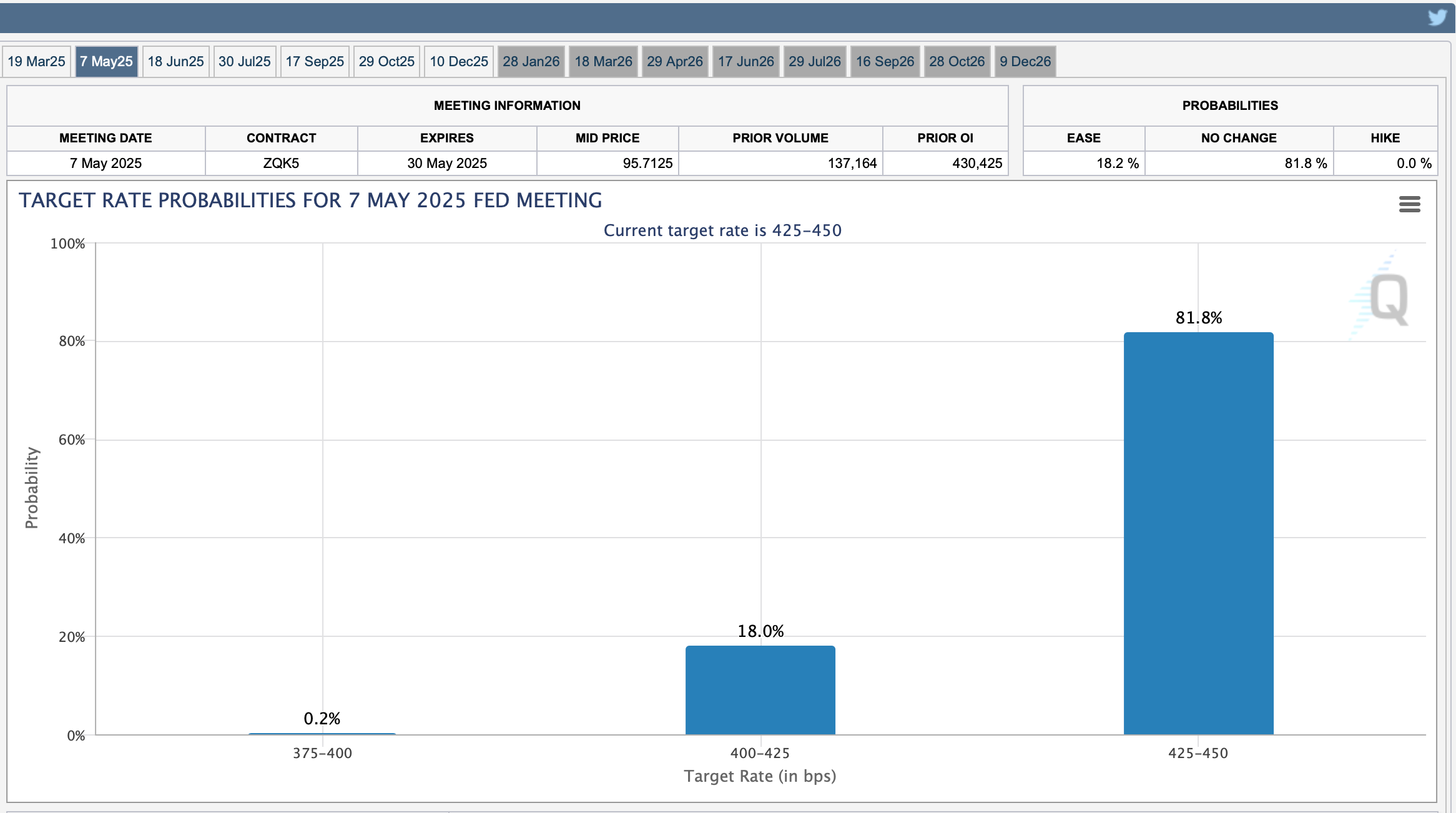
That projection could change dramatically after Wednesday’s meeting, and after Fed Chair Powell’s customary press conference on Wednesday afternoon.
When Doves Fly
Don’t be surprised if Powell and other members of the Federal Open Market Committee lean dovish after Wednesday’s meeting. I expect the odds of a May rate cut to increase, perhaps dramatically. There are two major reasons why this could happen:
- Data points indicating that the U.S. economy is in the midst of an economic slowdown are beginning to pile up.
- Consumer prices finally appear to be cooling in a meaningful way, soothing fears that rate cuts could reignite inflation.
More Red Flags Than a Nascar Race
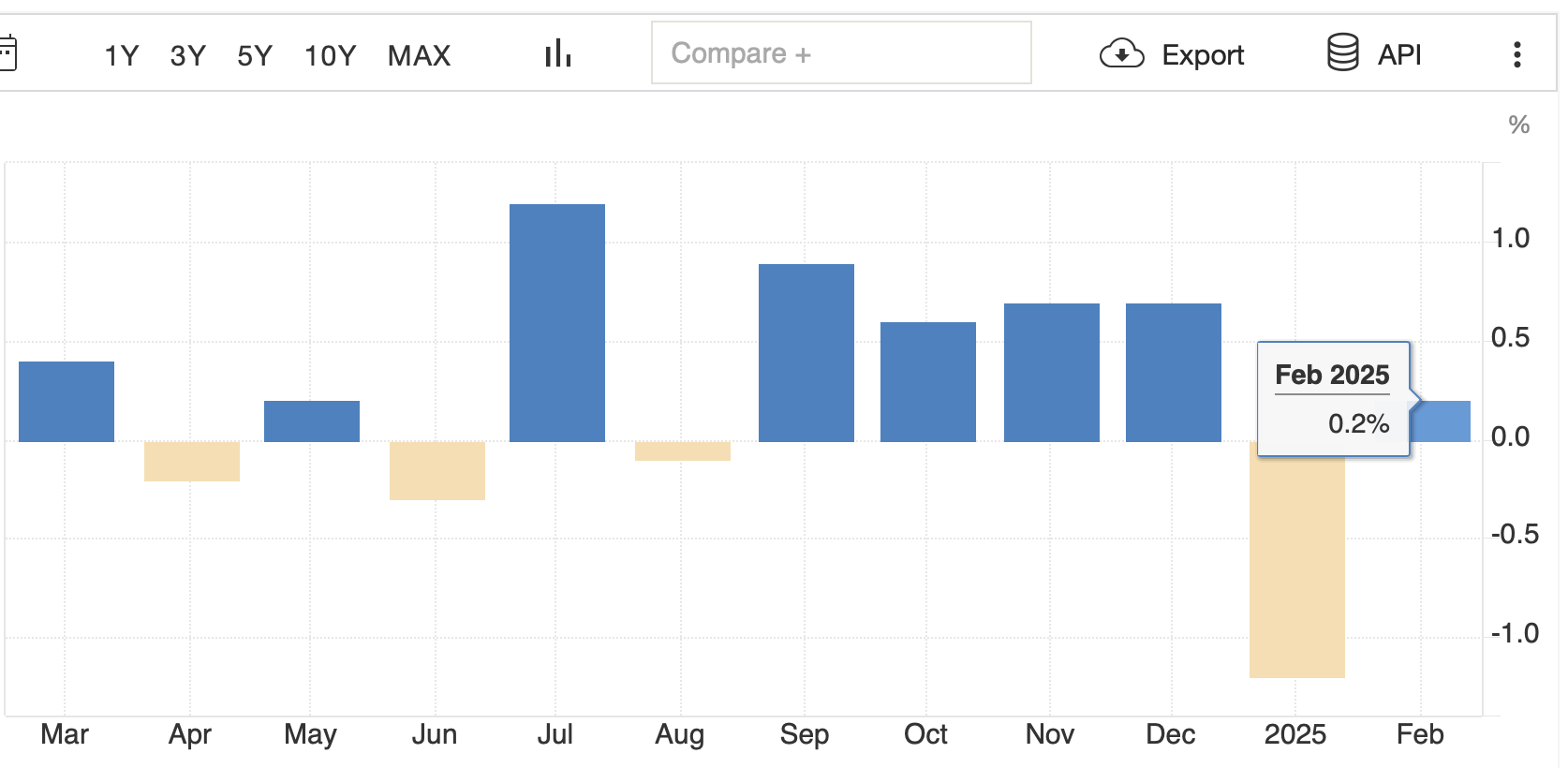
On Monday, retail sales figures for February came in well short of expectations at 0.2%. Analysts were looking for retail sales to bounce back after a decline in January.
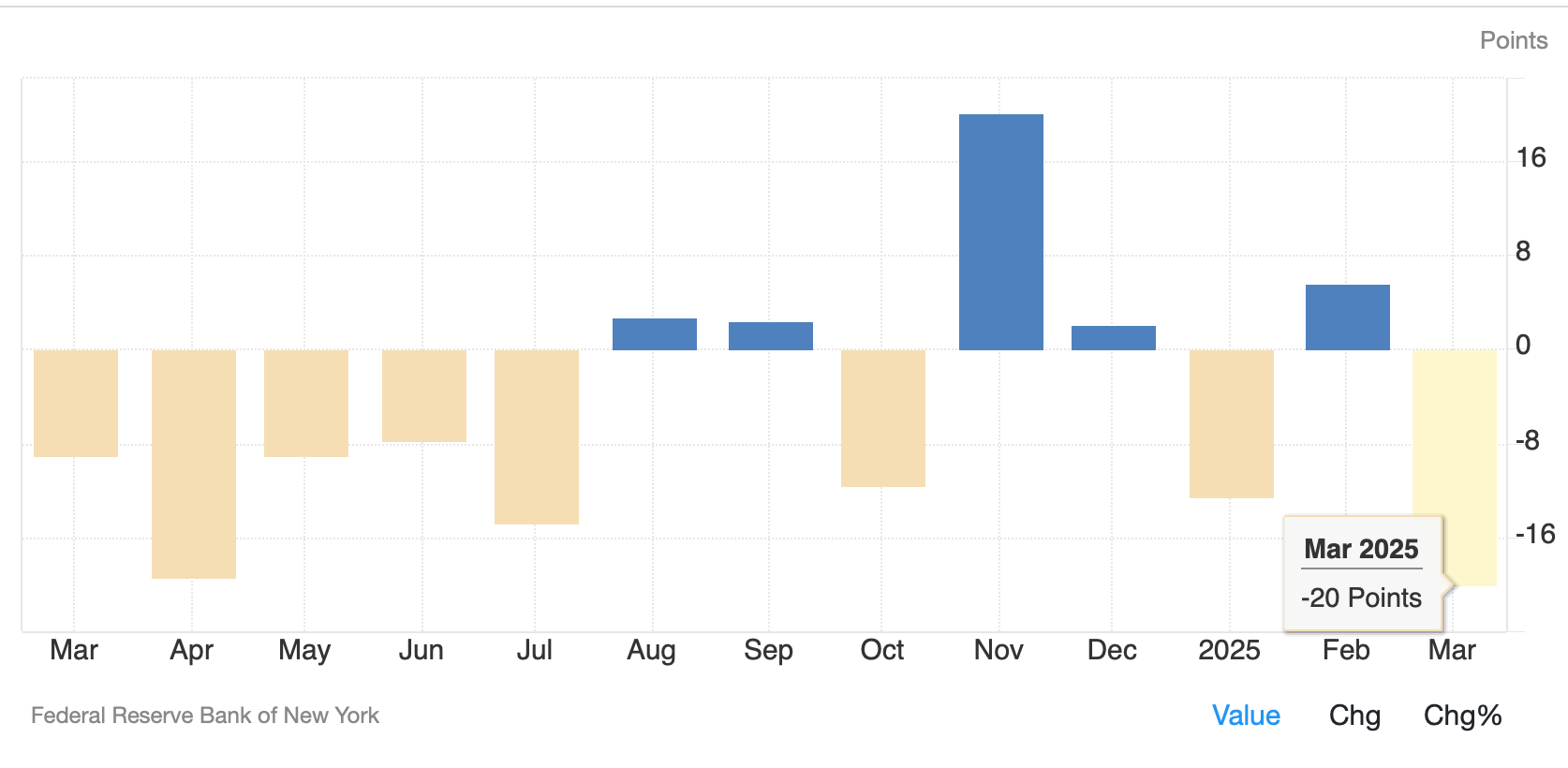
On the same day, the Empire Manufacturing Index, a survey of New York state manufacturers, gave its lowest reading in over a year. Again, this reading was well below estimates.
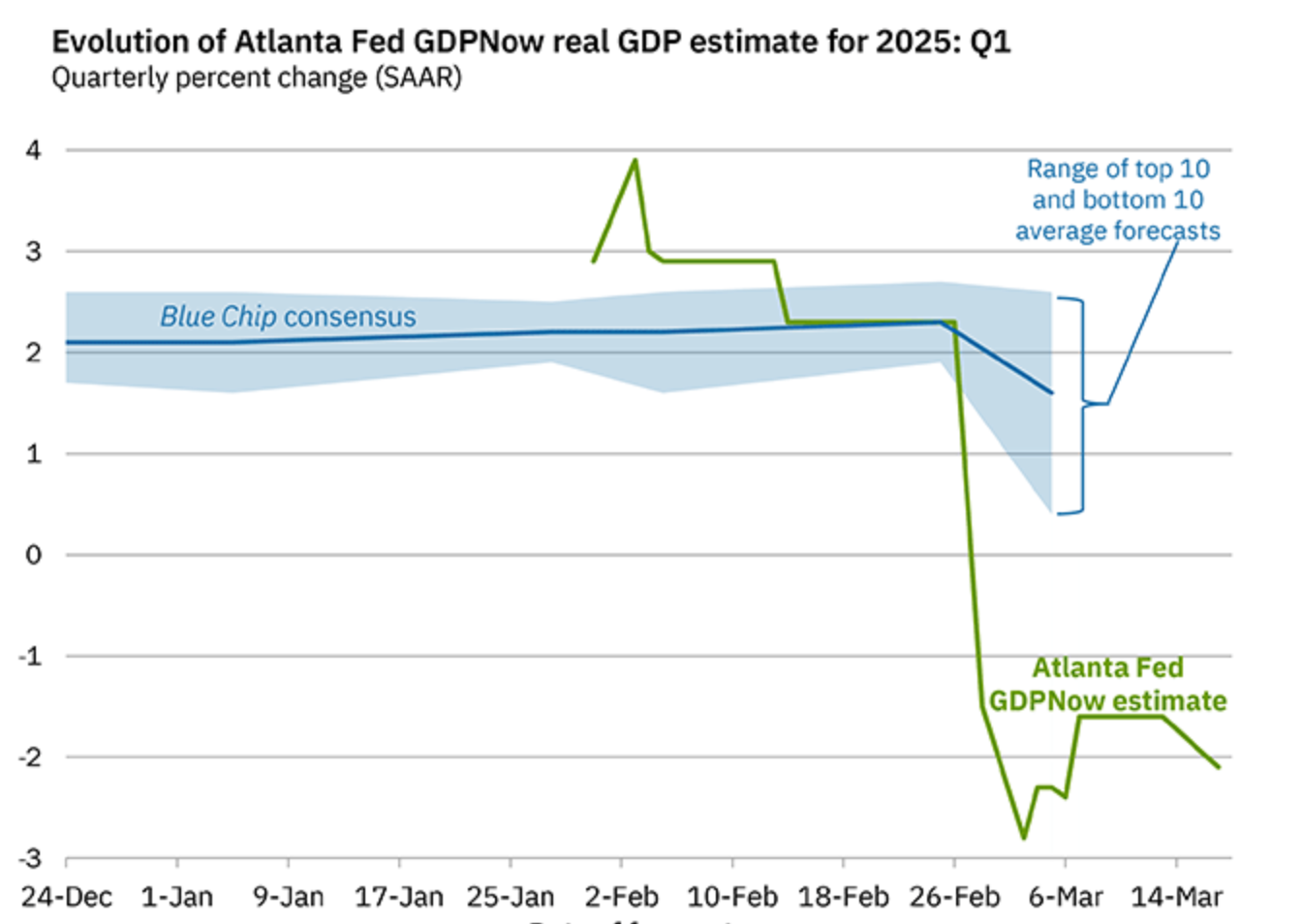
With the end of Q1 less than two weeks away, the Atlanta Fed’s GDPNow reading remains in negative territory at -2.1%. The official advance GDP release for Q1 is scheduled for April 30.
Existing home sales, which peaked in the early days of the pandemic, remain soft.
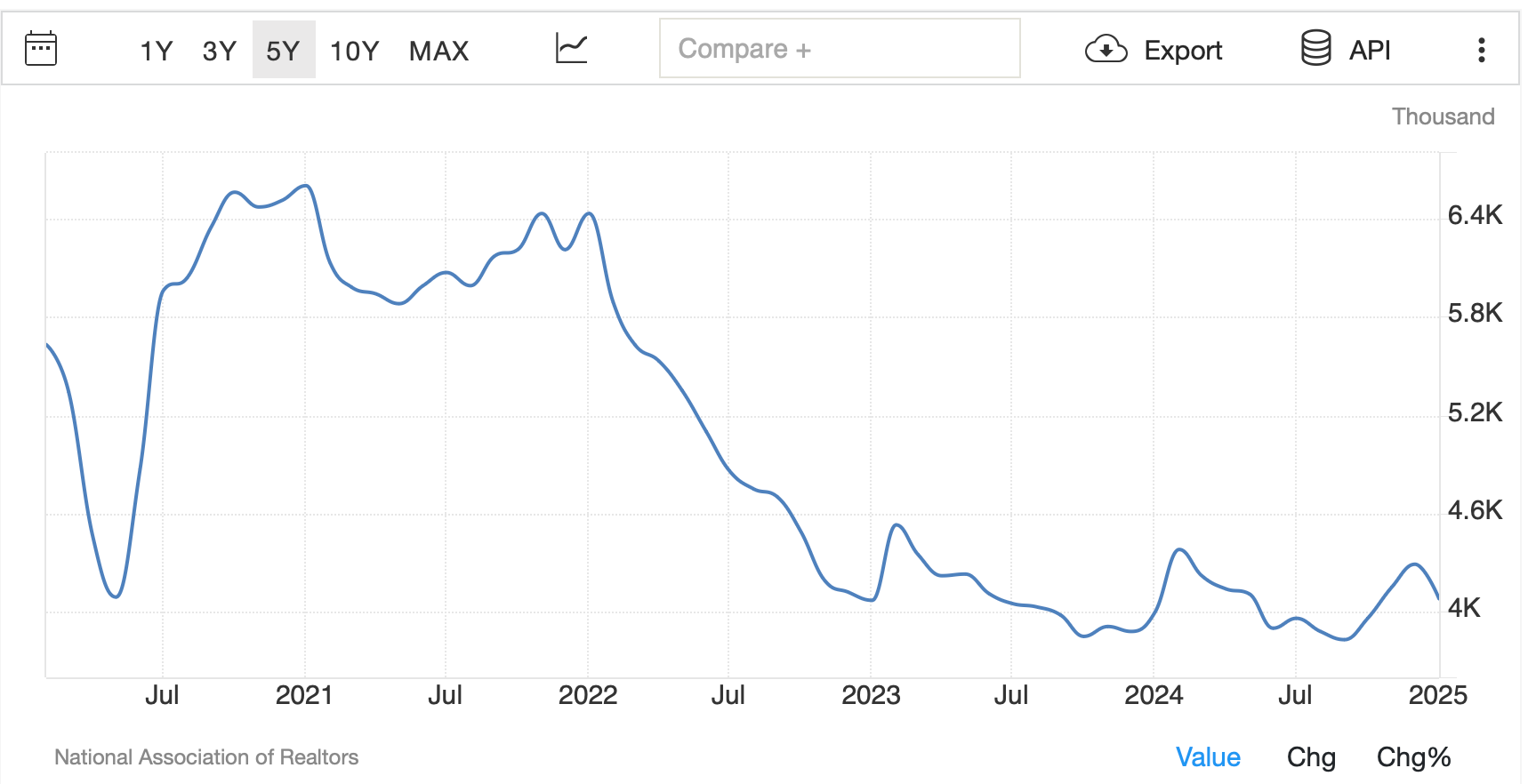
Thankfully, not every economic data point is coming in below estimates. For example, job creation has fallen off, but is still at respectable levels. But with this many red flags waving at the same time, it’s not hard to imagine interest rates falling in the near future.
Breakfast for Lunch and Dinner
Consumer prices are falling in two of the most visible places — at the gas pump and the supermarket.
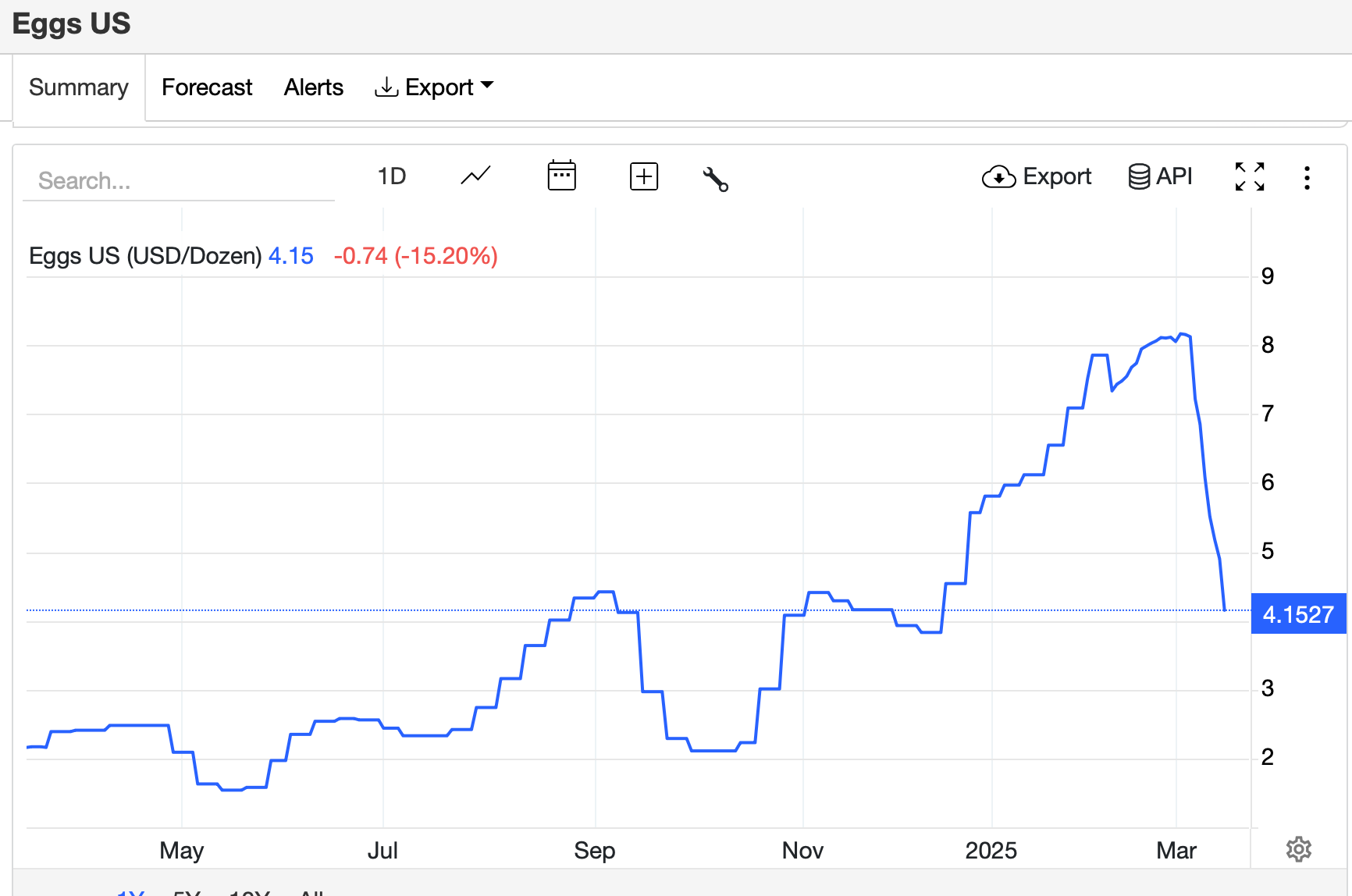
My favorite diner recently added a surcharge of $0.50 per egg on breakfast dishes. Based on the following chart, they can now dispose of that surcharge, as egg prices are in free fall.
The price of orange juice is also falling rapidly:
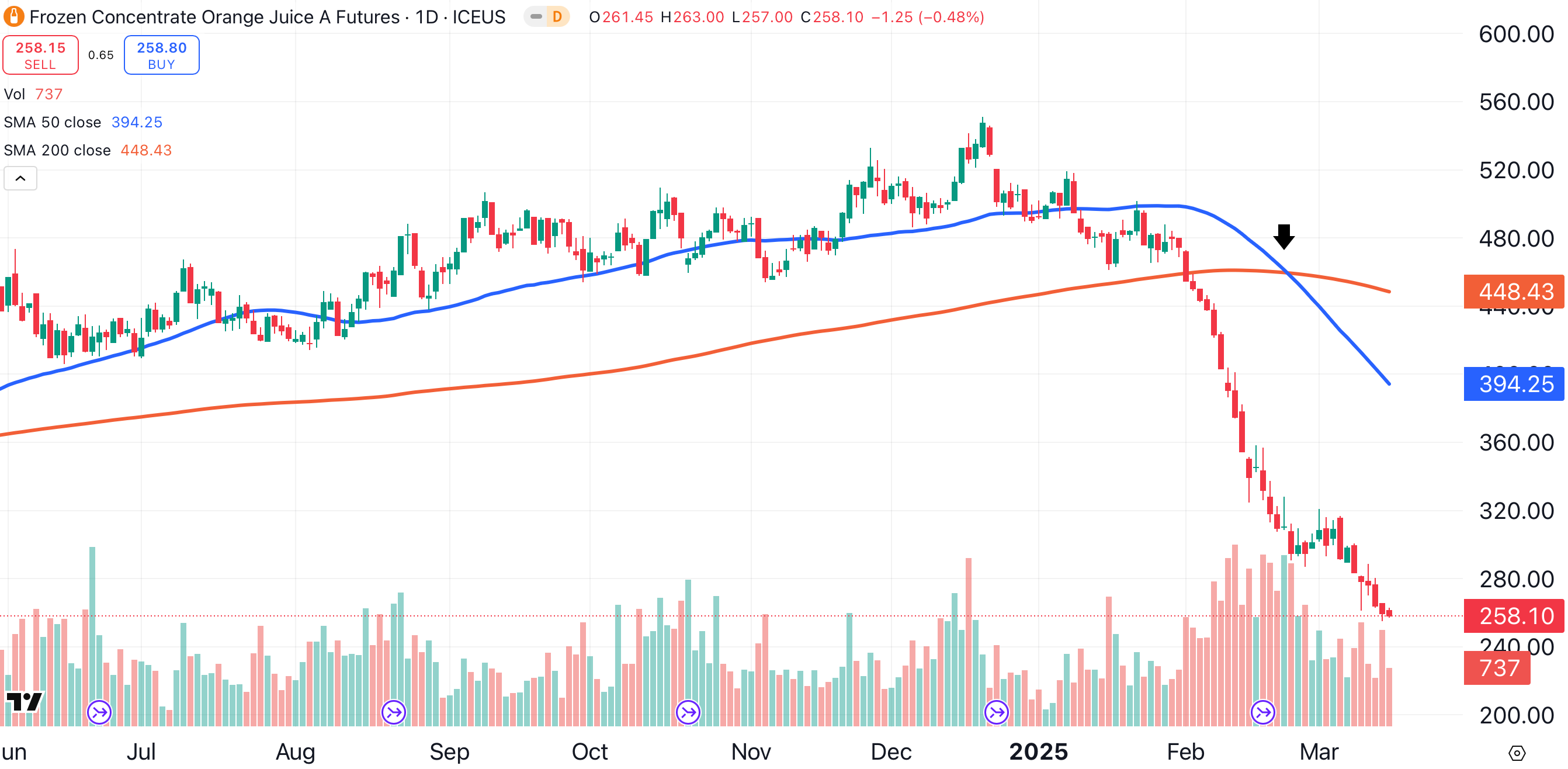
The price of orange juice has fallen by 53% over the past three months, while eggs have dropped by nearly 50% over the past two weeks. OJ has even formed a so-called death cross (arrow), as its falling 50-day moving average (blue) recently crossed below its falling 200-day moving average (red).
If this trend continues, soon we’ll be having breakfast for breakfast, lunch and dinner.
Between an economy that appears to be on increasingly shaky ground, and falling prices in the most visible of places, it’s only a matter of time until the Fed resumes its rate cut cycle — perhaps at a faster pace than previously anticipated.