Weekly Wins: When Is it Right to Sell a Winner?
Let's look at why Chris Versace sold shares in a winning position, plus a Fear & Greed Index update.
You've reached your free article limit
You've read 0 of 1 free Pro articles.
I've got two things to discuss today.
The first one is a win, though it's not from this week. And, it's one that I've also covered today in my Question of the Week column for Filthy Rich Animal, which you might have read in that newsletter or from my alert. If so, you might want to skip down.
The second one is not a win. It's a quick look at the Fear & Greed Index.
The Weekly Win
So, let's start by talking about Filthy Rich Animal and the Question of the Week.
If you're not familiar with it, Filthy Rich Animal is a weekly newsletter we started to reach newer investors. It's educational and actionable. And free. You're welcome to share it with your friends and relatives who might be interested in this kind of information. The home page is right here, and they can subscribe here.
Each week, I ask an educational investing question. This week, I ask why Chris Versace would sell some shares of a stock he likes.
Since there are investors reading this that are new to TheStreet Pro, let's start with a little background on TheStreet Pro’s Portfolio. It’s a professionally managed portfolio that usually includes around 25-30 stocks and sometimes a few ETFs. It’s a great example of a portfolio for people who like to do it themselves, rather than buy shares in an index fund.
Some subscribers might own the entire portfolio and mimic Chris’ trades. Others might pick only a few of their favorite stocks from among Chris’ list, while still others might only read the portfolio commentary for Chris’ expert opinions and analysis of the markets and the economy.
Back on May 20th, Chris wrote that he was selling shares in six different holdings.
One of those was ServiceNow NOW, which Chris rates as a 1, and means he thinks is a good stock to buy now.
ServiceNow, is one of 25 holdings in the portfolio. The company calls itself an AI platform for business transformation, and I remember using it in a prior job as part of my employee portal. Basically, it’s an AI company that helps businesses be more efficient.
Chris publishes a monthly investment thesis for each stock in the portfolio. For ServiceNow, Chris wrote of expected growth in revenues which should help the stock continue trending higher. He also appreciates the company’s AI business will keep pricing and margins strong. In other words, the company is profitable and will continue to be a leader.
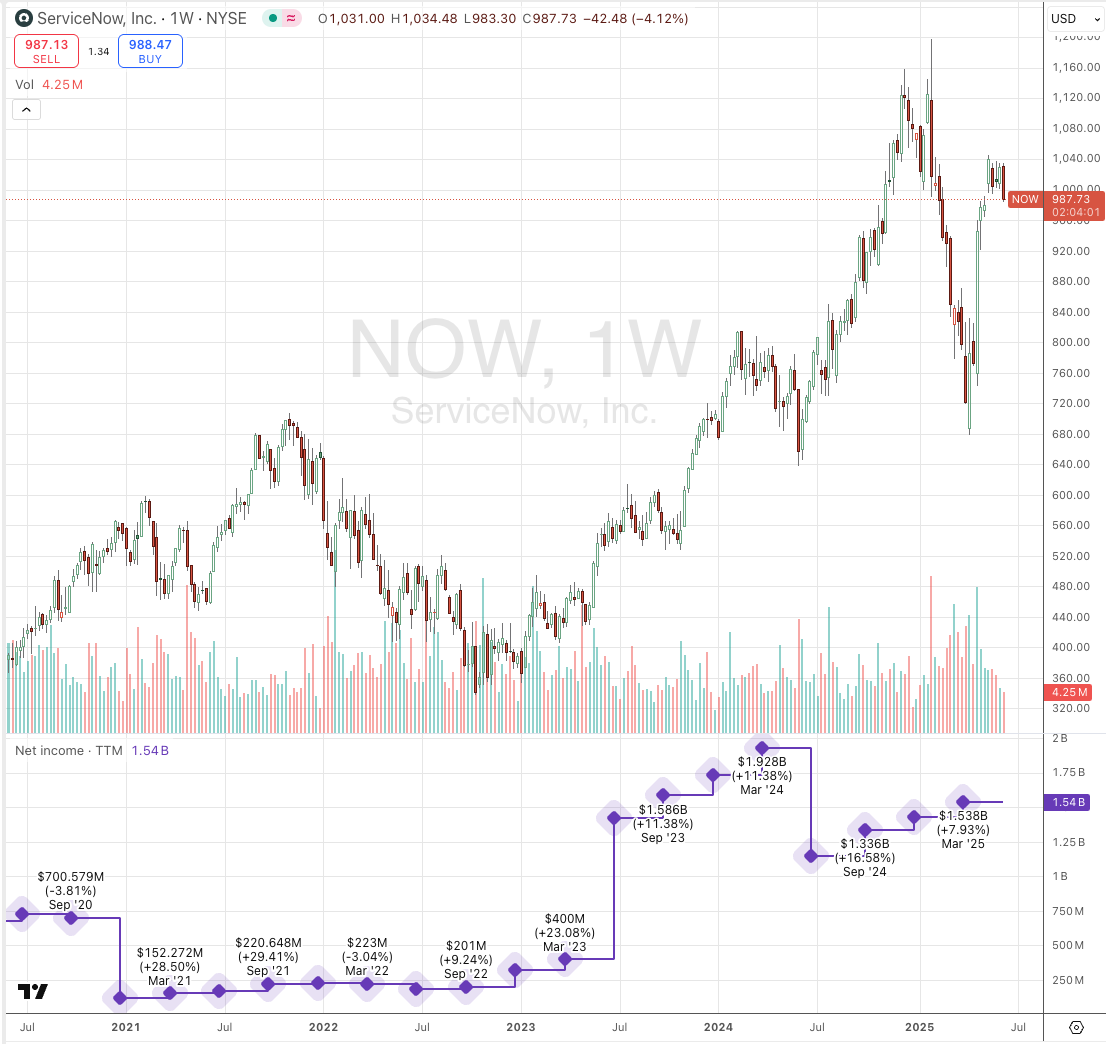
Here’s a chart. The top panel is the stock price. It’s up almost 3x since late 2022. Earnings are shown in the bottom panel and appear to be growing.
So, why did Chris sell shares?
First of all, Chris had recently purchased shares to add to an existing position as the market dropped in March on tariff concerns. Shares had fallen from $1100 to just $800 at the time. The majority of the shares that Chris sold in May were those new shares he had bought in March.
So this was just some profit taking on a really nice trade that locked in a quick 25% gain.
That's the win!
But there’s more.
Chris also wrote that he was getting nervous about the market as a whole and that it was time to raise money that could be deployed when the market presented new opportunities.
Basically, market risk was greater than the potential reward.
It’s not like Chris was selling everything; he was just lightening up in the hopes of redeploying his cash when the potential rewards were higher than the apparent risks.
Last, NOW is one of 25 holdings and Chris feels that no one single holding should be more than about 4% of the entire portfolio. At the time Chris made the sale, NOW’s weighting in the portfolio was above 4%, and the sale brought it back down to a 4% weighting.
To sum it up, Chris is an active portfolio manager and a good analyst. He’s also a good role model for all of us as we manage our financial lives!
He decided to sell shares in ServiceNow for three reasons.
- To take profits on shares he had purchased near the market low
- To have cash to spend on new favorites if the market began to decline
- To trim his holdings so that NOW shares weren’t overweighted in his portfolio
As they say, you won't go broke taking a profit.
Fear & Greed Update
It's been a while since I've given an update on the Fear & Greed Index. That's because it wasn't saying anything we didn't already know.
Lately, however, things are shifting. The Fear and Greed Index is declining.
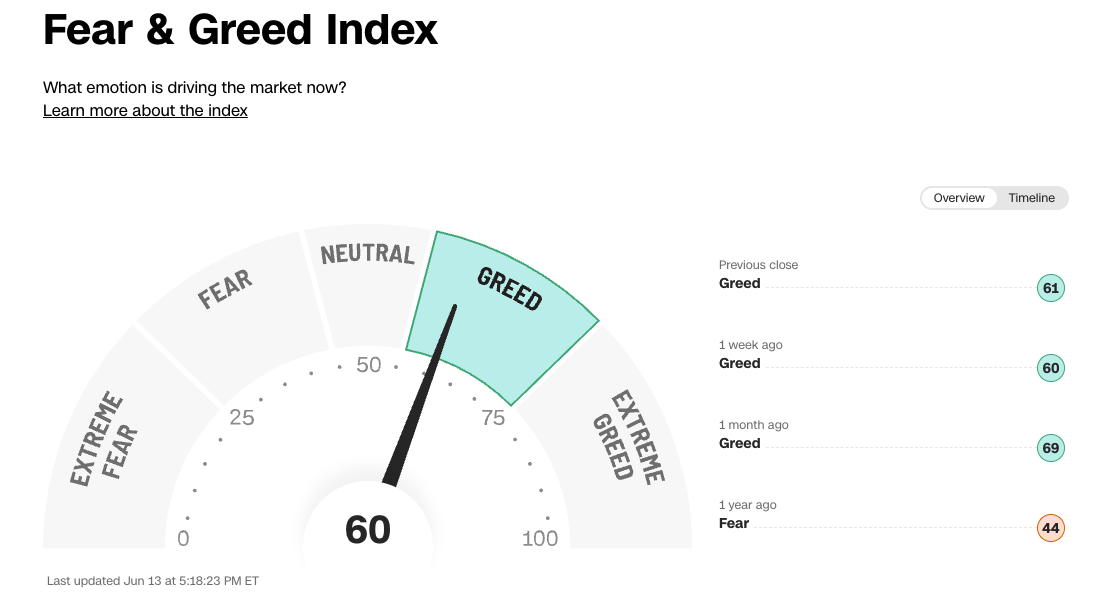
Back in early May, both the S&P 500 and Fear & Greed Index were moving upwards. Since then, while the S&P 500 has continued to rally, Fear & Greed has slipped.
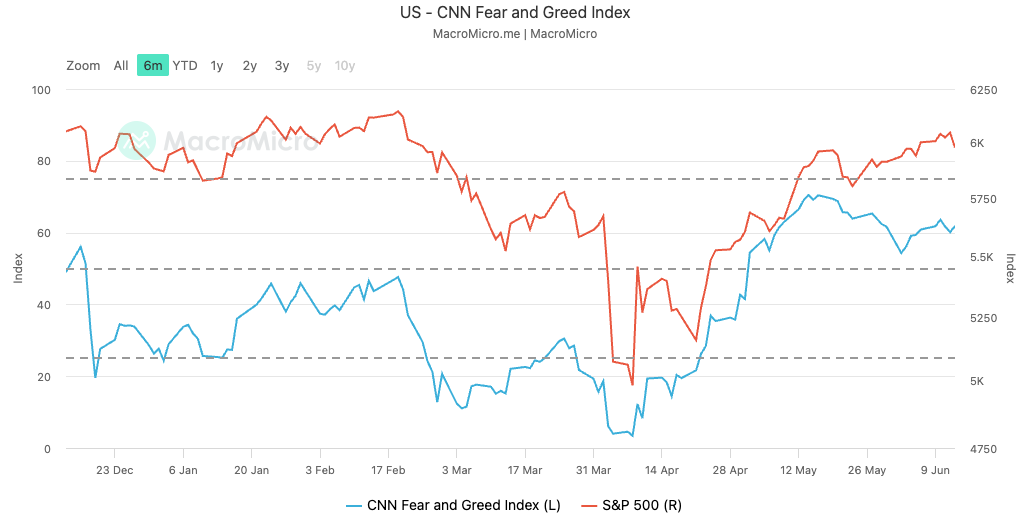
That's called a negative divergence.
Why is this happening?
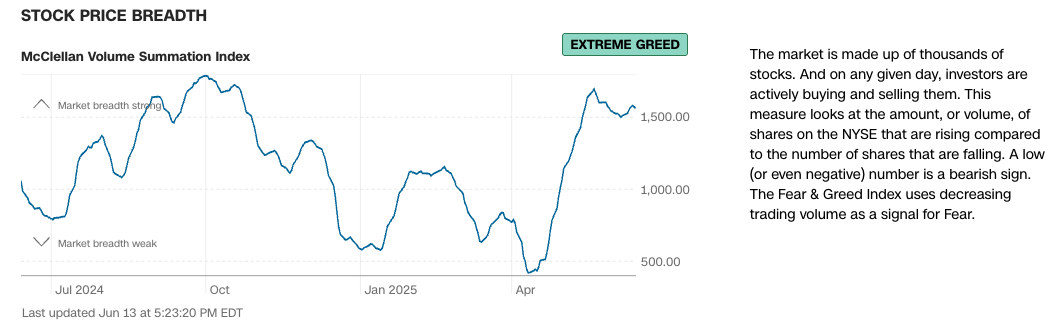
One culprit is Stock Price Breadth. The McClellan Volume Summation Index is falling, which indicates that there is more volume in stock going down than stocks going up.
But it's the bonds, too.
Safe Haven Demand shows that, this month, bonds have actually tied the performance of stocks. Investors are buying bonds again. Because they're nervous? Or just want yield? It doesn't matter, but they're buying bonds as much as they're buying stocks.
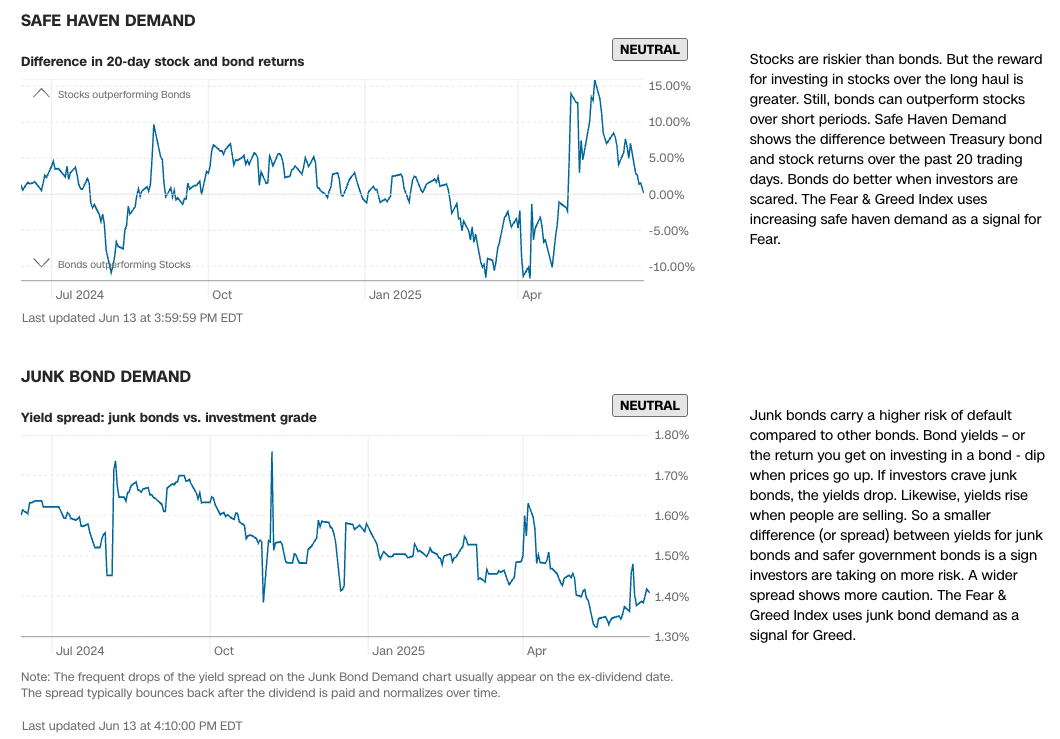
They're also showing a slight preference for safer investment grade bonds over riskier junk bonds.
I didn't include a chart of the options market, but the Put/Call ratio shows that traders are speculating again.
So, where are we? I think the Fear & Greed road map says that we're in a risky zone in the market. With geopolitical tensions flaring and things at home being no better, it's hard to argue that risk isn't on the rise.
Doug Kass agrees and you should read this article below next.