Watch Out for China's 'Seven Titans'
The 'Magnificent Seven' is seeing significant weakness, while a broad-based rally is occurring on the other side of the world, with these tech giants topping the gains.
You've reached your free article limit
You've read 0 of 1 free Pro articles.
On a mixed day of trading, most Asian markets closed narrowly in the red on Friday. But the pattern of trading in Hong Kong reminds us that the China rally goes far beyond tech stocks.
The U.S. tech selloff did infect China tech plays today. E-commerce empire JD.com JD (HK:6618) ended 5.0% in the red, with its online pharmacy and health clinic spinoff JD Health JDHIY (HK:6618) down a whopping 12.4%, leading the Hong Kong losses. Both companies just reported earnings that outdid analyst, but quite clearly not investor, expectations.
The likes of China’s leading chipmaker, SMIC (HK:0981), also ended in the red, down 3.0%. The “Microsoft of China,” Kingsoft KGFTY (HK:3888), also ended the day down 3.0%. But consider that SMIC has rocketed 88.3% higher this year, with Kingsoft up 42.2%. Its U.S.-listed subsidiary Kingsoft Cloud Holdings KC (HK:3896) has outpaced even that, up 61.1%.
It was also far from one-way trading today. The China consumer plays I highlighted in my last story generally moved higher again in Hong Kong, benefiting from the supportive pronouncements coming out of China’s annual meeting of its congress, the National People’s Congress. Last week I suggested they might.
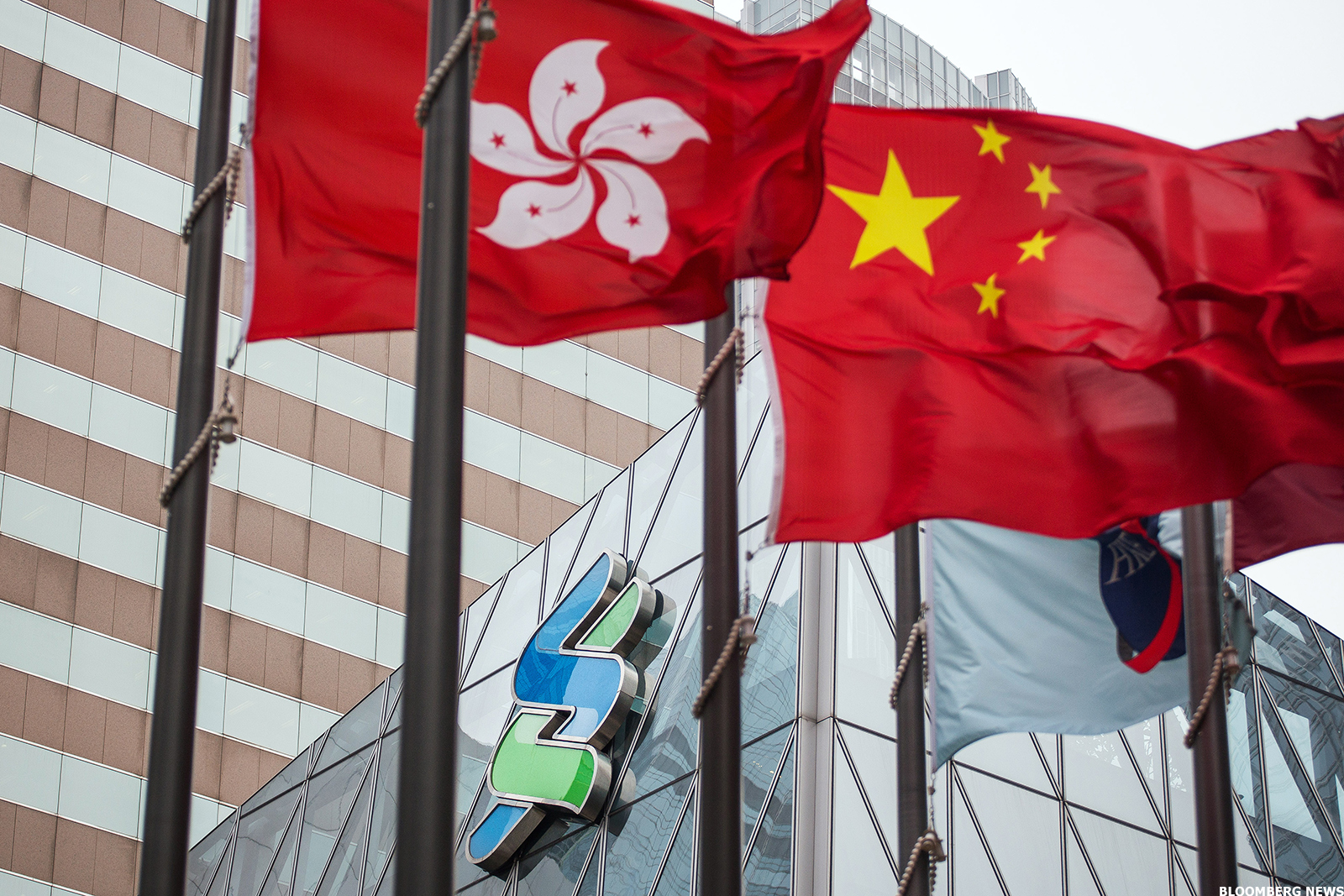
The Hang Seng gainers were led by the Chinese apparel-sourcing company Shenzhou International SHZHY (HK:2313), up 7.4%. The company is hardly a household name but it makes fabric and apparel for global brands, its long customer list led by Adidas ADDYY, Nike NKE, Puma PUMSY and the Fast Retailing FRCOY (T:9983) store chain Uniqlo.
We also saw a decent showing for sports-apparel brand Li Ning LNNGY (HK:2331), founded by the gold-medal gymnast of the same name, which ended today up 5.0%. That takes its 2025 advance to 17.5%. Shenzhou, by contrast, was one of the few Hong Kong-listed China plays that hadn’t run up – it was posting year-to-date losses until today’s advance turned things to put it 3.5% in the black for the year. By some counts, its failure to join the China stocks rally left its shares undervalued by some 48%.
Other consumer brands enjoying gains inspired by measures to stimulate consumer spending include sports-gear maker Anta Sports ANPDY (HK:2020), which is up 3.3% today and 29.0% this year; the jewelry-store empire Chow Tai Fook CJEWY (HK:1929), up 2.8% and 34.3% this year as it rebrands its wares; and the hotpot-restaurant chain Haidilao International HDALF (HK:6862), up 2.8% today and 12.5% year-to-date.
So the rally in Hong Kong H shares – Chinese companies listed in the city – goes far beyond Big Tech. It’s been a broad China rally taking the Hang Seng 23.5% higher in 2025.
Big Tech certainly leads the gains, but is more volatile. Société Générale dubbed seven Chinese companies the “Seven Titans,” a counterweight to the Magnificent Seven.
Those names by alphabetical order are: e-commerce market leader Alibaba Group Holding BABA (HK:9988); electric-vehicle maker BYD BYDDY (HK:1211); No. 2 e-commerce platform JD.com; videogame developer NetEase NTES (HK:9999); semiconductor maker SMIC (HK:0981; it's now delisted from Wall Street); app and entertainment empire Tencent Holdings TCEHY (HK:0700); and smartphone Xiaomi XIACY (HK:1810), now moving into the market for electric vehicles with a performance model.
And I’ll rank them in order of gains this year: SMIC (up 88.3%); Alibaba (up 72.2%); Xiaomi (up 59.9%); BYD (up 37.6%); Tencent (up 28.3%); after today’s correction, JD.com (up 28.4); and last but not least, NetEase, up 24.2% in 2025.
So they’re basically all up by one-quarter or more, and SocGen believes they have farther to run. It also notes that the Chinese rally has been concentrated in consumer discretionary, communications and tech, with consumer Internet at the nexus of all those overlapping elements.
Because Chinese shares corrected and rerated for the better part of three years, the Seven Titans trade at 18-times their 12-month forward earnings. That’s a discount of some 40% over the Magnificent Seven. The Mag Seven is down around 10% as a group this year, led by the 30.5% decline in Tesla TSLA. Only Facebook parent Meta Platforms META is showing a gain in 2025.
The Hang Seng Tech Index is up 35.1% in 2025. That’s accessible to U.S. investors via the KraneShares Hang Seng Tech Index ETF KTEC, where I have a small position. The ETF is matching the gain in the index, actually up 35.5% since it trades U.S. hours instead of Hong Kong.
My assessment that U.S. Pres. Donald Trump intends to use tariffs as a negotiating tool to strike a trade deal with China, which I outlined in my last column, is also the viewpoint of Jefferies global head of equity strategy Christopher Wood. He, too, notes the confusing on-again off-again nature of Trump’s trade policy. Despite all the “current noise,” Wood says in his latest Greed & Fear newsletter that his “base case” is that a deal will be made by Trump with China, potentially even including increased Chinese investment into the United States.
“If such a deal is done, it will make American fund managers much more willing to invest in Chinese equities, since it will no longer be a career risk to do so,” Wood says. China will no longer be considered “uninvestable,” he adds.
He also notes that the Hong Kong listings are outperforming mainland Chinese markets. The Hang Seng is up 23.5% this year; and the Hang Seng China Enterprises index edges that out with a 25.7% gain by focusing only on China-based Hong Kong listings. The CSI 300 index of the largest stocks in Shanghai and Shenzhen, by contrast, is hardly ahead in 2025, up only 3.2%.
Wood is adjusting his Asia ex-Japan portfolio to add one percentage point extra to each of Alibaba, BYD, Tencent, and the battery maker CATL (SZ:300750), the latter only listed in Shenzhen. That’s coming at the cost of selling out of the Indian subsidiary of Siemens NSE:SIEMENS. He added two percentage points to his China exposure for his Asia relative-return portfolio, pulling a point each from India and Korea.
It’s been a complete sea change to see Hong Kong stocks run up. Yet the Hang Seng remains well off its prior peaks in 2007, 2018 and 2021. There are very strong geopolitical winds that could blow the rally off course, but for now the policy conditions look very positive, suggesting tech, consumer and telecom plays in China will continue to run.
At the time of publication, Frew McMillan was long KraneShares Hang Seng Tech Index.