Want to Thrive Amid the Market Misery? Learn to Love It
We're often taught up is good and down is bad. But sharp traders know that even the worst times bring opportunities.
You've reached your free article limit
You've read 0 of 1 free Pro articles.
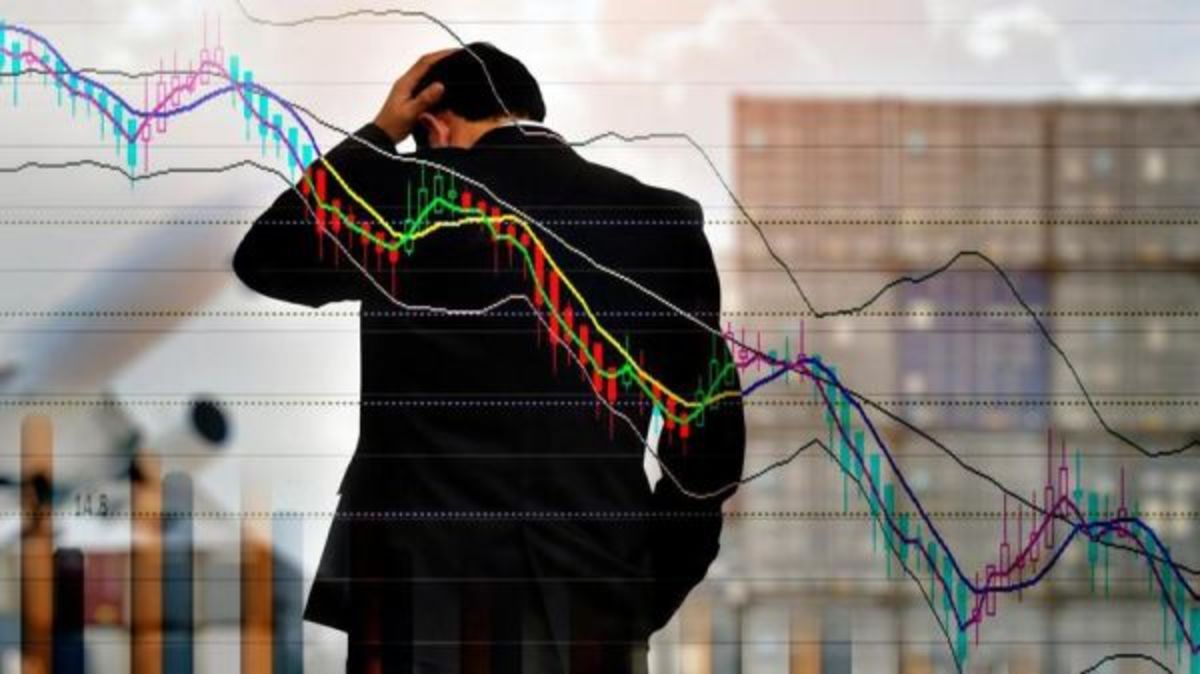
The market has been ugly. That shouldn't be a huge surprise. The one great certainty of all markets is cycles of ups and downs. That will never change. Another thing that will never change is that very few folks will be fully prepared for those periods, and no one will time them with any great degree of precision.
The trigger for the current down cycle is a war with Iran, stagflation fears, tariff uncertainties, doubts about AI valuation, and indexes that hide massive weakness. These inevitable cycles are what separate good traders with the right mindset from those who trade randomly and rely primarily on luck. As Warren Buffett put it, "you only find out who is swimming naked when the tide goes out."
There is a phrase that Navy SEAL instructors use when trainees are deep in the misery of training. They not-so-gently remind them to "Embrace the suck!"
The idea is not complicated, and the logic is compelling. Pain and adversity are going to come regardless of what we do. The only choice we have is how we respond to it. We can fight it. The reflexive move for most people is to run from discomfort, to wait it out, or to pretend it isn't happening. That approach may provide some immediate relief but it usually will make things worse in the long run.
In Stoic philosophy, there is an often-cited idea that the obstacle is the way. The path we need to take is directly into the heart of the problem. Adverse conditions will test us but they create openings that didn't exist when things are easy. We need ugly markets in order to find exceptional opportunities.
Ugly Markets Are Not the Enemy
One of the most common and persistent inclinations among investors is the perma-bull mentality. There is a naïve belief and hope that a rising market is the natural state of things and that any meaningful pullback is some kind of malfunction. Markets are supposed to go straight up forever.
For pure buy-and-hold investors, that conviction is mostly harmless. They tune out the drama, ignore the stock market, and stay the course. But for more active investors, it is dangerous and painful. When up is always right and down is always wrong, we spend a tremendous amount of time fighting the tape instead of respecting it, and that costs both financially and emotionally.
What the perma-bulls miss is that downside action is precisely where the best future opportunities are manufactured. When the market runs straight up for months on end, good setups become scarce. There is too much competition, too many players chasing the same names, and the risk/reward on most entries starts to compress. Bear markets and sharp corrections change that equation. The conditions that feel worst right now are the same conditions that tend to produce the most compelling entry points down the road.
That doesn't make the losses feel any better in the moment. But it does change your attitude when you love the suck and understand that it will reward you if you fully embrace it.
The Price Action Doesn't Lie
The traders who struggle most in markets like this one are those who fall in love with a thesis. They know why a company should be higher. They have done the research and studied the charts. So when the stock breaks support and keeps going, they dig in. They average down. They tell themselves the market is wrong and they are right. They fight The Market Beast.
The price action is what matters. We mark to market and come up with a new plan for dealing with the reality in front of us. Price action tells us something we need to hear whether we want to or not.
Those who defer to the tape, who treat a breach of key support as information rather than an insult by a herd of stupid traders or evil manipulators, have a fundamentally different experience of a bear market. Protecting capital when the action deteriorates isn't admission of being wrong. It is strategy and tactics that keeps us in a position to act when conditions improve. And conditions always improve.
What We Do With the Time
We don't know how long the current market mess will last. Nobody does. Trying to nail the exact bottom is a fool's errand, and spending our energy on that exercise is energy not spent on the things that actually matter: doing the research, building the watchlists, identifying the names that have held up best under pressure, and getting mentally prepared to move when the price action starts to cooperate again.
The increased volatility that comes with environments like this one is not just a problem to be managed. For traders willing to tighten their timeframes and stay disciplined with position sizing, it creates opportunities that a slow, grinding bull market simply doesn't offer. The setups that emerge from the rubble of a hard correction are often the best trades of any given year.
That requires us to be present and engaged rather than cowering in the corner and ignoring reality. It requires us to stop mourning what the market was two months ago and start preparing for what it is going to be.
Learn to Love the Misery
If the market were easy, it wouldn't reward us so well. The difficulty is not incidental to the opportunity. It is the source of it. Every participant who panics, abandons a sound process, or simply gets worn down and walks away is leaving something on the table for those of us who are still here doing the work.
So embrace the suck. Not because it is fun, but because that is what the job requires. The traders who will emerge from this environment in the best shape will be the ones who used the pain to sharpen their process, tighten their discipline, and stay ready. The market will eventually give us something to work with. Embrace the suck and you will be ready for it.
Related: When Markets Go ‘Below Deck’: The Portfolio Strategy Built for Stormy Conditions
At the time of publication, DePorre had no position in any security mentioned.