Walmart in Hot Water Over China Tariffs
Beijing’s Ministry of Commerce has summoned executives from the world’s largest retailer as it attempts to pass through higher tariffs to suppliers.
You've reached your free article limit
You've read 0 of 1 free Pro articles.
Walmart WMT has found itself caught in the crosshairs of the trade war, as it attempts to pass through the cost of higher trade tariffs to its suppliers.
China’s Ministry of Commerce has held talks with Walmart, according to Chinese state media, after the largest retailer globally asked suppliers in China to cut prices as much as 10% to compensate for additional U.S. tariffs on Chinese goods.
Walmart last week reportedly asked suppliers in fields such as apparel and kitchenware to lower their prices by up to 10%, in the company’s bid to push the higher trade duties onto its trade partners.
Suppliers have generally indicated they are unwilling to do so, since their margins are already thin. They argue that even a 2% reduction in prices could see them take a loss on goods.
Now, the Chinese authorities have summoned Walmart to discuss the company’s request, according to both the China Daily newspaper and an outlet affiliated with the CCTV station. The commerce department and other officials called the Walmart executives in on Tuesday, expressing a concern that such requests could disrupt supply chains, harm both Chinese and U.S. businesses, and impact U.S. consumers.
Walmart gets some 60% of its imported goods from China. It has been expanding its supplier base in India in a bid to diversify, which has seen India rise from a 2% share to around 25% of the company’s imports. China’s share of its shipments has fallen from around 80%, but China remains the retailer’s largest source of imports.
Walmart is also generating its strongest sales growth to customers in China. It said in reporting earnings last month that net sales in China rose 27.7% to $5.1 billion, an accelerating pace of growth that’s far faster than its overall 5% growth in revenues.
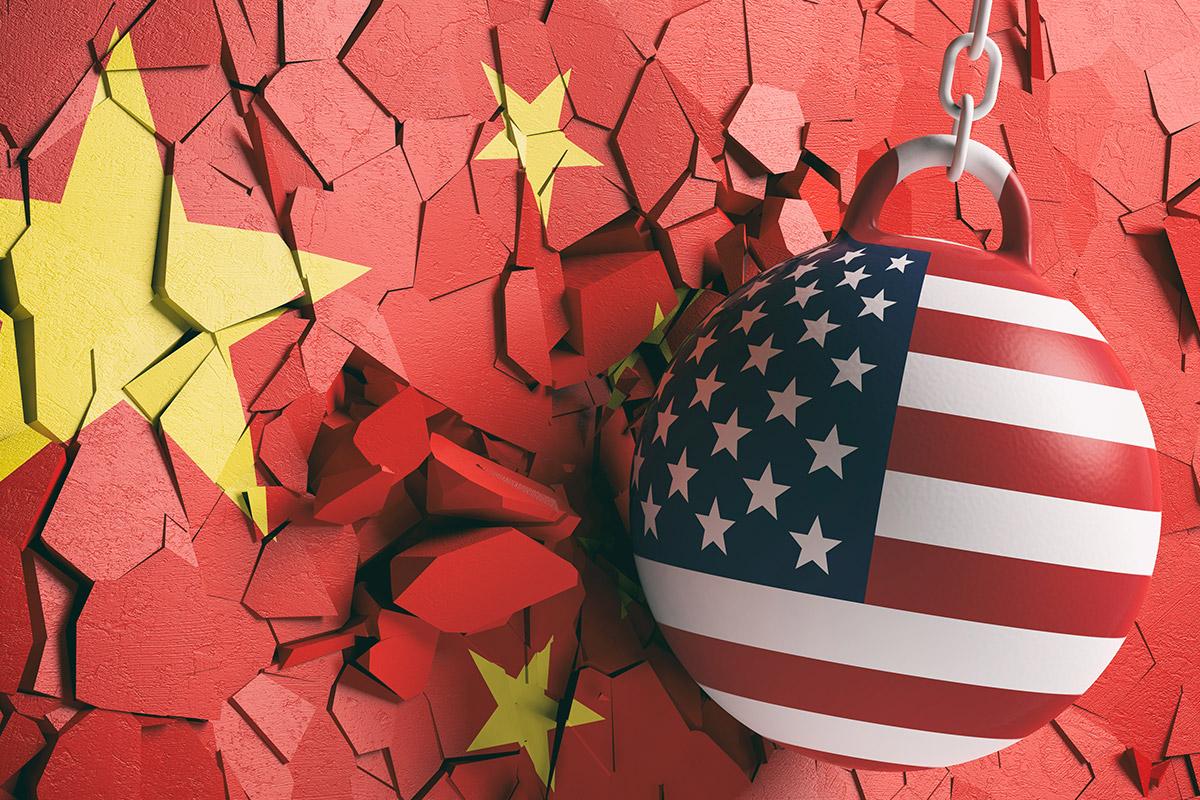
What happens to Walmart’s China operations may become a test case for the kinds of geopolitical tensions spurred by U.S. Pres. Donald Trump’s attempts to reshape world trade via tariffs. Beijing is seeking targeted ways to respond.
China has just wrapped up its annual meeting of its legislature, the National People’s Congress. A separate meeting that’s more of a talking shop, the Chinese People’s Political Consultative Conference, was occurring at the same time, so collectively they’re called the “Two Sessions,” setting China’s economic and policy direction for the year ahead.
As I indicated it likely would, the world’s second-largest economy did set a growth target of “around 5%” for this year, same as last year. But it only cleared that low bar – the lowest non-pandemic year since 1990 – thanks to stimulus and a jump in exports at the end of the year.
Some of that was frontloading of shipments into the United States from China. So we can expect a slight dip for the first quarter, although only 14% of China’s exports head to the United States. Still, we may see China off to a sluggish start to the year. The Lunar New year was at the end of January and caused a countrywide shutdown for 10 days.
China will concentrate on “vigorously boosting consumption,” which Premier Li Qiang, in delivering the agenda-setting work report, says is the country’s top priority in 2025. Li urged officials and delegates to “make domestic demand the main engine and anchor of economic growth.” President Xi Jinping, in newly released comments, added to that chorus, calling the shift toward consumption a “strategic move,” rather than an “expedient measure,” and necessary for “both economic stability and economic security.”
At the NPC, China announced it would double the subsidies for a consumer trade-in program, saying it will issue the equivalent of $41 billion in ultra-long-term special bonds. That will back a scheme that it already expanded heading into this year to provide what equals out to $2,760 for the purchase of an electric vehicle, and to include some smartphones as well as an expanded roster of home appliances: fridges, washing machines and stoves, as well as TVs, computers and the like.
So we continue to see consumer stocks move higher, alongside the kind of Big Tech names that typically lead a China rally. I keep looking for a big downward turn in Asian equities as a result of the turmoil over tariffs. And any noticeable decline fails to come.
Given the headwinds now facing U.S. stocks, where investors appear to be prepping for a “Trumpcession,” Asian equities are experiencing clear sailing. In fact, they offer an easy way to diversify if your portfolio has become overly concentrated in U.S. markets, particularly big tech.
Back in mid-January, when China confirmed that it hit the 5.0% target for full-year growth for 2024, we were still bracing for across-the-board tariffs of 60% on all Chinese imports. So the confused current reality, where U.S. allies and neighbors Canada and Mexico face the heaviest early burden, has been a welcome relief.
China has been measured in its response, leveling additional import duties of 10%-15% mainly on U.S. farm goods, effective as of Monday. It has also – entirely coincidentally, of course – launched an antitrust investigation into Google, without mentioning what operations of Google and parent Alphabet GOOGL it is scrutinizing. Since Google’s browser doesn’t operate in China, the State Administration for Market Regulation is likely to be looking at app store sales and the Android smartphone operating system. The investigation is widely viewed as an early warning shot that China will retaliate, in a targeted way, to increased pressure from U.S. authorities.
The U.S.-Sino relationship is difficult at the best of times, and all the more volatile at the moment, as the picture on trade and investment gets shaken up. I expect Xi and Trump to meet on trade and ink another deal. Meantime, whether Walmart and Google feel any lasting damage remains to be seen. But it’s noteworthy that these flagship U.S. companies are on the frontlines of any intensification of a trade war, one that economists say will produce no winners.
At the time of publication, Frew McMillan had no position in any security mentioned.