U.S. and Japan Laud 'New Golden Age' But $550 Billion Question Looms
Japan’s new leader and President Trump can claim “wins” but tougher diplomatic tests remain ahead.
You've reached your free article limit
You've read 0 of 1 free Pro articles.
Newly installed Japanese Prime Minister Sanae Takaichi has forged a quick bond with U.S. President Donald Trump, pledging a “new golden age of the Japan-U.S. alliance,” as Trump visits Asia for the first time in his second term.
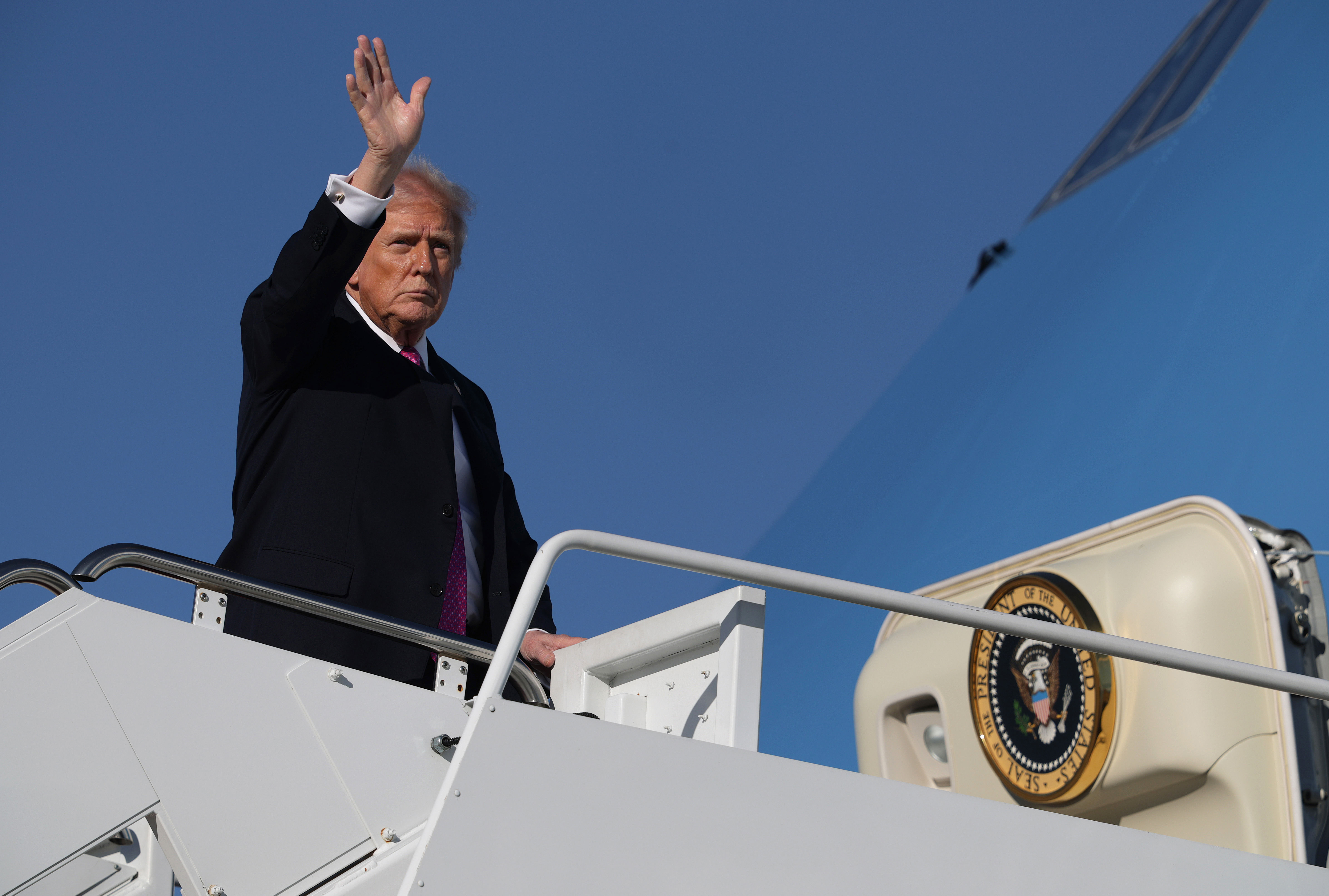
It is an early test of Takaichi’s leadership skills, as well as both an opportunity and challenge for Trump, who has in his trade negotiations treated Japan as a rival rather than an ally.
The White House has responded in kind, stating that the two nations are ushering in “a NEW GOLDEN AGE for the U.S.-Japan Alliance,” adding detail to the earlier trade deal between the two nations agreed in July.
One of the key issues of that pact, which Takaichi indicated on the campaign trail may need to be renegotiated, is the $550 billion in investment that Japan has pledged for U.S. deals, equivalent to more than 10% of Japan’s estimated $4.3 trillion economy in 2025.
Itemized Deal List
Japan’s ministry of finance has now released a list of the deals that Japan has agreed to back. Trump must sign off on them, with the White House indicating the “dealmaker in chief” has done so, securing “billions in investment from Japan.”
The deals itemized by Japan represent $393.5 billion in investment. But it is still not clear how the Japanese government, which previously indicated much of the money would be loan guarantees, will participate. They include backing the development of Westinghouse nuclear reactors that have Japanese suppliers such as Mitsubishi Heavy Industries (MHVIY) (T:7011) and Toshiba Group.
The White House has come up with bigger overall numbers nearing $450 billion, with Japan also committing to accelerate military spending and cooperate on issues such as rare earths and artificial intelligence. Still, Trump’s warm reception and the early indications that Takaichi and the U.S. president can work together give both leaders the kind of “wins” they need.
Putter With Particular Resonance
Takaichi, a protégé of Japan’s longest-serving prime minister, Shinzo Abe, is explicitly harking back to Trump’s close bond with her late mentor. She gave Trump a putter used by Abe, who was assassinated at a campaign rally in 2022, as well as a golfing bag signed by Japanese golfer Hideki Matsuyama.
Takaichi, whose election as prime minister a week ago sent Japanese stocks to new highs, greeted Trump with an honor guard as part of a full state visit. Trump spent Monday meeting Japanese Emperor Naruhito and taking a helicopter tour of Tokyo. On Tuesday, he also addressed U.S. troops aboard the U.S.S. George Washington aircraft carrier, at a naval base near Tokyo.
Takaichi continued her charm offensive by stating that she would nominate Trump for the Nobel Peace Prize that he so desperately would like to win. She thanked him for his “unwavering commitment to world peace and stability,” and stated that Japan is ready “for the greatest alliance in the world.”
Southeast Asian Pacts
Trump is fresh off a quick visit to the ASEAN Summit of Southeast Asian nations in Malaysia, where he cemented trade deals already agreed on with Malaysia, Cambodia, Thailand and Vietnam. He also observed as Thailand and Cambodia signed a peace agreement to suspend their recent deadly border clashes.
The U.S. leader will face a tougher test as he now heads to South Korea, for the APEC Summit on Korea’s southeastern coast. We can expect more “framework” deals as U.S. negotiators flesh out their negotiations with China. Trump is also due to meet Chinese President Xi Jinping on the sidelines of the summit.
While agreements on rare earths, the sale of TikTok and Chinese purchases of U.S. soybeans have all been floated, the negotiations with China are difficult and protracted. Any deals secured will basically be walking back trade emergencies created since Trump in April began imposing “reciprocal” heavy tariffs on the rest of the world.
So the opportunity to restore diplomatic ties with Japan, arguably the most important U.S. ally in Asia, as well as with South Korea are very welcome indeed. Takaichi can also claim early success in forging a working relationship with Trump.
Takaichi’s Party Under Scrutiny
Coincidentally, the trial of the man accused of assassinating Abe is currently taking place. Tetsuya Yamagami on Tuesday pleaded guilty to the crime, in his first court appearance.
“It is all true,” he said in a quiet, raspy voice, according to The Japan Times. “There is no doubt that I have done all this.”
The moment was captured on video, with Yamagami firing two shots from a homemade gun constructed from metal pipes.
His trial was delayed during a long psychiatric evaluation to establish whether Yamagami is fit to stand trial. He told investigators that he targeted Abe because of his ties to the Unification Church, the South Korean ministry whose members are sometimes called “Moonies,” in reference to church founder Sun Myung Moon.
Yamagami reportedly blames the church for preying on his mother, and claims her excessive donations left his family in poverty. However shocking the crime he now admits to, his claims have led to greater scrutiny of links between the church and conservative lawmakers in the ruling party.
Four ministers have resigned, with Takaichi’s Liberal Democratic Party finding that 179 out of its 379 lawmakers have some form of ties to the church, and a court has ordered the disbandment of the church in Japan. The church is appealing the decision — with proceedings on that case also taking place this week.
There are some 17 hearings due before the end of the year, with witnesses including Yamagami and his mother, who according to an interview with TBS News remains loyal to the church, scheduled to testify. A verdict is scheduled for January 21, 2026.
The Bank of Japan (BOJ) will meet on interest rates later this week. It is likely to make no change, with BOJ Governor Kazuo Ueda stressing the need to assess the impact of U.S. tariffs on earnings, wages and prices. There’s also the uncertainty surrounding the newly installed Takaichi administration, with the new leader preferring to keep borrowing costs low.
But it is a tricky balancing act. Japan, faced with devastating deflation for the better part of three decades, is now contending with a very different problem. It has seen inflation rise above the BOJ’s 2.0% target rate, and stay high since April 2022. Coupled with the very weak Japanese currency, inflation puts pressure on consumer goods, raw materials and imports in a country that sources all its oil overseas.
At the time of publication, McMillan had no positions in any securities mentioned.