Trump-Xi Drama Has China Stocks on Pins and Needles
Chinese listings in Hong Kong just nudged into bull-market territory, but as trade negotiations for now prove all talk and no action, their future is in limbo.
You've reached your free article limit
You've read 0 of 1 free Pro articles.
Investors in Asia are jittery about the prospects for peace in the trade war. We can read as much from today’s market moves, which saw Chinese stocks suddenly slip in Hong Kong trade today, ahead of a second day of tariff talks between U.S. and Chinese negotiators in London.
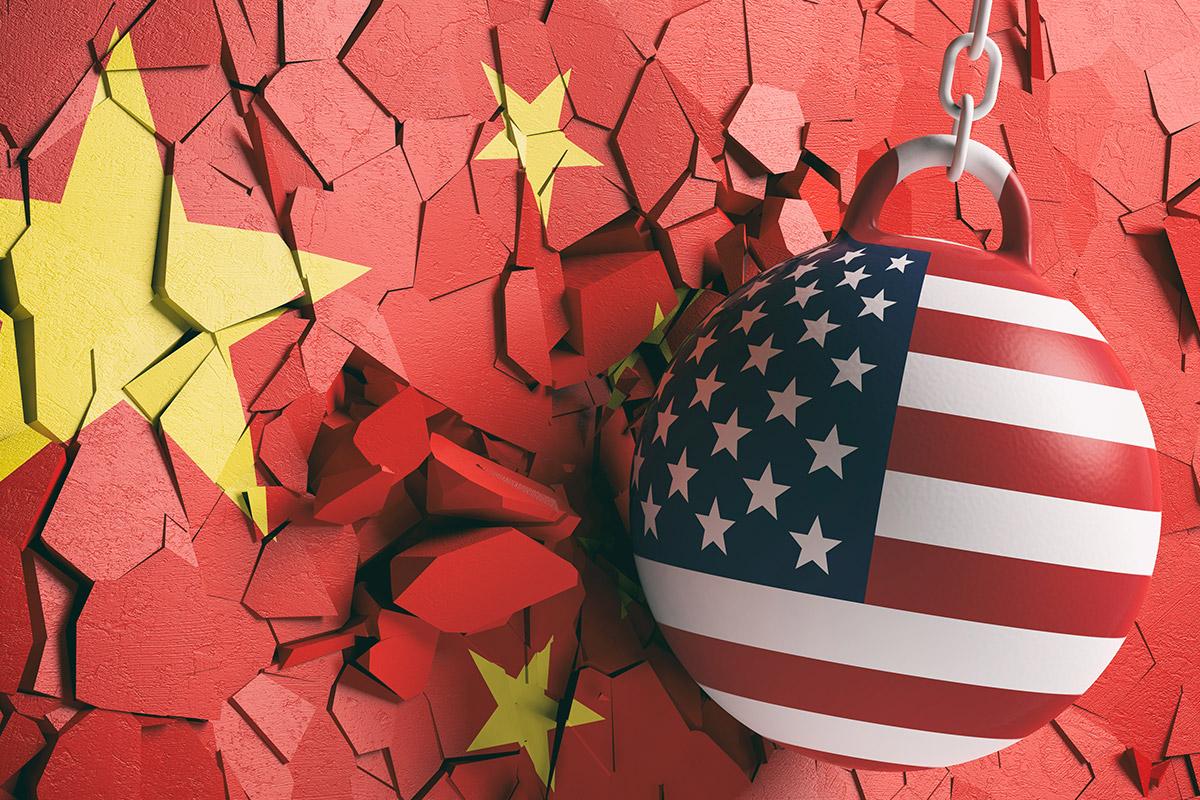
Investors bid up China plays on the Hong Kong market on Monday, but clearly aren’t confident that the têtes-à-têtes will yield concrete results. Then again, any progress on trade between the world’s largest economies would be good.
The Hang Seng China Enterprises Index moved slightly higher in Tuesday morning trade in Hong Kong, to take its gains since Friday’s close to 176 points, or 2.0%. But it then suddenly shed 107 points or 1.2% in the 30 minutes after the lunch break. Although the index, which tracks China-based large caps listed in Hong Kong, recovered, it still ended today down 0.2%.
That’s not the kind of optimism you might expect if the London negotiations are to yield fruit. Vice Premier He Lifeng heads the Chinese side, while U.S. Treasury Sec. Scott Bessent, U.S. Commerce Sec. Howard Lutnick and U.S. Trade Rep. Jamieson Greer head the U.S. delegation for the talks, at Lancaster House.
Another Lancaster House Moment?
The Lancaster House mansion, in sight of Buckingham Palace, has history when it comes to trade talks. It’s where then-European Central Bank chief Mario Draghi gave his “Whatever it takes” speech pledging to protect the euro as a currency, while then-British Prime Minister Theresa May gave the “Lancaster House speech” in 2017 outlining the United Kingdom’s intentions for its relations with the European Union after Brexit.
The Hang Seng China Enterprises Index has just inched into bull-run territory, recovering 20.7% from the plunge after U.S. Pres. Donald Trump’s introduction of his “reciprocal” tariff chart on the Rose Garden lawn in April, which imposed massive tariff increases virtually worldwide. Still, Chinese stocks in Hong Kong are essentially level with where they were in March, before the whole episode began.
In Hong Kong, there were advances today for mainland domestic-consumer plays. Chinese electric vehicle and battery maker BYD BYDDY (HK:1211) led the gainers, up 3.7% as it continues to rebound from a dip last month, when the world’s largest EV makers slashed prices inside China, to shift old stock. I said at the time this was an opportunity to buy the stock at a discount, and that’s still the case with the stock 12.6% off its all-time high in May, but BYD has now moved 5.5% higher since its low at the start of the month.
BYD sells essentially no vehicles into the United States, which has a punitive 100% import tariff on Chinese EVs that pre-dates the Trump presidency. So the car company is concentrating on Europe and emerging markets for future growth, while proving extremely popular in China thanks to models that sell for the equivalent o $7,760 for its budget Seagull model.
Defensive Stocks Higher in Hong Kong
Defensive stocks such as oil giant PetroChina PCCYF (HK:0857), up 1.9%, also advanced, as did sportswear maker Anta Sports Products ANPDY (HK:2020), up 1.4%. Losers exactly balanced out gainers in the China Enterprises index, suggesting that the outcome of these talks is also very much in the balance.
It typically takes 917 days, or about 2.5 years, for a trade deal to go from initial talks to the president’s desk for approval, as shown by analysis from The New York Times. Those are the kind of all-encompassing, legally binding trade pacts that lay the groundwork for years of fruitful trade.
This time around, the Trump administration is attempting to strike some 90 trade deals in 90 days. To date, it has unveiled one, with the United Kingdom, which was more of a framework than a substantive deal. Its main contents were simply to walk back the 10% minimum tariffs imposed on Britain by the United States.
If talks don’t yield much with Britain, an English-speaking ally where the United States has a trade surplus, we can only imagine how tough the talks are with a geopolitical rival like China. As Pres. Donald Trump indicated on social media, “I like President Xi of China, always have, and always will, but he is VERY TOUGH AND EXTREMELY HARD TO MAKE A DEAL WITH!!!”
Lutnick Says Vibes Are Good
What caused the negative mindset this afternoon in Asia? Above all, investors are jumpy.
The first round of talks in Geneva in May declared a 90-day tariff ceasefire and set the stage for further talks. Then, finally, Xi and Trump spoke by phone, a very positive step. Now both China and the United States have at least walked back from the effective full embargo on each other’s goods that were the immediate outcome of Trump’s Rose Garden event in April. But it’s not clear at all how trade duties will be modified from here.
Lutnick says the talks are 'going well, and we’re spending lots of time together.' But this is a trade negotiation, not a date, so investors want to see something specific and significant out of it, rather than vibes and feel-good photo ops.
Lutnick says the talks are “going well, and we’re spending lots of time together.” But this is a trade negotiation, not a date, so investors want to see something specific and significant out of it, rather than vibes and feel-good photo ops.
China’s exports to the United States plummeted 34.5% in May, the largest drop since the start of the pandemic. I can vouch from conversations with business owners here in Hong Kong that many Chinese companies are simply writing off U.S. business for the time being, until the picture is a little more settled.
Lutnick heads the agency that is in charge of U.S. export controls. It’s clear from his presence and U.S. comments that access to rare-earth minerals is a major concern, key as they are to many tech applications, including batteries and semiconductors.
Mining Stocks Move
Chinese mining stocks are therefore enjoying a day in the sun. Zijin Mining ZIJMY (HK:2899), a multinational extracting gold, copper and zinc, is up 2.0% today and 29.8% so far this year. Specialist China Rare Earth Holdings CREQF (HK:0769) shot up 13.2% today but is a penny stock that has virtually doubled this month, up 97.4%. It could just as easily lose as much if the talks collapse.
China is responding in kind to U.S. restrictions on semiconductor exports to China, with the Chinese Ministry of Commerce noting that rare earths are “dual use” materials that could be deployed in military applications. That’s much the same logic used to restrict the supply of chips to China.
So the battle lines on trade are drawn … will this ceasefire hold, and will these peace talks yield results?
At the time of publication, Alex Frew McMillan was long BYDDY.