Trump Touts Xi Meeting But Markets Aren't Enthused
As President Trump heads home from his trip to Asia what’s the score on trade?
You've reached your free article limit
You've read 0 of 1 free Pro articles.
It’s momentous when the leaders of the world’s largest two economies meet. And Thursday's U.S.-China trade talks mark the first time since before the COVID-19 pandemic that U.S. President Donald Trump has met his Chinese counterpart, Xi Jinping.
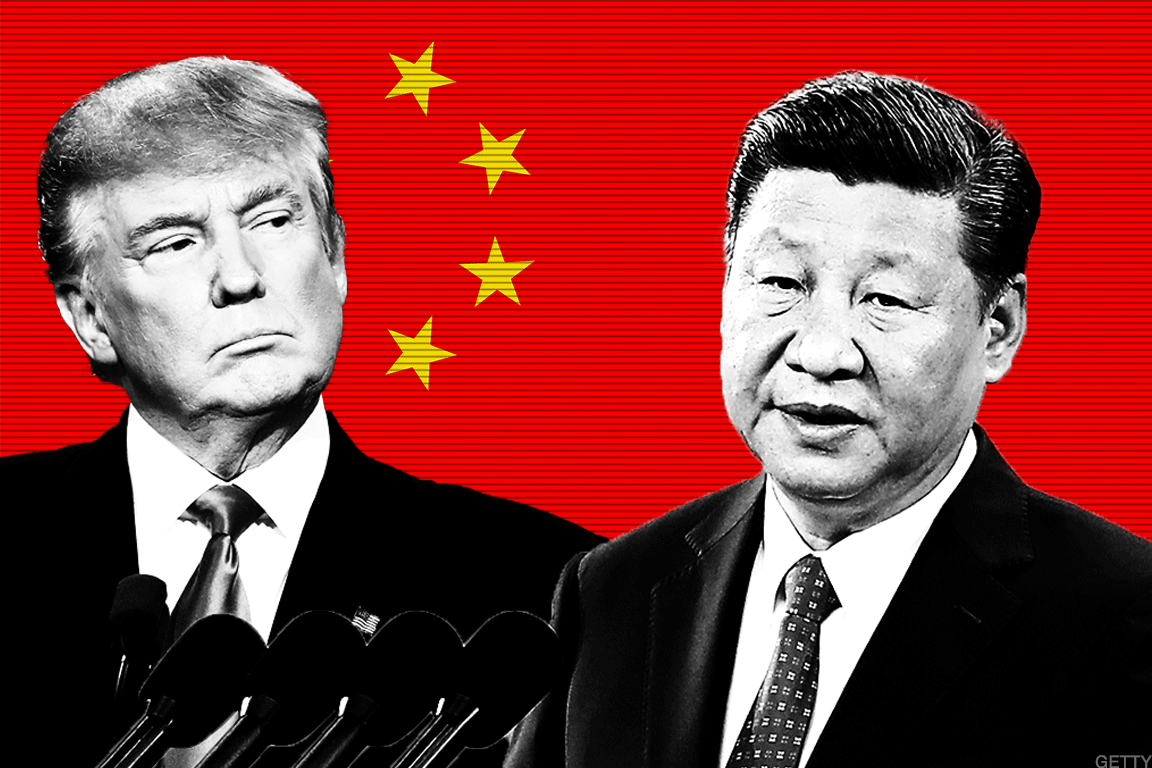
Trump calls the meeting with Xi “amazing,” and rated it a “12 out of 10.” He championed agreement reached on rare earths and combatting the flow of illegal drugs into the United States. And he said he will visit China in April, an opportunity for further progress after Thursday's negotiations, which lasted just over 1.5 hours.
So why isn’t there more excitement about the outcome? Why are markets shaking off both a U.S. interest-rate cut and the progress made on new trade pacts with both China and South Korea?
White HouseCcites 'Wins' but What Has Trump Won?
Trump and Xi met on Thursday in Busan, ahead of the APEC Summit in South Korea. That starts on Friday in nearby Gyeongju, near both Busan, Korea’s busiest port, and Ulsan, cities that are centers of production for shipbuilding and automobiles.
As Trump continues his Asia tour, the self-professed “dealmaker in chief” has championed a series of trade-war “wins.”
That led on Wednesday to an agreement with South Korea that “brings home more billion-dollar deals,” as the White House put it. The Korea agreement comes on top of the “easy win” of a trade deal in Japan, the impact of which I broke down in my last column.
But despite Trump’s glowing assessment aboard Air Force One, his administration is surprisingly silent on Thursday after Trump’s meeting with Xi, the first time they’ve met in person since the G20 Summit in Osaka in 2019.
The White House sent out a message in celebration, not of China-U.S. trade, but of the 290th birthday of founding father John Adams, George Washington’s successor, and the first presidential occupant of the White House when he moved into 1600 Pennsylvania Ave. in 1800.
Turning Up the Dial
A bit off topic? Sure, we have the comments from Trump about how well the Xi meeting went. In his enthusiasm, Trump is channeling the spirit of this year’s rockumentary spoof, Spinal Tap II: The End Continues. The dial on this trade deal is right up to 11, then add 1 more! It’s a 12 out of 10!
China is far more circumspect about the outcome. It echoes Korea’s shipbuilding prowess with comments from Xi that, “in the face of winds, waves and challenges, we should stay the right course, navigate through the complex landscape, and ensure the steady sailing forward of the giant ship of China-U.S. relations.”
Rather than any final deals, Beijing notes the importance to "work out and finalize the follow-up steps as soon as possible." The trade relationship should "serve as the anchor and driving force for China-U.S. relations, not a stumbling bock or a point of friction."
There are no details. There's also "good potential" for further progress on fighting illegal drugs, immigration and telecom fraud, and to work together on Artificial Intelligence as well as infectious diseases. No agreement on a TikTok sale at all!
Treating Xi and Trump as equals
The Chinese government is always eager to portray Trump and Xi as equals. We can hear that in the Chinese statement from the Ministry of Foreign Affairs, noting that Trump said it is a “great honor” to meet Xi, a “good friend for many years,” while “China is a great country.”
The Chinese statement notes that, after the APEC summit over the next two days, China will host the organization next year. What’s more, the United States will host the G20.
“We expect both to be successful,” Beijing’s statement said, noting the two presidents on Thursday “agreed to enhance cooperation in economic, trade, energy and other fields, and to encourage more people-to-people exchanges.”
Beijing has typically held back comment amid all the bluster on tariffs and trade, giving little of its negotiating position away. There’s similarly anodyne diplomatalk on Thursday, that the “trade teams had an in-depth exchange of views on important economic and trade issues, and reached consensus on solving various issues.”
Fancy telling us what those issues are? No! We have to turn to another statement to find any detail, which China credits to trade talks in Kuala Lumpur last weekend.
Buying Time but Not Progress on Trade
The broad-brush details are that the United States will cancel the extra 10% “fentanyl tariff” and suspend for another year the 24% “reciprocal” tariffs levied on Chinese goods. Washington will also suspend a U.S. move to add subsidiaries to the “entity list” of sanctioned Chinese companies.
China meanwhile will suspend the retaliatory tariffs that it announced on October 9. Chief among those: strict export controls on rare-earth minerals. China produces some 90% of the world’s 17 rare-earth materials, key to chip and tech applications that are essential in military radar systems, aircraft engines and electric vehicles.
At the time, U.S. Treasury Secretary Scott Bessent called those controls, to be enforced globally, “a bazooka at the supply chains and industrial base of the entire free world.”
Trump now says that “all the rare earths has been settled, and that’s for the world.” But we should note that China has only suspended the October 9 export controls for one year, while also not addressing and presumably leaving in place existing rare-earth controls that it imposed in April and last December.
Soybeans Back on Chinese Menu
So, any deal has at best bought time on the rare-earths issue. China is separately withholding rare-earth magnets from Europe, while looking to walk back European tariffs on Chinese-made electric vehicles. Europe-China talks on that topic are due to take place in Brussels on Friday.
Trump says China will renew the rare-earths agreement in a year — but there’s a lot of time between now and then. He also says China is resuming its purchases of U.S. soybeans. Reuters reports that the Chinese state-owned enterprise COFCO bought three shipments shortly before the Xi-Trump summit, the first Chinese purchases from this year’s U.S. soybean harvest.
China normally takes over 60% of global soybean exports. It has shifted purchasing to South America, potentially costing red-state farmers billions on a U.S. soybean harvest that measured $52 billion at last count. With Chinese buy orders already in for the South American crop, U.S. suppliers will likely still see disappointing demand.
Further Progress at Meetings Next Year?
Besides Trump’s pending state visit to China, Trump also invited Xi to the United States. So we can anticipate a likely state visit from Xi, perhaps surrounding the G20, scheduled to take place in December 2026 at the Trump National Doral Miami resort.
All good news, right? So why did Chinese stocks ease back from their highest levels in almost four years?
The CSI 300 index of the largest listings in Shanghai and Shenzhen fell 0.8% today, yesterday’s close being the highest since January 2022. The Hang Seng Index in Hong Kong, where international investors typically express their stance on China stocks, fell 0.2% today. The Hong Kong benchmark is now down 3.7% this month, since its high close for the year on October 2, its highest levels since 2021.
So there’s been no joy among Asia-based investors out of the Xi-Trump meeting. What’s more, Hong Kong stocks should get a shot in the arm from the U.S. interest-rate cut, since the territory has a Hong Kong dollar currency that is pegged to the U.S. dollar, meaning the city “imports” U.S. rates.
The U.S. Federal Reserve has, of course, trimmed rates by 25 basis points, to a range of 3.75% to 4.00%. Markets are not terribly excited because the cut was fully priced in, while U.S. Fed chairman Jerome Powell warned that another cut at the next rate meeting in December can’t be taken for granted.
Powell likened the Fed’s position, with the release of U.S. economic data slowed by the shutdown of the federal government, to driving in fog. “What do you do if you’re driving in the fog? You slow down,” the Fed chair said.
There was also unusual dissent in the ranks, with the newest Fed official, Stephen Miran, arguing for a 50 basis-point cut, while Jeffrey Schmid of the Kansas City Fed argued for no change. That’s the first “split dissent” since 2019.
Bank of Japan on Hold
The Bank of Japan (BOJ) also met on rates this week, opting on Thursday to keep rates steady. BOJ Governor Kazuo Ueda, like Powell, is worried about “various risks to the outlook,” with Ueda citing “high uncertainty on the impact of trade policies on overseas economic and price developments.”
Trump did get commitments from Japan on its massive $550 billion in agreed investment into the United States, as well as South Korea’s $350 billion U.S. investment pledge. Korean Air, for instance, is agreeing to buy 103 aircraft from Boeing (BA) , in a $36.2 billion deal, powered by engines from GE Aerospace (GE) in a separate $13.7 billion deal.
But those deals were already announced, and both GE shares, down 1.4%, and Boeing, off 4.7%, are slipping on Thursday.
In fact, the bulk of the trade “deals” announced on Trump’s Asia tour merely cemented agreements made in July. The White House has championed pacts with Japan, South Korea and four Southeast Asian nations (Malaysia, Thailand, Vietnam and Cambodia), but at best this October tour added a little flesh to bare-bones frameworks set up just before the expiration of the 100-day suspension of the initial tariffs revealed on the Rose Garden lawn by Trump back in April.
A Successful Trip?
This whirlwind trip to Asia has been a success for Trump, in terms of striking up a personal relationship with new Japanese Prime Minister Sanae Takaichi. He’s also met the leaders of the Southeast Asian nations in ASEAN, as well as rekindling his personal relationship with Xi. In that sense, this first Asia trip in Trump’s second term is a success.
But on trade, Trump’s muddled messaging continues. As I’ve noted before, a pyromaniac can’t claim to rescue the day by rushing in to extinguish a conflagration that they’ve just lit. In that sense, tariffs have still risen massively since April. On this Asia trip, Trump is claiming victory for a second time on “deals” that are mere frameworks set in July — and that wouldn’t be necessary in the first place had he not declared a war on trade in April.
The deal with China has bought a little more time. Investors are making it clear they want to see U.S. negotiators make the most of it.