Trump Tariff Surprise Sends Chinese Stocks Soaring With Volatility Ahead
Asian shares are moving higher as Trump says he would “rather not” deploy tariffs on China, but will likely seek a trade deal.
You've reached your free article limit
You've read 0 of 1 free Pro articles.
Newly-installed U.S. president Donald Trump knows how to dominate the news cycle. Now, it’s noteworthy for investors that his unpredictable, oscillating statements early in his second term are also currently dominating how global markets move.
Hong Kong stocks are the big gainers in Asia recently with Trump suddenly saying that he would rather not use tariffs on Chinese goods at all. That sent the Hang Seng up as much as 2.3% intraday and 1.9% at the close on Thursday, taking the Hong Kong benchmark back above the 20,000 level.
Tech and global-supplier stocks were particularly bullish, with the Hang Seng Tech Index up 3.2%. But domestic Chinese plays also gained ground, taking the Hang Seng China Enterprises Index up 2.1%. It tracks China-based companies listed in Hong Kong.
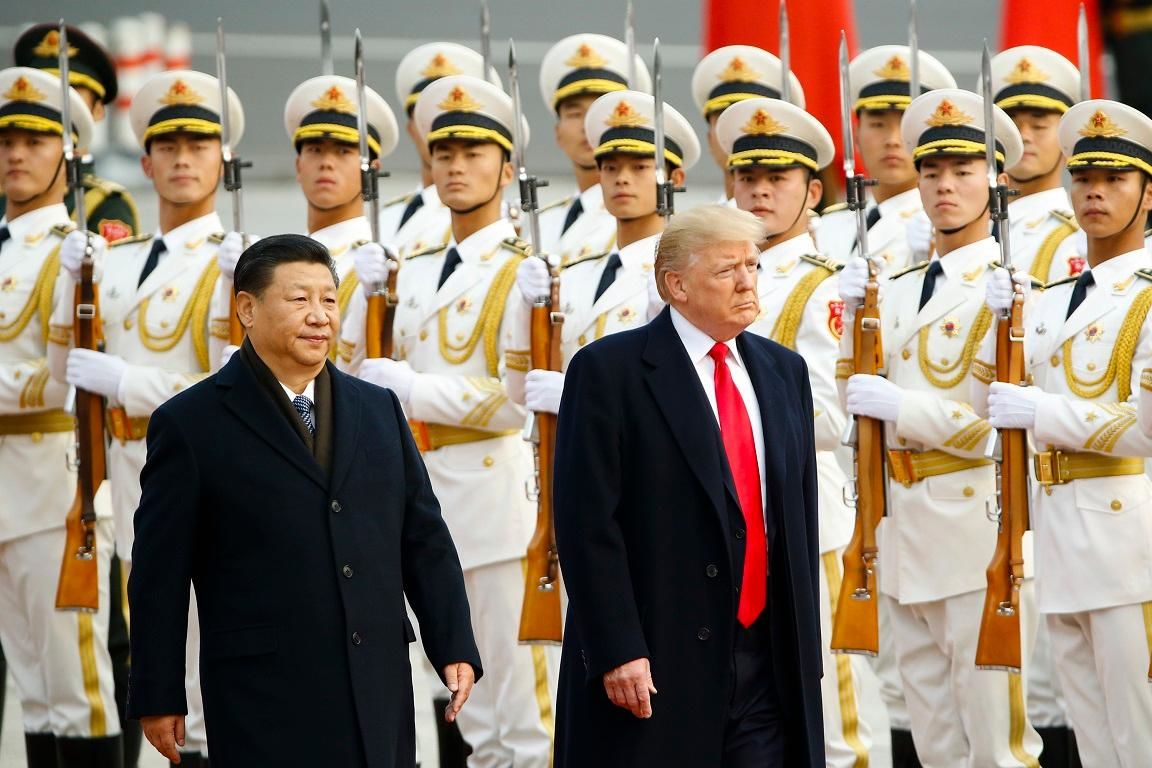
On the campaign trail, Trump dubbed himself “Tariff man,” and said that “tariffs are the greatest thing ever invented.” He proposed a 60% tariff on all goods from China, and up to 20% on imports from everywhere else.
Now, he is walking that back, both in interviews and his appearance at the World Economic Forum in Davos, prompting the move higher in Hong Kong. Trump likely hopes to use Chinese President Xi Jinping as a conduit to put pressure on Russian President Vladimir Putin to end the war in Ukraine, and has always stressed a close personal relationship with Xi.
“We have one very big power over China, and that’s tariffs, and they don’t want them,” Trump said in a Fox News interview. “I’d rather not have to use it,” he added.
I noted in my last story that Asian equities are already breathing easier after Trump’s “day one” actions spared the continent, focusing instead on domestic policy. Not only has Trump failed to impose any immediate tariffs on Asia, but his tone and language has also eased up dramatically.
And Hong Kong stocks have reflected that. They’re up 6.3% since the start of last week thanks to apparent easing of tension over tariffs.
The Apple AAPL supplier Sunny Optical SOTGY (HK:2382) led the gains, up 8.0% at the close. Mobile-phone giant Xiaomi XIACY (HK:1810) also added 6.8%. Sunny Optical provides lenses for iPhones and iPads as well as Android devices. Both Sunny and Xiaomi clearly lose out on increased trade protectionism and the inability to supply international customers.
Hong Kong equities were the world’s worst performers among major indexes for the three years prior to 2024. But they corrected course last year, and as I noted in my review of Asian equities for 2024, the Hang Seng China Enterprises measure of mainland companies was the surprise outperformer in Asia across the course of last year.
Trump offered Xi a seat at his inauguration, although the Chinese leader declined the unusual invite, sending an envoy in his place. The two leaders spoke by phone last week, Trump revealed in the Fox interview, a call before he took office that Trump says was a “good, friendly conversation.”
Trump said he may well seek another trade deal with China. Besides seeking Xi’s help with Russia, Trump is also casting around for ideas on how to “save” the U.S. operations of TikTok, owned by Beijing-based ByteDance, whereas in his first term he threatened suspension of the video-clip app.
So, rather than attacking China like he did on the campaign trail, Trump has saved his harshest criticism for U.S. allies such as Canada and the European Union. In his speech delivered remotely to Davos, he praised U.S. tariffs for encouraging manufacturers to make goods in the United States, then criticized the European Union for using tariffs to make sure goods are made there.
“If you don’t make your product in America, which is your prerogative, then very simply, you will have to pay a tariff – different amounts, but a tariff – which will direct hundreds of billions of dollars and even trillions of dollars into our treasury,” he said.
Then he took the European Union to task for using tariffs, and not buying enough U.S. products, highlighting farm goods and cars.
“They put tariffs on things that we want to do,” he said of the European Union, “and those are very bad, and they make it very difficult to bring products into Europe.”
So, tariffs: good when we use them, bad when they use them. Trade: good when we are selling, bad when we are buying. It is a murky picture.
Clearly, other nations will respond to U.S. trade barriers by implementing trade protections of their own. And global trade requires partners on either side of the deal.
As if to ram that point home, the Chinese electric-vehicle makers BYD BYDDY (HK:1211), Geely Automobile GELYY (HK:0175) and SAIC Motor (SH:600104) have just challenged the new import tariffs installed by the European Union. They have lodged a complaint with the EU’s Court of Justice, with BYD facing added charges of 17.0% to ship into Europe, Geely an extra 18.8% and SAIC suffering to the tune of 35.3%. That’s on top of the European Union’s existing import duty of 10% on all car shipments.
BYD shares inched ahead 1.4% on Friday. There were greater gains for its spinoff BYD Electronic BYDIY (HK:0285), up 5.6%, with the subsidiary supplying parts for iPads and a wide range of smartphones and consumer electronics.
Hong Kong and Asian equities will continue to experience Trump-linked volatility as the president gradually expresses what he’ll actually do on global trade. There’s a considerable gap between what the U.S. leader says he’s going to implement, and what actually gets implemented.
BNP Paribas said its quick poll showed 25% of respondents expect that Trump is using tariffs as a negotiating tactic, while 25% expect fresh tariffs to be quickly installed. The French bank’s view is in the middle, that modest tariffs will come in time.
Trump also wants to combat inflation and bring down U.S. interest rates. But most economists agree that higher U.S. tariffs – which are paid by the U.S. company importing the goods, and ultimately passed on to consumers – are inflationary. That would tie the hands of the U.S. Federal Reserve on rates.
At the Davos summit, 94% of the economists polled in the World Economic Forum’s "Chief Economists Outlook" said they expect inflation to increase under Trump. In all, 68% expect significant changes to U.S. trade policy, but almost half (47%) expect a positive or somewhat positive effect on growth.
Investors will continue to see share prices buffeted, particularly for major global exporters, as these contradictory issues play out. For global-minded investors, watch this space.
At the time of publication, McMillan was long BYD and AAPL.