Trouble Ahead, Trouble Behind: Why Today's Market Looks Similar to 1929
History never deceives us — we deceive ourselves... especially in a bull market that forgot what value means.
You've reached your free article limit
You've read 0 of 1 free Pro articles.
"Trouble with you
Is the trouble with me
Got two good eyes
But we still don't see
Come round the bend
You know it's the end
The fireman screams
And the engine just gleams
Driving that train
High on cocaine
Casey Jones you better
Watch your speed
Trouble ahead
Trouble behind
And you know that notion
Just crossed my mind..."
- The Grateful Dead Grateful Dead - Casey Jones (Winterland 12/31/78)
What follows is a combination of Daily Diary postings and my communications with my hedge fund (Seabreeze Partners) Limited Partners:
In past commentary we have noted that, with traditional valuations in the 98%-tile, stock market multiples are materially disconnected from reality and are somewhere between being very overvalued and pornographically overvalued. It remains our strong (but unpopular) conviction that investors are underpricing risk and that today's excessive valuations are a poor launching pad for future investment returns.
The Majority of Investors Know Everything About Price But Little About Value
We have long been a value investor, rarely chasing price nor compromising our investing disciplines. We are unemotional investors, endorsing (and not deviating from) the strategy of objectively evaluating reward vs. risk and maintaining a "margin of safety" in structuring Seabreeze's portfolio.
Value investors and investing have become a near obsolete endangered species: redeemed out and/or replaced by pod shops, quantitative products and strategies, index funds and by retail and institutional investors that worship at the altar of price momentum.
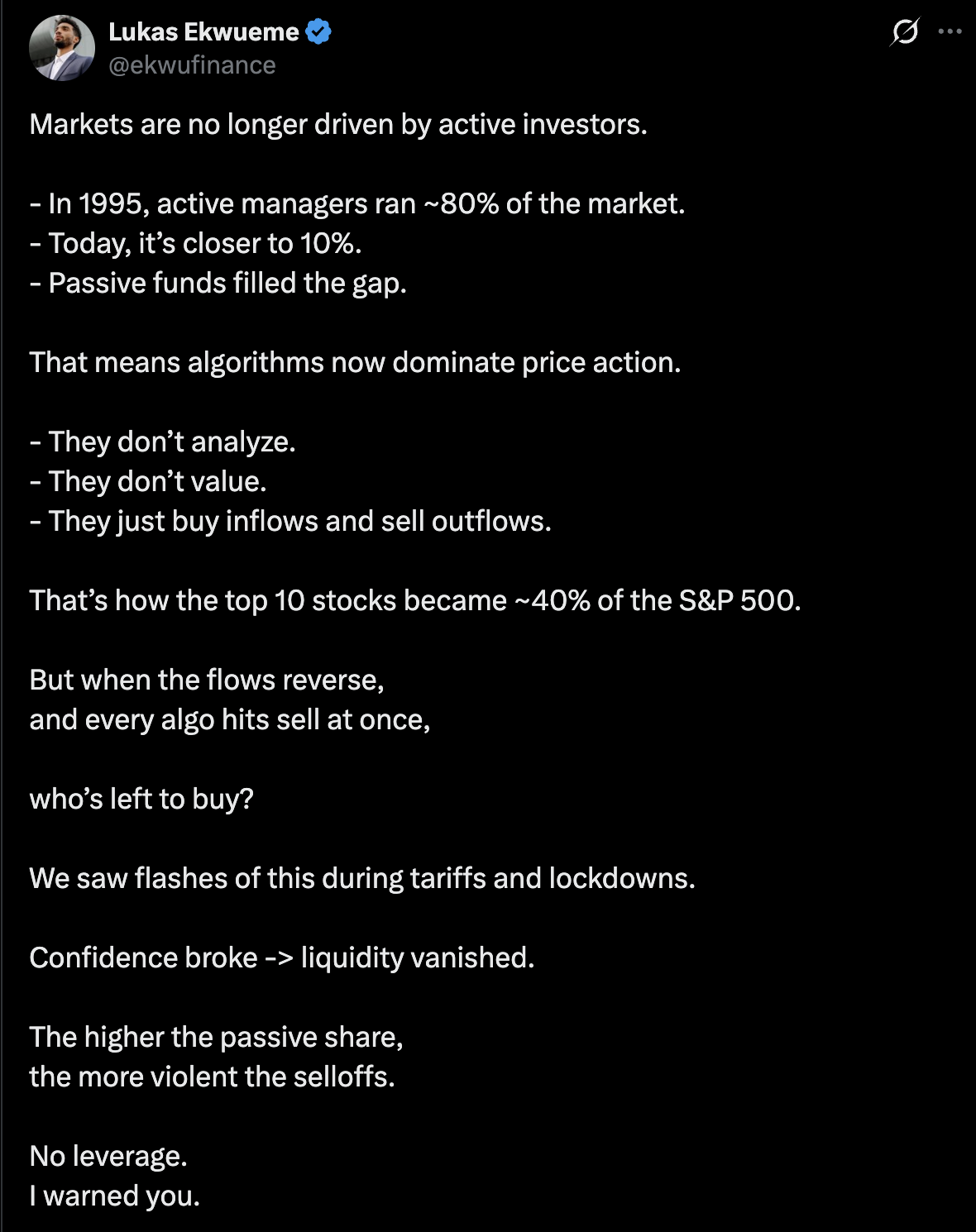
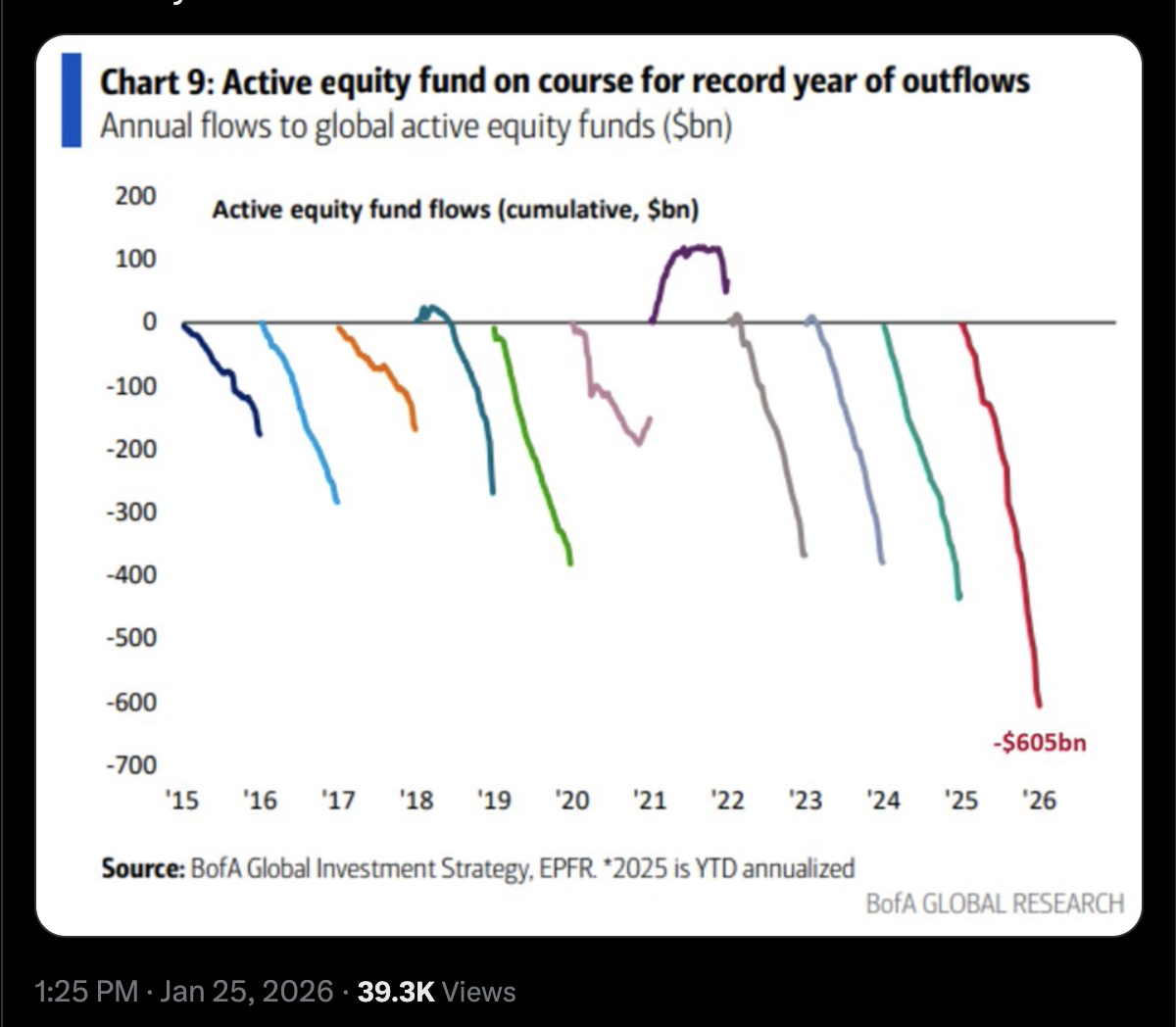
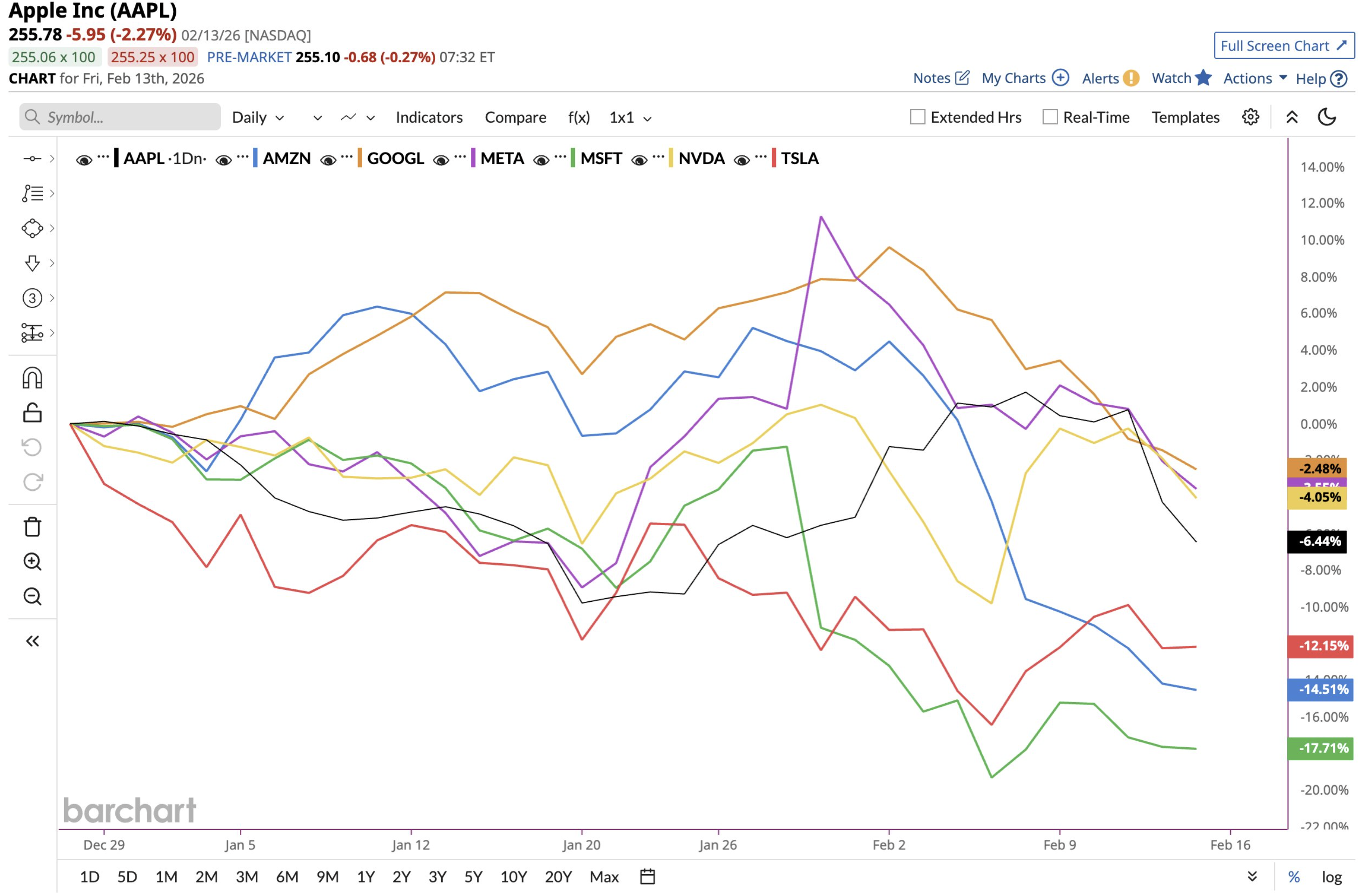
We do not consider the trend away from value investing to be a permanent condition. Indeed, recent price action suggests a change might already be afoot (as previous market leaders (Magnificent Seven) have begun to falter):

Speculation Has Run Amok
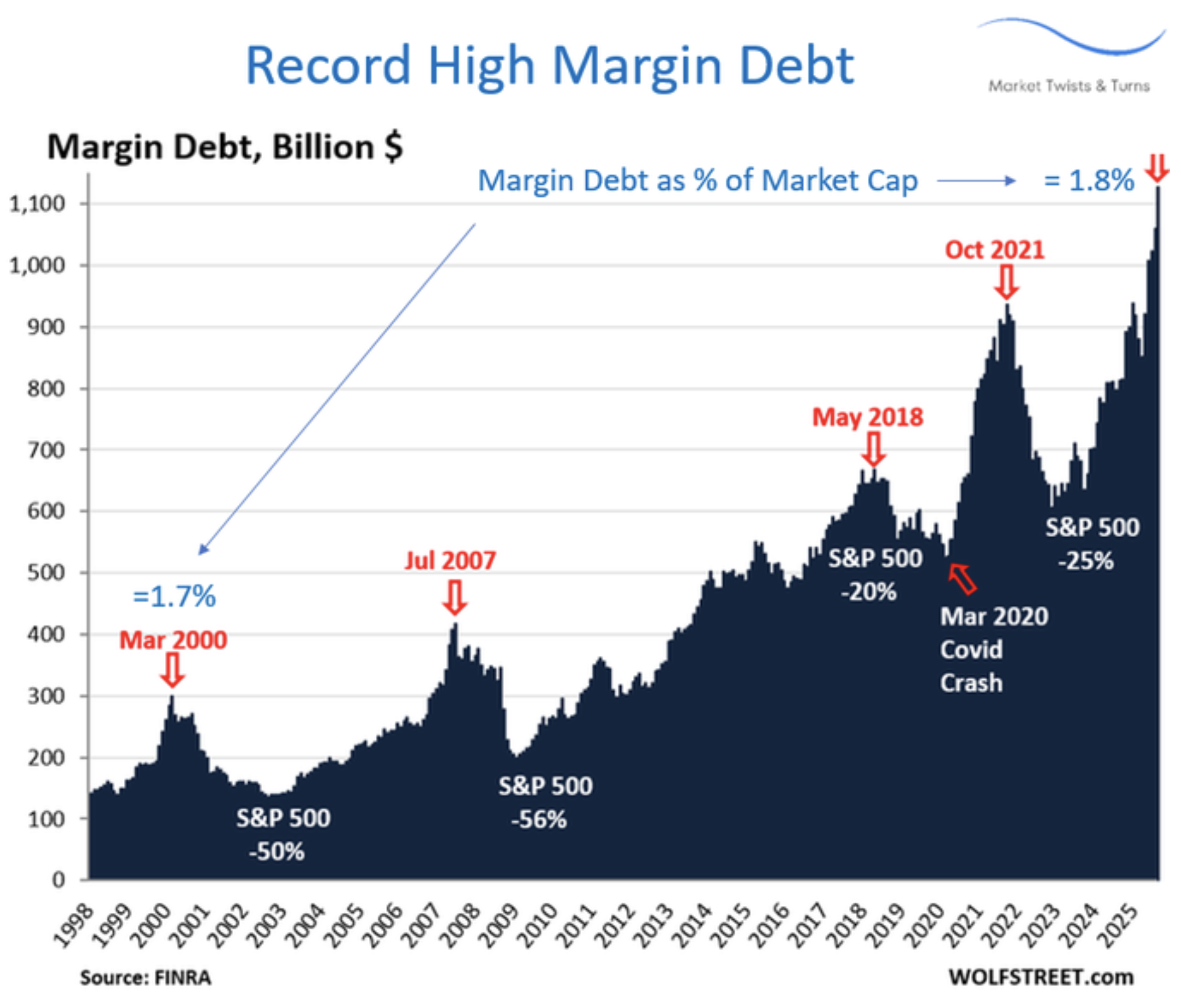
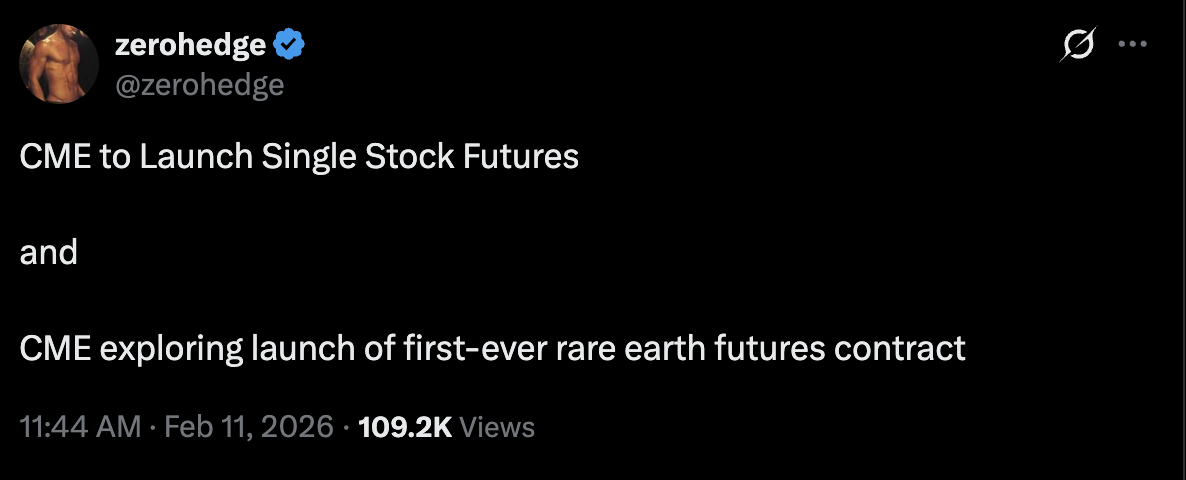
In the extreme, our markets today are looking more like speculative and, even gambling parlors (rather than traditional avenues of investing) than at any time in the last century. What could possibly go wrong with margin debt above the dot-com bubble levels, zero days to expiration (0DTE) options (with 24-hour maturities!) and accounting for 78% of all Nasdaq options volumes when coupled with the CME planning to launch single stock futures?
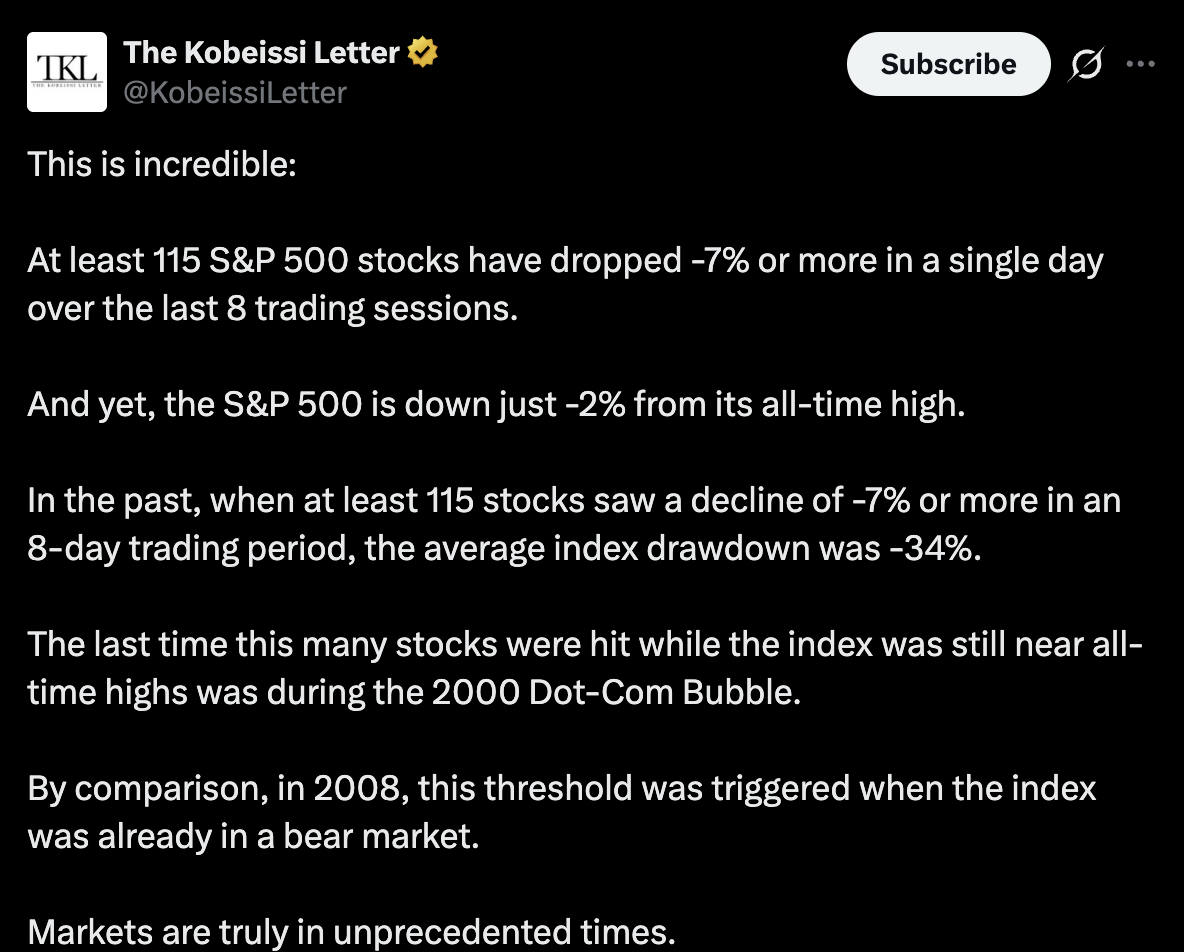
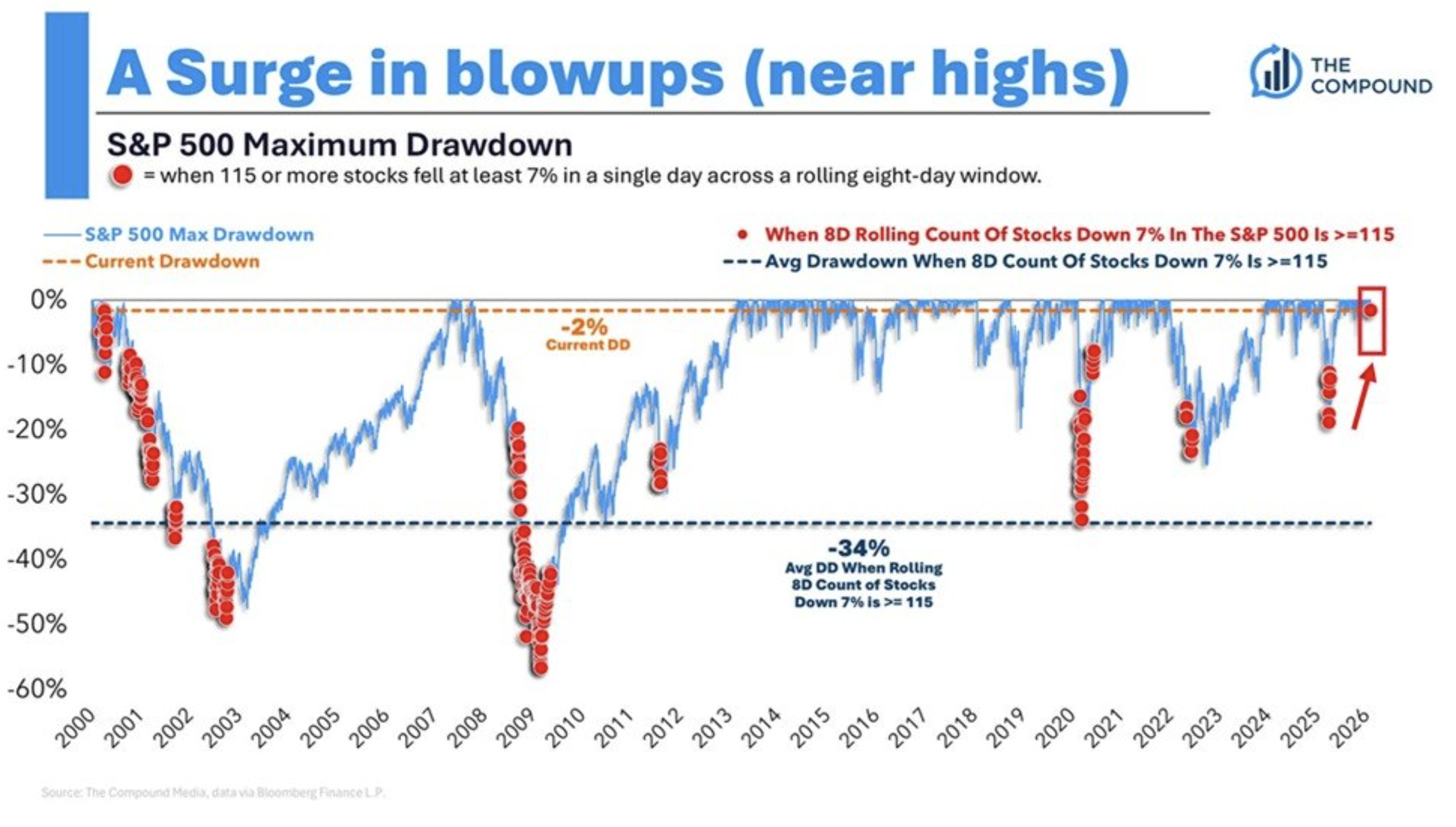
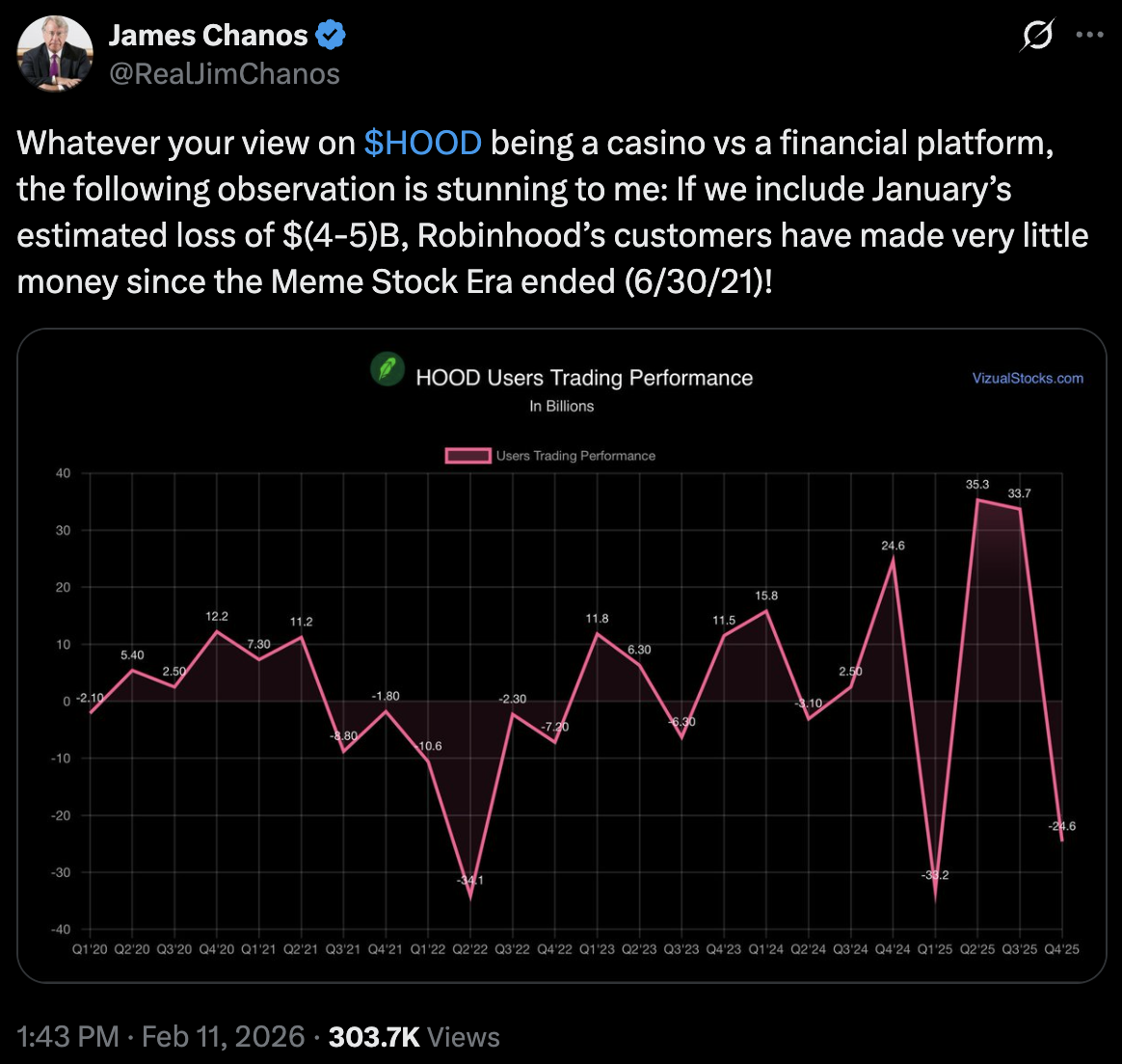
As a template, the popular brokerage website Robinhood (HOOD) (as measured by cumulative customer losses) has become a casino and not a traditional financial platform:
With margin debt, like valuations, at a record high — the equity indices have been inflated by both borrowed money and by the disproportionate role of passive investing (that has led to massive inflows into passive products and strategies). Any reversal in market sentiment could trigger an unwind of this leverage, which could cascade in a market dominated by passive products and strategies.
The recent unwind in the leveraged cryptocurrency markets might foreshadow what may happen in equities over the remainder of the year.
We do not think this ends well and we have growing confidence that we will be able to buy stocks at lower (and more attractive) levels over the next few months.
When and if this time comes, we will not hesitate to buy — but for now we wait patiently for the right pitch.
Lessons We Have Learned
History has taught us several important lessons — much of which has been lost by the current generation of investors:
- Markets tend to return to the mean over time as excess moves in one direction typically lead to an excess move in the opposite direction.
- There are no new eras, excesses are never permanent.
- Exponential rapidly rising (or falling markets) usually go further than you think, but they do not correct by going sideways.
- Greed is stronger than long-term resolve.
- The public buys the most at the top.
- When all the experts and forecasts agree — something else is going to happen.
The Risks Associated With Market Structure
Market structure is a little discussed market risk — but it is something that we remain sorely concerned about.
Today investors are all-in on equities:
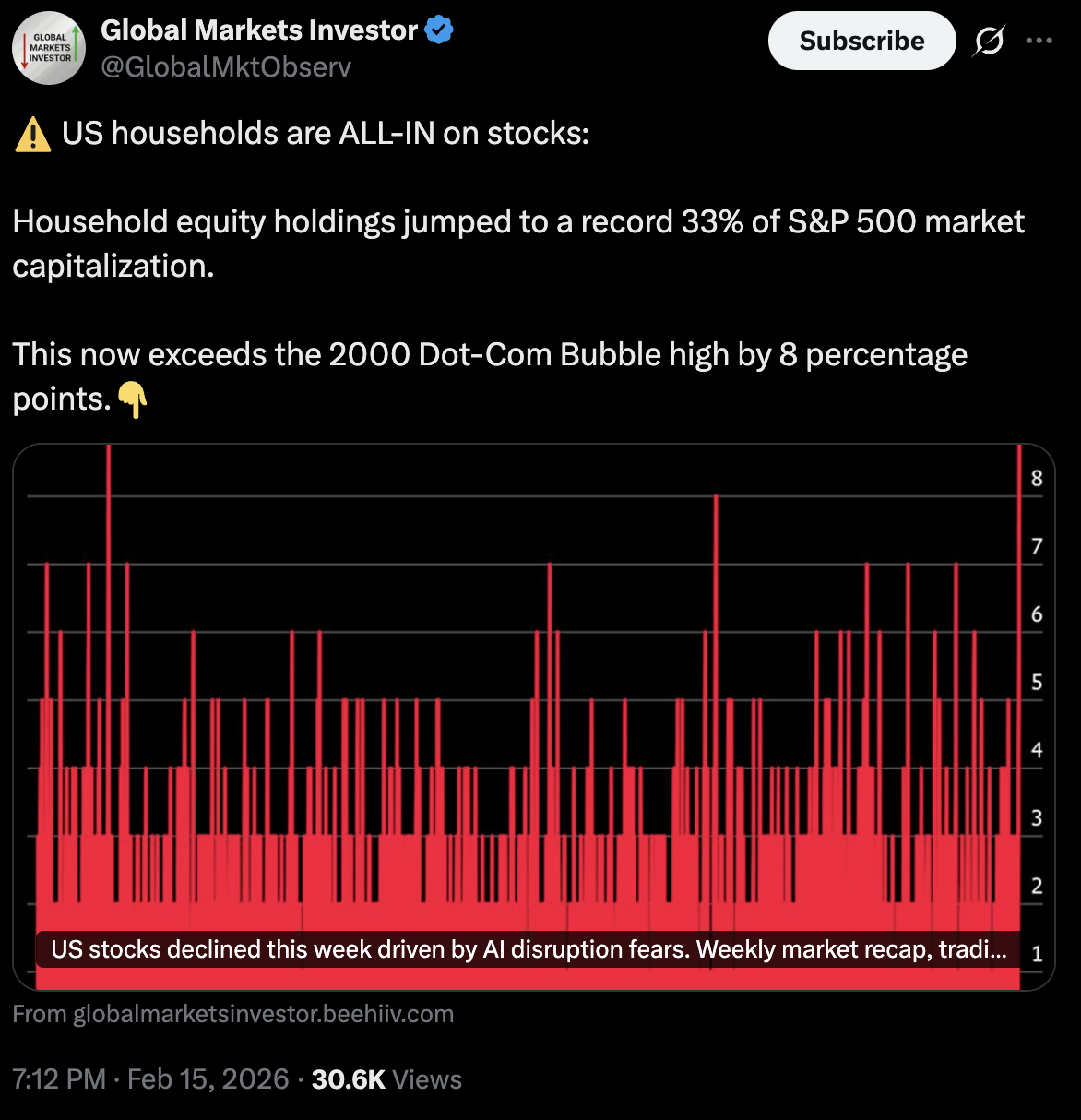
The decade-long transformation from active portfolio management to passive portfolio management (in which algorithms and machines dominate investment decisions) has contributed to this all-in (long) status. As a result, most investors are now comfortably long (and are ignoring multiple fundamental and valuation concerns).
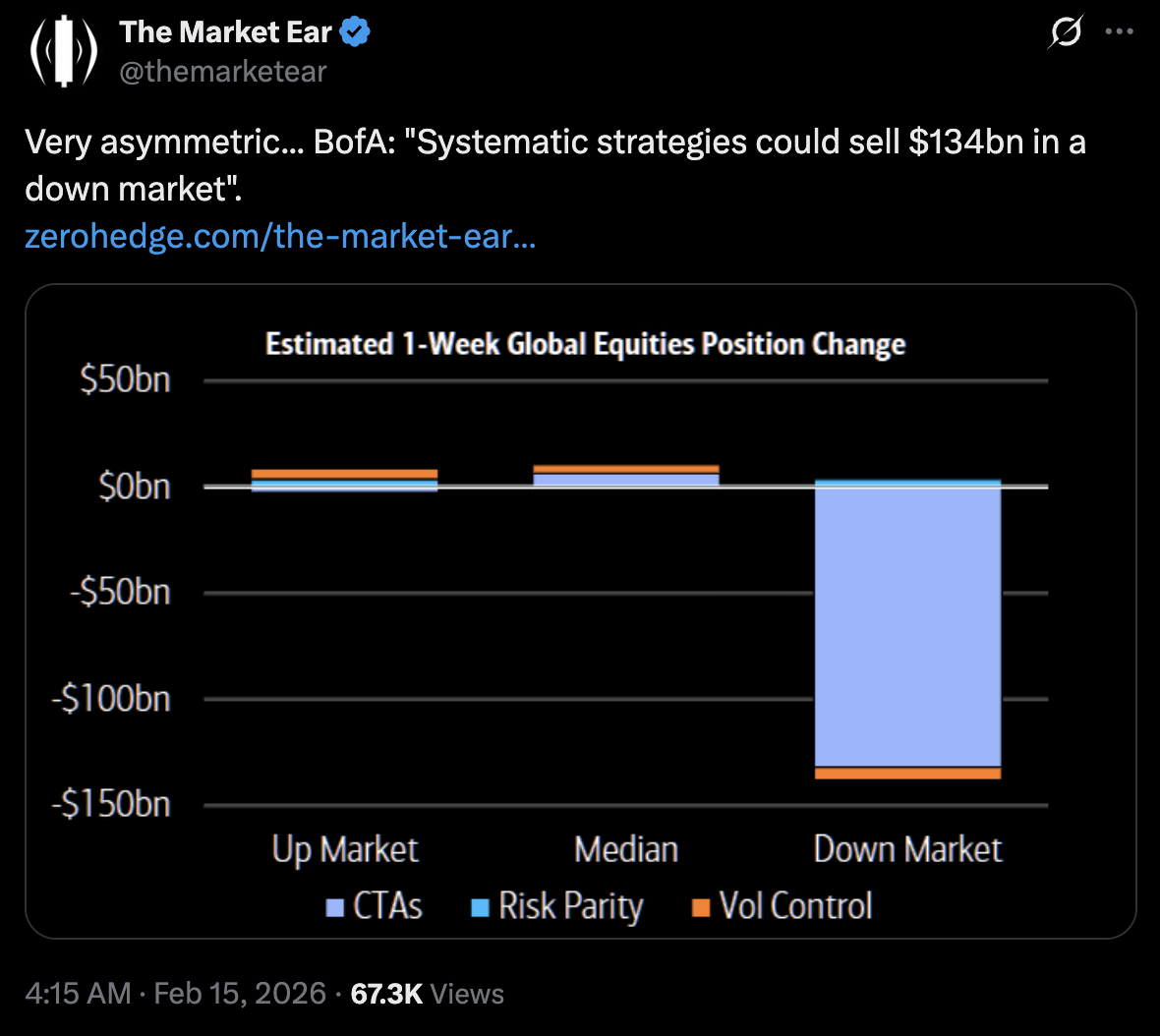
Passive investment management is agnostic to fundamentals — they know everything about price but very little about value. However, as noted above, the slightest change of momentum lost could lead to an episode of tumultuous selling (think the October 1987 and early 2022 market meltdowns):
Our Market Concerns Are Multiple
Away from market structure, our fundamental concerns — ignored by the majority of investors who have grown momentum-based and influenced — remain very much intact.
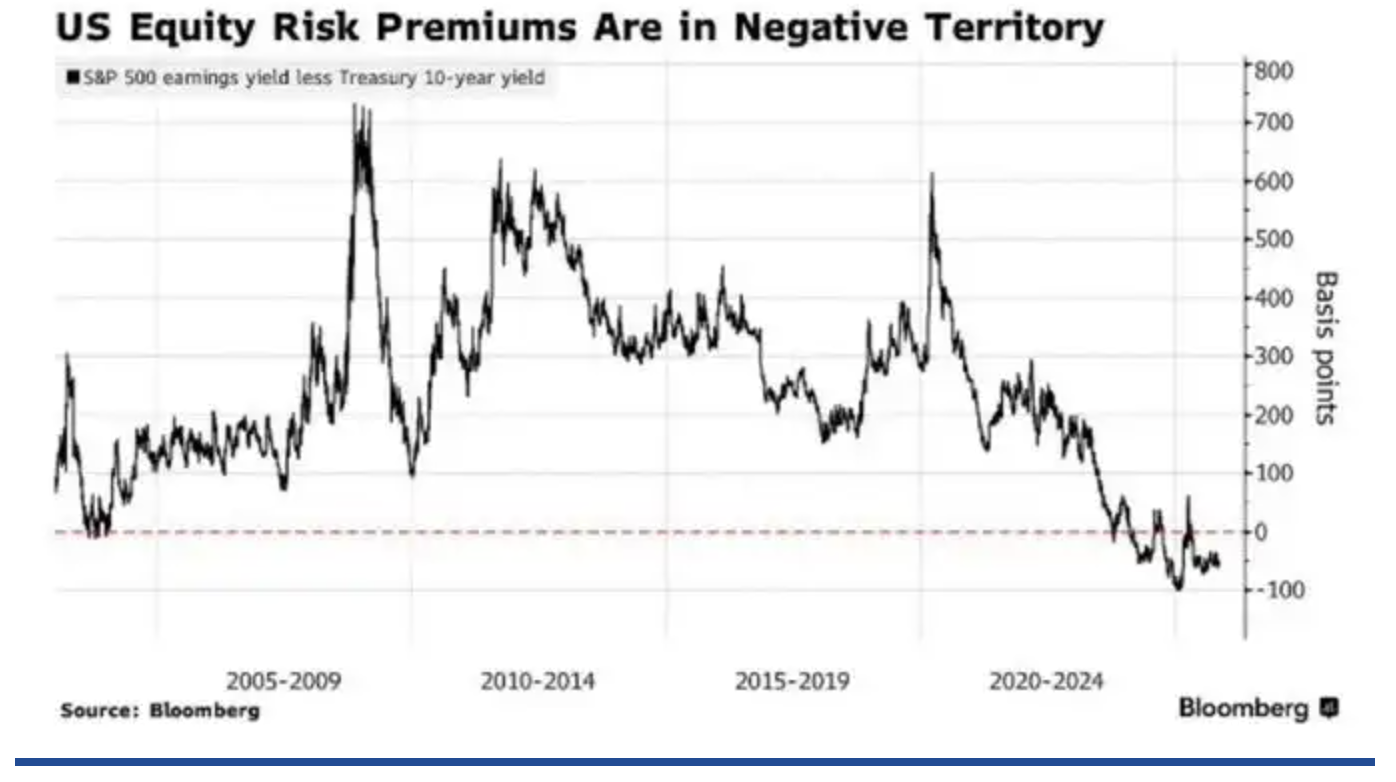
At the core of our negative market view is that the equity risk premium (ERP) has morphed into an equity risk discount (ERD!).
This means, on a risk-adjusted basis, equities offer a zero return to investors.
It also means that investors embrace the absurd belief that there is more risk in bonds than stocks:
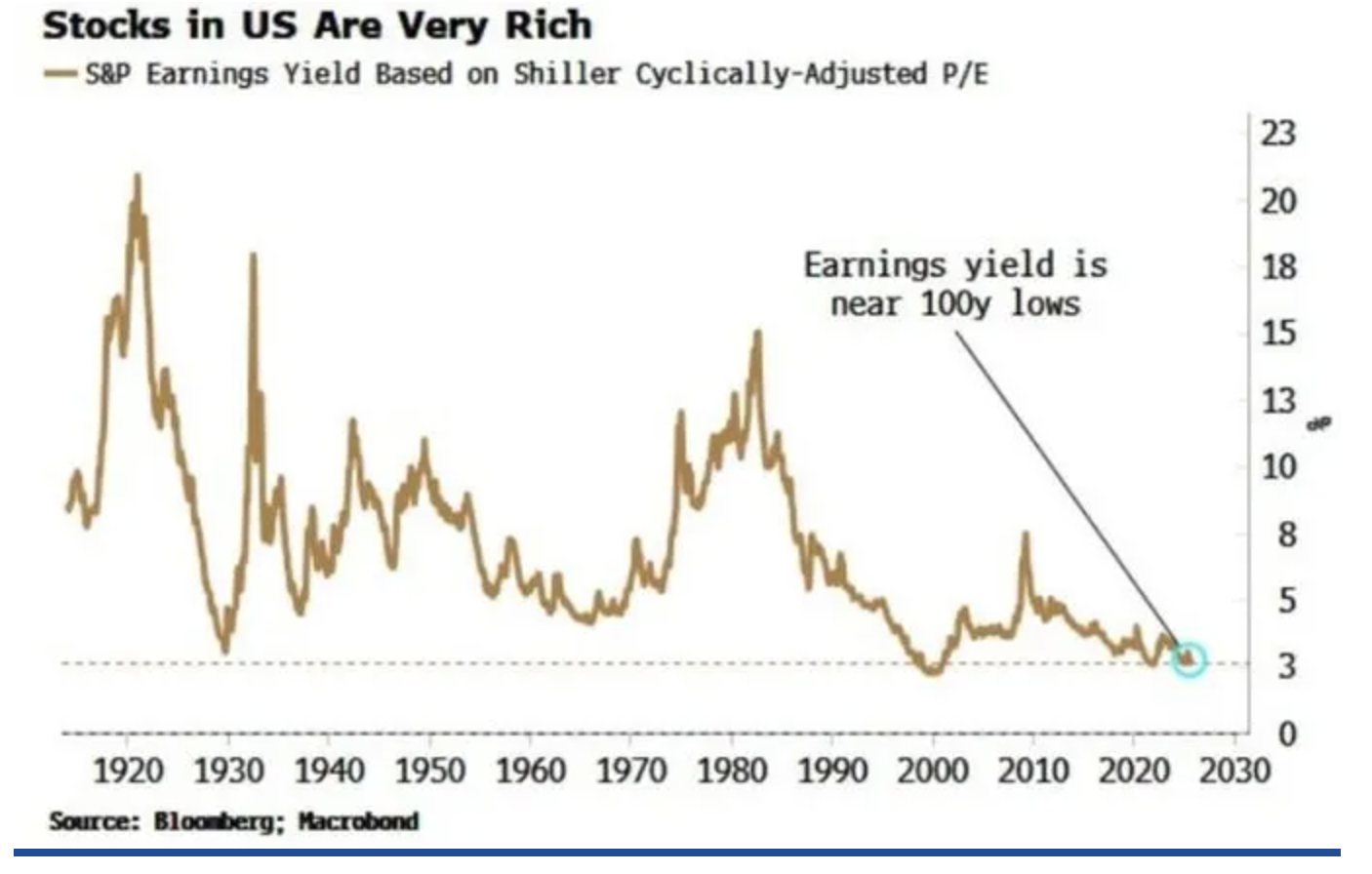
As part of the equity risk premium, the earnings yield (inverse of the P/E ratio) is near a century-year-old low. The only time it was lower was during the dot-com bubble:
Let me end this commentary by repeating some of my fundamental concerns previously discussed:
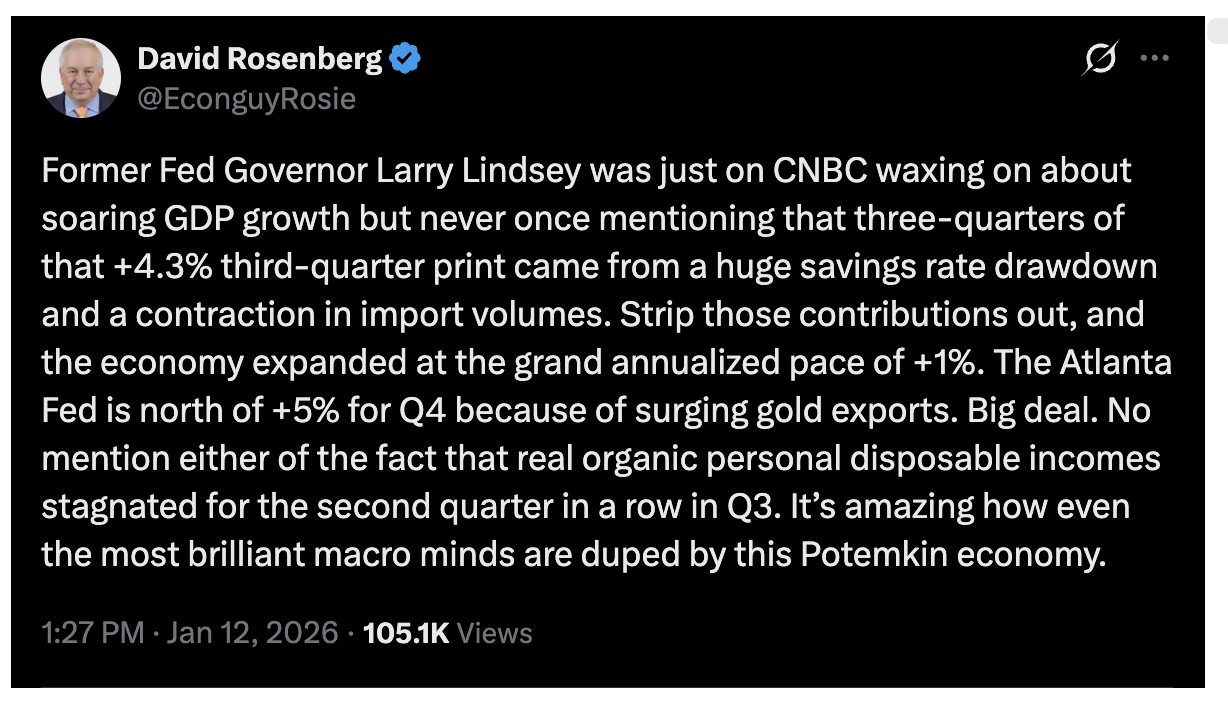
* We reject the generally positive consensus expectations for U.S. economic growth. Our core concern is that we are in a period of "slugflation" (sluggish domestic economic growth coupled with persistently high inflation):
We have learned that we cannot live alone, at peace: that our own well-being is dependent on the well-being of other nations far away. We have learned that we must live as men, not as ostriches, nor as dogs in the manger.
- Franklin D. Roosevelt
Increasingly (and importantly), errant Administration policy could begin to adversely impact economic alliances and contribute to a downturn in global economic activity.
Domestically, we believe there is a growing possibility that the current K-shaped economy's weakness in the lower-income cohort spreads into the middle and upper-middle class as the cumulative (or stacked) inflation since Covid finally has an impact — causing a spending freeze. With the outlook for global economic growth dissipating, consumer and business sentiment could plummet. BNPL (buy now pay later) and credit defaults would then rise and auto repossessions could increase dramatically.
and...
Economy Is In Recession": Only 181k Jobs Gained For All Of 2025
Drawdowns in the global equity markets and a still moribund housing market may contribute to a negative "wealth effect" and an air pocket with the high-end consumer as investor optimism of 2023-25 is abandoned.
* We also reject the notion that the new Fed Chair will grease the economy (and run it "hot") by lowering interest rates. We disagree on several counts: we see inflation remaining sticky and we don't think the new Chair will have a cooperative Committee.
* As previously noted, historical valuation metrics are at about the 98%-tile. Indicators like the Buffett Ratio, Shiller CAPE and Price/Sales are at all-time overvalued readings. We strongly disagree with the many investors who believe we are in a new valuation paradigm.
From Howard Marks:
* Dividends typically account for a bit more than 35% of the total return of stocks. The S&P Dividend Yield is now at a multi-decade low of 1.12% — contributions from dividends are modest — likely leading to substandard returns for an extended period of time.
* The composition of equity returns remains out of balance with a small number of large-cap technology stocks (highly dependent on the AI trade) contributing to overall returns. We are far less optimistic (than most) regarding the overall value of and return on investment prospects for the outsized AI capital expenditures — for society and as it relates to the productivity and profitability of individual companies.
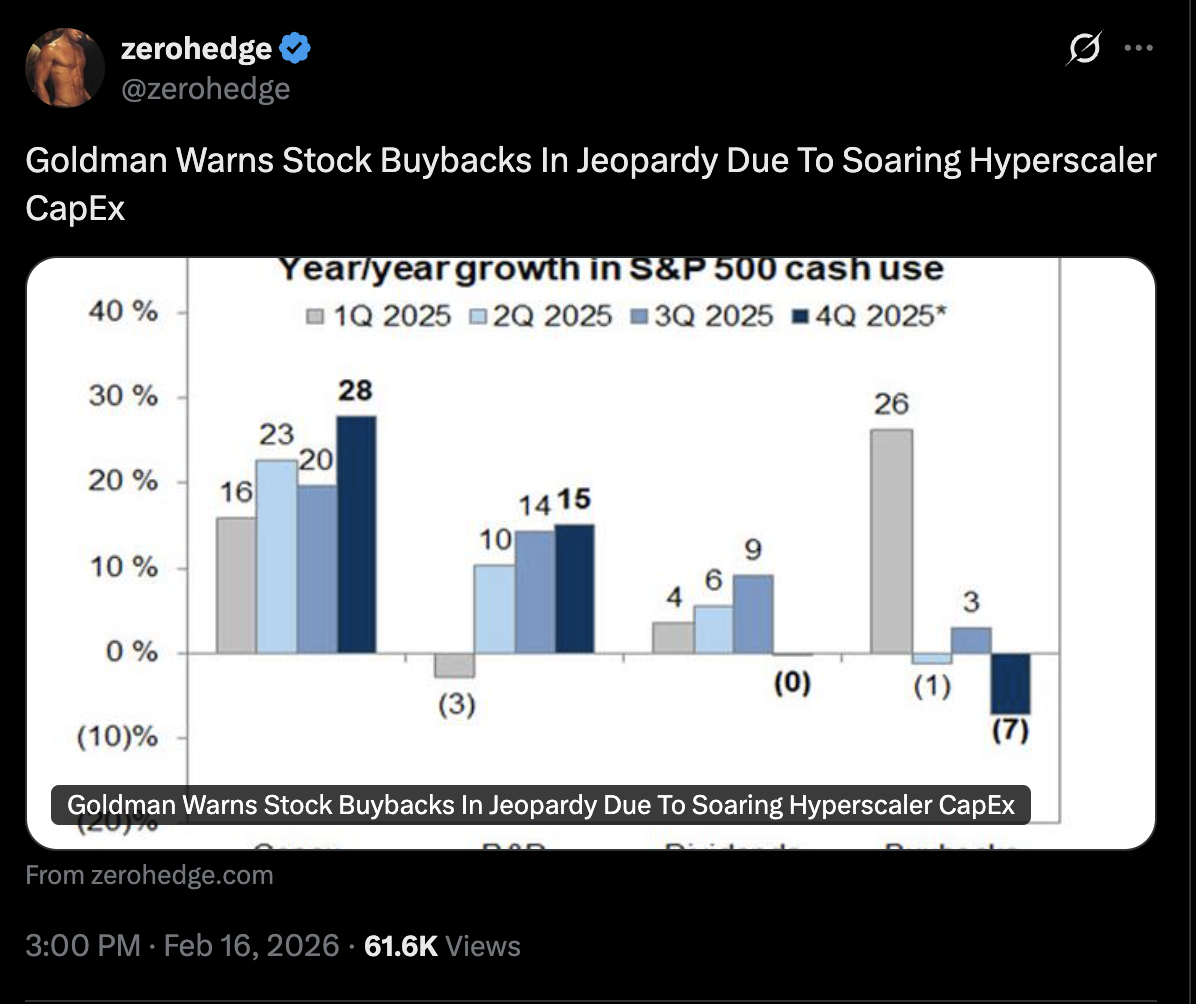
Mag 7 free cash flow is in free fall. So, after buying back over $1 trillion of stock in recent years (dramatically supporting the Nasdaq), the game is over as the unprecedented spend has transformed the hyperscalers from capital light to capital intensive — with attendant and adverse ramifications (on EPS growth and capital allocation strategy):
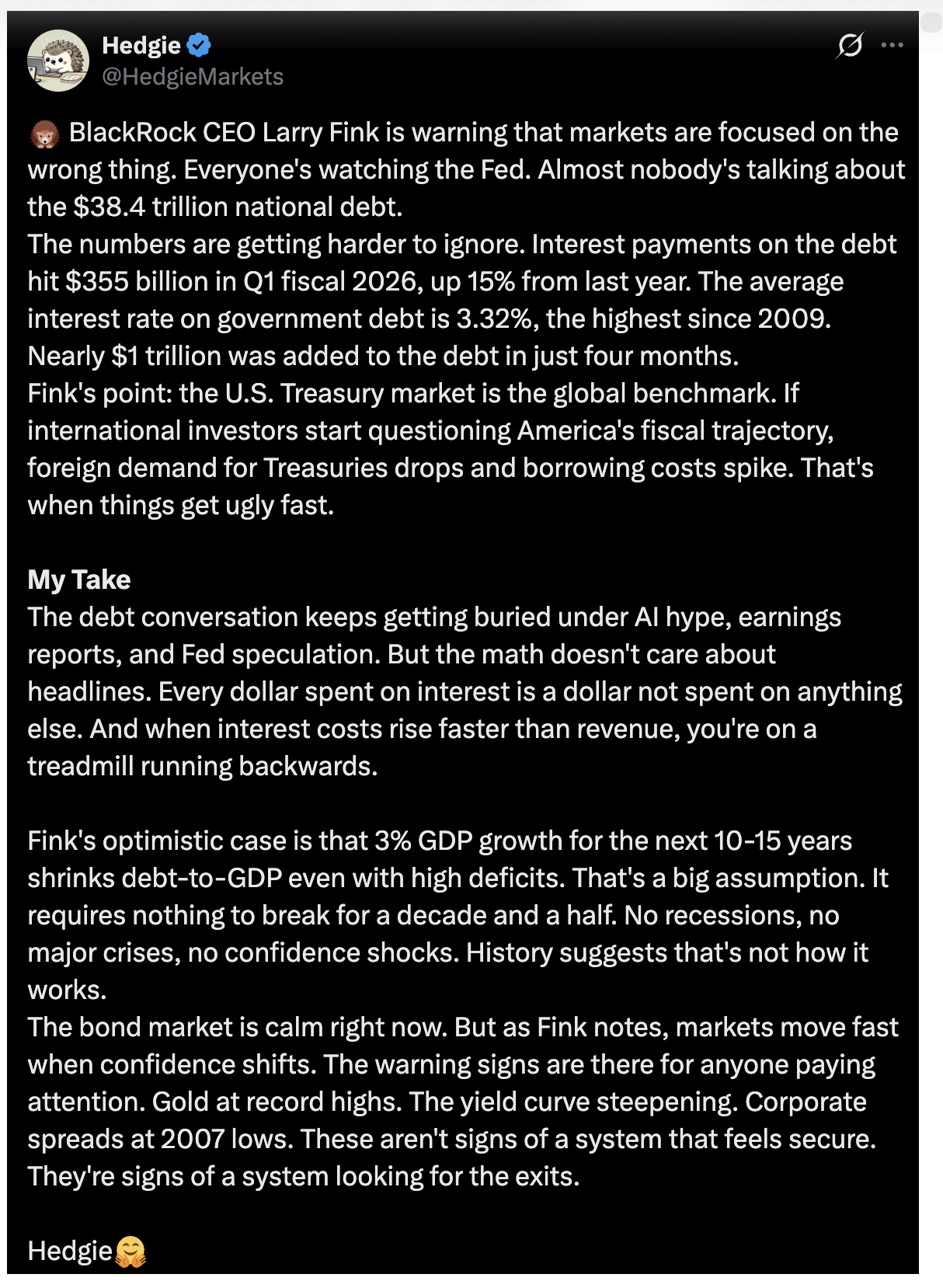
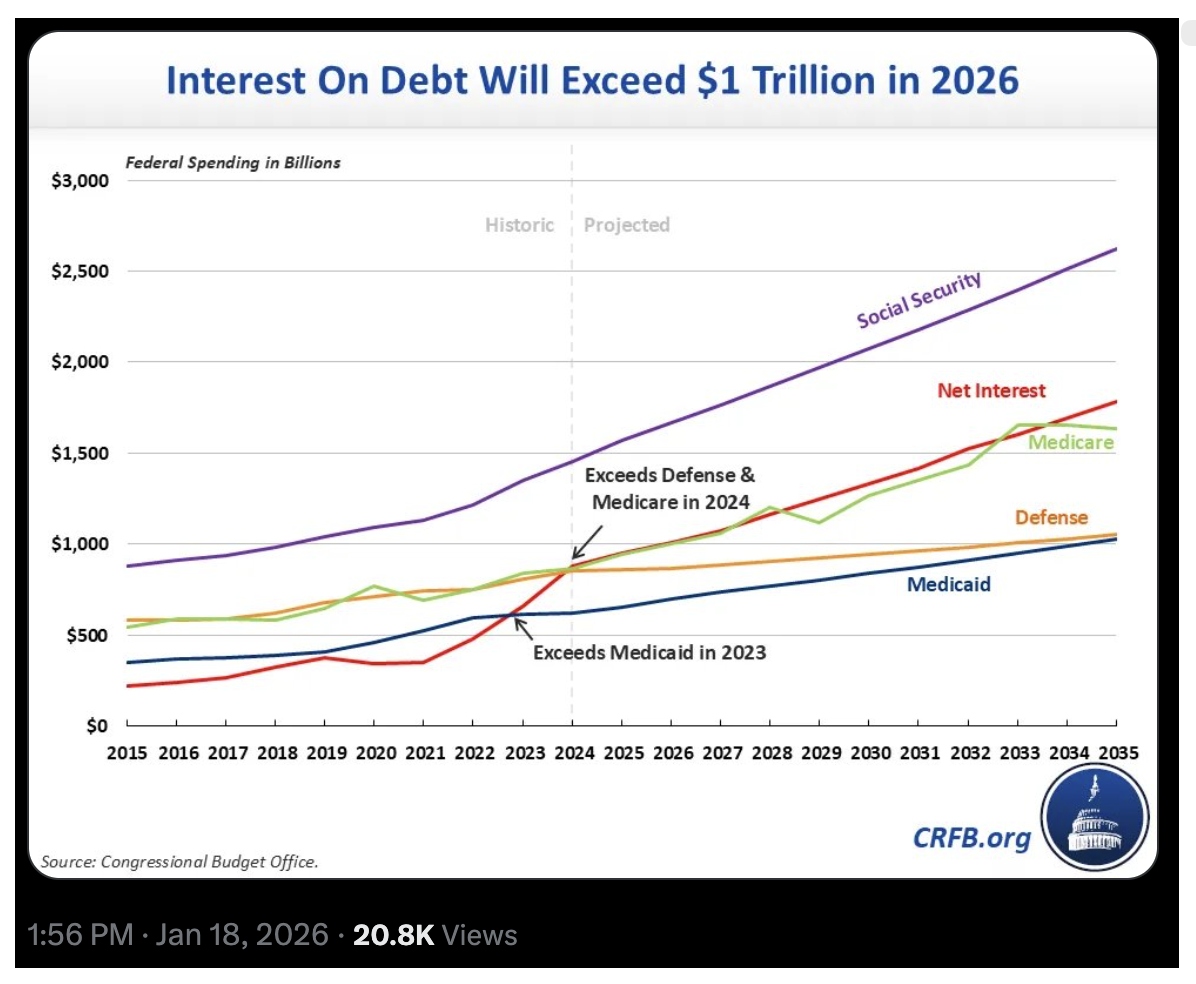
* Neither political party is acting in a fiscally responsible manner. A feckless approach to our deficit is producing a steady march higher in our national debt:
* I recently mentioned reading my friend Andrew Ross Sorkin's new book 1929: Inside the Greatest Crash in Wall Street History-and How It Shattered a Nation...
I couldn't help but see the similarities between then and now. The 1920s did not end well as our society lost sight of the value of regulations: wise rules are a source of abundance; well-regulated markets/systems attract users and investors; removing the constables patrolling our financial markets is potentially dangerous; and U.S. capital markets became the world's largest not despite regulation, but because of it.
* Wall Street strategists are unanimously bullish — on average they are forecasting a +11% return for 2026. They are nearly always bullish, so their opinions should be taken accordingly — and with a grain of salt.
As previously noted, Warren Buffett warned about a too ebullient mindset in November 1999, only four months before the dot-com bubble burst:
Once a bull market gets underway and once you reach the point where everybody has made money no matter what system he or she followed, a crowd is attracted into the game that is responding not to interest rates and profits but simply to the fact that it seems a mistake to be out of stocks. In effect, these people superimpose an I-can't-miss-the-party factor on top of the fundamental factors that drive the market. Like Pavlov's dog, these "investors" learn that when the bell rings — in this case, the one that opens the New York Stock Exchange at 9:30 a.m. — they get fed. Through this daily reinforcement, they become convinced that there is a God and that He wants them to get rich.
Bottom Line
History never repeats itself. Man always does.
- Voltaire
Delusions swing between extremes, like pendulums. Delusions of grandeur and unending wealth give place to delusions of unending gloom. One is as unreal as the other.
Today we seem to be close to an extreme in speculative activity and valuations. Unfortunately, history teaches us that the unsustainable cannot be sustained as, ultimately, with panic and pain, bubbles burst.
When we look at today's valuations we are reminded of (a twist) of something written by Jean-Jacques Rousseau:
History never deceives us; it is we who deceive ourselves.
For what we have learned from history is that we haven't learned from history.
This commentary was originally posted in Doug's Daily Diary on TheStreet Pro.
At the time of publication, Kass had no positions in any securities mentioned.