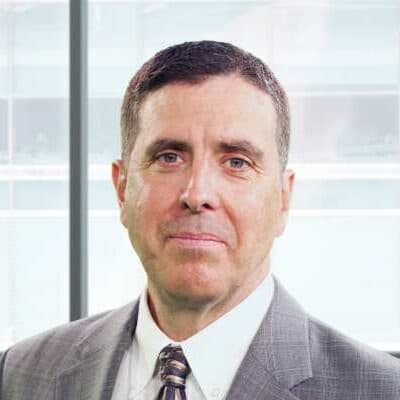
The 'Rieder' Choice, The Unspoken Economic Threat, Momma Maia 200!
Let's look at Rick Rieder of BlackRock fame for the Fed, the little-discussed threat to the U.S. economy and Microsoft's new chip.
You've reached your free article limit
You've read 0 of 1 free Pro articles.
Eulogy
And so now it comes to pass
By the eventide on mass
See them gather yet alas
They remain still as stained class
For they know only too well
That the story they will tell
Conjures up an ageless spell
Guarded by the Sentinel
Tipton, Downing, Halford (Judas Priest), 2005.
Shocking Shift
Good morning, my legions. Have you seen the headline story running at the Barron's website? Longtime BlackRock (BLK) executive Rick Rieder is apparently not only still one of several candidates to replace Jerome Powell as chair of the nation's central bank when his term in that position expires this May. According to prediction markets, Rieder has become the leader by plurality with a more than 40% probability to be nominated by Pres. Trump.
The piece that was penned by Nicole Goodkind and Rebecca Ungarino states that the other front-runners are former Fed Gov. Kevin Warsh, current Fed Gov. Christopher Waller and director of the National Economic Council Kevin Hassett. This, I find somewhat surprising, though I would not at all oppose Rieder's selection. All four candidates have shown themselves to be far more advanced than what we are currently existing with, in their ability to decipher economic data and lay out ideas for the implementation of forward-looking monetary policy based upon more than just that data.
I think we all expected that both Hassert, a long-time Trump ally, and Warsh were in consideration. Though he was a Trump nomination to the Fed during this president's first term, I think the revelation that Waller is still a possibility might surprise some. Though clearly competent, I don't know if I see him as apex predator material.
The Rieder Choice
He's special. Let me tell you why. The others are all already serving in the public sphere. They may already be operating at or close to their maximum potential. They are academics. Nothing wrong with that. Not putting that kind of work down, but the job would be a promotion for them. They would be climbing the ladder of academic success in their field. Reider is no academic.
As BlackRock's chief investment officer of global fixed income, he is running perhaps the most important private sector business in the world. He already understands the impacts of interest rates, money supply and managing the monetary base upon the economy. He would be taking a huge pay cut and be making a huge sacrifice to serve his country. That's honor, kids. We like honor. We respect honor. We are always faithful.
I'll tell you this on a personal level as well. I have been on television with Rider. I have been in green rooms with Rieder. He's personable. He's not a jack-axe. He'll talk economics and policy with anyone who seems interested. The first time I met him, he treated me like I was "the" smart guy even though I knew better.
Though I had already served as a Wall Street economist, I was an NYSE floor trader at the time. He took the time to hear my concerns for the U.S. economy and what I felt was the misguided trajectory for both monetary and fiscal policy at the time... and then he went on the air and addressed them. Most importantly, too, Rieder has always kept his politics close to the vest publicly. He would not be seen as politically biased.
His motivations are likely to be seen as driven by the economic environment before him. Rieder sees current short-term interest rates as modestly restrictive, as do I. His focus as an economist would be on household creation among younger families, which is something that there has been severe lack of consideration for in Washington for years.
He also gets the hand-in-hand relationship between productivity and economic growth and will likely provide ideas on sustaining the durability of the former so that the latter might be adjusted in order to develop an increased demand for labor as we enter into the advent of agentic artificial intelligence. Yes, I would endorse this selection.
I would also propose Judy Shelton, who has not been mentioned, as Vice Chair. The ideas laid out in her recent book would certainly stabilize U.S. debt security valuations, while improving the global perception of the U.S. dollar. One must be forward thinking as much if not more than data dependent. That's why in my opinion Fed Chairs Ben Bernanke, Janet Yellen (didn't even understand the Phillips Curve) and Jerome Powell have all been failures in that position. Rieder and Shelton see where the puck is going, not only where it has been.
The Threat...
The threat not spoken of often enough of late is the threat posed to the U.S. and global economies by weakness in Japanese government bonds. After last week's mini crash in that market, we have seen the debasement trade continue. The U.S. dollar has weakened against its reserve currency peers, while market prices for precious metals precisely and materials more broadly have soared.
Last week's volatility across the Japanese yield curve accompanied wild swings in the value of the yen. This event and for some time leading up to this event, consumer-level inflation, long dormant due to Bank of Japan interference, has reawakened. The current prime minister, Seanae Takaichi, has called for a snap election and is pushing for a new program of increased fiscal stimulus. Even here rivals are pushing for increased stimulus.
This would grow the already overwhelming Japanese government debt-load and, at least in theory, put downward pressure on the value of the yen vs. the U.S. dollar, the euro and the British pound. Now, this may be thinking a little too far out of the box for some, but should Japanese yields rise further and should the yen weaken significantly vs. peer currencies, there may come an effort by the Bank of Japan to support the yen.
The quickest and most efficient way to support the yen if one were a holder of large amounts of foreign sovereign debt securities would be to sell those securities, forcing increased demand for yen and increased supply of said currencies, namely the U.S. dollar. There is currently about $5 trillion (with a T) worth of Japanese capital deployed externally, much of it here. The Bank of Japan and other Japanese accounts currently hold a rough $1.202 billion worth of U.S. Treasuries, making Japan the largest holder nation (in aggregate) of U.S. sovereign debt.
Here's The 'Why'
Understand this. Should Japanese accounts begin to repatriate that capital toward their homeland, that will put increased downward pressure on the U.S. dollar, which is inflationary, but would also drive higher U.S. interest rates. We can let that run for a little bit, but at some point, the New York branch of the Federal Reserve Bank would have to act boldly and with some prejudice.
Remember, that central bank open market operations are conducted by the Fed's trading desk, which is located in New York. That means that both current Fed Chair Jerome Powell and New York Fed Pres John Williams have to be nimble and be on the ball, perhaps acting proactively. A form of limited quantitative easing may have to be implemented for a time to stabilize interest rates, should they start moving and to prevent the withdrawal of foreign capital from U.S. markets from creating inflation.
Are Powell and Williams up to this kind of challenge? I have my opinions and they are not going to be kind. Powell is too political to be objective, and I don't call Williams "old lightning bolt" because I'm so very impressed with his cognitive ability. What do you think?
Think He Meant It?
"The way people come into your life when you need them, it's wonderful and it happens in so many ways. It's like having an angel. Somebody comes along and helps you get right."
- Stevie Ray Vaughan
In Other News...
- Pres. Trump is now talking about increasing tariffs on South Korean autos, pharmaceuticals, and lumber from 15% to 25% as that nation's legislature has delayed the approval of the already agreed upon trade deal with the U.S.
- Microsoft (MSFT) has released its latest AI-accelerator chip, the Maia 200. The chip is designed to focus on inference and is manufactured by Taiwan Semiconductor (TSM) which is a Sarge name. Microsoft is claiming that the chip outperforms similar chips designed by Amazon (AMZN) and Alphabet (GOOGL) .
- The Trump Administration is proposing nearly flat rates for Medicare insurers next year, which is far less than Wall Street expected. Expect the health insurance stocks to end up with a bloody nose on Tuesday morning.
- Anyone else notice how strong November Durable Goods Orders and orders for Core Capital Goods Orders were? Yowza! December Durable Goods orders are expected to hit the tape on Wednesday morning. It is becoming increasingly difficult to see any possibility of an economic slowdown, ex-labor, if business investment remains this hot. Oh, and get this gang, this is ahead of the decreased taxes and regulation that took effect on New Year's Day. This economy, in terms of economic activity may move closer to overheating than slowing down. Now, if we can only teach laborers to embrace both generative and agentic AI in order to preserve their value in the workplace.
Marketplace
The major U.S. equity indexes pushed higher on Monday, but broadly markets are flat ahead of the major earnings releases due this week and ahead of the Fed's decision on Wednesday afternoon. The S&P 500 tacked on 0.5% as the Nasdaq Composite added 0.43%. All good? Not really. The small- to mid-cap equity indexes struggled. Growth came back to life as eight of the 11 S&P sector SPDR exchange-traded funds closed out the session in the green with tech (XLK) and communication services (XLC) placing second and third. The utilities (XLU) led, but other defensive in nature actors did not fare as well.
Breadth was "meh." Winners bet losers by just a smidgen at the NYSE, while losers beat winners by just a "tad" at the Nasdaq. Advancing volume took a 47.6% share of composite trade across NYSE-listings and just a 44.4% share across Nasdaq-listings so I Don't really know why "they" were celebrating the Monday session last night on financial television. At least I don't appear on that network anymore.
The Forces of Evil Never Had a Chance...
Friends, readers, and countrymen. Your all-time favorite economist, trader, investor, author, pundit, U.S. Marine, infantry NCO and former college hockey player returns to the airwaves this afternoon. Don't watch the other guys. The anchor here is sharper and the guests are smarter. Fox Business 15:00 ET, that's 3 p.m. ET for you civilians. Your old buddy goes live with the one and only Liz Claman. Told ya. They never had a chance.
Economics
(All Times Eastern)
08:15 - ADP Employment Change (weekly): Last +8K.
08:55 - Redbook (Weekly): Last 5.5% y/y.
09:00 - Case-Shiller HPI (Nov): Expecting 1.2% y/y, Last 1.3% y/y.
09:00 - FHFA HPI (Nov): Expecting 0.3% m/m, Last 0.4% m/m.
10:00 - CB Consumer Confidence (Jan): Expecting 90.1, Last 89.1.
10:00 - Richmond Fed Manufacturing Index (Jan): Expecting -6, Last -7.
4:30 p.m. - API Oil Inventories (Weekly): Last +3.04M.
The Fed
(All Times Eastern)
Fed Blackout Period.
Today's Earnings Highlights
(Consensus EPS Expectations)
Before the Open: (BA) (-.41), (HCA) (7.47), (KMB) (1.81), (NOC) (6.96), (UNP) (2.87), (UNH) (2.11), (UPS) (2.20)
After the Close: (QRVO) (1.86), (STX) (2.84), (TXN) (1.29)
At the time of publication, Guilfoyle was long TSM, AMZN equity, physical gold.