Surprise Chipmaker Winners (and Losers) on 100% Tariff
Certain Asian chipmaking stocks are surging in response to Trump administration plans for a 100% tax on foreign-made semiconductors, while other sector peers lose out.
You've reached your free article limit
You've read 0 of 1 free Pro articles.
East Asian stocks are generally jumping Thursday on the gains in Asia’s leading chipmakers, which should benefit from any U.S. restriction on the flow of computer chips.
The largest Asian chipmakers have already moved to expand U.S. operations under the CHIPS and Science Act, which set aside US$280 billion in funding for companies building semiconductor operations in the United States.
That investment will be all the more valuable under new rules proposed by U.S. President Donald Trump. Trump now says he will impose a 100% tariff on foreign-made computer chips, although overseas companies with U.S. operations will not face that charge.
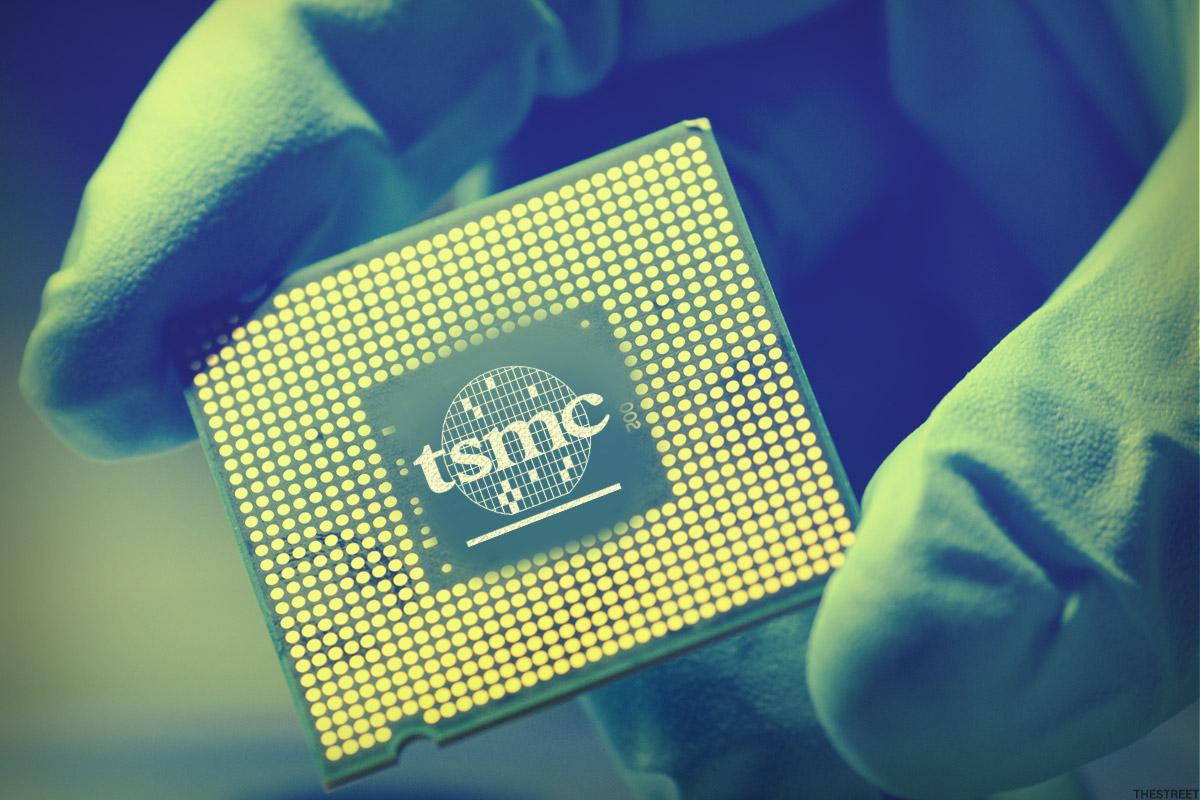
TSMC Largest Single U.S. Investment
Shares in Taiwan Semiconductor Manufacturing Co. TSM (TW:2330) ended the day up 4.9% on Thursday alone, a jolt in the arm for what has so far been a middling year for this stellar stock. It’s a long-term holding of mine, with a commanding share of the production of semiconductors in chip foundries.
I correctly called TSMC as the Asian stock of choice for 2024, when it soared more than 80%. Coming into this year, I said I would pick it again if allowed, but forced myself to look elsewhere, first to Indian equities and then Chinese tech. But a long position in TSMC remains one of my largest holdings.
Given the stock’s past performance, it is relatively disappointing to see it up “only” 10.8% year to date. But it has come off its April tariff-induced lows, and should now benefit both from its plans to ramp up U.S. production and any easing of global trade tensions.
TSMC is investing US$165 billion to build three chip “fabs” in Arizona, outside Phoenix. Trump actually sent TSMC shares south Wednesday by claiming TSMC would invest US$300 billion in Arizona, but it is not clear whether those figures include the spillover effects into the local economy, or represent plans to step up what’s already the largest foreign direct investment into the United States by a single company.
Samsung's Stunning 2025 Showing
Samsung Electronics SSNLF (KR:005930) is up 2.5% at Thursday’s close, taking its impressive rally in 2025 to 32.0%. The conglomerate had been punished prior to this year for its overreliance on cheaper DRAM chips but is now being rewarded for its efforts to play catchup making the kind of top-end chips required to power Artificial Intelligence.
The clearest reward for its renewed focus is the US$16.5 billion contract secured last week to supply AI chips for Tesla TSLA vehicles.
Samsung says it will invest US$37 billion to build two chip production facilities, a research center and a packaging facility by 2030.
Korean rival SK Hynix HXSCL (KR:000660) is up just 1.4% Thursday, in a year where the Nvidia NVDA supplier has already soared 53.0%. It has benefitted from an earlier commitment to top-flight AI chips, where Samsung was held back last year by sluggish demand for smartphones and other consumer electronics.
Hynix is investing US$3.9 billion to build out a facility in Indiana that will have an assembly line for the high-bandwidth memory (HBM) chips used in the graphic processing units that train AI systems. The Indiana operation will also include a packaging plant and research & development operations.
Extra Boost From Apple
Korean equities have until recently been the star Asian stock performers this year. The Kospi is up 34.6% year to date, still the best Asian index showing in 2025, ahead of the 27.8% rally in Hong Kong. But Southeast Asian markets have surged recently, as I explained recently, posting double-digit gains in the past month as central banks in the region moved into easing mode.
The stocks of the Asian chip producers gained added impetus after Apple AAPL declared that it will commit an added US$100 billion to step up its U.S. operations. It is not clear exactly what that investment will involve, although Apple has dubbed the initiative its American Manufacturing Program.
The cumulative commitment from Apple is US$600 billion, with prior plans announced for a server-manufacturing facility in Houston, a supplier academy in Michigan, and spending with its U.S. suppliers. But it is not clear how much, if at all, Apple will step up its U.S. production of consumer electronics.
Analysts say it would not be cost-effective to produce, say, iPhones entirely within the United States without the price for a phone soaring. Apple has already moved to diversify away from production in China, and in April had set plans in place with contract manufacturer Foxconn HNHAF (TW:2317) to make most iPhones for sale in the United States in India.
India’s Trade Relations in a Tailspin
Those plans are in tatters now that India’s trade relations with the Trump administration have entered a tailspin. Indian equities are at odds with gains for most Asia markets, as I noted in my last story, and indeed Indian markets are selling off Thursday despite gains elsewhere in Asia.
I noted in that Tuesday column that India was directed to buy Russian oil but at a price cap, under U.S. auspices. But Trump has now indicated he will set punitive tariffs at 25% on Indian exports into the United States, “punishment” for those Russian oil purchases. That would take total U.S. tariffs on shipments from India to 50%.
I would still not be surprised to see some kind of India agreement on trade, given the past close relationship between Trump and Indian Prime Minister Narendra Modi. Yet the Indian leader, a staunch nationalist himself, will also not want to be seen as backing down in the face of Trump threats. So for now, we are at a stalemate.
And for now, it is Asian chipmakers with U.S. expansion plans that are reaping the benefits of those Biden-era announcements. Analysts note, however, that the higher cost of U.S. production is in effect a “tax” of its own, compared with lower-cost locations such as Taiwan.
Companies without significant U.S. investment plans are suffering at the same time. That camp encompasses Tokyo Electron TOELY (T:8035), the leading Japanese chipmaker, which saw its share sink 2.5% Thursday, leaving them looking at a 23.1% loss since the start of August. Its key chipmaking facilities are all inside Japan, although it does have an R&D center in Albany, N.Y.
Likewise, Renesas Electronics RNECY (T:6723) is down 3.8% Thursday, and 14.9% year to date. Also Tokyo-based and with five chip fabs inside Japan, its main expansion focus has recently been to establish R&D centers in India, with plans to ramp up production there.
It takes years and billions of dollars to build chip fabs. So it's not an easy step to respond to the Trump administration bid to reshore the chip industry. Expect to see commitments to invest into U.S. production from companies without significant U.S. operations — plans that may stave off higher tariffs but would come to fruition long after Trump leaves office.
At the time of publication, McMillan was long TSM.