Stocks Can Keep Rising After Interest Rate Cuts
Interest rates and the money supply are the key factors going forward.
You've reached your free article limit
You've read 0 of 1 free Pro articles.
I recently received the two following questions on stocks, specifically about the Nasdaq:
Lately we’ve seen the Nasdaq rise even as interest rates stay high and the dollar remains firm. From a trader’s perspective, what factors in index price action should we focus on to understand this divergence?
Can we discuss the Nasdaq? How to estimate the probability of a correction to the downside?
I’ll try to answer both questions in one shot.
Sure, stocks in general, and the Nasdaq in particular, will eventually reverse. There is some evidence that it could happen soon, but not all evidence points toward a reversal.
From a trading perspective, why is it so hard to sell the top? Not only are there many moving pieces, but investors are likely focused on the wrong ones.
Rate Cut Implications
For example, right now, investors are hyper-focused on changes in interest rates. A compelling argument can be made that lower interest rates precede recessions.
Every recession this century (shaded grey, below) was preceded by reductions in the federal funds rate (blue line). Just last week, the Federal Reserve reduced its key interest rate by 25 basis points (not shown).
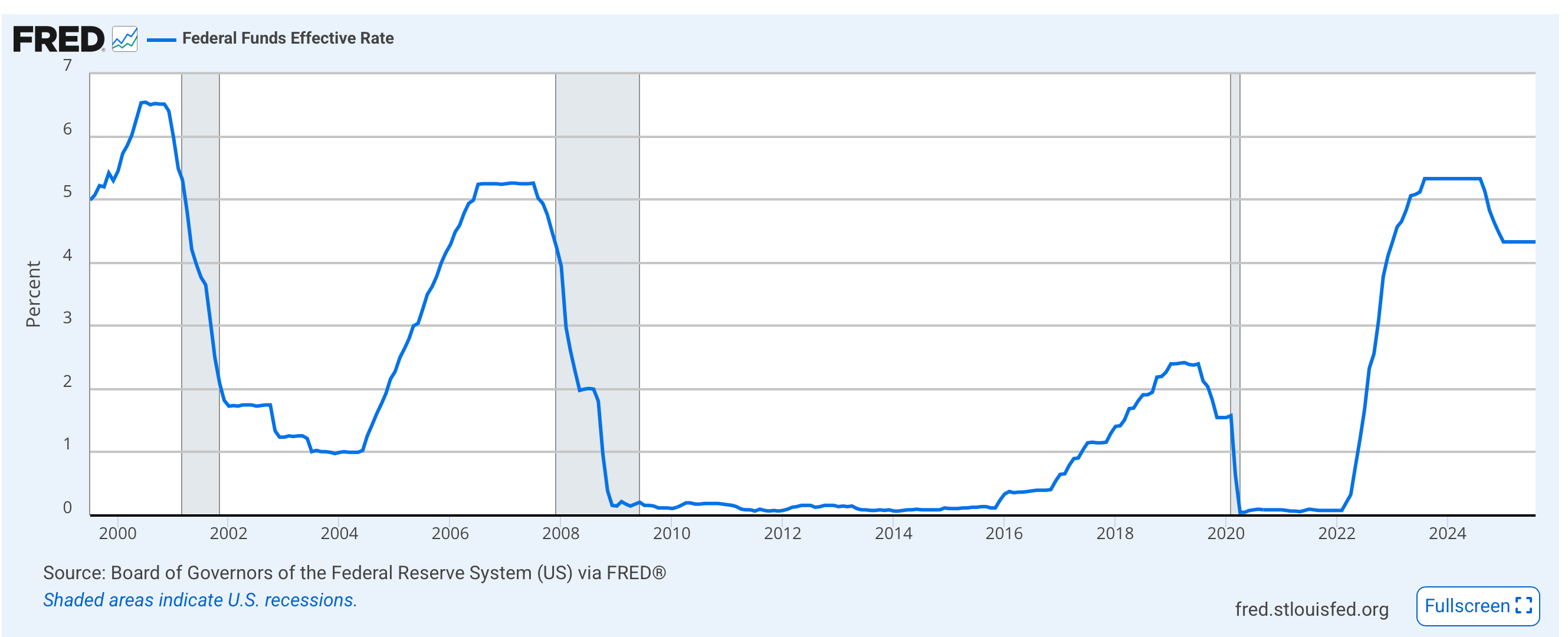
I’m not saying that every rate cut leads to a recession. What I am saying is that every recession this century was preceded by rate cuts. These are two very different things.
The two major recessions in the first decade of this century coincided with two vicious stock market crashes. The pandemic-induced 2020 mini-recession was accompanied by a mini-crash.
Based on the above chart, if we focus on interest rates alone, it’s not hard to imagine stocks peaking in the not-too-distant future. But while interest rates comprise a significant part of the discussion about future market direction, few among us are focused on money supply.
Money Chasing Stocks
There was a massive increase in the U.S. money supply, measured below by M2, at the start of the pandemic. This increase coincided with the worst bout of inflation in over 40 years.
In 2022 and into 2023, M2 contracted. Now it’s resumed its ascent, and has reached an all-time high.
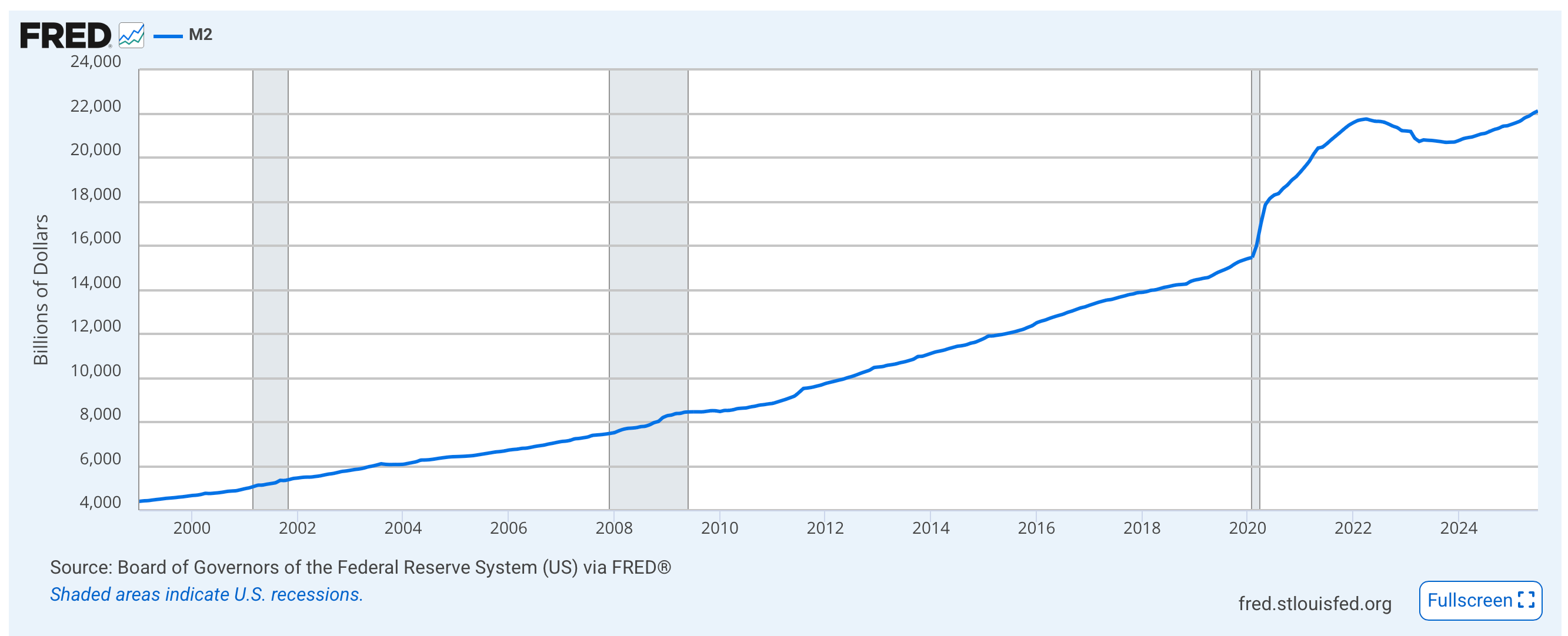
U.S. economist Milton Friedman put it simply when he said that inflation is caused by more money chasing the same amount of goods. The same can be said about more money chasing stock market performance.
An increase in the supply of dollars can cause the price of eggs to rise. It can also cause stock prices to rise. It's a tailwind to the market, regardless of interest rates.
How to Catch a Reversal
How will we know when a stock market reversal has finally arrived? Charts will tell us when stocks have begun their descent. Lower lows and lower highs will appear on the major indexes.
By the time that trend becomes obvious, stocks will no longer be trading at their highs. We don’t expect to sell the top, anymore than we anticipate buying the bottom.
In the meantime, asset prices should continue their ascent. Are we concerned about owning stocks in an inflated market? Yes, but we also should worry about failing to participate in a bull market that is riding a wave of liquidity.
At the time of publication, Ponsi had no positions in any securities mentioned.