Plenty Riding on This First Trump Trade Deal... But Little Optimism
Britain appears poised to strike the first tariff deal since the White House declared trade war on the world. But how detailed will any trade pact be?
You've reached your free article limit
You've read 0 of 1 free Pro articles.
There’s a lot riding on this first trade deal of the New Trump Era. But that’s what we are promised we’ll get later Thursday.
U.S. President Donald Trump teased on social media last night that he would hold a news conference in the Oval Office to unveil “a MAJOR TRADE DEAL WITH REPRESENTATIVES OF A BIG, AND HIGHLY RESPECTED, COUNTRY.”
The New York Times was the first to identify that country as Britain, and the BBC and most other news sources are now following suit.
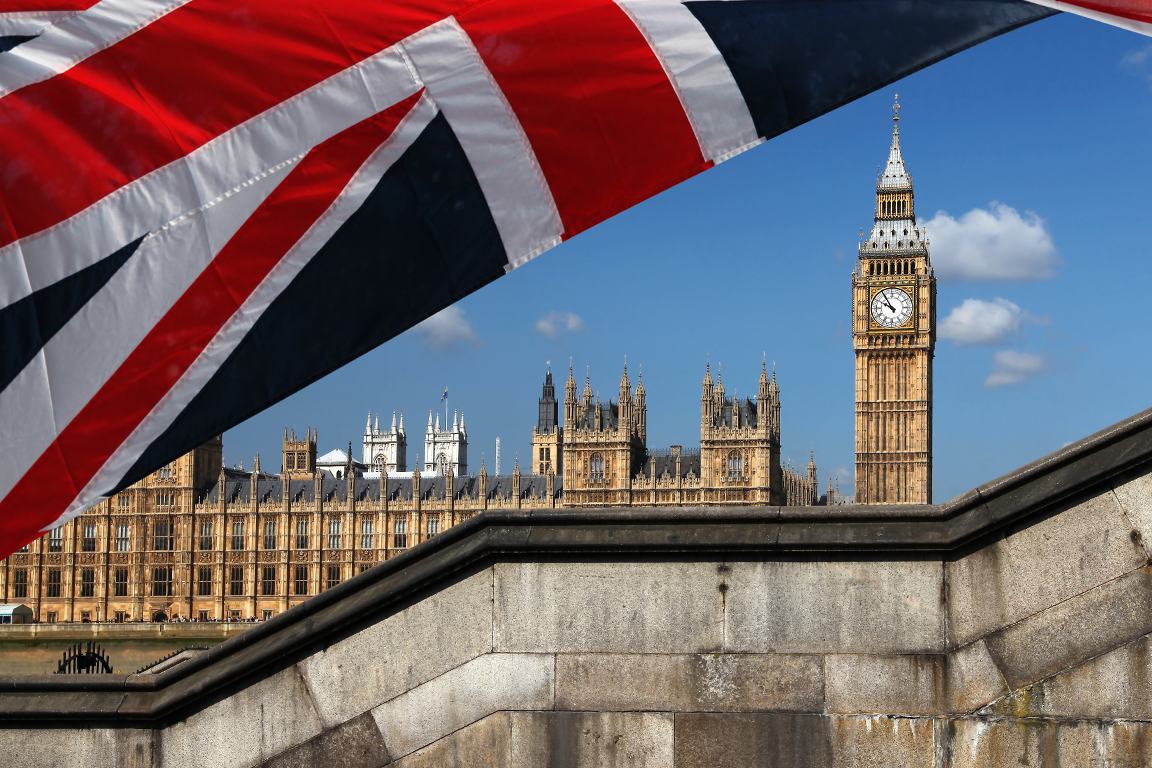
Now, as a Brit by birth, I’m allowed to joke that this can’t possibly be with the United Kingdom. It’s not big, and any economic respect it had was lost if not with the end of empire then with the disastrous decision to push through Brexit.
But Trump appears to be bigging up Britain. I’m sure this won’t be an actual trade deal — as I’ve noted before, they tend to take 18 months to negotiate and this has been worked on for about 35 days — but more of a broad-brush pact to maintain tariffs at certain levels.
Likely to Lack Detail
It may maintain the baseline 10% tariff that is temporarily placed on all nations until early July. The United States has a slight trade surplus with Britain, according to U.S. data, so the United Kingdom would “only” be facing that 10% even after the 90-day suspension of higher tariffs expires. That’s still far higher than the pre-Trump U.S. tariff average of 2.2%.
Still, to see any kind of deal with Britain championed by Trump will be a coup for relatively new Prime Minister Keir Starmer, who took office last July. It rewards his trip to Washington in late February, when Starmer met in person with Trump. It really wasn’t clear that was a good idea. Starmer, a lawyer and former chief prosecutor, is sort of an anti-Trump, extremely earnest and a little lacking in personality. The two men met literally the day before the fateful, fiery Oval Office ambush of Ukrainian President Volodymyr Zelenskyy.
Starmer also represents the left-leaning Labour Party, equivalent to the British Democrats. Still, Trump said the two men got along “famously,” and called the U.S.-U.K. relationship “tremendous.” It didn’t hurt that Starmer literally had in hand an invitation from King Charles III to return to Britain for a second state visit, an invite Starmer called “unprecedented.”
The Open Golf Tournament in Play
Elsewhere on the diplomatic front, Whitehall bureaucrats have been politely inquiring — they’re British —whether there’s anything that would prevent the Trump-owned golf course Turnberry from hosting the 2028 Open golf major. It’s their way of pushing for that to happen, without directly pushing it at all, you see … just asking …
So it’s a win for Starmer to tout the U.S. deal, with the British economy barely eking out 0.1% growth for Q4 2024. It shows what a poor state the European economy is in that Britain led the continent for that quarter, with Germany and France seeing their economies shrink and Italy stagnant. Coincidentally, the Bank of England is due to meet today, and expected to cut rates by 0.25%.
Asian nations will be carefully examining the details of what Britain, with its “special relationship,” has been able to achieve. The White House previously said that trade negotiations with India were some of the most-advanced, with Japan and South Korea near the front of the line to strike a U.S. agreement.
Toyota Slashes Profit Forecast 35%
We can see why Thursday, with Toyota Motor TM (T:7203) forecasting full-year net profit that’s down 34.9% from last year. The ¥3.1 trillion (US$21.5 billion) profit for the fiscal year through March 2026 has been hit hard by the steep tariffs imposed on automobile imports, which shot up to 25% effective April 3.
Toyota is the standard bearer for “Japan Inc.” and the country’s major manufacturers. Its shares are down 11.3% so far this year, and down by almost one-third (31.0%) since late March 2024 and the end of its last fiscal year.
Toyota stock took only a 1.3% hit Thursday, although that’s at odds with the 0.1% rise for the Topix that tracks the whole main Tokyo market, and the 0.4% gain for the blue-chip, exporter-heavy Nikkei 225.
Asian markets have not made any major moves Thursday, with Korea, Hong Kong and China also slightly up, but small declines in Taiwan and Southeast Asia. Taiwan and ASEAN are export-heavy jurisdictions that are threatened with some of the highest added tariffs, so you’d think any hint of a trade deal would be positive. But central banks in Asia are having to contend with suddenly volatile currencies, which have been surging against the U.S. dollar, as I noted in my last column. That reverses a years-long “strong dollar” trend, and presents an issue for institutions holding U.S. dollars that they must now hedge.
Given those added complexities, there is so far little optimism, yet, despite the imminent delivery of the first of what Trump says will be close to 100 trade agreements. I think that’s because we have little inkling of how specific these deals will be.
It is some surprise to see Indian equities move lower Thursday, given that India and Britain agreed a substantive free-trade agreement on Tuesday. But the tensions between India and Pakistan are dominating the conversation there, and keeping any trade optimism in check.
Indian stocks have, however, sustained a startling rebound since the delivery of Trump’s initial tariff chart on April 2. They have erased all their losses for the year, leaving the Nifty 50 up 9.5% since its dip on April 7, and 2.2% to the good in 2025.
Indian equities are a strong defensive play, I believe, boosted by the world’s fastest-growing major economy. We can watch for moves in export stocks like Toyota, Samsung Electronics SSNLF (KR:005930), Sony SONY (T:6758), and the Apple assembler Foxconn HNHPF (TW:2317) to see the response to any trade deals.