Oil Shock Exposes Asia’s Weakest Links: Which Nations Are Most at Risk?
Asian markets are reacting daily to the Middle East conflict. Here's what they tell us about oil, the war’s impact and Asia's vulnerabilities.
You've reached your free article limit
You've read 0 of 1 free Pro articles.
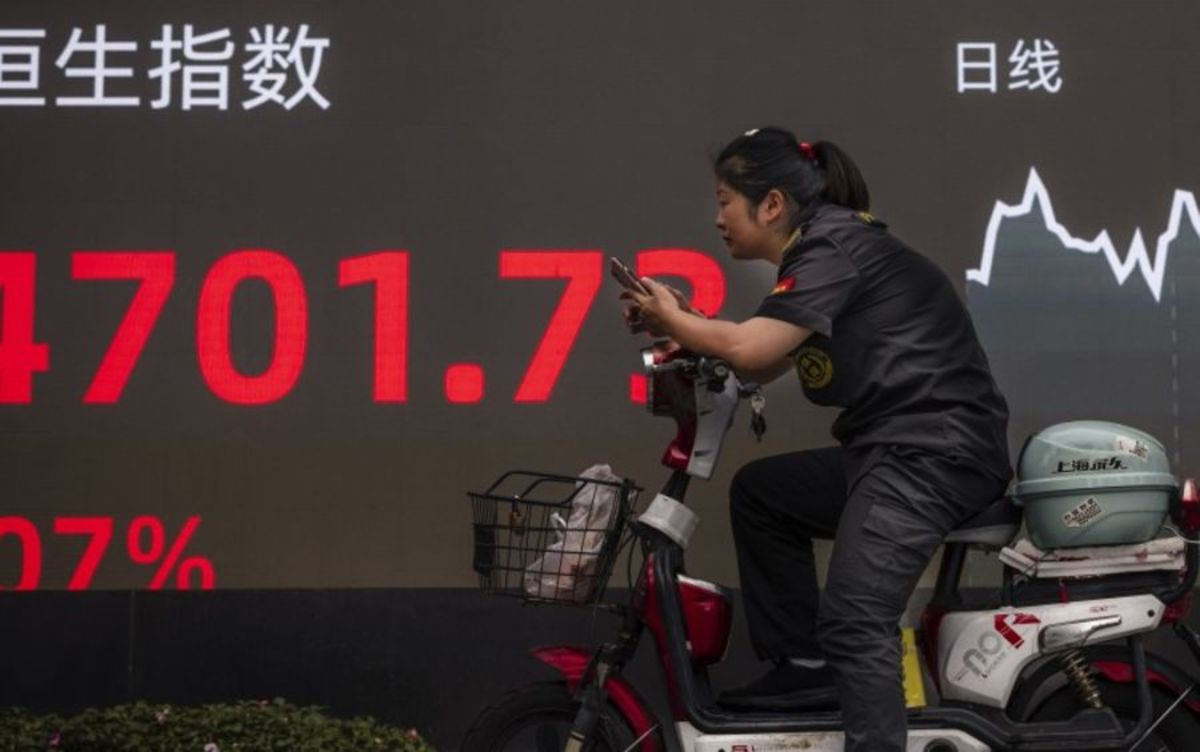 11-18-25-hong-kong-stocks-fall-in-week-on-property-developer-defaults-while-losses-in-hsbc-and-alibaba-unnerve-investors
Asia’s economic engine is powered by oil from the Middle East. On Tuesday, it was all green on the screen as oil eased back to $84 per barrel from its moonshot to $119 the day before.
Thursday, Asia is awash with red. Again, the black stuff is behind the moves.
Oil is moving back up near $100 again, Goldman Sachs (GS) has bumped its forecast to $150 per barrel, and the International Energy Agency (IEA) is warning that the challenge to the oil market is “unprecedented in scale.”
Record Oil-Reserve Release
The 32 IEA member nations just voted to free up 400 million barrels from their emergency reserves in response. That’s the largest release from the agency, which represents mainly developed nations that import oil.
That’s around one-third of IEA nation reserves. But there will be logistical issues to sort out in getting that supply flowing – IEA member New Zealand, for instance, stores some of its reserves in Italy, cheaper than building tanks at home. This will provide temporary relief at best.
What's more, as the diplomacy newsletter International Intrigue notes, it’s not much of a relief if you’re on a cruise, and the crew start prepping the life rafts. That's true even if they say they’re the biggest life rafts in history ...
Safe to Get Back in the Water?!
Can Asia catch a break?!
Just when it looked like inflationary pressure over U.S. tariffs is easing for Asia, following the U.S. Supreme Court decision that many are essentially illegal taxes, we have the inflationary oil card into play.
The impact in Asia is not uniform, however. China has a relatively deep well of oil reserves, and has been prescient in its push into renewable energy, which now generates 35.6% of its energy from hydro, solar and wind sources.
Thursday’s moves are modest in equity markets. Japan, yet to kick its nuclear program back into full gear, suffers the most, alongside neighbor South Korea.
The blue-chip Nikkei 225 in Tokyo is down 1.0% Thursday and 7.5% since the Iran conflict began on February 28, with the broad-market Topix likewise down 1.1% on the day and 7.3% since the end of Feb.
In Seoul, the benchmark Kospi is down a modest 0.5% Thursday but 10.6% since the Iran war began. It remains this year’s star performer, by far, up 32.5% year to date despite the correction.
Losers Lose More Ground
At the other end of the scale, stocks in India and Indonesia are well into negative territory for 2026. I’ve explained Indonesia’s transparency woes, leading to ratings-agency warnings, a situation unlikely to improve much under the nepotistic regime under President Prabowo Subianto. The Jakarta market is down 14.9% this year as a result.
The only silver lining is that Indonesia is a major commodities extractor, generating two-thirds of its oil at home. Still, emerging-market exposure is not what risk-averse investors are currently seeking, and the Jakarta composite is down 10.6% since the start of the war.
International investors have been selling down Indian exposure, as the Indian rupee weakens to record levels against the U.S. dollar. The Sensex is off 10.8% year to date, with the Nifty 50 down 8.7%.
I’ve been watching for Indian equities to turn, with stocks back to levels they first crossed in mid-2024. The Mid East conflict pushes back any likely reprieve, with the weak currency and high oil costs raising the risk that inflation will inflict domestic pain.
Not the Time for a Rally in Mumbai
We’ve just seen Indian inflation rise to 3.2% Thursday due to a rise in the cost of food, commodities and consumer goods. It’s not yet a worry, but we haven’t factored in the oil-price hike, either. India imports 87% of its oil, with 55% coming from the Middle East.
Indian inflation is frankly often far higher than now. It is still within the bank’s target of 4%, and well below the 6% level that requires the central bank to explain itself to government if that’s sustained for three straight quarters. But we can expect an inflation spike once higher oil prices wash through the system.
Still, it is unlikely Indian equities will rally until there’s a resolution of the oil shock. Commodities traders and currency moves will give us the signal as to when that’s likely to ease.
Overly Dependent on Middle East Oil
The Asian nations that get the highest proportion of their oil from the Middle East are Japan and the Philippines (both 95%), Vietnam (88%), Taiwan (78%) and Singapore (75%). But the figure is above 50% for almost all Asian nations, which also score high on their dependency on oil imports.
South Korea, Taiwan, Singapore, Japan and the Philippines essentially import 100% of their oil, and that figure is almost 90% for Thailand and India. The Strait of Hormuz that’s the particular bottleneck right now is key to oil shipments from the Gulf out to Asia.
How Long Will Reserves Last?
A third factor in the oil equation: developed Asian nations have the largest stockpiles of oil reserves: more than 200 days of demand for Japan and South Korea; more than 100 for China; with far lower reserves in emerging nations such as India and Indonesia.
“This divergence means that while Asia as a region is at the epicenter of the energy-security shock, a prolonged supply disruption could have a more asymmetric impact,” Nomura writes in a note to clients. “Emerging Asian economies, where the share of spending on energy goods also tends to be higher, are also more vulnerable to a lasting supply crunch.”
The statement Thursday from Iran’s new leader that Iranian forces aim to keep the strait “closed” suggests prolonged disruption. The six ships attacked in the Gulf so far include a bulk shipper flagged in Thailand, a Japanese container ship, and two oil tankers, one listed in the Marshall Islands and the other in Malta.
Bottom line: expect emerging markets to continue to sell off on the oil crisis; watch for inflation creeping into Asian economies; EM currencies are likely to flag as investors retreat to the safe haven of the U.S. dollar; and Asia’s worst-hit oil-dependent economies may surge if and when we get a resolution in the Middle East.
Insider-Trading Raids in Hong Kong
A completely unrelated postscript to my story … the Hong Kong authorities have arrested eight people on suspicion of corruption and insider trading. The corruption watchdog didn’t name the companies, but it raided a hedge fund and two brokerages, alleging that the hedge fund owner bribed the brokerage employees to get details on upcoming share placements, so the hedge fund could short the stocks ahead of the dilutive stock issuance.
Mainland China’s largest two brokerages, Guotai Junan International (HK:1788) and Citic Securities (HK:6030), have confirmed their offices were raided. Reuters reports that Citic’s Hong Kong unit CLSA as well as the hedge fund Infini Capital are involved in what authorities call Operation Fuse.
I wrote in January about the death of activist investor David Webb, who I was lucky to know. This week’s joint operation by the corruption and stock watchdogs in Hong Kong is the biggest insider-trading probe since the 2017 arrests that followed Webb’s revelation of the “Enigma Network.”
As I explained back then, Webb uncovered a web of some 60 interlinked Hong Kong companies. The penny-stock companies were secretly linked and bought and sold subsidiaries to each other as well as having cross-holdings of stock, driving up the share price and disguising that a handful of directors could control the companies by voting together.
Related: VIDEO: Oil Just Hit $100+. Is $150 Next?
At the time of publication, McMillan had no positions in any securities mentioned.